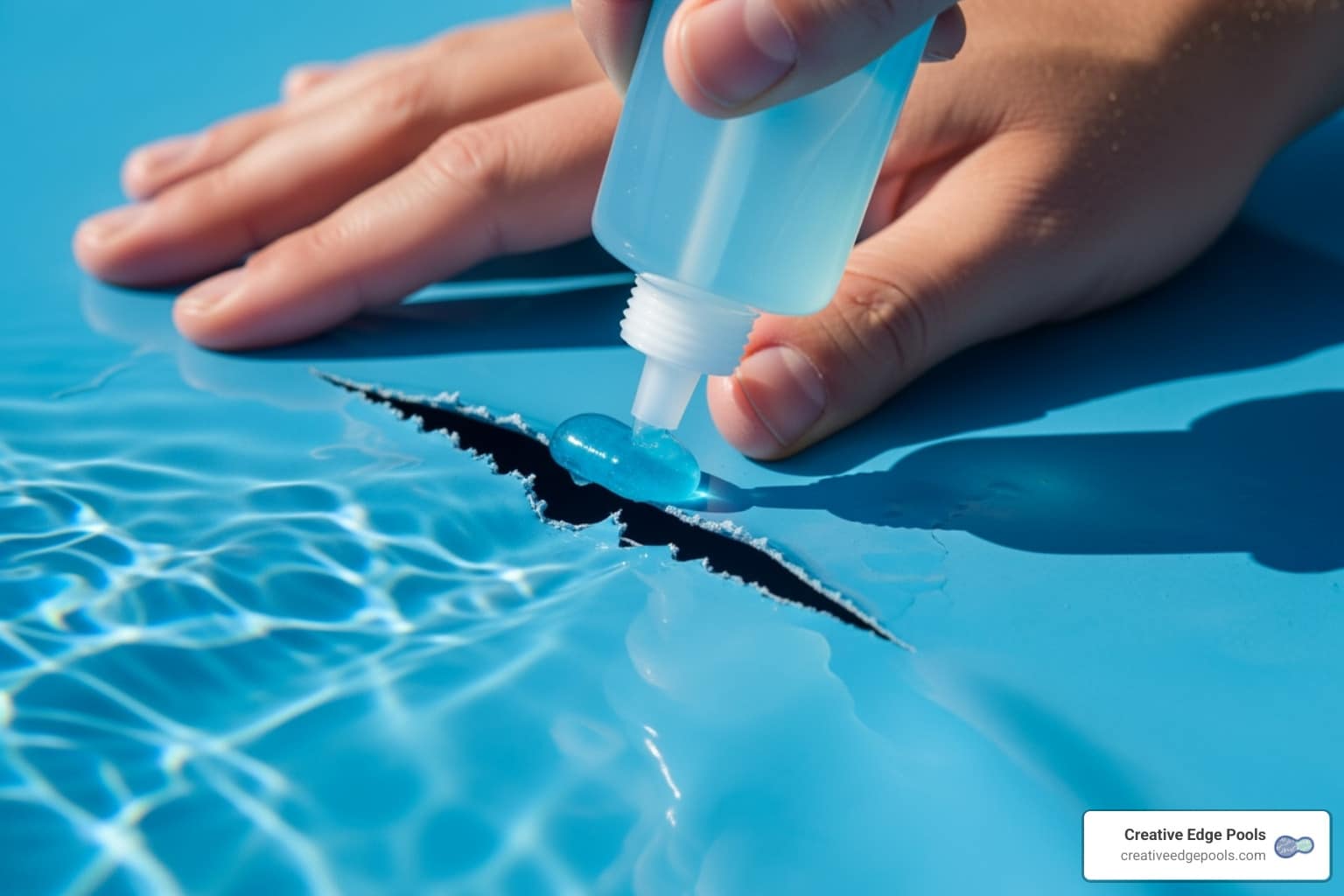
Underwater vinyl pool glue: 1st Aid Pro Fix
Your First Aid for Pool Liner Leaks
Underwater vinyl pool glue is a specialized adhesive that allows you to repair vinyl pool liner tears and holes without draining your pool, saving both time and thousands of dollars in water costs.
Quick Application Guide:
- Prepare: Clean the tear area and cut a patch 2-4 inches larger than the damage
- Apply: Spread glue on patch, fold it over, then unfold underwater at the tear
- Seal: Press firmly from center outward, removing all air bubbles
- Wait: Allow 48 hours undisturbed, 4-7 days for full cure
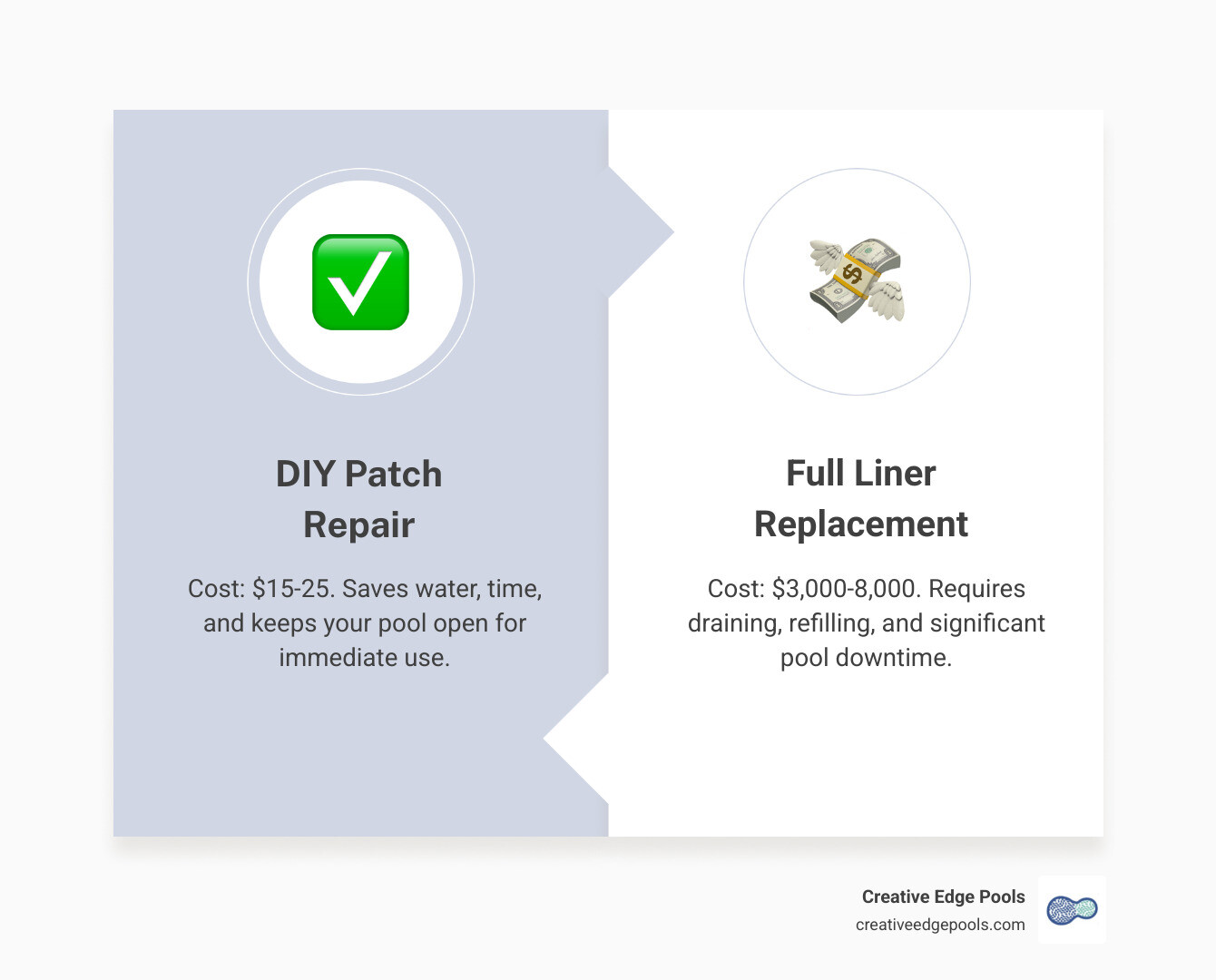
Pool leaks can turn summer fun into a costly nightmare. A typical vinyl pool liner replacement costs several thousand dollars, while a simple patch repair using underwater vinyl pool glue costs under $20.
This specialized adhesive works by creating waterproof bonds that are actually stronger than the original vinyl material. Unlike regular glues that fail in water, underwater formulas use advanced MS-polymer technology that cures even when submerged.
The beauty of this solution? You keep swimming while you repair. No draining 20,000 gallons of water. No waiting days to refill. No expensive water bills.
Underwater vinyl pool glue terms to remember:
- pool liner leak repair
- pool liner repair
- above ground pool liner repair kit
Your Step-by-Step Guide to Using Underwater Vinyl Pool Glue
Ready to become your pool’s hero? This comprehensive guide will walk you through everything you need to know, from selecting the right product to applying it like a pro for a durable, long-lasting fix.
What is Underwater Glue and Why Does it Work?
Picture this: you’re trying to stick two wet pieces of paper together with regular glue. Spoiler alert – it’s not going to work! But underwater vinyl pool glue is like the superhero of adhesives, designed to laugh in the face of water and create bonds that are actually stronger underwater than on dry land.
The secret lies in some pretty amazing chemistry. Most effective underwater vinyl pool glue products use MS-polymer technology – think of it as the Einstein of adhesive science. This isn’t your average craft store glue that gives up the moment it sees moisture.
Here’s what makes this stuff so incredible: Hydrophobic properties mean the glue actually repels water instead of dissolving in it. It’s like oil and water – they simply refuse to mix. Even better, these adhesives cure in water, using the moisture around them to trigger the chemical reaction that creates the bond. Pretty cool, right?
The benefits are game-changing. You get a strong, flexible bond that moves with your pool liner as temperatures change and kids cannonball into the deep end. The adhesive resists pool chemicals like chlorine and salt water, plus it won’t break down under UV rays from hours of summer sunshine.
When you’re shopping, you’ll find three main types: one-part sealants that are ready to squeeze straight from the tube, two-part epoxy putties that require mixing but work great for bigger repairs, and complete patch kits that include everything you need in one convenient package.
The real magic happens when you compare this to draining your entire pool. We’re talking about keeping 20,000 gallons of water in place, avoiding massive water bills, and getting back to swimming in days instead of weeks. No wonder pool owners are raving about this solution!
Step 1: Preparing for a Perfect Patch
Think of this like prepping for surgery – except way more fun and with a lot less stress! Getting your materials ready and surfaces properly cleaned is what separates a patch that lasts years from one that peels off next season.
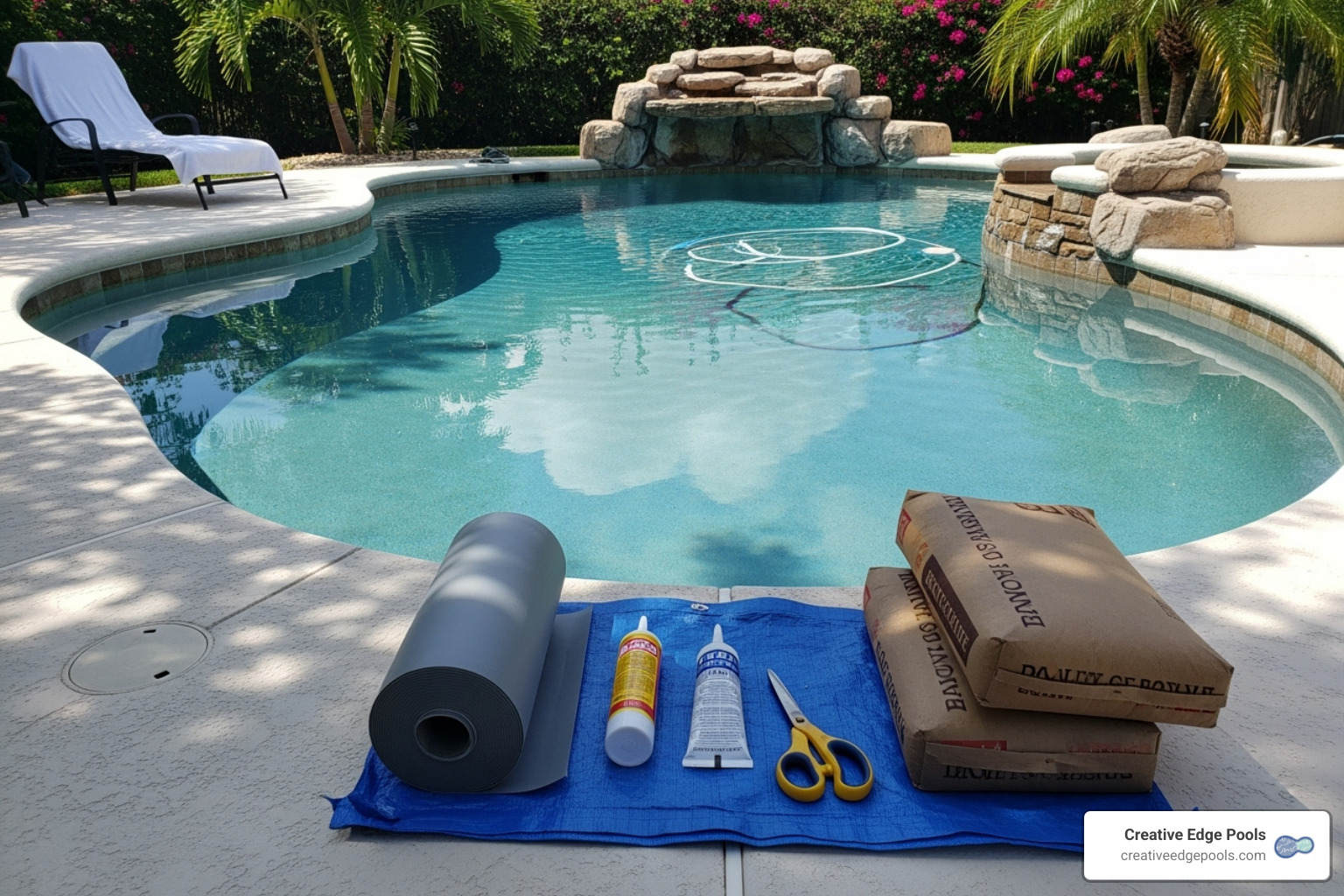
Let’s gather your tools. You’ll need your chosen underwater vinyl pool glue and vinyl patch material (many kits include both), sharp scissors for clean cuts, goggles for clear underwater vision, and a cleaning scrub pad to tackle any stubborn grime. Trust me, those goggles aren’t optional – you can’t fix what you can’t see clearly!
Surface preparation is where many DIY repairs go wrong, so let’s get this right. Start by locating the exact tear – sometimes it’s obvious, other times you’ll need to play detective and look for where debris gets sucked toward the liner. Once you’ve found your target, it’s time to remove algae and grime from about a 6-8 inch area around the damage. Think spring cleaning, but underwater! Any dirt, sunscreen residue, or algae buildup will prevent the glue from bonding properly.
Now for patch preparation – this is where attention to detail pays off big time. Cut your patch so it’s two inches larger than the tear on all sides, giving the adhesive plenty of surface area to grip. Here’s a pro tip that’ll save you headaches later: cut rounded corners instead of sharp ones. Those pointy corners are like little invitation cards for peeling, while rounded edges stay put for years.
The preparation might feel tedious, but it’s the foundation of a repair that’ll outlast your pool liner. Get this step right, and you’re already 80% of the way to success!
Step 2: Applying the Underwater Vinyl Pool Glue
Here’s where the magic happens – time to put that underwater vinyl pool glue to work! Don’t worry if you feel a bit nervous; even experienced pool pros get a little adrenaline rush during this step. The key is staying calm and working methodically.
Start by applying adhesive to the patch with a generous, even bead covering the entire surface. Don’t be stingy here – you want complete coverage, especially around the edges where peeling usually starts. Think of frosting a cake; you want smooth, consistent coverage without any bare spots.
Now comes the clever part: fold the patch over on itself, glue-side to glue-side. I know it sounds backwards, but this protects the adhesive as you maneuver underwater and prevents it from sticking to everything except where you want it.
Time to submerge and unfold! Put on those goggles, take a deep breath, and head down to your repair site. Once you’re positioned over the tear, smoothly unfold the patch and apply it firmly to the tear. Speed matters here – the glue is already starting to react with the water.
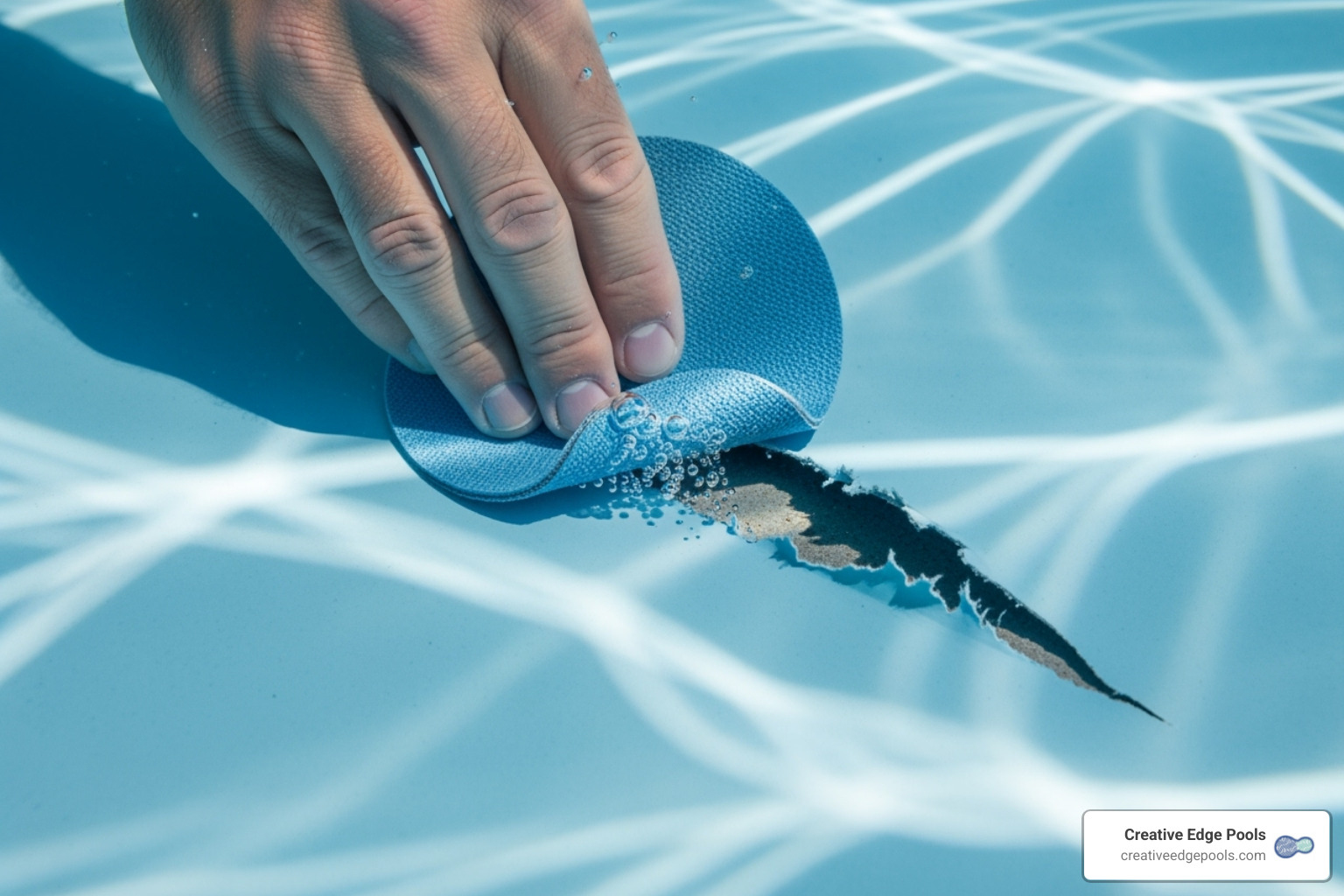
The final step is crucial: squeeze out water bubbles by working from the center outward with firm, smooth strokes. Every bubble you eliminate creates a stronger bond. Think of it like smoothing out wallpaper – you want that patch to become one with your liner.
Take your time with this step. A few extra minutes ensuring perfect contact will give you a repair that lasts for years instead of months.
Step 3: Curing, Durability, and Safety
Congratulations – you’ve successfully applied your patch! Now comes the hardest part for most pool owners: patience. I know that crystal-clear water is calling your name, but giving your repair proper time to cure is what separates a quick fix from a permanent solution.
Curing time varies, but here’s what to expect. The initial set time requires 24-48 hours of leaving your patch completely undisturbed. No touching, no scrubbing, and ideally minimal pool activity. Think of it as your patch’s recovery time – it needs peace and quiet to do its job properly.
Full cure time extends up to 7 days, though your patch will feel secure much sooner. During this period, the underwater vinyl pool glue reaches maximum strength and flexibility. It’s like fine wine – the longer you wait, the better the result.
Several factors affect curing. Water temperature plays a big role – colder water slows things down, while warmer water speeds up the process. Water chemistry matters too, so avoid shock treatments for about a week after your repair. Those chemical surges can interfere with the bonding process.
The durability of a properly applied patch is honestly impressive. These repairs often become stronger than the original liner material, creating a permanent fix that can outlast the rest of your liner. We’re talking about a long-lasting repair that handles temperature changes, chemical exposure, and years of pool parties without breaking a sweat.
Safety precautions are straightforward but important. Wear goggles for clear vision and eye protection during application. Avoid skin contact with the adhesive – if you do get some on your hands, wash it off immediately with soap and water. Most importantly, read the instructions that come with your specific product. Every brand has slightly different requirements and safety guidelines.
Following these guidelines ensures you get the strongest possible repair while keeping everyone safe. After three decades in the pool industry, I’ve seen countless successful DIY patches that saved homeowners thousands of dollars and kept their summer fun on track.
Beyond the Patch: Ensuring a Lasting Repair
A successful patch is just the beginning. Understanding how to troubleshoot issues and prevent future tears will keep your pool in top condition for years to come.
Troubleshooting Common Repair Issues
Even with the best intentions and the finest underwater vinyl pool glue, sometimes things don’t go exactly as planned. Don’t worry – we’ve all been there! After thirty years in the pool business, I’ve seen just about every patch problem imaginable, and the good news is that most issues have simple solutions.
Patch peeling or lifting is by far the most common complaint we hear from DIY pool owners. Nine times out of ten, this comes down to poor surface cleaning. If there’s even a thin film of algae, sunscreen residue, or pool grime on the liner, your underwater vinyl pool glue is essentially trying to stick to that debris instead of the actual vinyl. It’s like putting a bandage on muddy skin – it just won’t hold.
The fix? Go back to square one with your cleaning. Use a non-abrasive scrub pad or sponge and really scrub the area around the tear. I mean really scrub it. You want that vinyl surface to feel squeaky clean under your fingers.
Sharp patch corners are another sneaky culprit behind peeling patches. Those pointed edges create stress concentration points where water pressure and daily pool use can gradually work the patch loose. Always cut rounded corners on your patches – this simple step distributes stress evenly and makes your repair much more durable.
Sometimes the issue is glue not sticking at all, which can be incredibly frustrating. The most likely cause is unbalanced water chemistry. While modern underwater vinyl pool glue is designed to resist pool chemicals, extreme conditions – like right after a shock treatment – can interfere with the bonding process.
Check your water balance before applying any patch, and avoid shocking your pool for about a week after the repair. Give that adhesive time to fully cure without chemical interference.
Repairing difficult spots like seams and corners requires a bit more finesse. These areas have multiple layers of vinyl or tight angles that make getting uniform contact tricky. For seams, try to position your patch so it bridges across the seam rather than following it. For corners, you might need a smaller, custom-shaped patch that can conform to the angles without bunching up.
Maintain Your Pool and Prevent Future Tears
Here’s the truth every pool owner should know: the best repair is the one you never have to make! While mastering underwater vinyl pool glue techniques is valuable, preventing tears in the first place will save you time, money, and frustration.
Regular inspection should become second nature during your routine pool maintenance. Every time you’re skimming leaves or brushing the walls, take a moment to really look at your liner. Pay special attention to high-stress areas like the waterline, around skimmers and returns, and near steps or ladders. Catching a small tear early means a quick 15-minute patch job instead of dealing with significant water loss later.
Proper water chemistry isn’t just about swimmer comfort – it’s crucial for liner longevity. Unbalanced water can make vinyl brittle and prone to cracking. Keep your pH, alkalinity, and sanitizer levels in the recommended ranges through regular testing and adjustment.
Protecting your liner from damage requires some simple awareness. Sharp objects are vinyl’s worst enemy, so keep pool toys, cleaning tools, and anything with edges away from the liner surface. When vacuuming, use a vinyl-specific vacuum head with brushes rather than wheels, and move it smoothly across the surface without aggressive dragging.
Careful entry and exit might seem obvious, but it’s worth mentioning. Encourage swimmers to use ladders and steps properly rather than pulling themselves up on the pool edge, which can stress and potentially tear the liner.
Proper maintenance is key for every pool owner. A well-maintained vinyl liner can serve you faithfully for up to 15 years, making these preventive measures a smart investment.
Of course, sometimes a repair goes beyond what underwater vinyl pool glue can handle. Large tears over six inches, multiple leaks, or structural damage to your pool deck or walls require professional attention. For major repairs or if you’re dreaming of a complete backyard change with a custom gunite pool designed to your exact specifications, trust the experts.
Like us on Facebook!