Sanding Pool Plaster Underwater: Ultimate Smooth 2025
Why Your Pool Plaster Feels Like Sandpaper
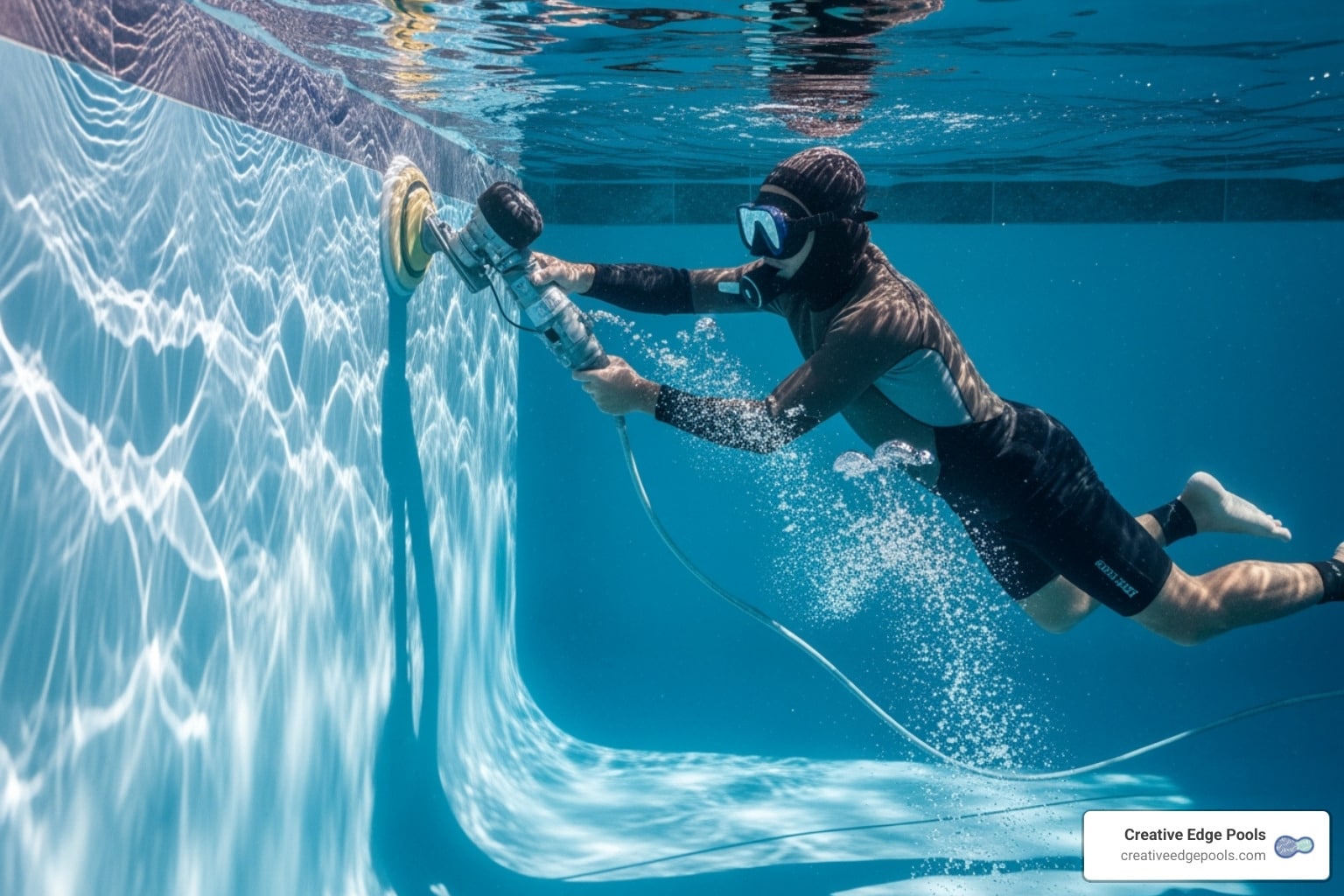
Sanding pool plaster underwater is a cost-effective technique for smoothing rough spots and removing light scale buildup without draining your pool. Here’s what you need to know:
Quick Guide to Underwater Pool Plaster Sanding:
- Best for: Minor rough spots, light calcium scale, small imperfections
- Tools needed: Pneumatic sanders only (never electric), diamond pads, rubbing bricks
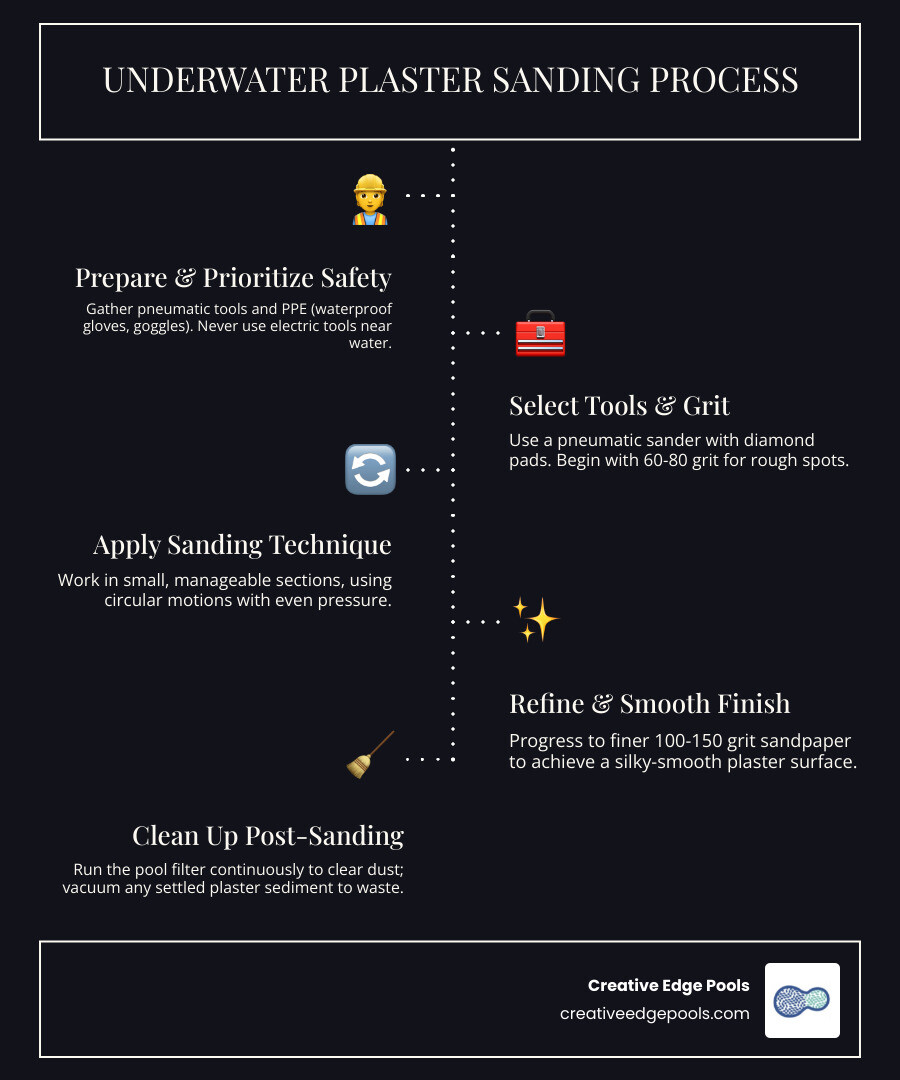
- Grit recommendations: Start with 60-80 grit, finish with 100-150 grit
- Safety: Use waterproof gloves and goggles; beware of plaster dust
- When to avoid: Major damage, delamination, or widespread roughness
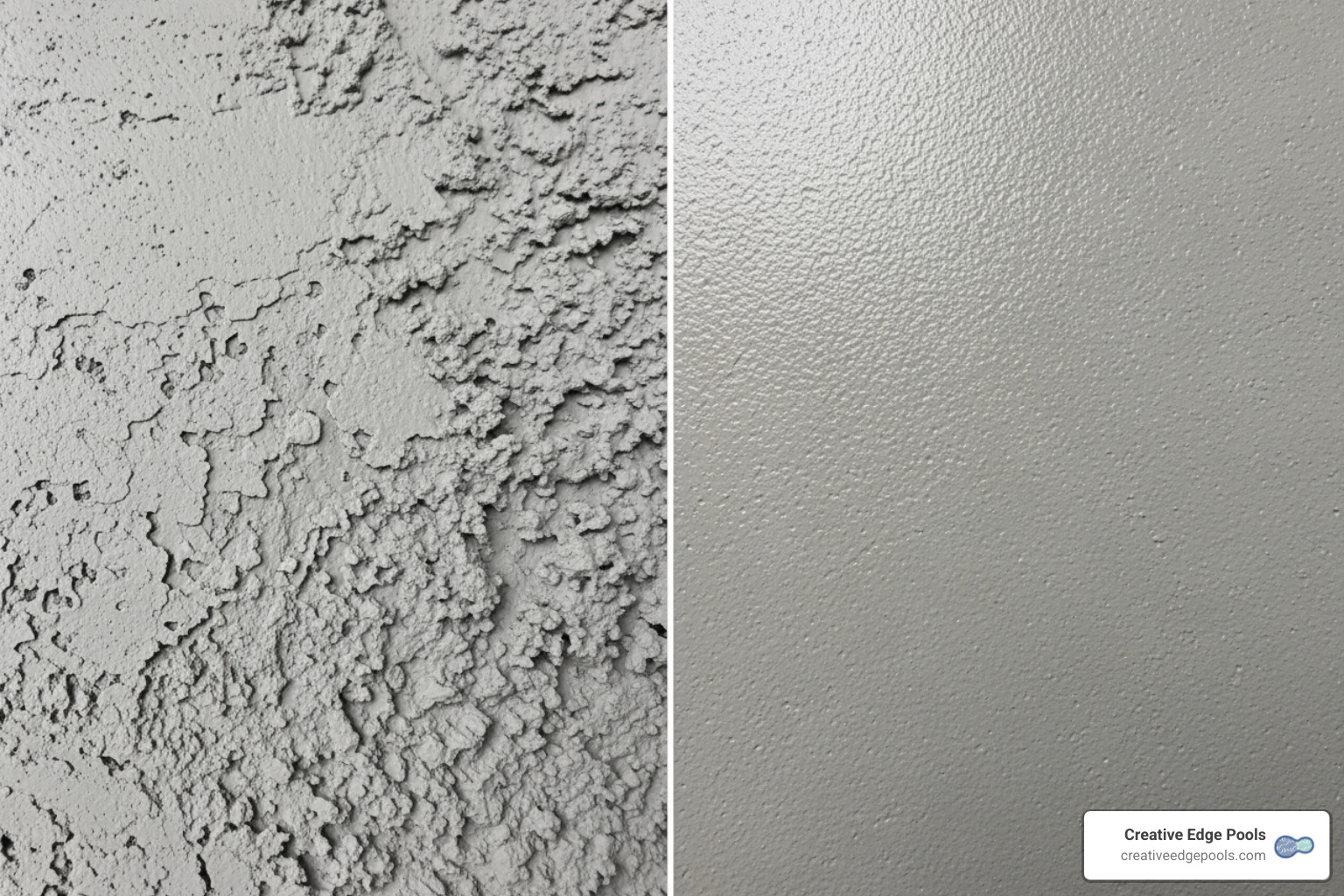
Nothing ruins a relaxing swim quite like scraping your feet on rough plaster. If your pool surface feels like sandpaper, you’re dealing with one of several common issues: calcium scale buildup from imbalanced water chemistry, chemical etching from low pH levels, or uneven troweling during the original installation.
The good news? Underwater sanding can revive your plaster to feel as smooth as new without the time and cost of draining and refilling your 20,000-gallon pool. This technique saves thousands of gallons of water, eliminates the risk of structural stress on your gunite shell, and costs a fraction of full replastering.
As David Brabant, with over thirty years in the swimming pool industry, I’ve seen countless pools transformed through proper underwater sanding techniques. My hands-on experience includes everything from troubleshooting rough plaster issues to guiding homeowners through safe sanding pool plaster underwater methods that restore their pool’s comfort and beauty.
The Complete Guide to Sanding Pool Plaster Underwater
Your pool should feel like silk under your feet, not sandpaper. When rough spots appear, it’s tempting to think you need a complete overhaul, but that’s not always the case. Let’s walk through your options so you can make the best decision for your pool and your wallet.
When to Sand vs. Other Solutions
Think of pool maintenance like caring for a favorite piece of furniture. Sometimes you need a light polish, other times a deep refinishing, and occasionally a complete replacement. The same logic applies to your pool plaster.
Sanding works beautifully for minor issues that haven’t spread throughout your pool. Those localized rough spots on your steps? Perfect for sanding. Light scale buildup from slightly imbalanced water chemistry? Sanding can handle it. If your pool was recently plastered but certain areas feel rough because of uneven troweling, sanding pool plaster underwater can actually create a smoother finish than the original hand troweling.
I’ve seen many pools where calcium hypochlorite shock created small rough patches. These respond wonderfully to underwater sanding, restoring that smooth feel you remember from when your pool was new.
Acid washing becomes necessary when you’re dealing with widespread issues. Think heavy stains that cover large areas, heavy scaling that’s built up over years, or when the entire surface has developed a uniform roughness. This process requires draining your pool and applying diluted acid to remove the top layer of plaster. It’s effective, but you can only acid wash a limited number of times before the plaster becomes too thin.
Replastering is the big renovation. You’ll need this for old plaster that’s reached the end of its 8-12 year lifespan, delamination where the plaster is separating from your gunite shell, or when you can see exposed gunite through worn areas. While it’s a significant investment starting around $10,000, sometimes it’s the only way to truly restore your pool’s integrity.
| Method | Best Use Case | Cost | Effort | Notes |
|---|---|---|---|---|
| Sanding | Localized rough spots, light calcium, minor imperfections | Low | Moderate | Keeps water in pool; can achieve smoother finish than hand troweling; avoid if gunite is showing |
| Acid Washing | Widespread stains, heavy scaling, uniform roughness | Moderate | High | Removes top plaster layer; limited number of treatments possible; requires draining pool |
| Replastering | Major damage, delamination, exposed gunite, aged plaster | High | Very High | Complete surface renewal; needed every 8-12 years; most durable solution |
Gearing Up: Tools and Safety for Underwater Sanding
Safety isn’t just important here—it’s absolutely critical. Working with tools underwater creates unique hazards that don’t exist in typical DIY projects.
The electrocution risk is real and potentially fatal. Never, ever use electric tools underwater. This can’t be emphasized enough. Only pneumatic tools (air-powered) are safe for underwater use. Yes, the water might damage or shorten your pneumatic tool’s life, but that’s a small price compared to your safety.
Plaster dust creates another challenge. Even underwater, sanding generates fine particles that cloud the water dramatically. This water cloudiness makes it hard to see your work and can create respiratory issues if dust escapes to the surface.
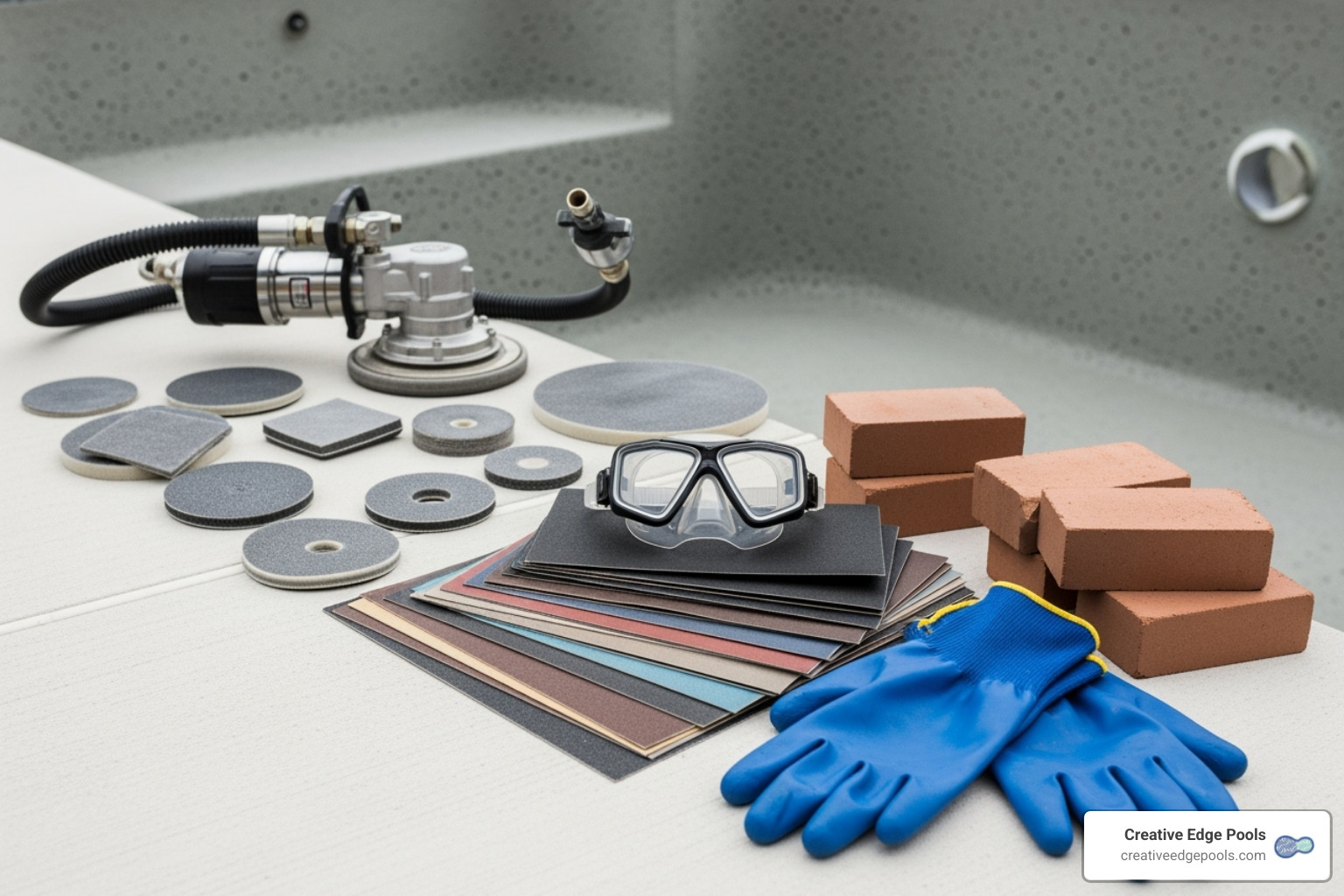
Your Personal Protective Equipment (PPE) should include quality goggles to maintain visibility and protect your eyes from debris. Waterproof gloves protect your hands from both abrasive surfaces and any pool chemicals. If you’re working near the surface where dust might escape the water, wear a good mask to protect your lungs.
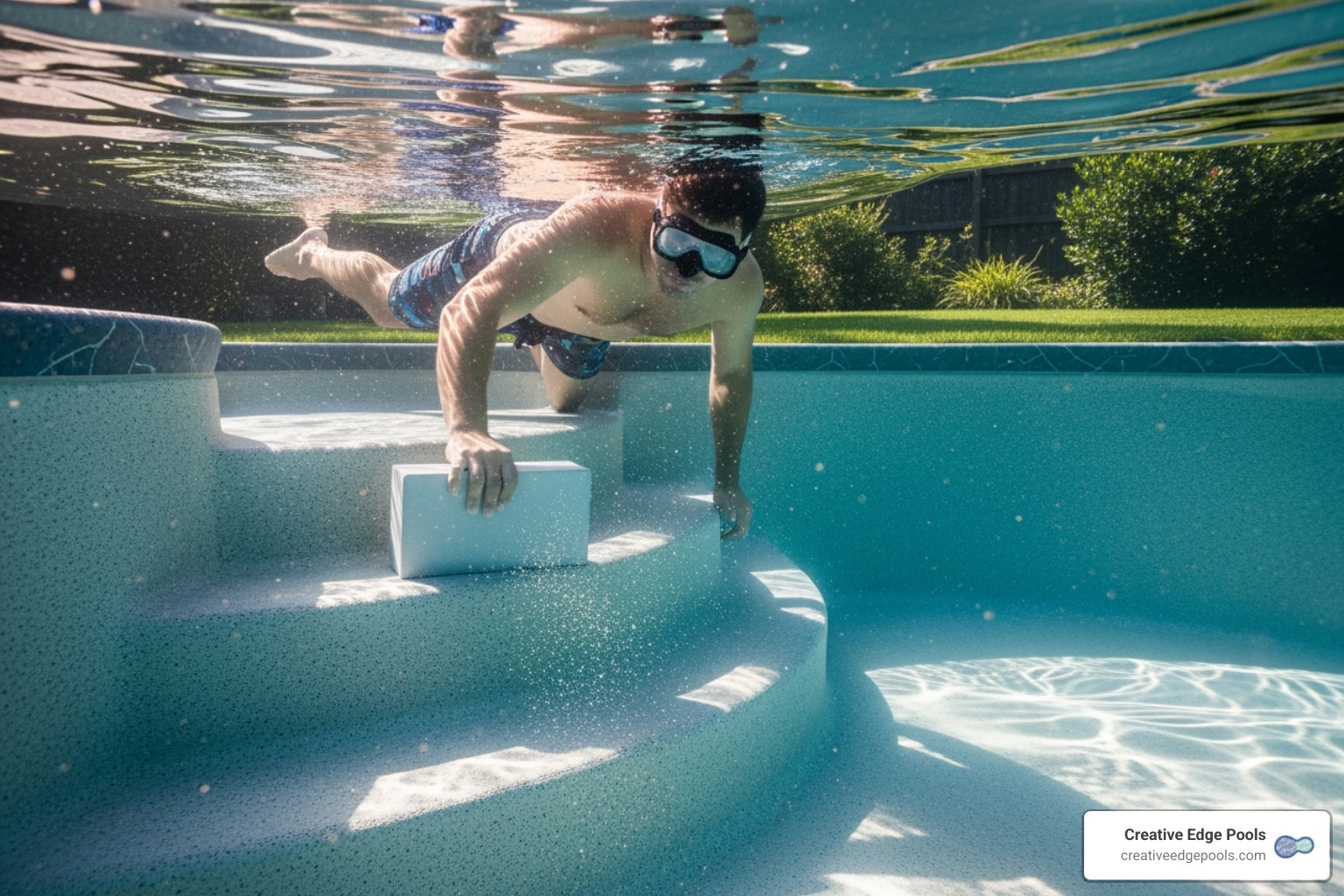
For your essential tools and materials, you’ll need a pneumatic sander as your main workhorse. Diamond polishing pads work exceptionally well on plaster and come in various grits. Wet/dry sandpaper handles smaller, detailed areas perfectly. Rubbing bricks are fantastic for pool steps and ledges—they’re simple but incredibly effective.
The Right Touch: Techniques for Sanding Pool Plaster Underwater
Now comes the satisfying part—changing those rough spots back into the smooth surface you love. The key is patience and technique rather than brute force.
Start with area preparation by ensuring your pool water is crystal clear. Any debris or algae will interfere with your work and make it harder to see your progress. Focus on the problem areas first, but if you’re tackling larger sections, break them into manageable chunks.
Choosing sandpaper grit makes or breaks your results. Always start coarse with 60-80 grit to remove the rough material efficiently. This initial pass does the heavy lifting, removing scale buildup and smoothing major imperfections. Don’t rush this step—it sets the foundation for everything that follows.
Follow up with fine grit in the 100-200 range to create that silky finish. These finer grits polish the surface and eliminate the scratches left by the coarse grit. An added bonus: smoother surfaces discourage algae growth since algae loves to grab onto rough textures.
Your sanding technique should emphasize circular motions whether you’re using a pneumatic sander or working manually with a rubbing brick. This creates even material removal and prevents gouges or uneven spots. Apply even pressure—let the tool and grit do the work rather than forcing it. Too much pressure creates deeper scratches, while too little won’t be effective.
Working in small sections keeps you in control and ensures consistent results. Check your progress frequently and don’t try to cover too much area at once. This methodical approach prevents over-sanding and helps you achieve uniform smoothness.
Choose between manual vs. power tools based on your project size. Small, isolated rough spots respond well to hand sanding with wet/dry sandpaper or a rubbing brick. For larger areas, a pneumatic polisher with diamond pads saves your arms and covers ground much faster.
Post-sanding cleanup is crucial for water clarity. Run your pool filter continuously for several hours or overnight to remove suspended plaster particles. For heavy dust accumulation on the pool bottom, vacuum to waste (bypassing your filter) prevents clogging and removes debris efficiently.
After the Sanding: Long-Term Care and What to Expect
Congratulations! You’ve successfully transformed those rough patches into silky-smooth surfaces. But before we celebrate with a victory lap in the pool, let’s talk about what comes next. Understanding the long-term effects and maintaining your newly smoothed plaster will help ensure your hard work pays off for years to come.
Potential Risks and Long-Term Effects of Sanding Pool Plaster Underwater
While sanding pool plaster underwater can work wonders for rough spots, it’s important to understand what we’re actually doing to our pool’s surface. Think of plaster like the skin of your pool – it protects everything underneath, but it’s not infinitely thick.
Sanding Risks:
The biggest concern with sanding is thinning the plaster layer. Pool plaster is typically made from a marble-dust mixture that’s only so thick to begin with. When we sand too aggressively or cover too large an area, we risk removing too much material. This becomes especially problematic if we’re sanding over hollow spots in the plaster – those areas might delaminate further or even drop off entirely, exposing the gunite shell underneath.
Here’s the thing: gunite by itself isn’t waterproof. The plaster serves as that crucial waterproof barrier. If we accidentally expose gunite through overzealous sanding, we’ve created a much bigger problem than we started with. This is why underwater sanding works best on newer plaster with minor imperfections, not as a cure-all for aged, degrading surfaces.
Long-Term Effects:
When done correctly and sparingly, sanding delivers some wonderful benefits. You’ll immediately notice a smoother surface that feels amazing under your feet. No more scraping or uncomfortable textures – just the silky feel you remember from when your pool was new.
Another bonus is reduced algae growth. Algae absolutely loves rough surfaces because they provide countless tiny hiding spots to grab onto and multiply. A smooth plaster surface gives algae far fewer places to establish itself, making your regular pool maintenance easier and more effective.
However, there’s a trade-off to consider. If we thin the plaster too much through extensive sanding, we might inadvertently create a shortened plaster lifespan. This means you could need a full replaster sooner than the typical 8-12 year cycle. That’s why we always recommend treating sanding as a targeted fix for specific problem areas rather than attempting a complete surface restoration.
The Role of Water Chemistry in Plaster Health
Here’s a truth that might surprise you: even the smoothest plaster won’t stay that way if your water chemistry is out of whack. In fact, poor water balance is often the root cause of the roughness you just spent time fixing.
Water Balance Importance:
Pool plaster is essentially cement mixed with marble dust, designed to live underwater within specific chemical parameters. When those parameters go haywire, your plaster pays the price. Low pH, alkalinity, or calcium hardness creates what we call “hungry” water – it becomes corrosive and aggressively pulls calcium right out of your plaster, creating that rough, etched surface you’ve been dealing with.
On the flip side, high pH, alkalinity, or calcium hardness causes scaling. This forces calcium and other minerals to precipitate out of the water and deposit onto your plaster as a rough, white film. Even something as common as calcium hypochlorite in bagged shock can contribute to this erosion and create unpleasant textures.
Post-Sanding Maintenance:
Now that you’ve invested time and effort into smoothing your plaster, protecting that work becomes crucial. Regular water testing isn’t just recommended – it’s essential. Test your water daily, especially after adding chemicals or hosting a pool party. You’ll want to keep a close eye on pH, alkalinity, and calcium hardness levels.
To prevent recurrence of roughness, maintain your pH between 7.4-7.6, alkalinity between 80-120 ppm, and calcium hardness between 200-400 ppm. These ranges prevent both etching and scaling, keeping your beautiful, smooth plaster in prime condition.
If you’re facing widespread roughness due to chemical imbalance rather than localized rough spots, acid washing might be a better solution to remove that top rough layer. For pools showing extensive gunite exposure, the surface may need “redusting” – essentially resurfacing with new marble dust, typically around the 10-year mark.
Your Smooth Pool Future
We’ve covered quite a journey together, from diagnosing rough plaster to mastering the art of sanding pool plaster underwater. Let’s wrap up with the key points that’ll keep your pool feeling fantastic for years to come.
Sanding as a targeted fix really shines when used properly. It’s a brilliant, cost-effective solution for localized rough spots, minor calcium buildup, and small imperfections – all without the hassle and expense of draining your pool. You’ll save thousands of gallons of water, avoid structural stress on your gunite shell, and spend a fraction of what full replastering would cost.
Prevention through chemistry remains your best long-term strategy. Consistent, balanced water chemistry prevents most plaster problems before they start. Make water testing and chemical balancing as routine as skimming leaves, and your plaster will thank you.
When to call a professional is an important decision point. While DIY sanding works wonderfully for minor issues, major plaster damage, widespread delamination, or exposed gunite calls for expert assessment. For a complete overhaul or problems that seem beyond a simple fix, consider a professional renovation to restore your backyard oasis.
Follow us on Facebook for more pool tips, maintenance advice, and inspiration for your backyard. We love sharing insights that help our clients in Eastern Massachusetts and Southern New Hampshire get the most enjoyment from their pools!