Pool Filling Service Cost: Smart Savings 2025
Why Understanding Pool Filling Service Cost Matters Before You Dive In
Understanding your pool filling service cost is essential before taking the plunge, as it varies dramatically based on water source and pool size. Here’s what you need to know:
Quick Cost Breakdown:
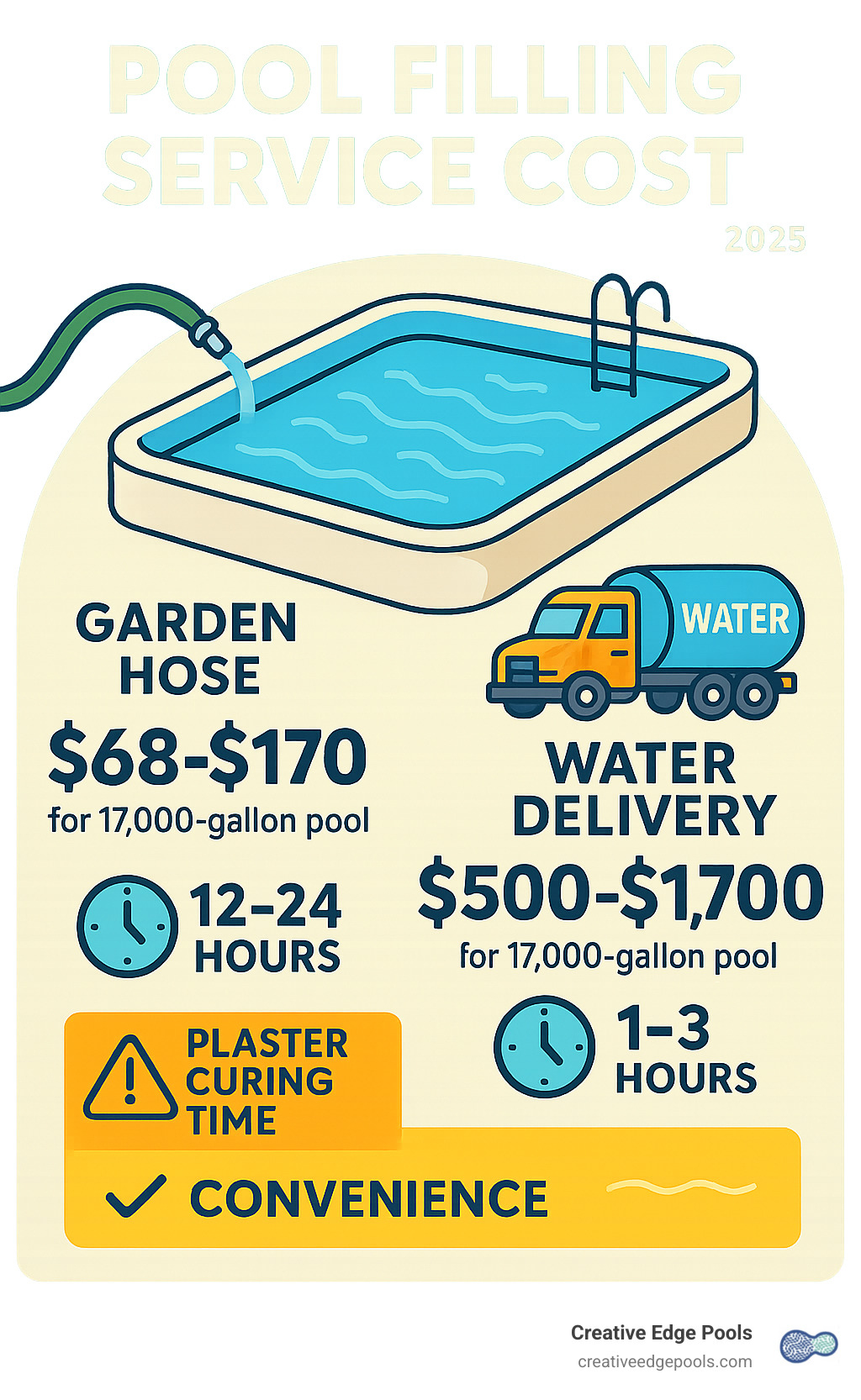
- Garden Hose (Municipal Water): $4-$10 per 1,000 gallons
- Water Delivery Service: $30-$100 per 1,000 gallons
- Average Pool (17,000 gallons): $68-$170 (hose) vs $500-$1,700 (delivery)
- Fill Time: 12-24 hours (hose) vs 1-3 hours (delivery truck)
The choice between a garden hose and a water delivery service isn’t just about cost; it’s about timing, convenience, and protecting your investment. For new gunite pools, the speed of filling is critical for proper plaster curing, especially in hot weather.
Key factors affecting your total cost include:
- Pool size and volume
- Water source (municipal, well, or delivery)
- Geographic location
- Delivery fees and minimum charges
- Seasonal demand
I’m David Brabant, owner of Creative Edge Pools. With over thirty years in the swimming pool industry, I’ve helped countless clients steer pool filling service cost decisions for their custom gunite installations. Understanding these costs upfront ensures your new pool gets the proper start.
Key Factors That Influence Your Pool Filling Service Cost
Understanding what drives your pool filling service cost helps you make the smartest choice for your budget. The price depends on several key elements, from your water source to where you live. Let’s break down these factors.
Garden Hose vs. Water Delivery: A Cost and Time Comparison
You have three main options for filling your pool, each affecting your pool filling service cost. The choice balances budget, timeline, and convenience.
Municipal water through your garden hose is the most budget-friendly option, costing $4 to $10 per 1,000 gallons. A 17,000-gallon pool would cost between $68 and $170. The catch is time. Filling this way can take 12 to 24 hours, tying up your water lines and requiring monitoring. Also, local water restrictions might prevent this method.
Well water is nearly free, with the main cost being electricity for the pump ($25 to $75 for a full fill). However, you must be careful not to overtax your well system. Take breaks every few hours to let the well recover. Burning out the pump leads to expensive repairs that negate any savings. Well water may also contain minerals requiring extra chemical treatment.
A water delivery service is the premium option, costing $30 to $100 per 1,000 gallons ($500 to $1,700 for a 17,000-gallon pool). The main benefit is speed: trucks can fill a pool in just 1 to 3 hours. Many services use treated municipal water, and some offer pre-chlorinated water. This speed is critical for new gunite pools, where quick filling protects the plaster during curing.
| Feature | Garden Hose (Municipal Water) | Well Water | Water Delivery Service |
|---|---|---|---|
| Cost per 1,000 Gallons | $4 – $10 | $0 (electricity: $25 – $75 total) | $30 – $100 |
| Time to Fill 15,000 Gallons | 12 – 24 hours (or more) | 12 – 24 hours (with breaks) | 1 – 3 hours (multiple trucks) |
| Water Quality | Treated municipal water | Varies, may require treatment | Often treated municipal water, sometimes pre-chlorinated |
| Best Use Case | Budget-conscious, patient, no water restrictions | Homeowners with reliable well, willing to manage pump | Speed, convenience, critical for new plaster |
For more details on setting up your dream pool, including initial installation, explore our insights on gunite pool installation.
How to Calculate Your Pool’s Volume to Estimate Costs
To estimate your pool filling service cost, you first need to know your pool’s volume in gallons. Guessing can lead to sticker shock. If you don’t have the original specs, you can calculate the volume with basic measurements.
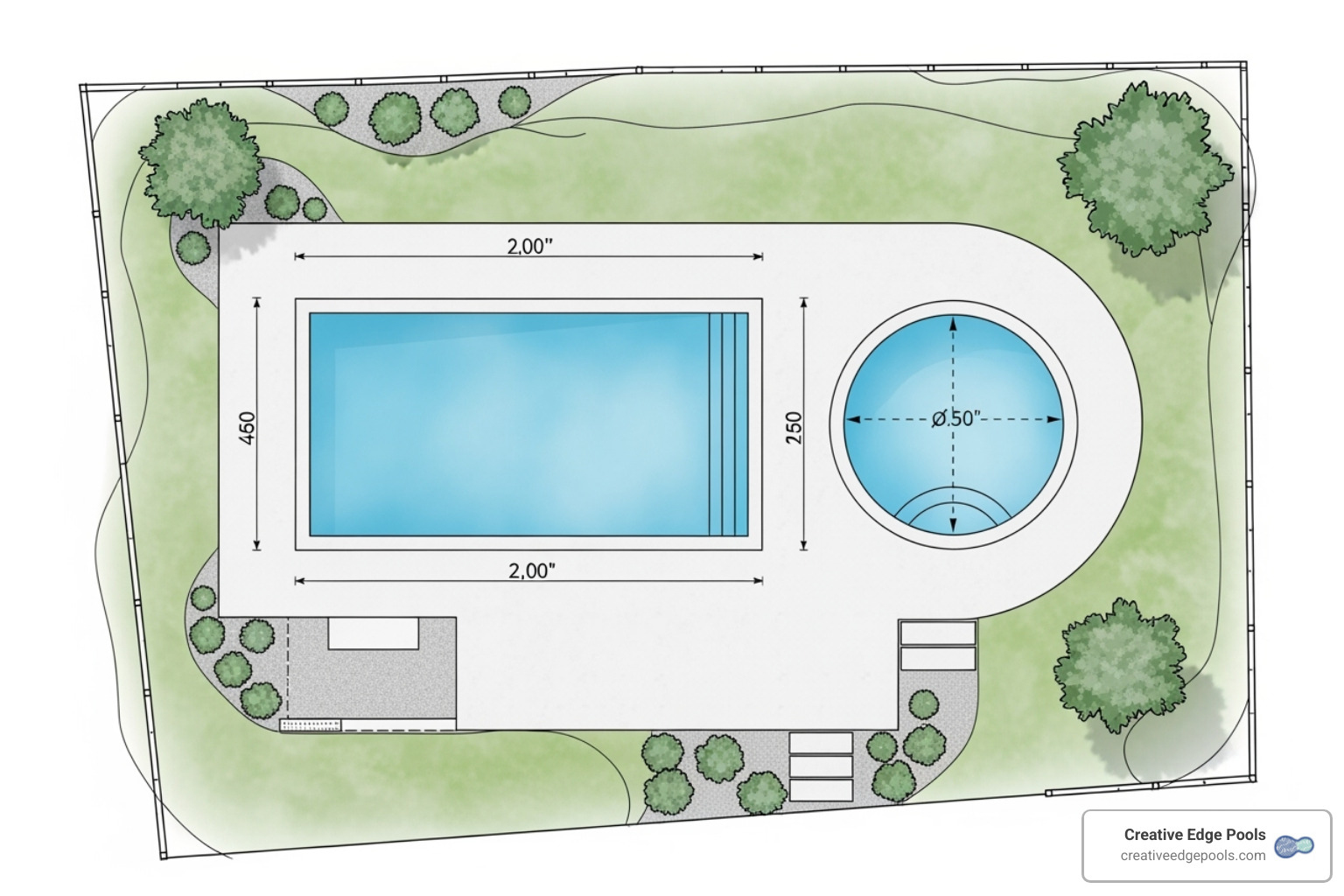
For rectangular pools, the formula is: Length (ft) × Width (ft) × Average Depth (ft) × 7.5 = Volume in gallons. (One cubic foot equals about 7.5 gallons.) For example: 20 × 40 × 6 × 7.5 = 36,000 gallons.
For round pools, the formula is: 3.14 (pi) × Radius (ft) × Radius (ft) × Average Depth (ft) × 7.5 = Volume in gallons. The radius is half the diameter. For example: 3.14 × 12 × 12 × 5 × 7.5 = approximately 16,956 gallons.
To find the average depth, add the shallow end depth to the deep end depth and divide by two. A pool with a 3-foot shallow end and 9-foot deep end has an average depth of 6 feet.
Alternatively, you can find an online pool volume calculator with a quick search. Knowing your exact volume is also crucial for chemical balancing and maintenance.
If you’re considering a complete backyard change, perhaps removing an old pool before installing a new one, you might find our resources on pool demolition helpful.
Uncovering Additional Pool Filling Service Cost Factors
The per-gallon rate is just the start. Several other factors impact the final pool filling service cost, especially with water delivery.
Delivery fees are common and cover travel, setup, and labor. Always ask for a complete cost breakdown in your quote.
Your location matters. Rural areas may have higher fees due to travel distance, while urban areas might have higher base rates.
Minimum truckload charges (often 6,000-8,000 gallons) can make professional delivery for small top-offs uneconomical, making a garden hose a better choice for smaller jobs.
Seasonal demand in our Eastern Massachusetts and Southern New Hampshire area means higher prices and longer waits in late spring and early summer. Booking off-season can save money.
Partial fills to top off your pool may cost $20 to $500, but remember the minimum delivery charges if not using a hose.
Ask about discounts for multiple truckloads or for being a returning customer. Getting quotes from several providers helps ensure you’re getting fair pricing and allows you to compare options.
Beyond the Fill: Essential Considerations for a Perfect Pool
Getting water into your pool is just the first step. There are several other important factors to consider that will protect your investment and set you up for years of enjoyable pool ownership.
Why a Fast Fill is Critical for New Gunite Pool Plaster
For new gunite pools, a fast fill is critical to protect the new plaster finish. Here, the pool filling service cost is secondary to safeguarding your investment.
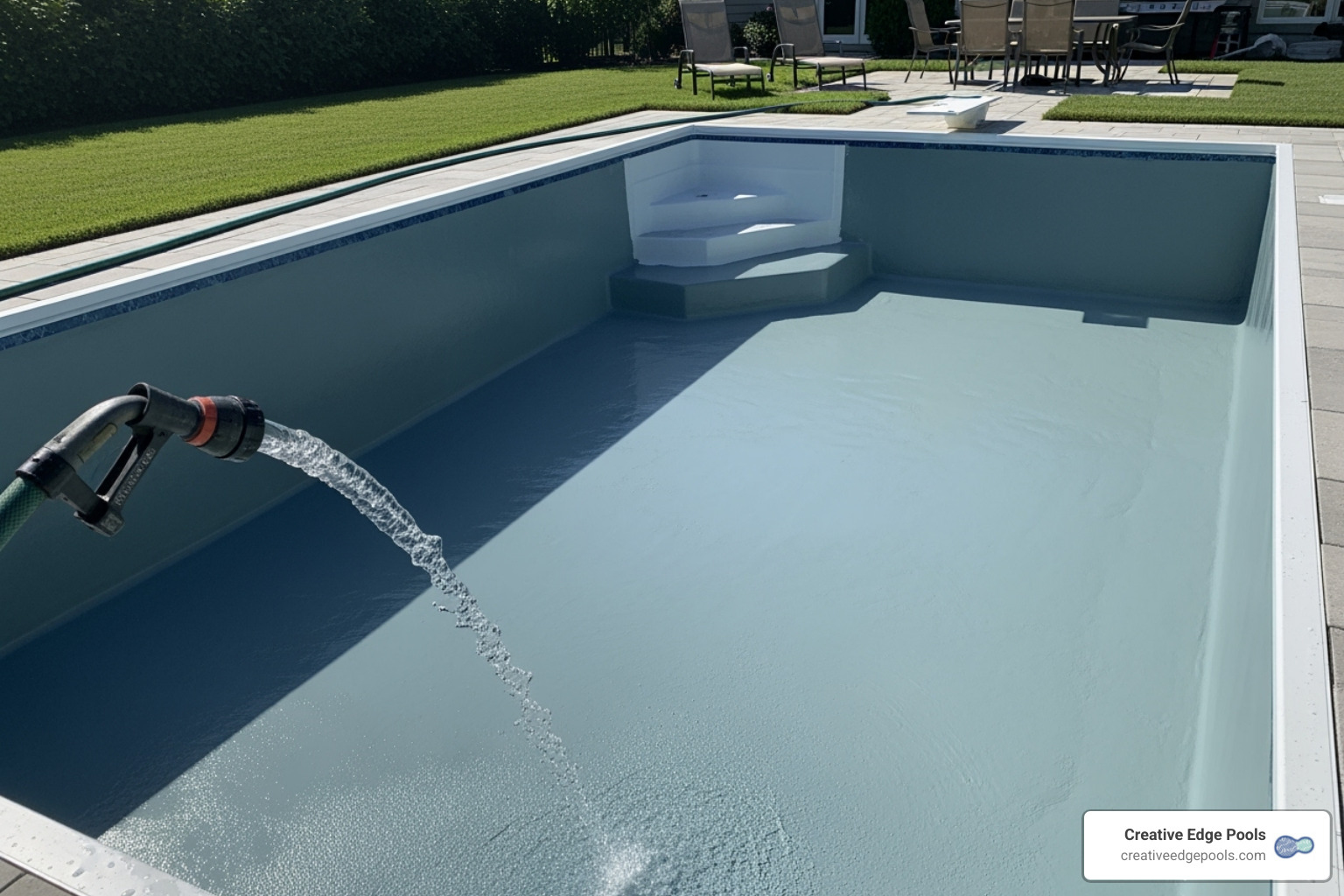
Gunite plaster must stay continuously moist while curing, meaning the pool must be filled quickly after application—often within 24 hours. A slow fill can cause expensive problems. Spalling (plaster peeling) and cracking can occur from uneven drying, compromising the pool’s integrity. Discoloration from uneven curing can also leave a blotchy appearance.
Improper curing also reduces the plaster’s overall durability, making it more susceptible to future chemical damage. Your builder will insist on a fast fill because a slow hose fill can ruin their work. The higher initial pool filling service cost for water delivery is minimal compared to thousands in potential plaster repairs or resurfacing.
At Creative Edge Pools, we always recommend professional water delivery for new pools to ensure the plaster cures correctly. For more information about maintaining your gunite pool’s beauty, check out our guide on gunite pool renovations.
Budgeting for Initial Maintenance and Accessories
Once filled, you must budget for essential items to keep your pool safe and clean. These costs are separate from the initial pool filling service cost but are crucial for your pool’s longevity.
- Startup chemicals: Fresh water needs sanitizers like chlorine, pH adjusters, and alkalinity balancers to be safe for swimming.
- Water testing kit: A reliable kit (strips, liquid, or digital) helps you monitor water health and prevent issues like algae blooms.
- Pool cover: A quality cover reduces evaporation and keeps debris out. Standard covers run $780-$2,600, while safety covers ($1,200-$3,600) are essential for preventing accidents.
- Safety fence: Often required by local codes, a fence is critical if you have children or pets. Expect to invest around $15-$25 per linear foot.
- Cleaning tools: A skimmer net, pole, pool brush, and vacuum are necessary for routine upkeep.
Routine maintenance can cost $125-$350 monthly, with potential repairs from $650-$900. Budgeting for these expenses prevents future stress.
If you’re considering the removal of an existing pool, our resource on pool removal cost provides helpful guidance.
A Homeowner’s Checklist for Arranging Water Delivery
If you opt for professional water delivery—especially for a new gunite pool—some preparation will ensure a smooth process.
- Scheduling: Book your delivery well in advance, particularly during peak season. Coordinate timing with your pool builder.
- Site Access: Ensure the water truck has a clear path and enough space to maneuver. Remove any gates or obstacles.
- Supervision: A responsible adult must be present throughout the delivery to guide the driver and monitor the fill.
- Water Source: Verify the water source with the company. Most use treated municipal water; some offer pre-chlorinated options.
- Payment: Clarify all payment terms upfront and get a detailed written estimate.
For new gunite pools, ensure the plaster is finished per your builder’s specs. A foot of water in the deep end can help buffer the hose pressure on fresh plaster. Also, ask your local utility about wastewater credits, as pool water doesn’t enter the sewer system, potentially reducing your bill.
At Creative Edge Pools, we guide our clients through every aspect of pool ownership, from understanding pool filling service cost options to coordinating the delivery. For ongoing tips and inspiration, follow us on Facebook for more pool tips or explore our work by learning more about our custom pool services.