
Pool Cost Calculator: 7 Powerful Ways to Avoid Costly Mistakes 2025
Understanding Your Pool Investment Before Breaking Ground
Pool cost calculators are online tools that help homeowners estimate the price of installing a swimming pool based on key factors like size, materials, and location. To quickly determine potential costs:
| Pool Type | Average Cost Range | Factors Affecting Cost |
|---|---|---|
| Inground Concrete/Gunite | $35,000-$100,000+ | Size, depth, features, region |
| Fiberglass | $20,000-$85,000 | Shell type, installation complexity |
| Vinyl Liner | $20,000-$40,000 | Size, liner quality, substructure |
| Above-ground | $1,500-$8,200 | Size, brand, installation method |
Planning a pool installation without understanding the costs can quickly turn your dream backyard into a budget nightmare. A pool represents a significant investment, and prices can vary dramatically based on dozens of factors – from your geographic location to the type of materials you select, and from basic designs to custom luxury features.
Using a pool cost calculator early in your planning process helps set realistic expectations and prevents the shock of unexpected expenses. It gives you a starting point for discussions with contractors and helps you understand which features you can afford and which might need to wait.
I’m David Brabant, owner of Creative Edge Pools with over thirty years of experience building custom pools throughout Massachusetts and New Hampshire. I’ve developed comprehensive pool cost calculators that account for regional pricing factors specific to New England, helping hundreds of homeowners transform budget concerns into actionable plans.
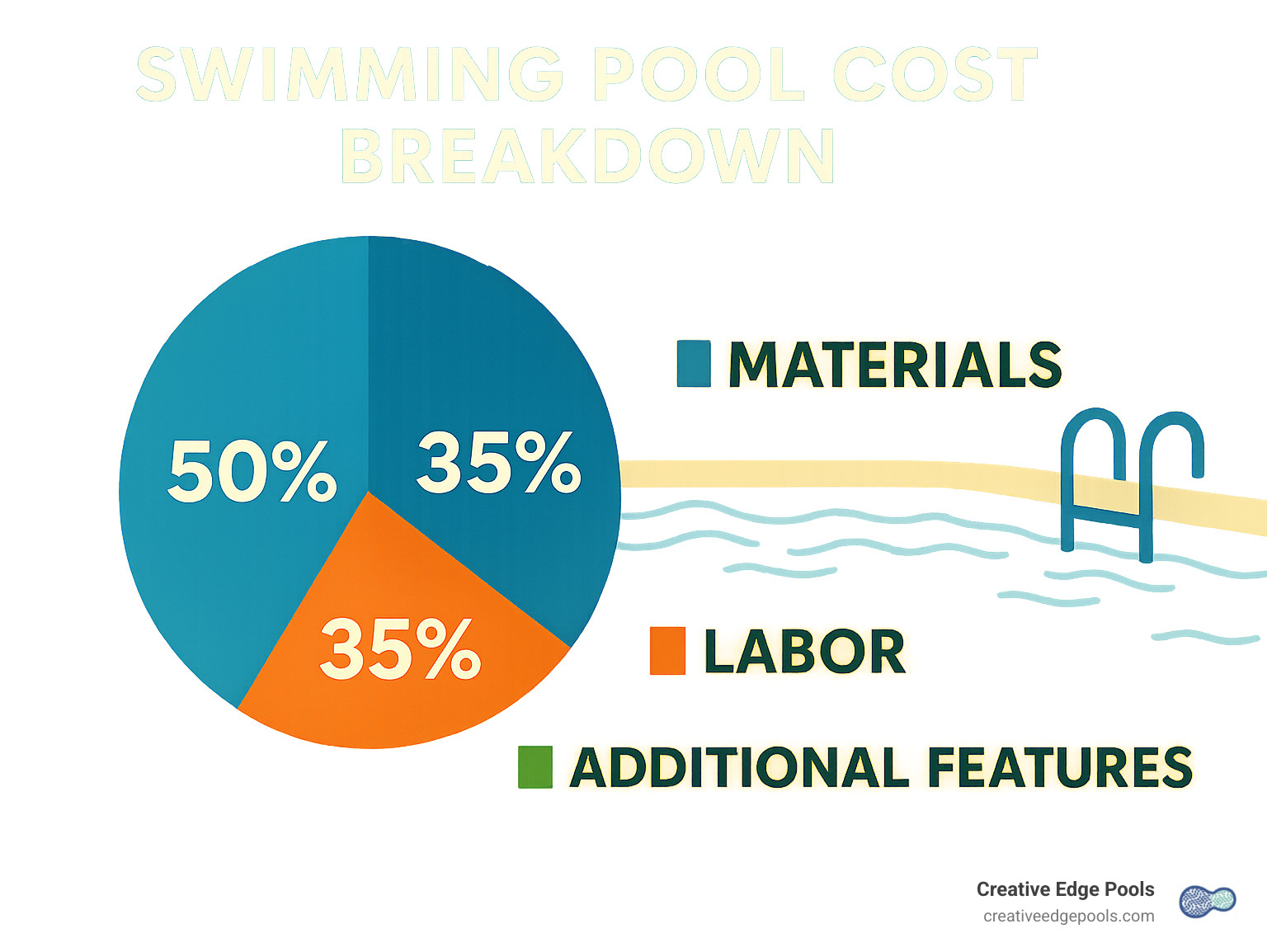
Pool Cost Calculator: How It Works & How Accurate Is It
Ever wondered how those handy online pool cost calculators actually work? They’re not magic, though they might seem like it! At their core, these tools use a straightforward formula:
Pool Price = Cost per Square Foot × Total Area of the Pool
But the best calculators don’t stop there. They dig deeper, considering factors that significantly impact your final investment. When I meet with homeowners in Massachusetts and New Hampshire, I explain that quality calculators factor in your location (because labor costs in Boston differ from those in Manchester), pool type (concrete vs. fiberglass vs. vinyl), dimensions, shape complexity (those curved edges cost more than straight lines!), material quality, and any special features you’re dreaming about.
When you input these details, the calculator’s algorithm consults databases of current material costs, labor rates, and regional pricing factors to generate your estimate. It’s like getting a quick preview of what might be possible for your backyard.
But here’s the honest truth about accuracy: even the best pool cost calculators typically provide ballpark figures that might be off by 10-30% from final quotes. Why? Because no online tool can crawl around your yard checking soil conditions or measuring access points like we do during an in-person assessment.
At Creative Edge Pools, we find our initial calculator estimates typically get refined by 15-25% after our site visit. That’s when we can evaluate all those property-specific factors that computers just can’t see through your screen.
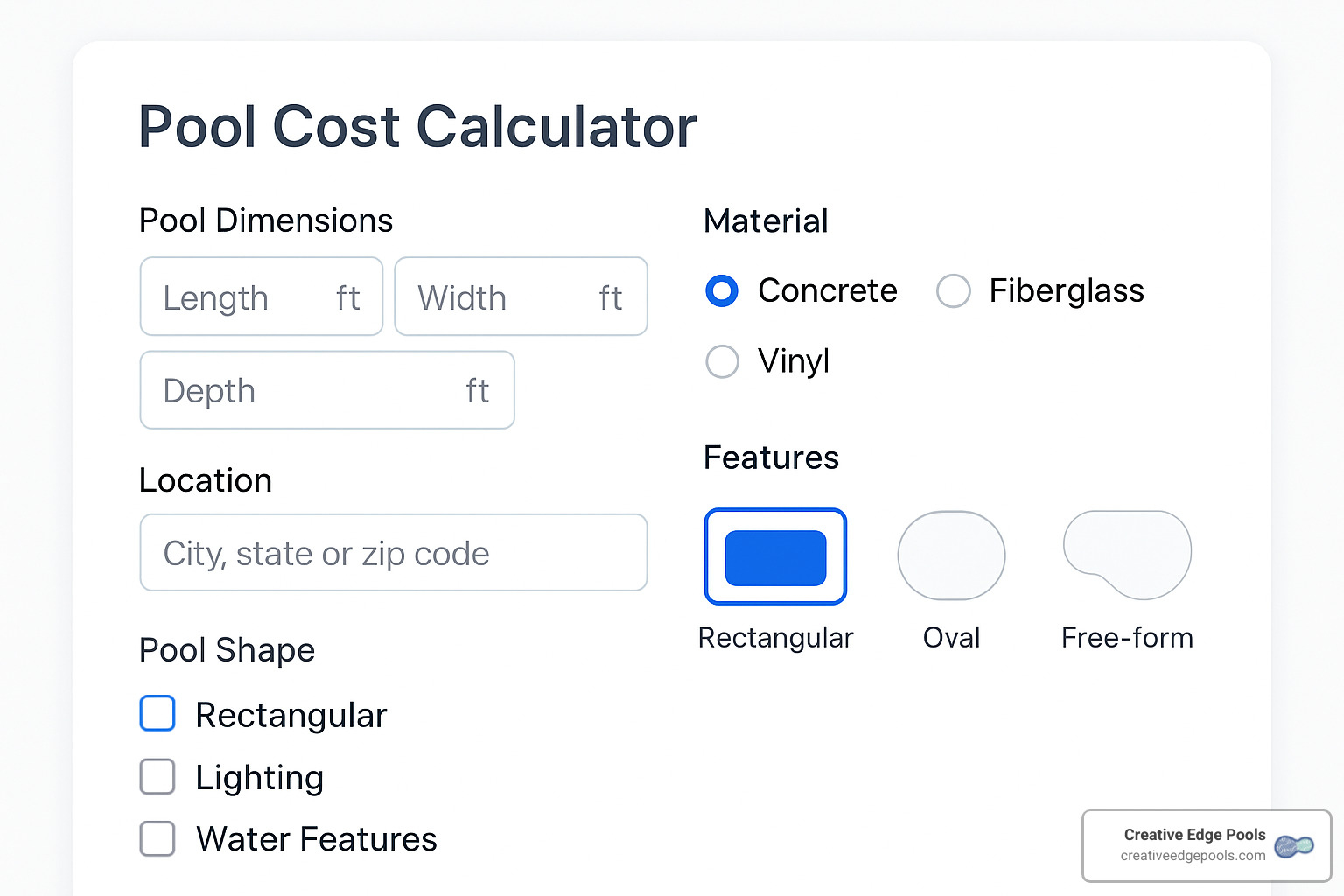
Input Fields Your Pool Cost Calculator Needs
A truly helpful pool cost calculator needs several key input fields to give you a meaningful estimate. When you’re using one, look for these essential categories:
Your location matters tremendously—costs in Wellesley differ from those in Salem, NH. The pool type you select (concrete/gunite, fiberglass, vinyl liner, or above-ground) dramatically affects pricing. Size dimensions including length, width, and depth determine the volume of materials needed. The shape you choose impacts labor complexity—rectangles are simpler than free-forms. Any features like spa integration or waterfalls add to the bottom line. Don’t forget deck area specifications and accessories like diving boards or automatic covers.
The more detailed information you can provide, the closer your estimate will be to reality. Some advanced calculators even consider yard slope and soil conditions, though these are best evaluated in person.
Limitations of an Online Pool Cost Calculator
While pool cost calculators are fantastic starting points, they do have limitations you should keep in mind before getting your heart set on a specific budget.
No calculator can truly assess your property’s unique characteristics. I’ve seen everything from unexpected ledge rock requiring specialized equipment to high water tables necessitating additional drainage systems. These site-specific factors can significantly impact your final cost.
Local building codes vary dramatically too. In some Massachusetts towns, permit fees might be $300, while others charge $1,500 for essentially the same pool. Fencing requirements, electrical specifications, and setback rules all differ by municipality.
Material availability fluctuates seasonally and regionally. During the post-pandemic building boom, we saw some material costs jump 30% in just months—something no calculator could predict.
Finally, different pool builders have different overhead costs, specialty areas, and yes, profit margins. At Creative Edge Pools, we focus on custom gunite installations with comprehensive landscaping integration, which creates a different pricing structure than companies offering prefabricated options.
I always recommend using online calculators like the methodology explained at poolcalculator.net as a starting point for budgeting, but following up with an on-site assessment for a detailed, binding quote. That in-person evaluation is where the real clarity comes—and where your backyard dreams start taking concrete shape.
Breaking Down Pool Costs: Factors & Average Price Ranges
Let’s explore what really affects your pool’s price tag. Understanding these elements helps you make smarter choices about where to splurge and where to save on your backyard oasis.
Pool Types and Materials
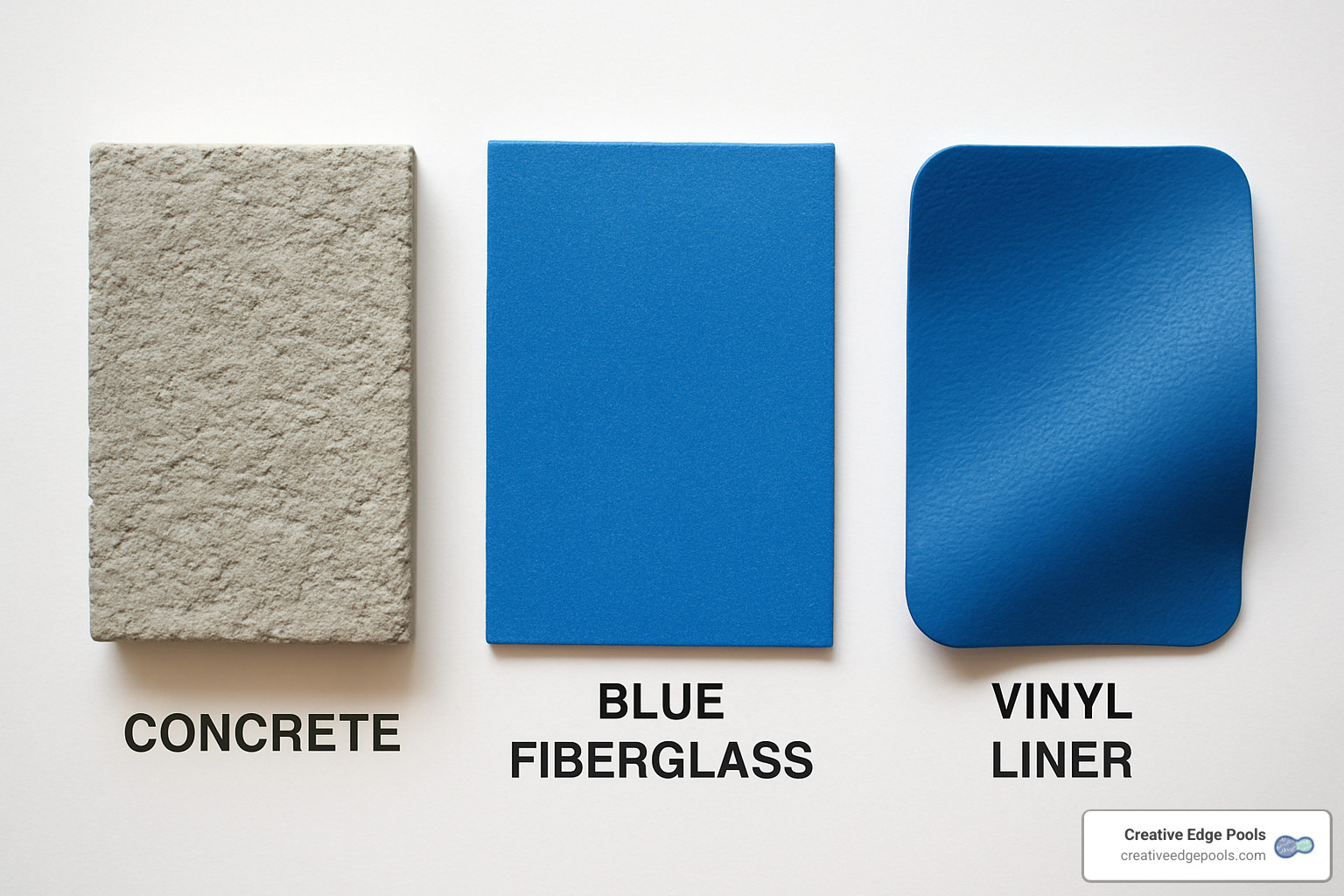
The foundation of your pool budget starts with the type of pool you choose:
Concrete/Gunite Pools ($35,000-$120,000) are like the luxury vehicles of pools. They’re built to last generations (50-100 years!) and can be shaped into virtually any design your heart desires. The tradeoff? They take longer to install—sometimes 2-4 months—and require more maintenance over their lifetime. But for many of our Massachusetts clients, the durability and customization options make gunite worth every penny.
Fiberglass Pools ($20,000-$85,000) offer a happy medium for many families. These pre-made shells arrive ready to drop into your excavated yard, cutting installation time down to just 3-5 weeks. The smooth surface naturally resists algae, meaning less scrubbing for you! The main limitation? Shipping constraints typically cap the width at about 16 feet, so those dreaming of Olympic dimensions might need to look elsewhere.
Vinyl Liner Pools ($20,000-$40,000) represent the budget-friendly option for inground pools. They’re gentle on bare feet and wallet-friendly upfront. Just remember that the liner will need replacement every 7-15 years at a cost of $2,500-$3,500, so factor that into your long-term budget.
Above-Ground Pools ($1,500-$8,200) provide the most affordable entry point to pool ownership. They’re semi-permanent, can be installed quickly, and might be perfect if you’re not ready for the commitment of an inground option. Their typical lifespan of 7-15 years is considerably shorter than inground alternatives.
Size and Shape Considerations
When it comes to pools, size definitely matters for your budget. It’s simple math: more pool equals more materials, more labor, and more ongoing maintenance costs.
Small pools (around 10′ × 20′) typically run $10,000-$25,000 and are perfect for tight spaces or those primarily interested in cooling off rather than swimming laps.
Medium pools (approximately 15′ × 30′) hit the sweet spot for many families at $20,000-$50,000, offering enough space for games and light exercise.
Large pools (20′ × 40′ or bigger) command $40,000-$100,000+ and provide ample room for serious swimmers or large gatherings.
The shape of your pool dramatically impacts costs too. Those clean, rectangular designs are the most economical to build. Add some curves with a kidney or oval shape, and you’re looking at a 15-20% premium. Go fully custom with a free-form design that mimics a natural lagoon, and your budget might increase by 25-50% over the basic rectangle.
Regional Pricing Variations
Your address significantly impacts your pool budget. Here in the Northeast (including our service area of Massachusetts and New Hampshire), expect to invest $52,000-$79,000 for a standard inground pool. That’s notably higher than the Southeast ($34,000-$55,000) or Midwest ($40,000-$65,000).
Why the difference? At Creative Edge Pools, we’ve found that New England’s shorter construction season, higher labor costs, and stricter permitting requirements typically push our regional pricing about 15-20% higher than national averages. It’s not just about labor costs—everything from material delivery to seasonal considerations plays a role.
Feature Upgrades and Their Cost Impact
The base pool is just the beginning. The features you add can transform your swimming experience while also affecting your pool cost calculator results:
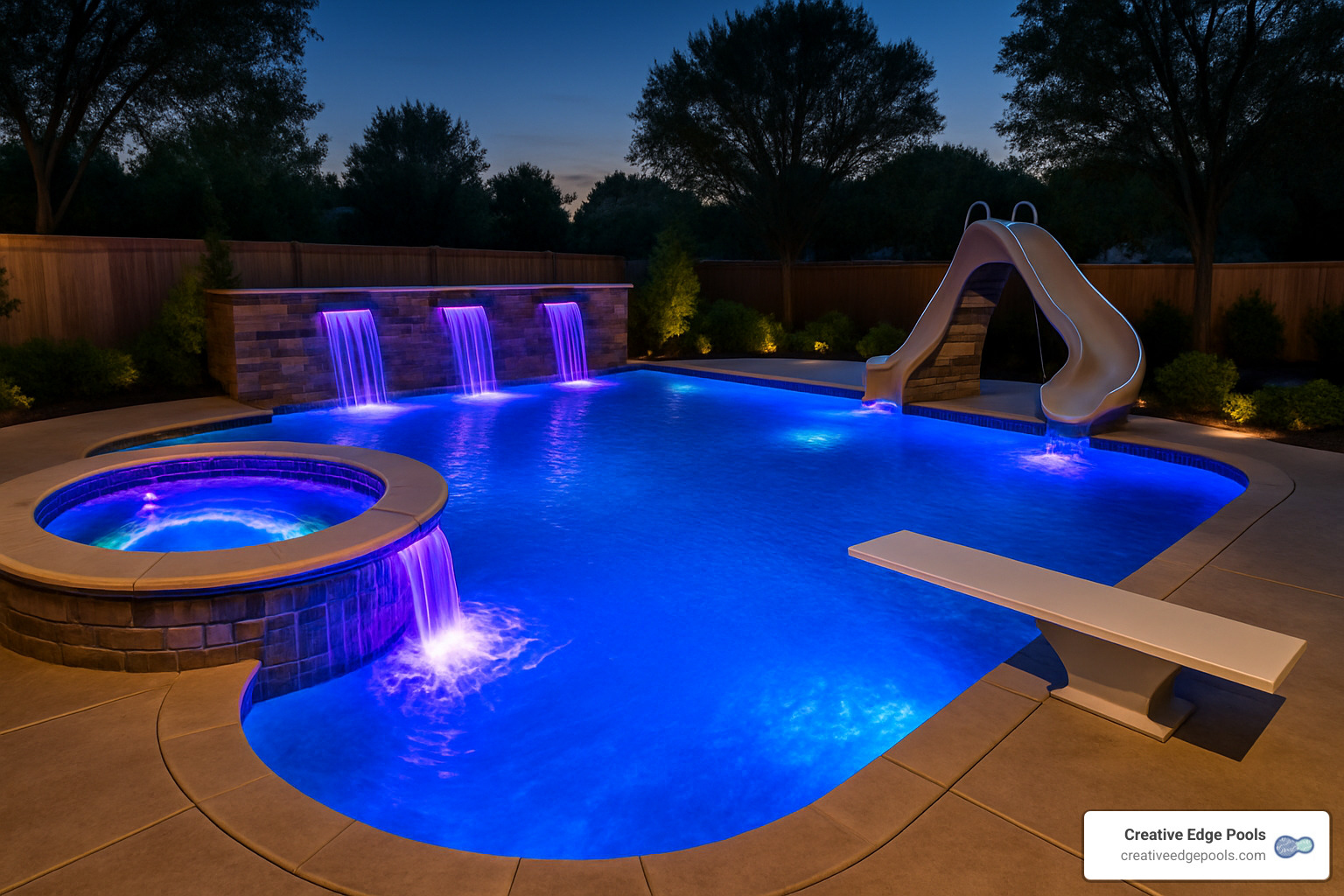
A built-in spa addition ($5,000-$15,000) extends your swimming season and adds therapeutic benefits. Water features like waterfalls and fountains ($1,000-$10,000) create that resort ambiance many homeowners crave. Lighting systems ($700-$1,800) dramatically extend your pool’s usable hours and create magical evening atmospheres.
For families with children, diving boards ($300-$1,000) and slides ($1,000-$5,000) add endless entertainment value. Practical additions like automatic covers ($5,000-$15,000) improve safety and reduce maintenance, while salt water systems ($1,000-$2,500) offer gentler water treatment with less chemical handling.
Looking to extend your swimming season? Consider solar heaters ($3,000-$7,500) or heat pumps ($2,500-$5,500) to keep the water comfortable deeper into fall.
Understanding how these various factors affect your pool budget helps you make informed decisions about your investment. If you’re wondering how gunite pools specifically compare to other options, our detailed guide on Comparing the Cost of Gunite Inground Pools to Other Types of Pools provides even more insight.
Looking Beyond Installation: Hidden Fees, Ownership & Financing
When you’re dreaming about that perfect backyard oasis, the pool cost calculator gives you a starting point—but there’s much more to consider. Think of your pool as a relationship, not just a purchase. You’ll be living with it (and paying for it) for years to come!
Permit and Preparation Costs
Before the first shovel hits the ground, your wallet will already be open. Those pre-construction expenses often surprise first-time pool owners:
Building permits aren’t optional—they’re a necessity that can range from $100 in rural areas to a whopping $1,800 in stricter municipalities. Your property might need site preparation work ($500-$5,000) if it’s not perfectly flat and clear. And don’t forget about those pesky utility lines that might need rerouting ($500-$5,000).
Some properties require soil testing ($500-$1,500) to ensure your pool won’t sink or shift over time. And depending on complexity, you might need professional architectural or engineering plans ($1,500-$3,000) before approval.
Essential Additions
Your pool cost calculator might show the pool itself, but what about everything around it? These aren’t luxury add-ons—they’re necessities:
That beautiful pool needs something to surround it. Decking costs between $3,000 for basic concrete to $20,000 for premium natural stone. Safety fencing isn’t just smart—it’s legally required in most places ($1,500-$10,000 depending on material and length).
Pool covers range from simple tarps ($75) to automated systems that open with the push of a button ($22,000). Landscaping around your new pool ($2,000-$10,000) isn’t just for looks—it helps with drainage and creates your backyard atmosphere. And don’t forget equipment upgrades like better pumps or filters ($1,000-$5,000) that can save money long-term.

Long-Term Ownership Costs
The relationship with your pool continues long after construction. Here’s where many homeowners get surprised:
Your pool needs regular care—either from you or a service ($80-$150 monthly). Those seasonal rituals of opening and closing in New England climate zones run $300-$550 each time. Your utility bills will increase by $50-$300 monthly for electricity to run pumps and water to replace evaporation.
Pool chemistry isn’t just for high school classes—you’ll spend $25-$100 monthly on chemicals to keep the water safe and clear. Equipment doesn’t last forever, with replacements needed every 5-10 years ($500-$2,000). Your insurance company will notice your new pool too, typically raising premiums $200-$400 annually. And don’t forget property tax increases that vary by location but almost always follow improvements.
At Creative Edge Pools, we believe in transparency. That’s why we provide every client with a 10-year ownership cost projection alongside installation estimates. No surprises—just clear expectations for your investment.
Financing Your Pool Project
Unless you’ve been saving for years, you’ll likely need financing for your pool. Here are your main options:
Home Equity Loans or HELOCs make the most financial sense for most homeowners. With current rates between 5-8% and terms up to 30 years, they offer affordable payments. Plus, the interest may be tax-deductible (talk to your accountant). The catch? You need equity in your home to borrow against.
Personal Loans offer flexibility when you don’t have equity or don’t want to use your home as collateral. You can borrow between $1,000-$100,000 with terms from 2-7 years. The trade-off is higher interest rates (7-36% depending on your credit).
Pool Company Financing offers convenience—we handle everything in one place. Sometimes these programs offer promotional rates, but compare carefully as they might have higher fees than bank options.
Credit Cards work for smaller projects or when you need immediate funds. You might even earn rewards or cashback. But with interest rates between 15-24%, they’re best for amounts you can pay off quickly.
DIY vs. Professional Installation: Cost Comparison
I’ve seen the DIY pool kits at big box stores. They’re tempting! But here’s the reality check:
Professional installation isn’t just about convenience—it’s about longevity. DIY pools typically last 3-5 years, while professionally installed pools serve families for 25+ years. That’s because professionals understand proper structural, electrical, and plumbing requirements that aren’t obvious to homeowners.
Manufacturer warranties often become void with DIY installation. And when inspectors come around (they will), professional installers ensure everything meets building codes—saving you from expensive corrections later.
For most New England homeowners, professional installation delivers far greater value over time than any initial DIY savings. After all, a pool is meant to be a source of joy, not a source of ongoing headaches.
Want to learn more about budgeting for your dream pool? Check out our detailed guide on How to Budget for a Gunite Inground Pool: Tips and Strategies or see how different pool types compare at Pool Running Cost Calculator | Poolonomics.
Frequently Asked Questions about Pool Cost Calculators
How accurate is a pool cost calculator compared to a contractor quote?
Ever used an online mortgage calculator only to find the bank had a very different number in mind? Pool cost calculators work similarly – they’re helpful starting points, but rarely tell the complete story.
Most calculators provide estimates within about 10-30% of what you’ll see on a final quote. This gap exists because calculators can’t physically inspect your property to spot those budget-changing surprises hiding beneath the surface.
Here at Creative Edge Pools, our calculator typically lands within 15% of our final quotes for straightforward installations. But when we encounter challenging soil conditions or unique property layouts, that margin can widen. It’s why we always follow up with an in-person visit – those “small details” like bedrock or limited access can significantly impact your bottom line.
Think of a pool cost calculator as the first chapter in your pool planning story, not the complete book. The most accurate estimate will always come from a qualified contractor who’s walked your property, tested your soil, and understood your vision face-to-face.
Can a pool cost calculator estimate upgrades or remodels?
Trying to use a standard pool cost calculator for a renovation project is like trying to use a cake recipe to make cookies – the ingredients might be similar, but the process is entirely different!
Most calculators are designed with new installations in mind, not the complexities of working with existing structures. Renovation costs depend heavily on your pool’s current condition, the extent of changes you’re dreaming about, and how easily contractors can access existing systems.
While some specialized calculators exist for common renovation projects, they still can’t account for the surprises that often appear when opening up an existing pool system. Typical renovation costs include:
- Resurfacing a worn pool interior ($3,500-$15,000)
- Replacing an aging vinyl liner ($2,500-$3,500)
- Upgrading outdated equipment ($1,500-$5,000)
- Renovating cracked or dated decking ($3,000-$12,000)
For the most reliable remodeling estimate, nothing beats having a renovation specialist examine your existing pool in person. They’ll spot potential complications that no calculator could possibly predict and provide solutions custom to your specific situation.
Are there ways to lower the number a pool cost calculator gives me?
That initial calculator estimate gave you sticker shock? Don’t worry – there are plenty of ways to bring that number down without sacrificing your pool dreams!
Size adjustments make one of the biggest differences. Even reducing your planned pool by just a few feet can save thousands in materials and labor. Many families find they don’t actually need that Olympic-sized pool they first imagined.
Material choices dramatically impact your bottom line too. While concrete/gunite pools offer incredible durability and customization, vinyl liner pools can give you that refreshing backyard oasis at a significantly lower initial investment.
Timing your project strategically can also lead to savings. Many pool builders (including us at Creative Edge Pools) offer better rates during the off-season when crews aren’t as busy. Planning your installation for fall or winter could mean better pricing and more contractor attention.
Simplified designs keep costs manageable – those flowing, free-form shapes look amazing but require more labor and materials than a classic rectangle. You might also consider phasing in luxury features over time rather than installing everything at once.
The best savings strategy is working with a transparent, experienced builder who can guide you through these decisions. We love helping homeowners find that perfect balance between budget and backyard dreams, identifying where to save and where to splurge for maximum enjoyment of your new pool.
Conclusion
A pool cost calculator is an invaluable starting point for your swimming pool project. Think of it as your financial compass, helping you steer budget expectations before sitting down with contractors. While these digital tools can’t match the precision of someone standing in your backyard with a tape measure, they offer crucial guidance that helps you:
Understanding the numbers early means no jaw-dropping surprises later. You’ll be able to determine if that sparkling oasis fits within your financial reality, compare different pool types (is gunite worth the extra investment for your family?), and see exactly how much that waterfall feature might add to your bottom line.
The calculator also helps you think beyond just installation day. Those ongoing maintenance costs? The potential increase in your utility bills? A good calculator helps you see the complete financial picture of pool ownership.
But here’s the truth – the most accurate estimates will always come from professionals who can walk your property, understand the quirks of your landscape, know local building codes inside and out, and factor in regional pricing that’s specific to Massachusetts and New Hampshire.
At Creative Edge Pools, we’ve spent decades designing and installing custom gunite swimming pools throughout Eastern Massachusetts and Southern New Hampshire. We don’t just build pools – we transform backyards. Our comprehensive approach includes the entire outdoor living space, from expert landscaping to detailed masonry work, creating environments that perfectly match both your vision and your budget.
Ready to move beyond digital estimates to a personalized quote for your dream pool? We’d love to visit your property, discuss your specific needs, and provide a detailed estimate custom to your unique project. Those numbers on the calculator are just the beginning – let’s talk about making them reality.
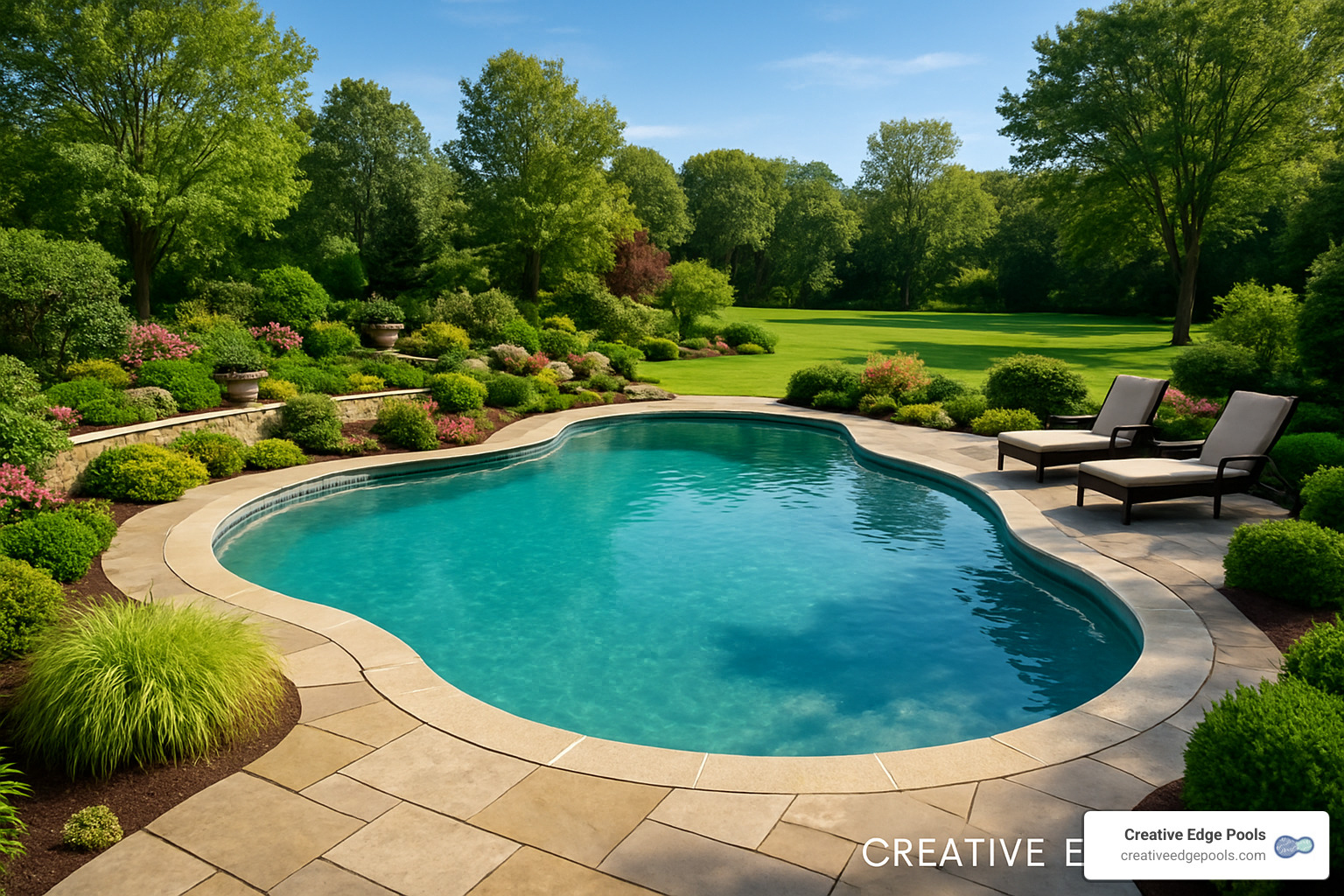
Whether you’re just dipping your toes into the idea of pool ownership or you’re ready to dive in headfirst, understanding the full financial picture is essential. A pool cost calculator is your first step toward turning backyard dreams into a refreshing reality—without budget surprises making you feel like you’re in over your head.
For more specific information about pool costs in our region, be sure to check out our guide to Massachusetts inground pool costs.
