
Landscaping Rocks Around Pool: 7 Powerful Benefits in 2025
Why Landscaping Rocks Around Pool Transform Your Backyard
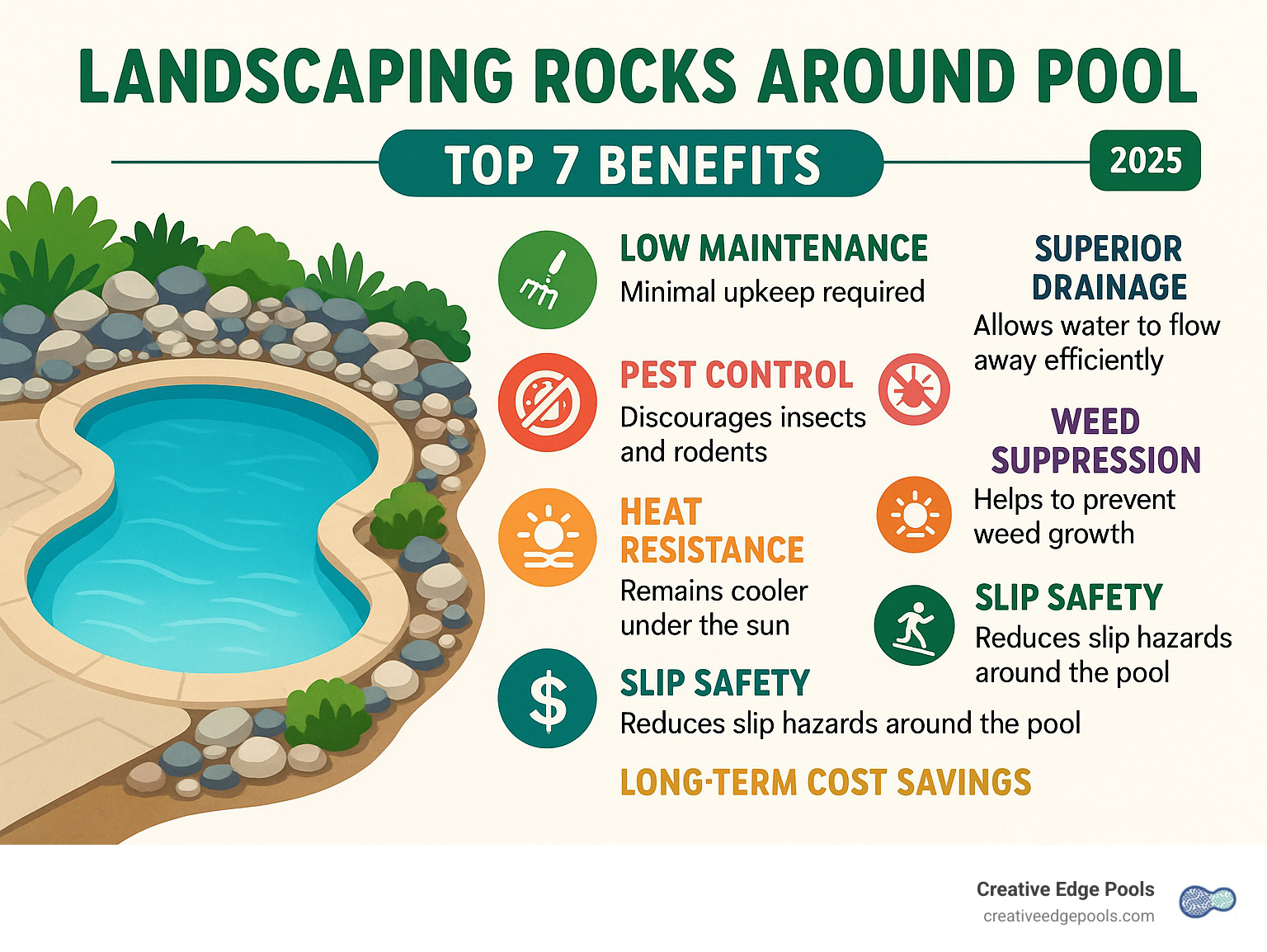
Landscaping rocks around pool areas offer homeowners a perfect blend of natural beauty and practical benefits that traditional mulch simply can’t match. When you choose the right rocks for your pool landscape, you’re investing in a solution that requires minimal maintenance while providing superior drainage, pest control, and weed suppression.
Best rocks for pool landscaping include:
- Flagstone – Natural non-slip surface, ideal for pathways and pool decks
- Travertine – Stays cool underfoot, neat appearance, naturally slip-resistant
- River rocks – Smooth finish, excellent drainage, spa-like aesthetic
- Pea gravel – Budget-friendly, versatile, comfortable walking surface
- Bluestone – Durable, cool to touch, sophisticated look
- Granite pavers – Heat-resistant, long-lasting, available in multiple colors
Unlike mulch that decomposes and requires annual replacement, rocks can reduce your pool area maintenance costs by up to 50% while decreasing weed growth by up to 90%. They also prevent the messy wash-in problems that occur when mulch gets blown or washed into your pool water.
From creating dry creek beds for better drainage to installing stone fire pits for evening entertainment, the design possibilities are endless. The key is selecting materials that complement your pool style while providing the safety and functionality your family needs.
I’m David Brabant, owner of Creative Edge Pools, and I’ve spent over thirty years helping homeowners in Massachusetts and New Hampshire create stunning outdoor environments that blend beauty with practicality.
Landscaping Rocks Around Pool terms to learn:
- backyard landscape ideas with fake rocks around inground pool
- ideas white rock landscaping around pool
Rock vs. Mulch: Pros, Cons & Cost
After three decades of helping homeowners create beautiful pool areas, I’ve learned that the rock versus mulch debate usually comes down to one simple question: Do you want to spend your weekends maintaining your landscaping, or enjoying your pool?
Landscaping rocks around pool areas consistently outperform mulch in almost every way that matters.
Drainage is where rocks really shine. I can’t tell you how many times I’ve been called to fix soggy, muddy areas around pools where mulch has turned into a waterlogged mess. Rocks allow water to flow naturally through to the soil below, preventing puddles that become mosquito breeding grounds and slip hazards.
The pest control benefits are something homeowners don’t always think about until it’s too late. Mulch is basically a five-star hotel for mice, insects, and other critters. Rocks create an environment that pests simply don’t find appealing.
Weed suppression with rocks is dramatically better than mulch – we’re talking about 90% fewer weeds when rocks are properly installed with landscape fabric.
Now, rocks aren’t perfect. Heat retention can be a real issue with darker stones in direct sunlight. That’s why we often recommend lighter stones like travertine or limestone for areas where people walk barefoot.
Erosion control is another area where rocks excel. Heavy rains can wash mulch right into your pool, but properly sized rocks stay put and actually help prevent soil erosion on slopes.
| Feature | Rocks | Mulch |
|---|---|---|
| Lifespan | 10+ years | 1-2 years |
| Maintenance | Minimal | High |
| Weed Control | Excellent | Poor |
| Pest Deterrent | Yes | No |
| Drainage | Superior | Poor |
| Initial Cost | Higher | Lower |
| Heat Retention | Variable | Low |
| Pool Water Impact | None | Can blow/wash in |
More info about Low Maintenance Pool Landscape Design
Quick Cost Snapshot
Here’s the math that surprises most homeowners: material lifespan makes rocks the clear winner financially. Quality landscaping rocks can last 10-15 years with minimal care, while mulch needs complete replacement every year or two.
The replacement frequency costs add up fast. If you’re spending $300 annually on fresh mulch, that’s $3,000 over ten years – often more than a quality rock installation costs upfront.
DIY versus professional labor depends on your project size and comfort level. Small areas can definitely be DIY projects, but larger installations benefit from professional base preparation and drainage planning.
Safety & Maintenance Impacts
Slip resistance is critical around wet pool areas. Smooth river rocks can become skating rinks when wet, while textured stones like flagstone provide much better traction.
Chemical splash from pool maintenance doesn’t faze rocks, but it can damage or discolor mulch. Rocks simply rinse clean, while mulch might need replacement after chemical contact.
Mulch wash-in during storms is one of the most common problems I see. It clogs filters, creates water quality issues, and means more work for you. Switching from mulch to rocks solves this problem permanently.
Best Rocks for Poolside Use
After three decades of pool installations in Massachusetts and New Hampshire, I’ve learned that choosing the right landscaping rocks around pool areas can make or break your outdoor oasis. Not all rocks handle pool chemicals, freeze-thaw cycles, and wet conditions the same way.
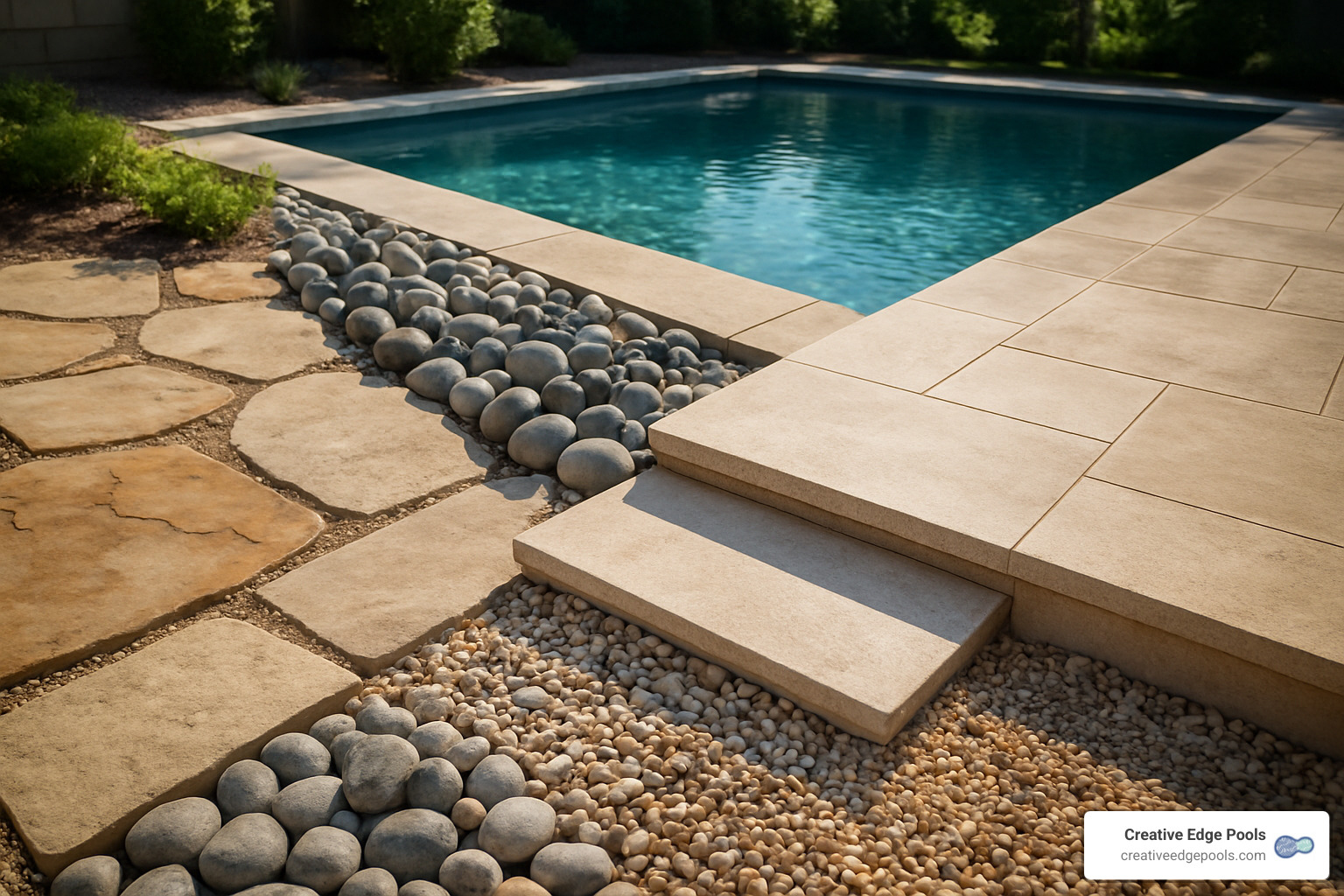
Flagstone is my go-to recommendation for pool decks and walkways. Its naturally textured surface provides excellent grip even when soaking wet. The flat profile feels comfortable under bare feet, and its earthy tones complement everything from rustic stone pools to sleek modern designs.
Travertine is what I call the “luxury choice that thinks ahead.” This remarkable stone actually stays cool to the touch even in blazing summer sun. Its porous structure absorbs water, which then evaporates and cools the surface – making it up to 20% cooler than concrete or darker stones.
River rocks create that spa-like feeling many of our clients crave. Their smooth, naturally polished surfaces and subtle color variations add visual interest while providing superior drainage.
Pea gravel offers incredible value without sacrificing performance. These small, rounded stones provide excellent drainage and feel comfortable underfoot, while their size prevents them from ending up in your pool skimmers.
Bluestone delivers the durability and sophisticated appearance that never goes out of style. This dense stone shrugs off pool chemicals and maintains its rich color over time.
Granite brings exceptional heat resistance and comes in more colors than you can imagine. Its incredible durability makes it perfect for high-traffic areas, though darker varieties can get hot in direct sunlight.
Limestone offers natural beauty with excellent slip resistance and heat management. It stays pleasantly cool underfoot and provides that classic, timeless look that complements traditional pool designs beautifully.
Latest research on low-maintenance landscaping
Choosing Landscaping Rocks Around Pool for Climate
Our New England climate throws everything at pool landscapes – from scorching summer heat to brutal freeze-thaw cycles. Freeze-thaw resistance is absolutely critical here. Porous stones like some limestones can crack when water freezes inside them, while dense stones like granite and bluestone handle our winters like champs.
Salt-water pools require stones that can handle salt exposure without deteriorating. Granite and basalt perform exceptionally well in saltwater environments, maintaining their appearance and structural integrity over time.
UV exposure affects different stones in surprising ways. Darker stones tend to fade more noticeably over years of sun exposure, while lighter stones like travertine maintain their color beautifully.
Sealing porous stone is essential in our climate. Travertine and certain limestones should be sealed before winter to prevent water infiltration and freeze damage.
More info about Pool Landscaping Ideas
Sizing & Comfort Considerations
Barefoot comfort is non-negotiable around pools. Smooth river rocks and rounded pea gravel feel great under bare feet, while angular crushed stone can be uncomfortable or even painful. I always have clients walk on sample stones barefoot before making final selections.
Skimmer-safe sizing prevents expensive headaches down the road. Any stone smaller than your skimmer opening can end up in your pool’s plumbing system, potentially causing costly damage. I recommend avoiding pea gravel smaller than 3/8 inch near skimmer areas.
Children and pets require special attention when selecting stones. Sharp-edged stones can cause cuts during play, while very small stones present choking hazards for young children. Rounded stones in appropriate sizes are always the safest choice for family pools.
Design, Calculation & Installation Guide
Planning your landscaping rocks around pool project properly from the start saves time, money, and frustration down the road. After installing hundreds of pool landscapes over the years, I’ve learned that the difference between a professional-looking result and a disappointing one often comes down to proper preparation and accurate calculations.
Area measurement begins with understanding your pool’s shape and the border width you want. For round pools, you’ll measure the diameter and add your desired rock border width on all sides.
Depth planning is where many DIY projects go wrong. We recommend 3-4 inches of depth for most rock installations. This provides excellent weed suppression while ensuring rocks don’t shift or create thin spots over time.
The cubic-yard formula might seem intimidating, but it’s straightforward once you break it down. Since landscape suppliers sell rocks by the cubic yard, you need to convert your square footage measurements into volume.
Edging materials create the clean, finished look that separates professional installations from amateur attempts. Steel edging works well for curved areas, while concrete or stone borders provide a more permanent solution.
Landscape fabric underneath your rocks is non-negotiable for long-term success. We use commercial-grade fabric that resists UV damage and tearing. The fabric blocks weeds while allowing water drainage.
Drainage base preparation depends on your soil conditions. Clay soils often need a sand or gravel base to prevent water pooling under the rocks.
More info about Hardscape Installation Services
Calculating Amount of Rock Needed
The πr² method takes the guesswork out of ordering materials. Here’s how we calculate rock needs for circular pool areas:
- Measure your pool diameter and add twice your border width
- Calculate the total area using π × radius²
- Subtract your pool’s area from the total
- Multiply by your depth (converted to feet)
- Divide by 27 to convert cubic feet to cubic yards
Let’s work through a real example. For a 24-foot pool with a 3-foot border, your total diameter becomes 30 feet. The total area is π × 15² = 707 square feet. Your pool area is π × 12² = 452 square feet. Subtracting gives you 255 square feet of rock coverage needed.
With a 4-inch depth (0.33 feet), you need 255 × 0.33 = 84 cubic feet. Converting to cubic yards means dividing by 27, giving you 3.1 cubic yards. We always recommend rounding up slightly to account for settling and ensure complete coverage.
Border subtraction is the step most homeowners forget, leading to ordering way too much material. Always subtract your pool’s area from your total calculated area.
Maintaining Landscaping Rocks Around Pool
Maintaining landscaping rocks around pool areas is refreshingly simple compared to the constant attention mulch requires. A few basic maintenance tasks keep your rock landscape looking pristine year after year.
Leaf-blower cleaning becomes your best friend for rock maintenance. A quick weekly blow-off removes leaves, grass clippings, and other debris before they can decompose and create soil for weeds.
Weed pre-emergent application in early spring stops weed seeds from germinating. Choose products specifically designed for use near water features, and apply carefully to avoid any drift into your pool.
Algae scrub occasionally becomes necessary in shaded, consistently moist areas where algae can grow on rock surfaces. A stiff brush with mild detergent solution quickly resolves any algae issues.
Periodic raking helps maintain even rock distribution and removes any debris that’s worked its way between the stones. This is especially important after storms or heavy leaf fall.
The beauty of rock landscaping is that these simple maintenance tasks take a fraction of the time and effort required for mulch beds.
More info about How to Landscape Around an Inground Pool
Creative Ideas & Safety Upgrades with Rocks
When it comes to landscaping rocks around pool areas, the possibilities extend far beyond simple borders. After decades of creating outdoor spaces, I’ve found that rocks can transform ordinary backyards into extraordinary retreats that feel like natural sanctuaries.
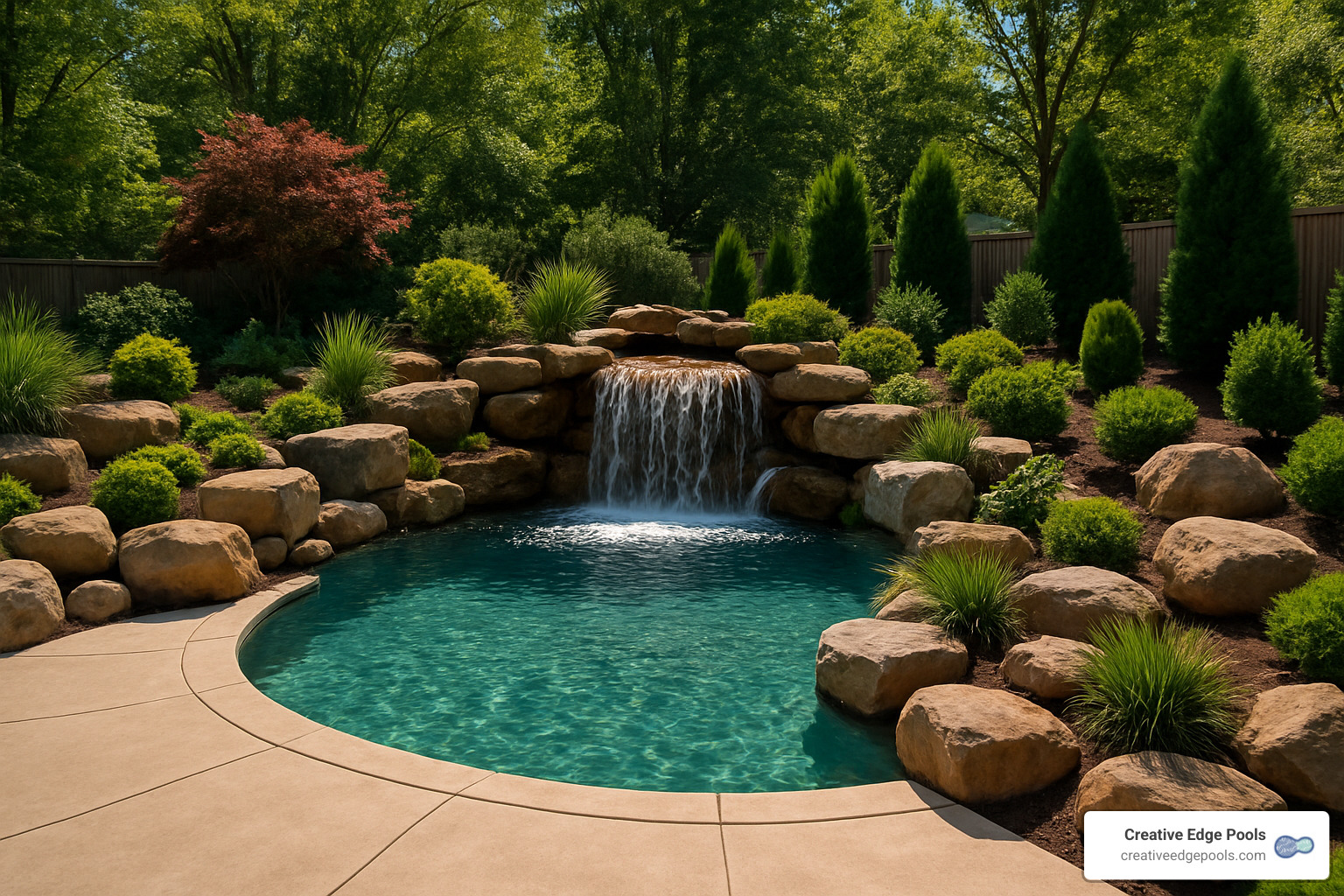
One of my favorite features is the dry creek bed using river rocks. These installations solve practical problems while creating stunning visual appeal. Rainwater flows naturally through these rock channels, carrying runoff away from pool areas instead of creating muddy puddles.
Rock waterfalls never fail to impress visitors. There’s something magical about the sound of water cascading over boulders and river rocks – it drowns out traffic noise and creates that peaceful atmosphere every pool owner craves.
Stone fire pits positioned near pools create perfect evening gathering spots. Picture your family roasting marshmallows by the fire while the pool lights dance on the water. These installations use the same materials as your pool landscaping, creating a cohesive design.
Boulder seating strategically placed around your pool serves double duty. Large boulders provide natural seating for poolside conversations while adding structural interest to your landscape.
Stepping-stone pathways using flagstone or large river rocks solve the wet-foot problem beautifully. These pathways connect your pool to other outdoor living spaces while providing sure footing on wet surfaces.
Low-voltage lighting integrated with rock features extends your pool enjoyment well into the evening. Lights placed under waterfalls or around boulders create dramatic nighttime effects.
The xeriscape approach combines rocks with drought-tolerant plants for ultimate low-maintenance beauty. Succulents, ornamental grasses, and native plants thrive in rocky environments while requiring minimal water.
An often-overlooked benefit is the pest barrier that rocks create. Unlike mulch that attracts rodents and insects, rocks create an inhospitable environment for pests that might otherwise nest near your pool equipment.
More info about Backyard Pool Landscaping
Natural Oasis Concepts
Creating a natural oasis starts with understanding how plants and rocks work together. Creeping phlox planted in rock crevices creates soft, colorful accents that contrast beautifully with hard stone surfaces. This low-maintenance groundcover fills gaps naturally while providing seasonal bursts of color.
Ornamental grasses paired with boulders and rock beds add texture and gentle movement to your landscape. Grasses like switchgrass work particularly well in our New England climate, swaying in the breeze and creating that peaceful, natural feeling.
For homeowners wanting that resort feel, tropical foliage can create stunning effects even in our northern climate. Large-leafed plants like hostas or elephant ears provide dramatic contrast to rock surfaces.
The Mediterranean courtyard vibe using drought-tolerant plants and mixed stone sizes brings Old World charm to any backyard. This approach works particularly well with travertine and limestone installations.
Kid & Pet Safety Tips
Safety always comes first in family pool areas. Non-slip coping is essential for pools where children play. Textured stones like flagstone or sealed travertine provide excellent traction even when wet, significantly reducing slip and fall risks.
When planning rock landscaping for families with young children, avoid pea gravel near toddlers who might put small stones in their mouths. Larger river rocks or flagstone are much safer choices for areas where young children play.
Secure edging prevents rocks from migrating into pool areas or creating trip hazards. Proper edging installation is crucial for long-term safety and appearance.
Routine stone checks help identify loose or shifted stones before they become hazards. A quick monthly inspection while you’re doing other pool maintenance can prevent accidents.
More info about Hardscaping and Landscaping
Frequently Asked Questions about Landscaping Rocks Around Pool
What is the best rock for landscaping around a pool?
This is the question we hear most often, and honestly, there’s no single “best” rock – it depends on your specific needs, budget, and personal style. However, after installing hundreds of pools across Massachusetts and New Hampshire, we’ve seen which stones consistently deliver the best results for families.
Flagstone vs. travertine represents the most common choice homeowners face. Flagstone gives you that natural, rustic beauty with excellent slip resistance – perfect if you love the organic look of natural stone. Travertine, on the other hand, offers luxury appeal and stays remarkably cool underfoot, even on scorching summer days. It’s neat and sophisticated, making it ideal for contemporary pool designs.
Barefoot comfort should be a top priority if you have kids or simply enjoy walking around your pool without shoes. Smooth river rocks and rounded pea gravel feel wonderful under bare feet, while angular crushed stone can be uncomfortable and even painful. We always tell our clients to literally test-walk on stone samples before making their final decision – it might feel silly, but your feet will thank you later.
Climate fit is absolutely crucial here in New England. Our freeze-thaw cycles can destroy the wrong stone choice in just a few seasons. Granite and bluestone handle our winters beautifully, while porous stones like some limestones need sealing to prevent cracking when water freezes inside them.
Is it better to mulch or rock around a pool?
After three decades in the business, we’ve learned that landscaping rocks around pool areas almost always outperform mulch in the long run. While mulch might seem cheaper upfront, the ongoing costs and maintenance headaches usually make rocks the smarter investment.
Maintenance savings with rocks are substantial – we’re talking about up to 50% reduction in annual maintenance costs compared to mulch. Think about it: rocks don’t decompose, don’t need yearly replacement, and don’t blow into your pool water during storms. Mulch, on the other hand, needs constant refreshing and creates a mess every time the wind picks up.
Weed control is dramatically better with rocks. When properly installed with landscape fabric underneath, rocks can reduce weed growth by up to 90%. This means you’ll spend your summer weekends enjoying your pool instead of pulling weeds around it. Plus, you won’t need to apply herbicides near your pool water nearly as often.
Pool water cleanliness is another huge advantage. Mulch decomposes and washes into pools, clogging filters and throwing off your water chemistry. We’ve helped countless homeowners switch from mulch to rocks specifically because they were tired of fishing wood chips out of their skimmers after every rainstorm.
How do I prevent rocks from ending up in the pool?
This is a smart question that shows you’re thinking ahead. Nobody wants to be fishing pebbles out of their pool or dealing with damaged equipment because small rocks got into the plumbing system.
Proper edging is your first line of defense and the most effective prevention method. Steel edging, concrete borders, or natural stone borders create clean barriers that keep rocks where they belong. Good edging also makes your landscape look professionally finished – it’s a win-win investment.
Stone size selection requires some strategy. Here’s the simple rule: avoid any rocks smaller than your skimmer opening diameter. If you love the look of pea gravel, stick with sizes at least 3/8 inch in diameter, and keep it away from the immediate pool edge where it might get kicked around.
Strategic placement is all about thinking like water and foot traffic move around your pool. Use larger stones near pool edges and save smaller decorative rocks for border areas where they won’t migrate toward the water. We’ve found that homeowners who plan their stone placement thoughtfully rarely have problems with rocks ending up where they shouldn’t be.
Conclusion
Changing your poolscape with carefully chosen landscaping rocks around pool areas creates a beautiful outdoor retreat that works as hard as it looks good. The combination of natural beauty and practical benefits – from superior drainage and pest control to dramatically reduced maintenance – makes rock landscaping one of the smartest investments you can make for your backyard.
After thirty years of helping Massachusetts and New Hampshire families create their dream outdoor spaces, I’ve seen how the right rock choices can completely change how a family uses and enjoys their pool area. Instead of spending weekends pulling weeds and replacing mulch, you’ll have more time for what really matters – making memories with family and friends.
The aesthetic and functional gains work together beautifully. Your pool area looks more sophisticated and resort-like, while the rocks quietly handle drainage, discourage pests, and suppress weeds without any effort on your part. It’s the kind of upgrade that makes you wonder why you waited so long to make the change.
At Creative Edge Pools, we believe your backyard should be a place where you can truly relax and enjoy yourself. That’s why we offer single-vendor convenience for both pool installation and complete landscaping services. When one team handles everything from the initial design to the final stone placement, you get better coordination, consistent quality, and a finished project that works together seamlessly.
Whether you choose the cool elegance of travertine, the natural charm of flagstone, or the spa-like beauty of river rocks, the right selection depends on your family’s specific needs and your local climate. Working with experienced professionals who understand how different materials perform in New England weather ensures you’ll love your choice for decades to come.
Your pool should be the heart of family enjoyment in your backyard – a place where kids learn to swim, where friends gather for barbecues, and where you can unwind after long days. With proper rock landscaping, you’ll spend less time maintaining your outdoor space and more time enjoying the beautiful, functional retreat you’ve created.
More info about Landscaping Rocks Around Pool
