Inground Pool Contractors in My Area: Top 5 Amazing Picks
When considering a major home improvement project like installing a pool, finding inground pool contractors in my area who deliver reliable and exceptional service is crucial. A swimming pool is a significant investment, ranging from $25,000 to $100,000 depending on size and type, but it’s more than just a construction project—it’s an improvement to your lifestyle and home value. Here are some quick tips to get you started:
- Seek personalized service: Look for contractors who treat you with care and understand your unique vision.
- Stay informed: Prioritize companies that keep you updated throughout the process.
- Trust experience: Opt for a contractor with a proven track record in your area.
My name is David Brabant, owner of Creative Edge Pools. With over 30 years in the pool industry, I’ve worn many hats, from excavation to site development. My experience ensures that I understand the nuances of finding top inground pool contractors in my area.
Inground pool contractors in my area basics:
– inground pool contractor near me
– inground swimming pool contractors near me
– pool installation
Understanding Inground Pool Costs
When planning to install an inground pool, understanding the costs involved is essential. The price can range significantly, from $25,000 to $100,000, depending on several factors like size, materials, and location.
Average Cost and Price Range
- Concrete pools: These are typically the most expensive, with costs ranging from $50,000 to $120,000. They offer durability and customization but require resurfacing every 10 to 15 years.
- Fiberglass pools: These cost between $20,000 and $60,000. They are less expensive and have lower maintenance costs, but their shape is less customizable.
- Vinyl liner pools: The most budget-friendly option, costing $20,000 to $50,000. However, they might require liner replacement every 6 to 12 years.
Key Components of Pool Costs
- Excavation: This is one of the first steps and can significantly affect costs. It involves land clearing and digging, which may vary based on soil conditions and accessibility.
- Plumbing and Electrical: Installing the necessary plumbing and electrical systems is crucial for a functioning pool. These systems include water filtration, lighting, and heating setups.
- Concrete and Grading: For concrete pools, the construction of the pool shell is a major cost component. Grading ensures proper water flow and is necessary for all types of pools to prevent water accumulation around the pool area.
Additional Considerations
- Weather and Material Delays: These can impact the timeline and potentially increase costs. Delays in material availability or adverse weather conditions can extend the project duration.
- Maintenance Costs: Beyond installation, expect annual maintenance costs ranging from $2,500 to $5,000. This includes cleaning, chemical balancing, and potential repairs.
Understanding these components helps in budgeting effectively and ensures that you’re prepared for both the upfront and ongoing costs of pool ownership. This knowledge is crucial when discussing your project with inground pool contractors, as it allows for informed decision-making and better financial planning.
The Process of Installing an Inground Pool
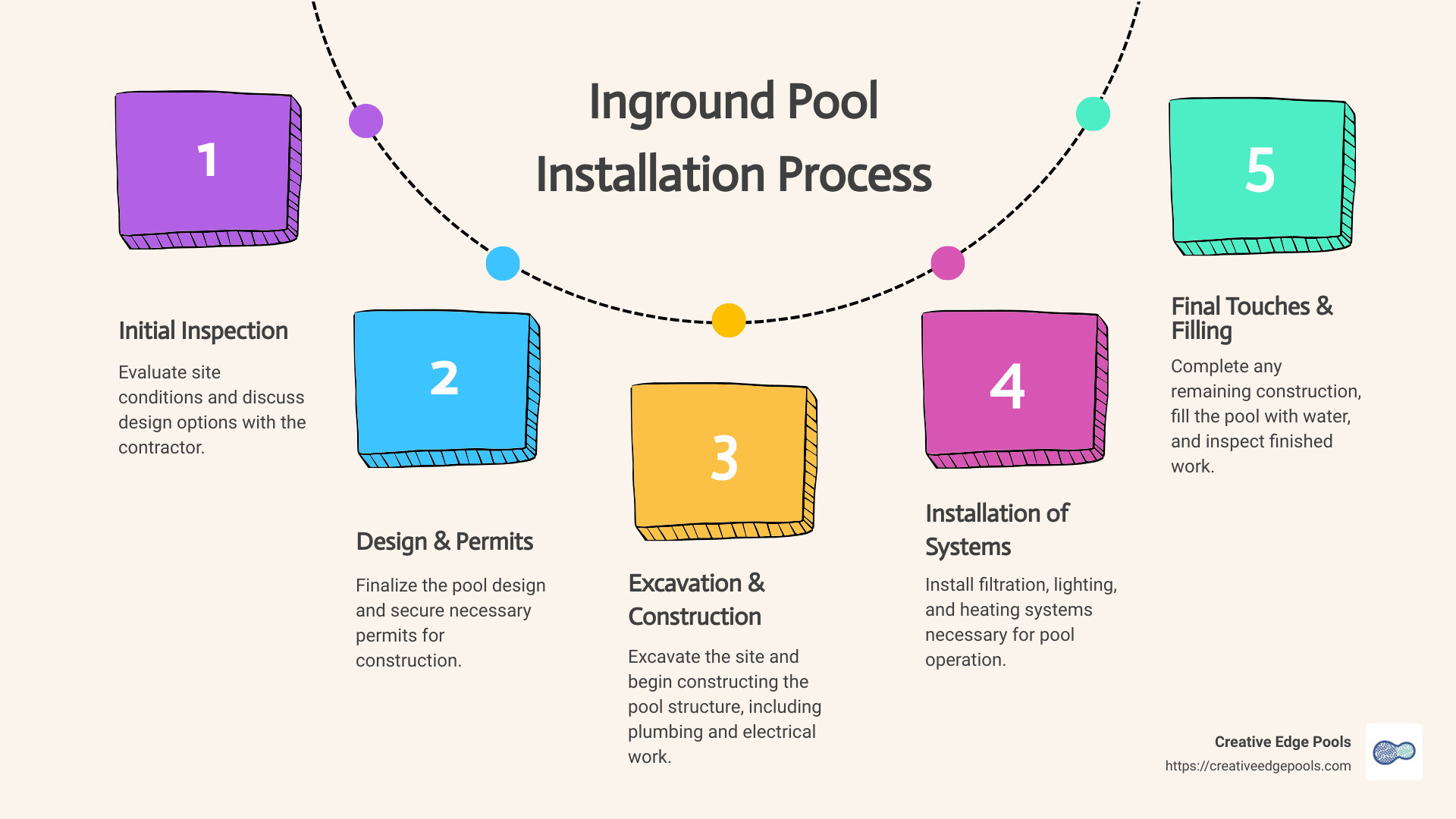
Installing an inground pool is a multi-step process that requires careful planning and execution. Here’s a breakdown of what to expect:
Initial Inspection and Design
Before breaking ground, an initial inspection of your property is essential. This helps identify any potential challenges, like soil conditions and accessibility, that might affect the project.
Next comes the design phase, where you work with professionals to create a pool that suits your needs and complements your outdoor space. This stage involves selecting the pool’s shape, size, and additional features, such as waterfalls or lighting.
Permits and Excavation
Obtaining the necessary permits is a crucial step. Professional contractors handle this process, ensuring compliance with local regulations and safety standards.
Once permits are secured, excavation begins. This involves clearing the land and digging the pool’s outline. The complexity of this step can vary depending on your property’s landscape and soil type.
Building the Pool Walls and Systems
After excavation, the construction of the pool walls begins. For concrete pools, this involves pouring and shaping the concrete to form a durable shell. Vinyl and fiberglass pools have different processes, but all require precise installation to ensure longevity.
Installing the filtration system is next. This system is vital for keeping your pool water clean and safe. It includes pumps, filters, and sometimes additional features like saltwater systems.
Lighting, Heating, and Water Filling
Lighting and heating systems improve the pool’s usability and ambiance. LED lights are a popular choice for energy efficiency, while heating systems extend the swimming season by maintaining comfortable water temperatures.
Finally, the pool is filled with water, marking the near-completion of the installation process. This step may seem straightforward, but it must be done carefully to check the systems and ensure everything functions correctly.
Timeline and Potential Delays
The timeline for installing an inground pool typically ranges from two to eight weeks, depending on the pool type and complexity. However, several factors can cause delays:
- Weather conditions: Rain or extreme weather can halt progress.
- Material delays: Unavailability of specific materials can push back timelines.
- Scheduling conflicts: Coordinating various contractors and inspections might lead to unexpected pauses.
Understanding these steps and potential challenges helps manage expectations and ensures a smoother installation process. Collaborating with experienced inground pool contractors in my area not only streamlines these stages but also provides peace of mind through their expertise and professional handling of any arising issues.
Types of Inground Pools
Choosing the right type of inground pool is crucial for meeting your needs and budget. Let’s explore the three main types: vinyl liner pools, fiberglass pools, and concrete pools.
Vinyl Liner Pools
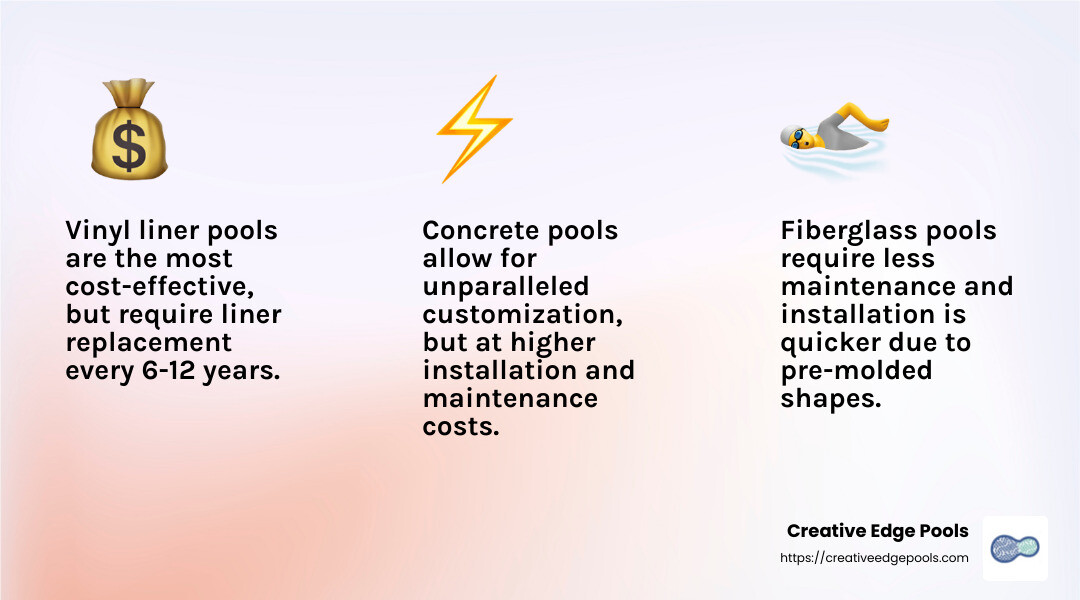
Vinyl liner pools are a popular choice for their affordability and flexibility in design. They typically cost less than concrete or fiberglass pools, making them a cost-effective option for many homeowners. The vinyl liner can be customized with various patterns and colors, allowing for a personalized look.
However, vinyl liners require more maintenance compared to other types. They need replacement every 6 to 12 years. Despite this, they offer a smooth surface that resists algae growth, simplifying cleaning and maintenance.
Fiberglass Pools
Fiberglass pools are known for their durability and low maintenance requirements. They come pre-molded in various shapes and sizes, which can limit customization but ensures a quicker installation process. Fiberglass is also smooth and non-porous, reducing algae buildup and making it easier to maintain.
The initial cost of fiberglass pools may be higher than vinyl liner pools, but their long lifespan and reduced maintenance costs can make them a more economical choice over time.
Concrete Pools
Concrete pools offer unparalleled customization. You can shape them into virtually any design, making them ideal for homeowners with a specific vision. They are the most durable option, lasting 50 years or more with proper care.
However, concrete pools are the most expensive to install and maintain. They require resurfacing every 10 to 15 years, a significant cost to consider. The rough surface can also harbor algae, necessitating regular cleaning and chemical treatments.
Cost-Effective Options and Considerations
When considering cost-effective options, think about both initial expenses and long-term maintenance. Vinyl liner pools have the lowest upfront costs, while fiberglass pools might save money in the long run due to lower maintenance.
Each pool type has its pros and cons, so weigh these carefully based on your budget, desired features, and maintenance willingness. Consulting with inground pool contractors in my area can provide personalized insights into what might work best for your situation and property.
Understanding the differences between these pool types helps you make an informed decision that balances cost, durability, and maintenance needs.
Benefits of Hiring Professional Inground Pool Contractors in My Area
When considering the installation of an inground pool, hiring professional inground pool contractors in my area is a decision that brings several advantages. Let’s explore why turning to experts is a smart move.
Professional Equipment and Expertise
Professional contractors bring specialized equipment and tools that ensure a high-quality installation. They have the expertise to handle complex tasks like excavation, plumbing, and electrical work, which are crucial for a successful pool build. This expertise minimizes errors and ensures that your pool is built to last.
Safety First
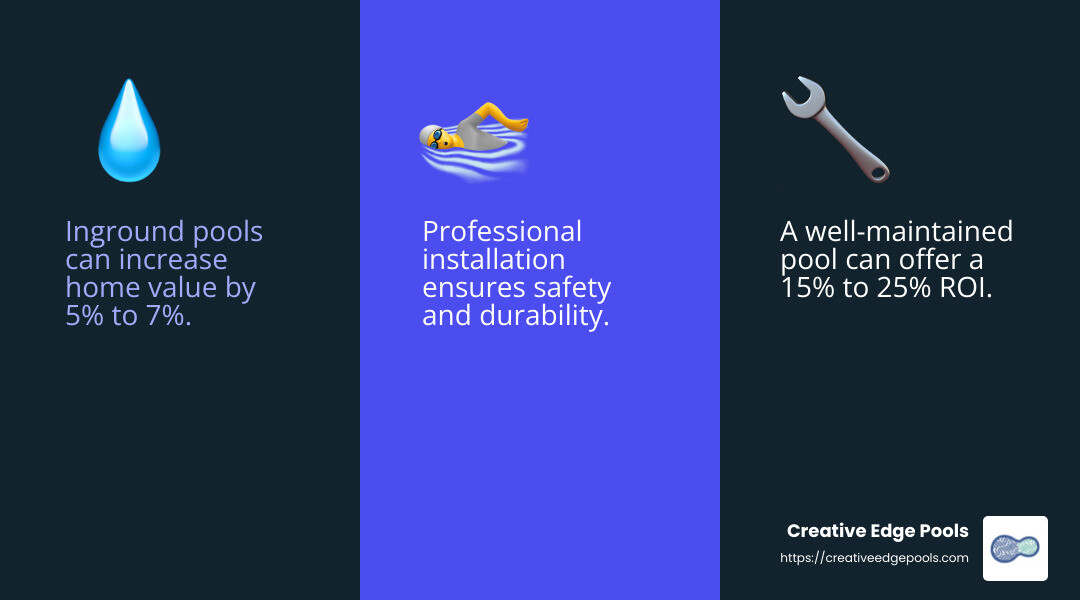
Safety is a top priority when installing a pool. Professionals know how to adhere to safety standards and regulations, protecting your family and property. They ensure that all electrical components are correctly installed and that the pool structure is sound, reducing the risk of accidents and future issues.
Return on Investment (ROI) and Increased Home Value
An inground pool can increase your home’s value by 5% to 7%, offering a significant return on investment. According to experts, a well-maintained pool can provide a 15% to 25% ROI when selling your home. Professional contractors ensure that the installation adds value, both aesthetically and financially.
Building Long-term Relationships
Hiring local contractors fosters long-term relationships. These professionals are part of your community and have a vested interest in maintaining their reputation. They often offer ongoing maintenance services, ensuring your pool remains in excellent condition for years to come.
Conclusion
Choosing professional contractors for your inground pool installation is an investment in quality, safety, and long-term satisfaction. Their expertise not only improves your property but also provides peace of mind, knowing your pool is built to the highest standards.
Top 5 Tips for Choosing the Best Inground Pool Contractors in My Area
Selecting the right inground pool contractors in my area can make all the difference in the success and enjoyment of your pool project. Here are five key tips to ensure you make the best choice:
1. Verify Licenses
Before hiring, always check that the contractor is properly licensed. A valid license means the contractor meets local regulations and standards. This not only ensures quality work but also protects you from potential legal issues. It’s a simple step that can save you a lot of headaches down the line.
2. Read Reviews
Take the time to read reviews from past clients. Look for consistent themes in the feedback, such as reliability, quality of work, and customer service. Reviews can provide insights into the contractor’s strengths and any potential weaknesses. Websites like HomeGuide and Google are good places to start.
3. Ask for References
Don’t hesitate to ask contractors for references from previous projects. Speaking directly to past clients can give you a clearer picture of what to expect. Ask them about their overall experience, the contractor’s communication, and how any issues were handled.
4. Compare Quotes
Get at least three detailed quotes from different contractors. This allows you to compare prices and services, ensuring you get the best value for your money. Be wary of quotes that are significantly lower than others, as this could indicate lower quality materials or hidden costs.
5. Check BBB Ratings
A contractor’s rating with the Better Business Bureau (BBB) can be a good indicator of their reliability and ethics. High ratings suggest a history of satisfied customers and prompt resolution of complaints. It’s a quick check that can provide peace of mind when making your decision.
By following these tips, you’ll be well-equipped to find the best inground pool contractors in my area, ensuring a smooth and successful pool installation process.
Frequently Asked Questions about Inground Pool Contractors in My Area
How much does it cost to install an inground pool?
The cost of installing an inground pool can vary widely, typically ranging from $25,000 to $100,000. The final price depends on factors like pool type, size, and location. For example, concrete pools are on the higher end, costing between $50,000 to $120,000, while vinyl liner pools are more affordable. Don’t forget to budget for additional features like lighting or heating, which can increase the overall cost.
What is the most expensive part of installing an inground pool?
One of the most costly aspects of pool installation is excavation. This process requires specialized equipment and skilled professionals to ensure the land is properly prepared. Other costly components include the installation of plumbing, electrical systems, and the pool shell itself. Hiring experienced inground pool contractors in my area can help manage these costs effectively, as they bring the expertise and equipment needed for a seamless installation.
Is installing an inground pool a good investment?
Investing in an inground pool can offer both financial and personal benefits. A pool can increase your home’s value by 5% to 8%, providing a potential return on investment if you decide to sell. Beyond financial gains, a pool offers long-term benefits such as improved quality of life, improved outdoor enjoyment, and a personal retreat right in your backyard. By choosing professional contractors, you ensure that your pool is not just a luxury but a valuable asset.
Conclusion
When it comes to changing your backyard into a personal oasis, Creative Edge Pools stands out as a trusted partner. As a family-owned business in Eastern Massachusetts and Southern New Hampshire, we specialize in designing and installing custom gunite swimming pools and spas.
Our unique approach is centered around comprehensive backyard development. This means we don’t just install pools; we create entire outdoor environments custom to your vision. Our services include not only pool installation but also landscaping and masonry, ensuring that every element of your outdoor space complements each other.
Working with us means you benefit from over a hundred years of combined experience. Whether it’s the intricate details of landscape masonry or the robust structure of a gunite pool, our team is equipped to handle it all. We pride ourselves on our personalized service, ensuring that your dream backyard becomes a reality.
Choosing Creative Edge Pools means choosing quality, reliability, and a commitment to excellence. We’re not just building pools; we’re crafting experiences. So, if you’re ready to transform your backyard into a paradise, contact us today to begin your journey with a team that truly cares.