
How to replace step lights in cement pool deck: Top 1 Fix
Why Proper Pool Deck Lighting Matters for Safety and Enjoyment
Learning how to replace step lights in a cement pool deck is essential for maintaining both safety and ambiance. Proper lighting is not just for looks; it’s a legal requirement (IRC code R314.7) that prevents accidents. When a light fails, it compromises the safety and enjoyment of your pool area after dark.
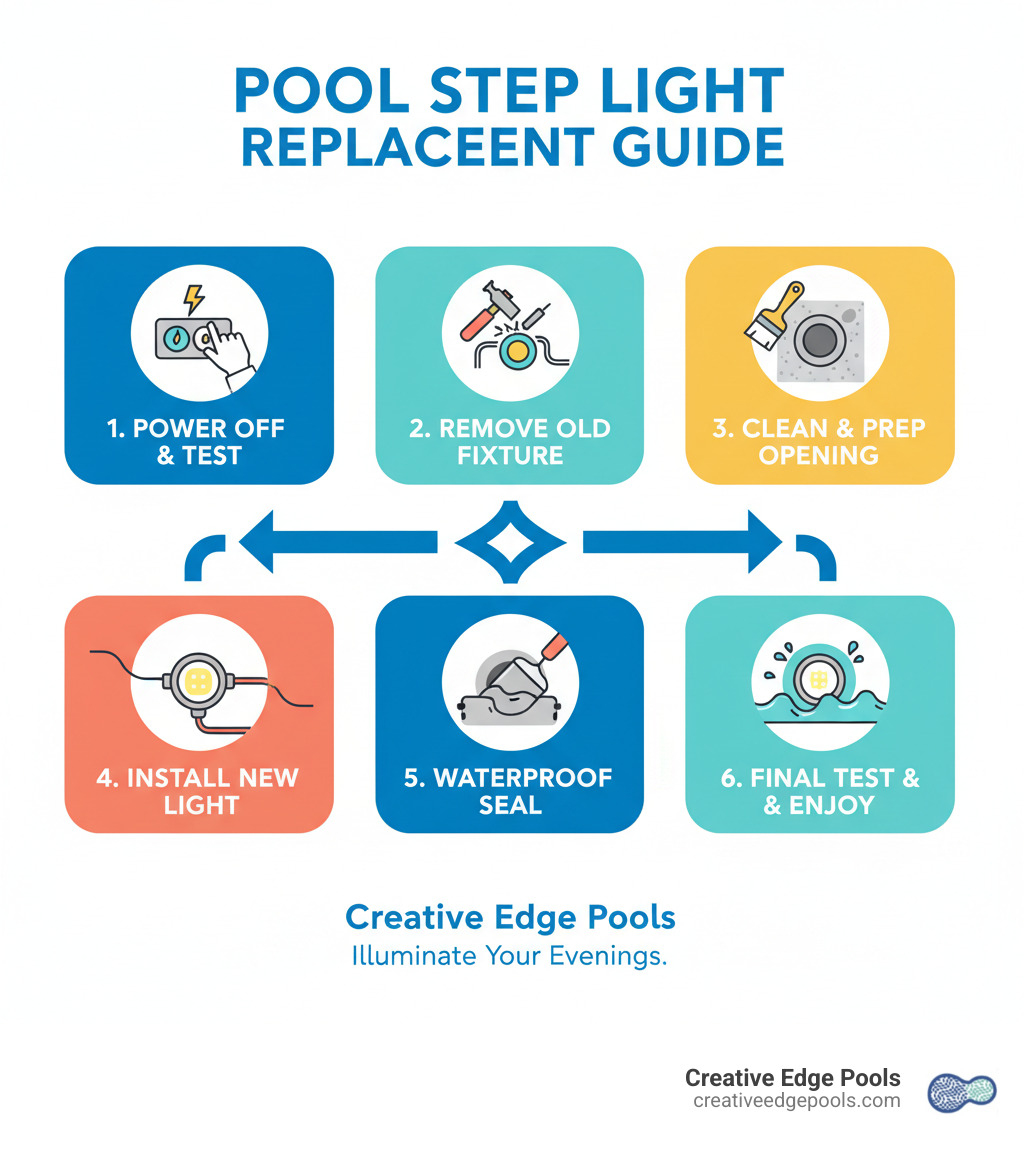
The process involves a few key stages:
Quick Steps:
- Turn off power at the circuit breaker and verify with a voltage tester.
- Remove the old light by carefully chipping away mortar and disconnecting wires.
- Clean the opening and prepare it for the new fixture.
- Install the new light using waterproof connections.
- Seal the fixture with non-shrink grout for a watertight finish.
- Test the system before finalizing the installation.
Replacing lights in concrete requires working with both electrical systems and masonry. While professional installation can cost $700-$1,500+ per light, a DIY approach is possible with the right guidance.
I’m David Brabant, owner of Creative Edge Pools. With over thirty years of experience in pool construction and renovation, I’ve handled countless step light replacements. I’m here to share the critical steps that ensure a successful project and help you avoid costly mistakes.
Before You Begin: Planning Your Step Light Replacement
Before starting, careful planning is key to a successful project. Replacing step lights in a cement deck is about creating a safe, beautiful space that lasts. This planning phase is your roadmap to avoiding costly mistakes.

Safety is the top priority. Working with electricity near water requires extreme caution. Always turn off power at the circuit breaker and use a voltage tester to confirm the circuit is dead before touching any wires. This step is non-negotiable.
Your new lights should also complement your deck’s design while providing safe illumination. Consider how the light will look and function in your overall backyard ambiance.
Choosing the Right Lights for Your Cement Deck
Modern lighting offers incredible options. LED lights are the standard for pool decks for several reasons:
- Energy Efficiency & Longevity: LEDs use a fraction of the power of older bulbs and can last 10-15 years. This makes them affordable to run and means you won’t be repeating this project soon. For a simple upgrade, you can often replace old E26 light bulbs with new E26 LED versions.
- Safety: Most modern systems are low-voltage (12-volt), which significantly reduces electrical risks in a wet environment.
- Waterproofing: Look for fixtures with an IP rating of IP67 or IP68. This ensures they can withstand direct water exposure and moisture without failing.
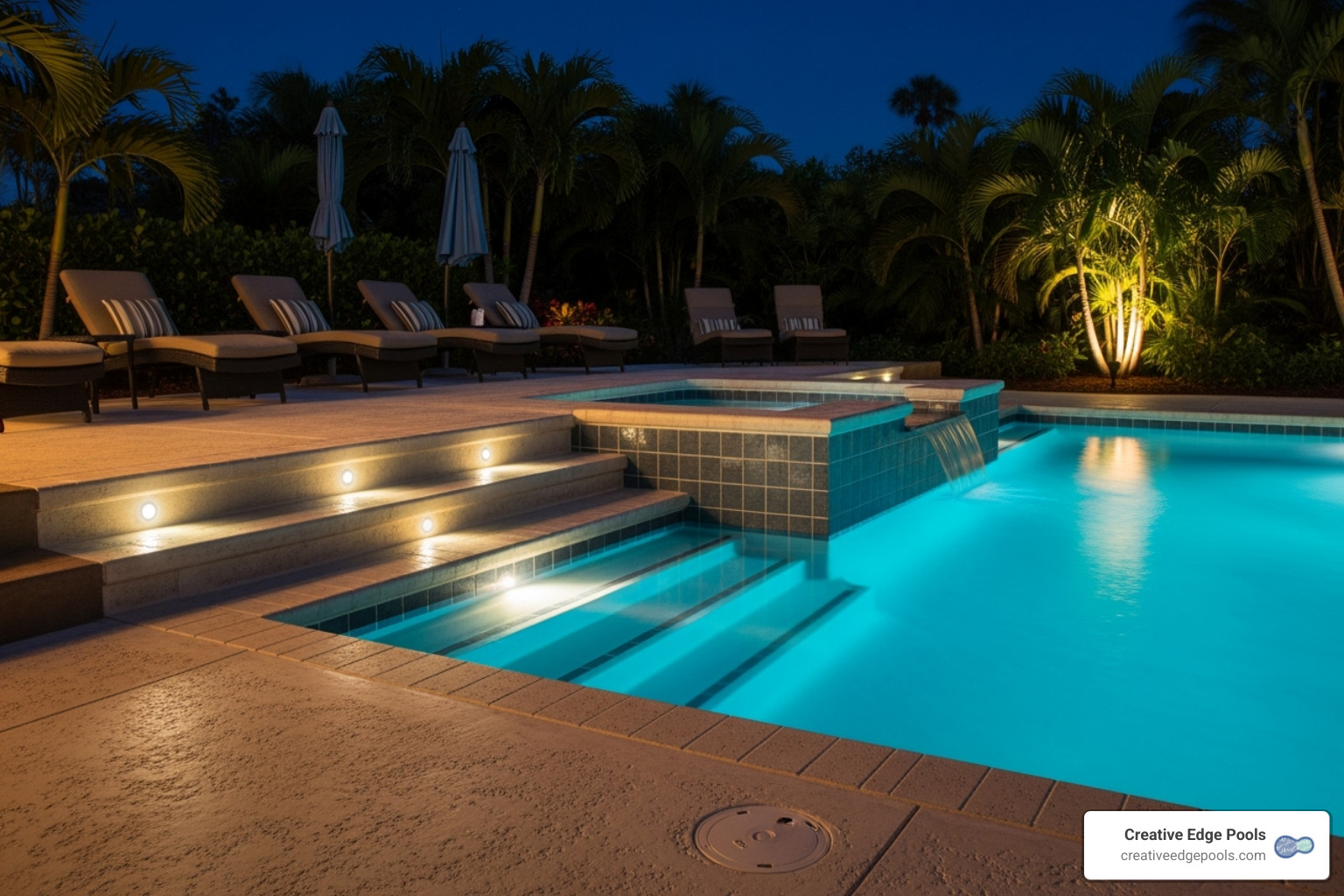
- Style & Features: Recessed lights sit flush with the concrete for a clean look, while undercap lights tuck under step overhangs to reduce glare. Many LED systems also offer color-changing options to shift from warm white to vibrant party colors.
Essential Tools and Safety Gear
Having the right tools makes the job smoother and safer. Here’s what you’ll need:
- Safety Gear: Safety glasses, work gloves, and rubber-soled shoes are non-negotiable.
- Electrical Tools: A voltage tester is your most important safety tool. You’ll also need waterproof wire nuts and outdoor-rated electrical tape for secure, dry connections.
- Concrete Tools: A hammer and chisel are needed for removing old mortar. For enlarging openings, a concrete drill with a diamond core bit is essential for precision.
- Sealing Materials: Non-shrink grout or hydraulic cement is crucial for creating a watertight seal around the new fixture.
- Power Supply: Ensure your transformer is plugged into a GFCI-protected outlet, as required by code for pool lighting systems.
How to Replace Step Lights in Cement Pool Deck: A Step-by-Step Guide
With your plan and tools ready, it’s time to tackle the replacement. This process requires precision and patience, but following these steps will guide you to a professional result.
Safely Removing the Existing Light Fixture
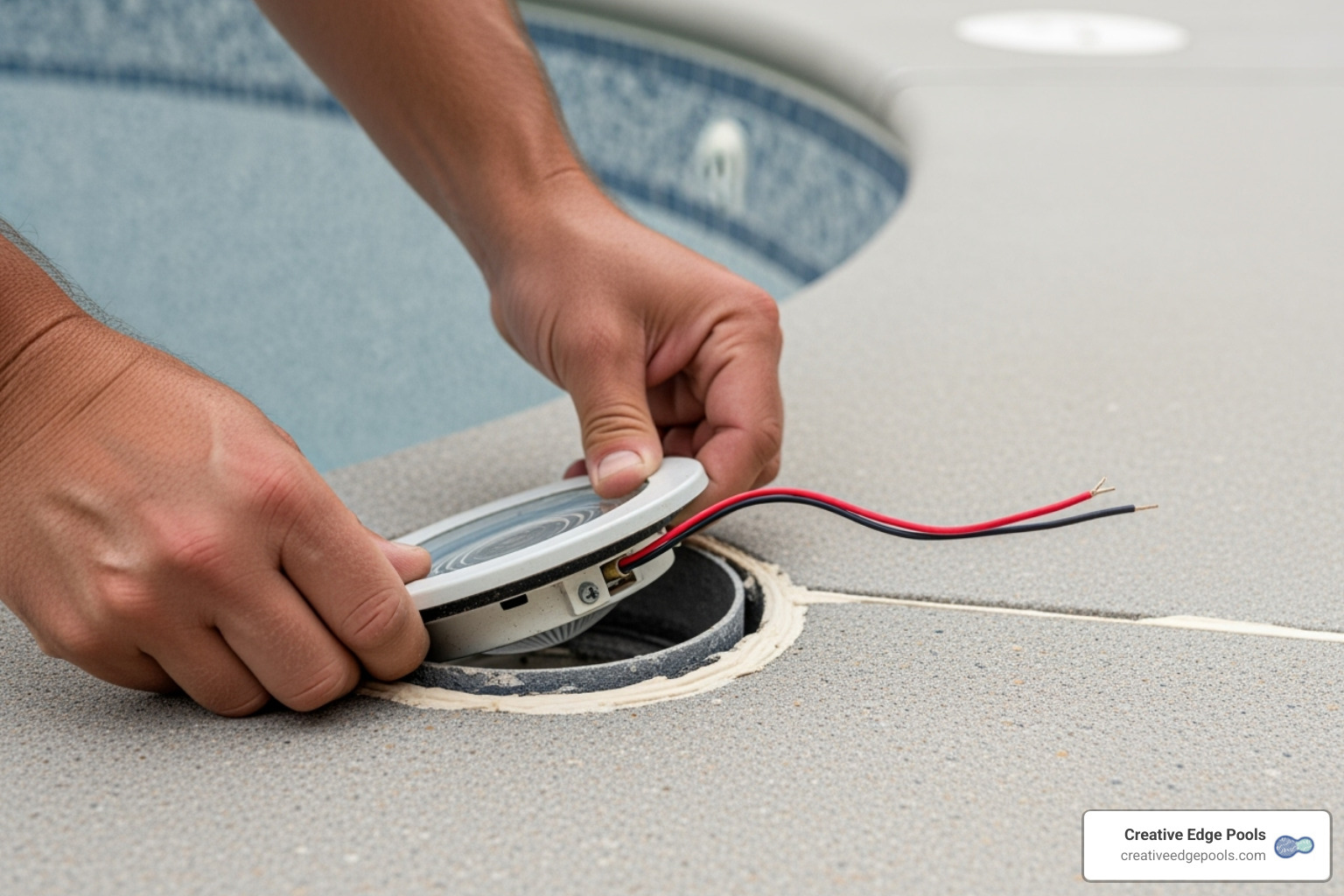
- Confirm Power is Off: Even though you’ve already turned off the breaker, use your voltage tester one last time at the fixture to be certain there is no power. For added safety, use a lock-out tag on the breaker.
- Remove the Faceplate: Carefully unscrew or pry off the decorative faceplate. Corrosion may make this difficult, so be patient.
- Chip Away Old Mortar: Using a hammer and chisel, slowly work around the fixture’s edges. Chip away small pieces to avoid damaging the surrounding concrete or the electrical conduit behind the light.
- Disconnect and Extract: Once the fixture is loose, gently pull it out to access the wiring. Untwist the wire nuts to disconnect the old light. After removing the fixture, inspect the conduit for any cracks or damage.
Installing the New Fixture: The Core of Replacing Step Lights in a Cement Pool Deck
- Clean and Prepare: Use a shop vacuum to thoroughly clean the opening of all dust and debris. A clean surface is essential for a good seal. Read the new fixture’s instructions.
- Wire the New Light: Feed the new fixture’s wires into the conduit, leaving a 6-inch loop of extra wire for future maintenance. Strip about half an inch of sheathing from the wires and make your connections, matching polarity (e.g., smooth wire to smooth, ribbed to ribbed).
- Create Waterproof Connections: Use waterproof wire nuts, twisting them on tightly. For extra protection, wrap each connection with outdoor-rated electrical tape. This secondary barrier is crucial in a wet environment.
- Test the Light: Before sealing, briefly turn the power on to test the light. If it works, turn the power back off immediately. If not, recheck your connections. For additional guidance on proper electrical connections, check out this helpful installation guide.
- Seal with Grout: Position the new fixture in the recess. Mix your non-shrink grout or hydraulic cement as directed. This material expands as it cures, creating a perfect watertight seal. Apply the grout evenly around the fixture, filling all gaps, and wipe away any excess with a damp sponge. Allow the grout to cure completely as specified by the manufacturer to ensure a lasting, waterproof bond.
Finalizing the Project and Professional Considerations
With your new lights installed, the final steps involve setting up the power supply and knowing when it might be better to call a professional.
Best Practices for Wiring and Transformer Setup
Proper power supply setup ensures reliability. Place your transformer near a GFCI-protected outlet, shielded from weather but accessible for maintenance. If it has a photocell, ensure it gets daylight.
To calculate wattage load, add up the wattage of all your lights (e.g., ten 5-watt lights = 50 watts). Choose a transformer with a higher capacity (e.g., 75W or 100W) to avoid strain and allow for future expansion.
When running low-voltage cable, start from the farthest light and work back to the transformer to manage wire length. Bury the outdoor-rated cable 6-12 inches deep to protect it from damage. Ensure all connections at the transformer terminals are secure to prevent flickering. Use built-in timers and photocells for automated, energy-saving operation.
Common Issues When You Replace Step Lights in a Cement Pool Deck
Even with good planning, you might encounter issues:
- Damaged Conduit: The pipe protecting the wires can crack during removal. Repairing conduit in concrete is a complex job that often requires professional tools.
- Unexpected Wiring: Older homes may have brittle wires or non-standard connections. If you find anything that seems unsafe, it’s best to consult an expert.
- Improper Sealing: A failed waterproof seal is the most critical challenge. Water intrusion can cause short circuits and fixture failure.
- Incompatible Fixtures: A new light might not fit the old opening, which can compromise the seal and appearance.
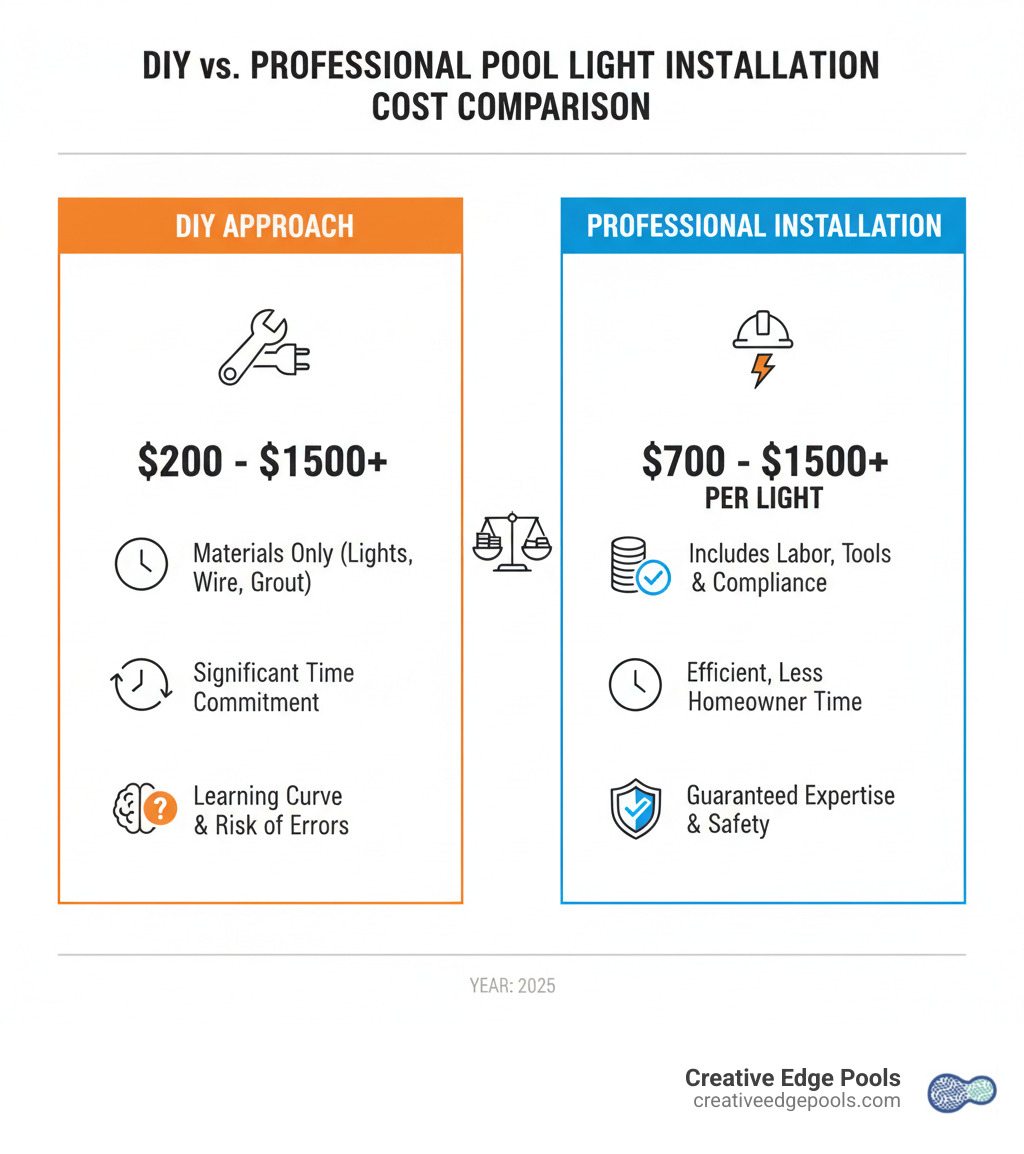
When to call a professional is a key consideration. A DIY project can save money on labor, but professional installation (typically $700 – $1,500+ per light) includes expertise, warranties, and specialized equipment. The time commitment and risk of electrical hazards or leaks are significantly higher with a DIY approach.
At Creative Edge Pools, we’ve seen how small mistakes can lead to costly repairs. Our team has the specialized tools and 30 years of experience to handle these projects safely and efficiently. Whether you do it yourself or hire a pro, the goal is safe, beautiful lighting for your pool.
If you’re considering a larger renovation, explore our gunite pool renovation services or contact us for a consultation. For more pool tips and inspiration, follow us on Facebook.
