
Understanding Your Pool Removal Investment
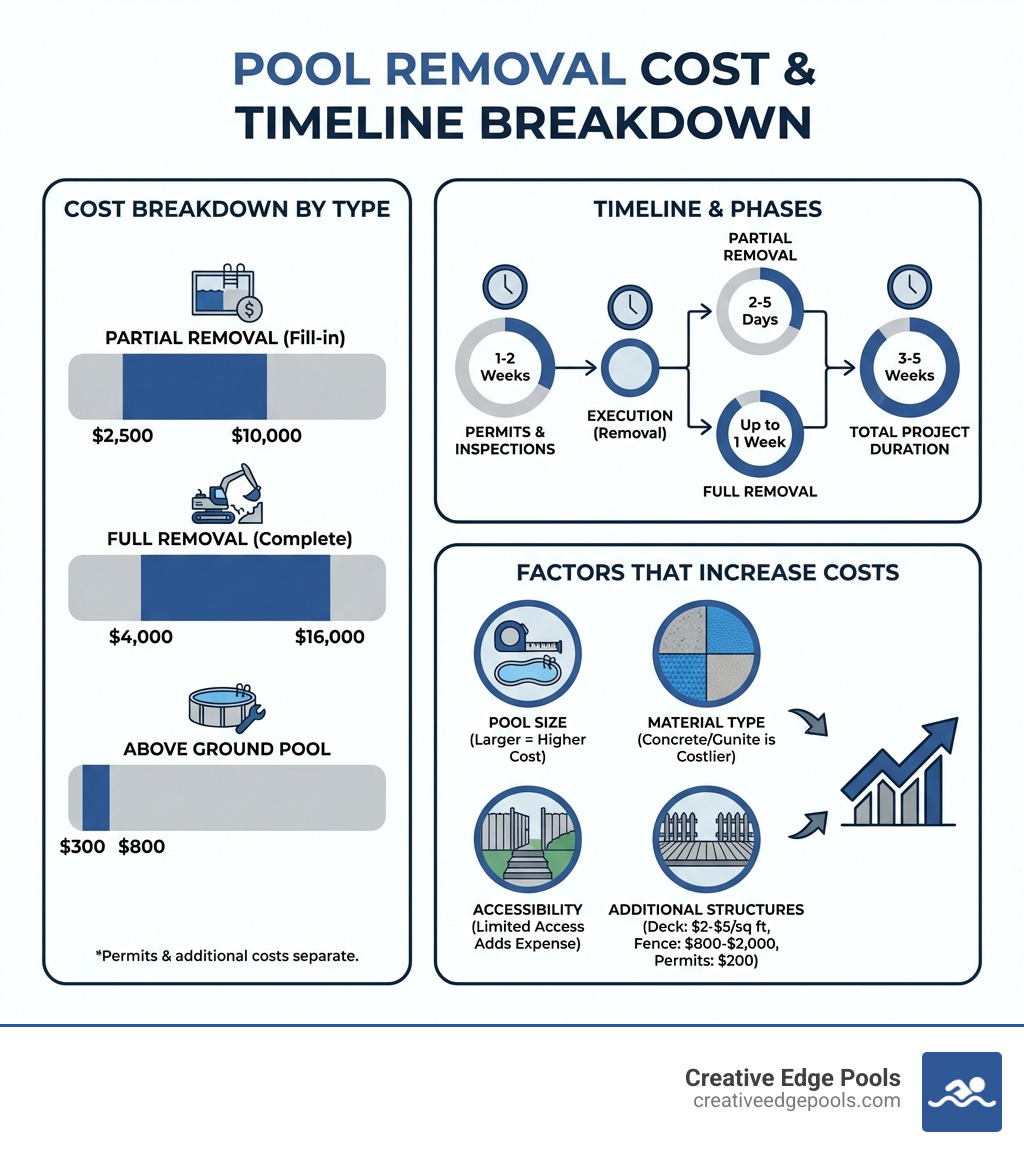
The cost to get rid of inground pool typically ranges from $4,000 to $16,000 depending on the removal method, pool size, and materials. Here’s a quick breakdown:
Average Pool Removal Costs:
- Partial Removal (Fill-in): $2,500 – $10,000
- Full Removal (Complete Demolition): $4,000 – $16,000
- Above Ground Pool: $300 – $800
- Additional Costs: Permits ($200), Deck Removal ($2-$5 per sq ft), Fence Removal ($800-$2,000)
For many homeowners in Eastern Massachusetts and Southern New Hampshire, an aging pool becomes a source of expensive maintenance and wasted yard space. Reclaiming that land is a significant investment that requires careful planning.
The process involves more than just filling a hole. From permits and utility disconnection to proper demolition and backfilling, each step impacts your final cost. The type of removal you choose—partial or full—affects both your budget and what you can do with the space in the future.
Timeline: Partial removal typically takes 2-5 days, while full removals can take up to a week. Including permits and inspections, expect a 3-5 week project duration.
Comparing Partial vs. Full Inground Pool Removal
Choosing between partial and full removal significantly impacts the cost to get rid of inground pool, the timeline, and future land use.
Partial Removal (The “Pool Fill-In”)
This is the more common and affordable option. The process includes:
- Draining and Perforation: Drilling holes in the pool bottom to ensure proper drainage.
- Partial Demolition: Breaking down the top 18 to 36 inches of the pool walls.
- Debris Burial and Backfilling: Filling the cavity with the rubble and clean fill material, compacted in layers to prevent sinkholes.
- Topsoil and Grading: Adding topsoil and grading for drainage.
Pros: Lower cost ($2,500 – $10,000), faster completion (2-3 days), and less yard disruption.
Cons: Requires disclosure to future buyers, restricts future building on the site, and carries a higher risk of settling if not done correctly.
Full Removal (Complete Demolition)
This comprehensive approach involves removing the entire structure:
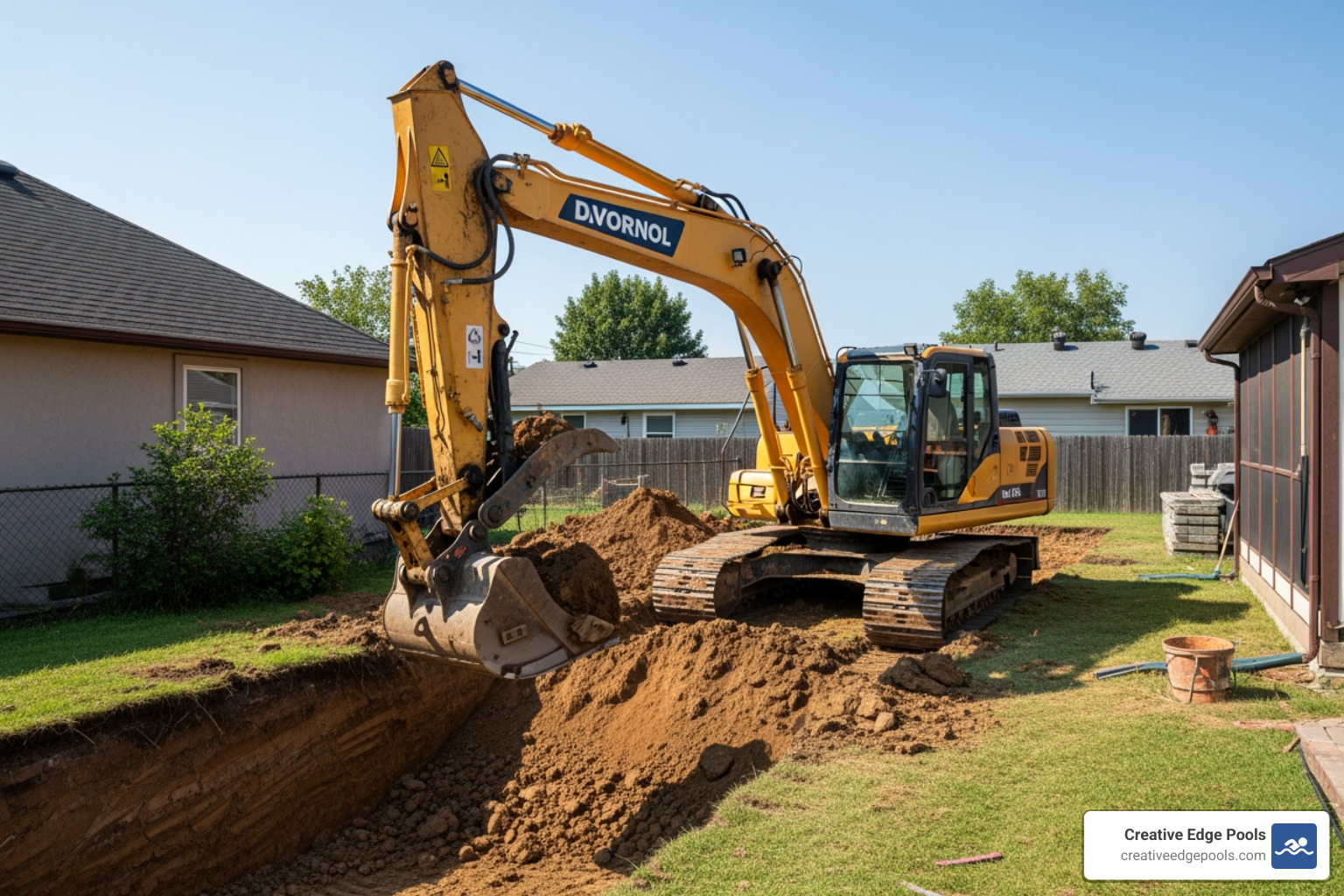
- Draining and Demolition: Breaking up the entire pool structure with heavy machinery.
- Debris Hauling: Transporting all materials (concrete, rebar, liners) to a licensed disposal facility.
- Engineered Backfill: Filling the hole with clean material, often requiring compaction tests for soil stability.
- Grading and Restoration: Restoring the ground with topsoil and seed.
Pros: No disclosure issues, full buildability for future structures, and maximum peace of mind regarding property value.
Cons: Higher cost ($4,000 – $16,000), longer timeline (up to a week), and more invasive machinery.
| Feature | Partial Removal (Fill-in) | Full Removal (Complete Demolition) |
|---|---|---|
| Average Cost | $2,500 – $10,000 | $4,000 – $16,000 |
| Timeline | 2-3 days (fieldwork) | 5-7 days (fieldwork) |
| Debris Management | Buried in place | Hauled off-site |
| Future Buildability | Restricted (often non-buildable) | Generally unrestricted (with engineered backfill) |
| Disclosure | Required for future buyers | Not required |
| Property Value Impact | Can decrease or be neutral | Neutral to positive |
For more details, explore our Pool Removal Services Complete Guide.
Factors Influencing the cost to get rid of inground pool
The cost to get rid of inground pool is influenced by several property-specific variables.
- Pool Size: Larger pools require more demolition, debris removal, and fill material. Costs often start at $151 – $187 per cubic yard.
- Site Accessibility: Narrow gates or steep slopes increase labor and equipment costs. Difficult access can add $1,500-$3,000, while crane requirements can add $3,000-$5,000.
- Labor and Equipment: Skilled labor averages $1,000-$3,000. Equipment rentals for excavators and jackhammers range from $100 to $600 per day.
See our detailed breakdown on How Much Does Pool Demolition Cost?
Material Matters
- Gunite and Concrete: Most expensive ($8,000 – $15,000). These robust structures require heavy-duty machinery and involve rebar removal and heavy debris disposal.
- Fiberglass: Mid-range ($6,000 – $12,000). Shells may be removed in one piece or cut into sections.
- Vinyl Liner: Least expensive ($4,000 – $10,000). These involve dismantling a metal/polymer frame and removing the liner.
Hidden Fees and Additional Expenses
- Permits: Average $200, depending on the town in MA or NH.
- Deck and Fence Removal: Concrete decks cost $2-$5 per sq ft to remove; fences range from $800-$2,000.
- Disposal Fees: Tipping fees at landfills can add $150-$500.
- Fill Material: Gravel ($5-$8/cu yd) and dirt ($8-$12/cu yd) are standard, but engineered fill for future building costs $25-$50+ per cubic yard.
- Compaction and Testing: Critical for stability, adding $250-$1,000. Structural engineers for compaction tests cost $400-$800.
- Utility Disconnection: Licensed electricians or plumbers typically charge $75-$150 per hour.
- Landscaping: Restoration via seeding ($0.10-$0.20/sq ft) or sod ($1.50-$3.00/sq ft) completes the project.
To finance these improvements, a home equity line of credit (HELOC) often provides lower interest rates than personal loans.
The Step-by-Step Process of Professional Pool Demolition
Creative Edge Pools follows a systematic approach to ensure safety and efficiency for homeowners in Eastern Massachusetts and Southern New Hampshire.
- Consultation: We assess size, material, and accessibility to determine the best removal method.
- Permits: We handle the demolition permit process to ensure compliance with local MA and NH codes.
- Draining: The pool is drained responsibly into approved locations, never into storm drains.
- Utility Disconnection: Licensed pros safely cap electrical, gas, and water lines.
- Shell Demolition: We use excavators and hammers to break up gunite/concrete or dismantle vinyl/fiberglass structures.
- Debris Management: For partial removals, debris is buried after creating drainage holes. For full removals, all material is hauled to a licensed facility.
- Backfilling and Compaction: Clean fill is added in layers and compacted to prevent settling. Engineered fill is used if future construction is planned.
- Grading and Restoration: The surface is graded for proper runoff and topped with soil for landscaping.
- Final Inspection: We coordinate any required municipal inspections to close out the permit.
Learn more about our Pool Removal Process.
Maximizing Your Investment: Property Value and Savings
Removing a pool is an investment in your home’s future, offering both immediate and long-term financial benefits.
Impact on Property Value
In New England, an aging pool is often a liability. Removal can:
- Eliminate Maintenance: Saves thousands annually on chemicals, repairs, and utilities.
- Reduce Liability: Lowers insurance premiums and safety risks.
- Increase Usable Space: Reclaims yard space for gardens or patios, potentially increasing appeal by 5-15%.
- Improve Curb Appeal: Replaces an eyesore with fresh landscaping.
While well-maintained pools in certain neighborhoods have value, older pools often deter buyers. Full removal is generally better for property value as it avoids disclosure requirements.
Smart Ways to Save
- Partial Removal: Saves $3,000-$8,000 if you don’t plan to build on the site.
- Off-Season Scheduling: Booking between October and February can net a 10-15% discount.
- Multiple Quotes: Compare at least three estimates to find the best value.
- DIY Prep: Handle draining or fence removal yourself to save $300-$2,000 in labor.
- Re-use Concrete: Use broken concrete as base material for other projects to save on disposal.
- Bundle Projects: Combine removal with other landscaping for package deals.
- Fill Selection: Use standard clean dirt instead of engineered fill if only planting a lawn. See our guide on How much does it cost to fill a pool?.
Repurposing Your Space
Once the pool is gone, your backyard becomes a blank canvas for a lush lawn, an outdoor kitchen, a play area, or even an Accessory Dwelling Unit (ADU) if you opted for full removal.
Frequently Asked Questions about Pool Removal
How long does it take to remove an inground pool?
Fieldwork for partial removal takes 3 to 5 days, while full removal takes up to a week. Including the 1 to 2 weeks needed for permits and inspections, the entire process typically spans 3 to 5 weeks.
Does removing a pool decrease my home’s value?
Usually, no. For aging pools in MA and NH, removal often increases value by eliminating maintenance costs and liability. It makes the home more attractive to a broader range of buyers. However, partial removal requires disclosure, which can limit future building options.
Can I remove an inground pool myself to save money?
We strongly advise against DIY pool removal. It requires heavy machinery, specialized knowledge of soil compaction, and strict adherence to local codes. Improper backfilling leads to sinkholes and drainage issues that are far more expensive to fix than the initial cost to get rid of inground pool. Professional contractors ensure the job is safe, legal, and structurally sound.
Conclusion
Removing your inground pool is a major step toward a more functional backyard. Whether you choose partial or full removal, understanding the costs and process allows you to plan effectively.
At Creative Edge Pools, our family-owned team brings over 100 years of experience to homeowners in Eastern Massachusetts and Southern New Hampshire. We handle everything from permits to final grading, helping you reclaim your outdoor space. Ready to transform your backyard? Explore our Swimming Pool Removal services today.
