
cost of replacing inground vinyl pool liner: 2025 Expert Guide & Shocking Prices
Understanding the True Investment: Pool Liner Replacement in 2024-2025
The cost of replacing inground vinyl pool liner typically ranges from $4,500 to $6,500 for most standard pools, with the national average being approximately $2,467. Here’s a quick breakdown:
| Pool Size | Average Cost Range |
|---|---|
| 12′ x 24′ | $1,500 – $3,000 |
| 18′ x 36′ | $2,400 – $6,000 |
| 20′ x 40′ | $3,000 – $7,500 |
Key factors affecting price:
– Pool size and shape (rectangular vs. free-form)
– Liner thickness (20-mil to 28-mil)
– Custom features (steps, benches)
– Labor costs ($1,000-$2,500)
– Additional services (draining, disposal, floor repairs)
When your inground vinyl pool liner starts showing signs of age—fading, cracking, leaking, or developing wrinkles—it’s time to consider replacement. Most vinyl liners last between 10 to 15 years, depending on maintenance, water chemistry, and climate conditions. While the upfront cost might seem substantial, delaying replacement can lead to more expensive structural issues down the road.
I’m David Brabant, owner of Creative Edge Pools with over thirty years of experience in the swimming pool industry, and I’ve overseen hundreds of inground vinyl pool liner replacements throughout my career, giving me knowledge of the cost of replacing inground vinyl pool liner across various pool types and configurations.
The 2024–2025 Cost of Replacing Inground Vinyl Pool Liner
Let’s talk dollars and cents for your pool liner replacement project. As we steer through 2024 and peek ahead to 2025, I’ve noticed some interesting shifts in pricing that you should know about before planning your budget.
Based on our hands-on experience at Creative Edge Pools and what we’re seeing across the industry, the cost of replacing inground vinyl pool liner currently hovers around $5 per square foot. For most homeowners, this translates to between $4,500 and $6,500 all-in, covering both materials and labor for a standard installation.
Pool size makes all the difference in your final bill. Here’s what real homeowners are paying in 2024, and what we’re projecting for next year:
| Pool Size | Square Footage | 2024 Cost Range | Projected 2025 Cost Range |
|---|---|---|---|
| 12′ x 24′ | 288 sq ft | $1,500 – $3,000 | $1,600 – $3,200 |
| 16′ x 32′ | 512 sq ft | $2,100 – $4,500 | $2,200 – $4,800 |
| 18′ x 36′ | 648 sq ft | $2,400 – $6,000 | $2,600 – $6,300 |
| 20′ x 40′ | 800 sq ft | $3,000 – $7,500 | $3,200 – $7,900 |
Just last week, one of our senior technicians mentioned to me, “We’re seeing about a 5-7% increase in material costs year over year. The supply chain headaches from 2022 have eased up a bit, but prices are still climbing steadily.”
If you have a uniquely shaped pool, deep end, or tricky access to your backyard, expect your costs to land in the upper ranges of these estimates or potentially higher.
National Averages at a Glance
Looking at projects across the country, the typical homeowner spends about $5,500 for a standard liner replacement. Breaking this down:
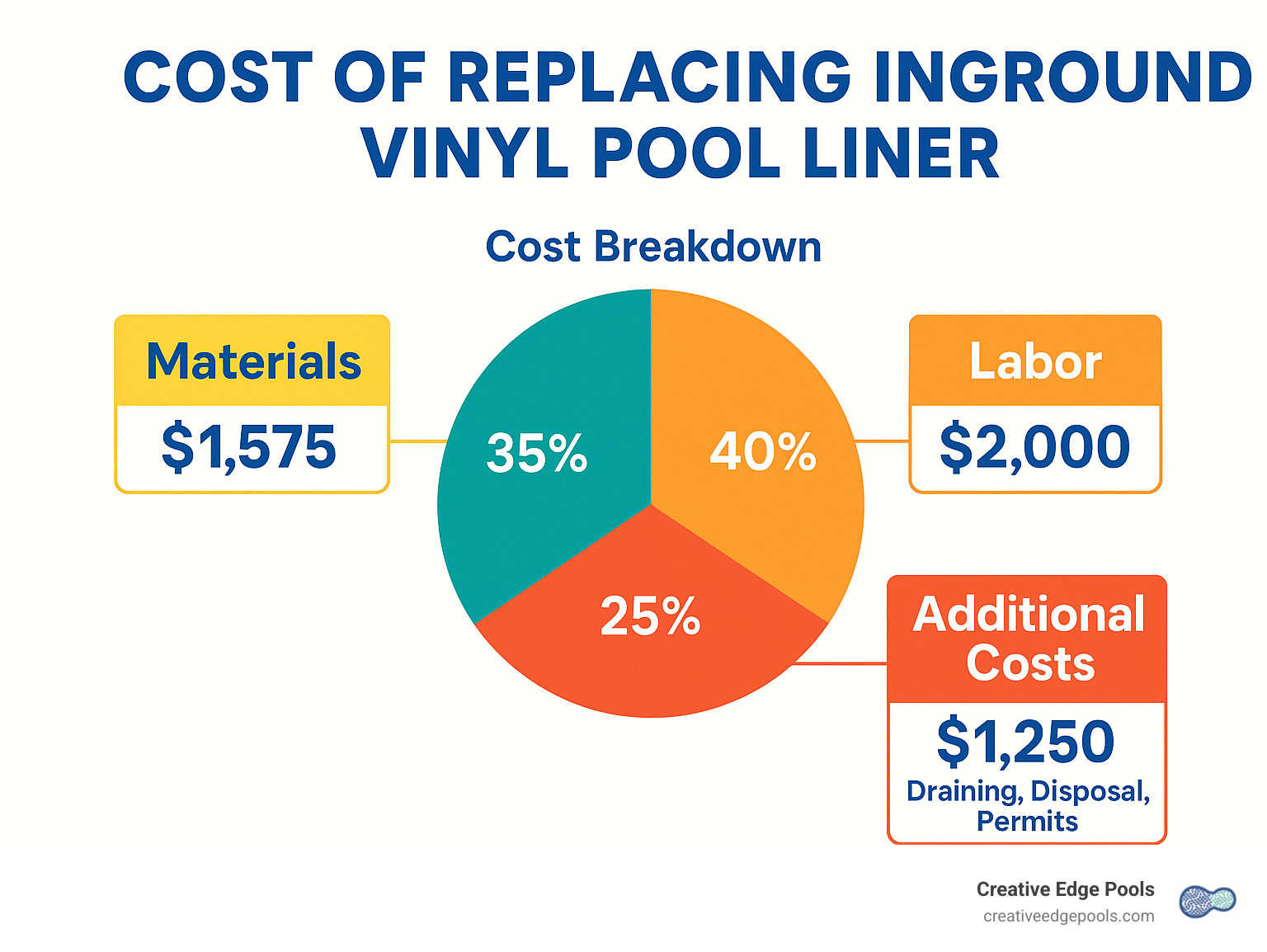
Labor takes the biggest bite at roughly 40% (about $2,200) of your total investment. The actual liner materials account for approximately 35% (around $1,925), while the remaining 25% (about $1,375) covers everything else – draining and refilling your pool, hauling away the old liner, pulling permits where needed, and handling minor floor repairs.
I always tell my clients that it’s these “everything else” costs that often catch people by surprise. Budget accordingly!
Cost of Replacing Inground Vinyl Pool Liner for Standard Sizes
Your pool’s dimensions play the starring role in determining your final price tag. Here’s what you can realistically expect based on common pool sizes:
For a cozy 12′ x 24′ pool (288 sq ft), budget between $1,500 and $3,000 total. The liner itself typically runs $700 to $1,200, with labor adding another $800 to $1,800.
Moving up to a 16′ x 32′ pool (512 sq ft), your total investment jumps to $2,100 to $4,500. Materials cost around $1,000 to $1,800, and labor ranges from $1,100 to $2,700.
A larger 18′ x 36′ pool (648 sq ft) pushes the budget to $2,400 to $6,000 total. Expect to pay $1,200 to $2,000 for materials and $1,200 to $4,000 for professional installation.
For substantial 20′ x 40′ pools (800 sq ft), the total typically falls between $3,000 and $7,500. The liner itself costs $1,400 to $2,500, with labor running $1,600 to $5,000.
These estimates assume standard rectangular shapes and typical depths. If your pool has a deep end or unique configuration, your costs will trend toward the higher end.
Premium vs. Budget Projects: How Design Choices Shift the Cost of Replacing Inground Vinyl Pool Liner
The gap between basic and premium liner installations can be surprisingly wide. Your design choices dramatically impact what you’ll pay:
When it comes to pattern and color, a standard solid blue liner serves as your baseline price. Opting for custom patterns or prints adds $300 to $700 to your bill, while designer patterns with textured finishes bump costs up by $500 to $1,000.
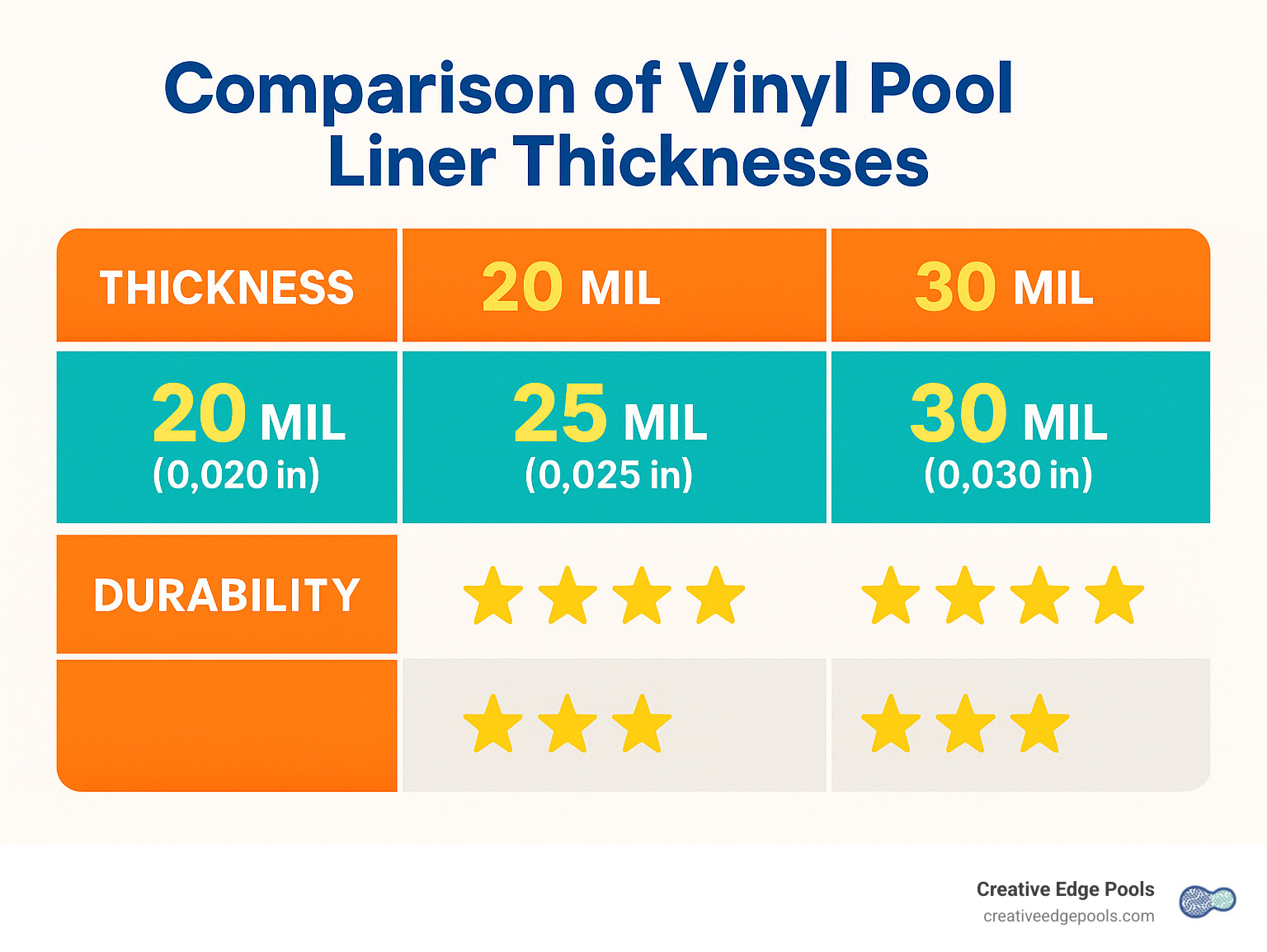
Liner thickness is another major factor. A 20-mil liner (standard thickness) represents your base price. Upgrading to a 25/27-mil mid-range liner adds $200 to $400, while premium 28-mil or thicker options increase costs by $400 to $700.
Don’t forget about warranty options. Most installations include a basic 15-year pro-rated warranty. Extended coverage adds $200 to $500, while transferable warranties (valuable if you might sell your home) cost an additional $300 to $600.
I recently helped a family in Lexington who told me: “We hesitated at first about paying extra for the thicker liner, but after our previous one only lasted 7 years with the kids being rough on it, spending an extra $400 for the 28-mil liner just made sense for our peace of mind.”
What Drives the Price? 9 Factors You Can’t Ignore
When planning your pool renovation, understanding what affects the cost of replacing inground vinyl pool liner helps avoid budget surprises. I’ve seen countless homeowners caught off guard by factors they never considered. Let’s walk through the nine most important elements that will shape your final price tag.
Pool Size, Shape & Depth
Your pool’s dimensions are the foundation of your cost estimate. Think of it this way: more square footage equals more material and more labor hours. But it’s not just about size:
A simple rectangular pool is the budget-friendly option. These straightforward shapes require less precise measuring and fitting, saving on labor costs.
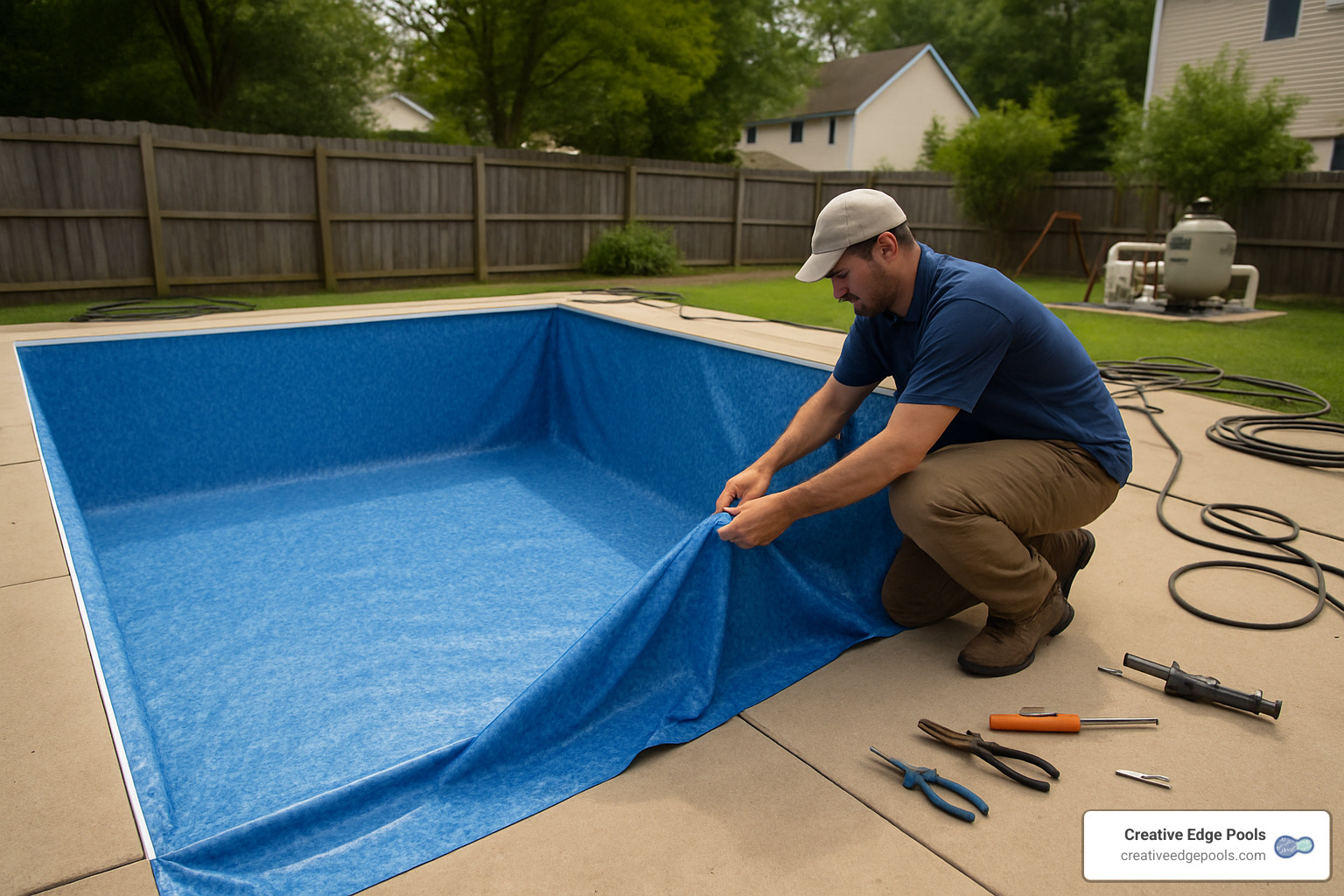
Free-form or kidney-shaped pools tell a different story. These require what we call the A-B measuring method, where technicians place measurement points roughly every 16 inches around your pool’s perimeter. This painstaking process ensures your custom liner fits perfectly, but it does add to your bottom line.
Depth variations matter too. That 8-foot deep end you love for diving? It requires more material and installation expertise than a standard 5-foot depth. Similarly, those comfortable tanning ledges, built-in benches, and swim-outs add character to your pool but complexity to your liner replacement.
Liner Specification Details
The liner itself offers several choices that affect both price and longevity:
Thickness is your primary decision point. Standard 20-mil liners are your entry-level option, typically lasting 7-10 years under normal conditions. Premium 28-mil liners cost about 20-30% more upfront but can extend your liner’s life to 12-15 years or beyond. As one customer told me, “I’ll gladly pay a bit more now to avoid doing this again in seven years!”
Embossed liners with their textured surface help hide small imperfections in your pool floor and add about $200-$400 to your project cost. Many homeowners find this worthwhile for the improved appearance.
Improved UV protection adds to your initial investment but pays dividends in sun-drenched regions where solar degradation is a primary cause of liner failure. You can learn more specifics about different liner options at our Pool Liner Installation Prices page.
Site & Seasonal Factors
Timing and location influence your costs in ways many homeowners don’t anticipate:
Spring fever is real in the pool industry! Most homeowners want their pools ready for summer fun, creating peak demand between April and June. This high-demand period typically comes with a 10-20% premium on labor costs.
Savvy pool owners often schedule replacements for fall (September-November) to capture off-season discounts of 5-15% on labor. As a bonus, installation crews are less rushed during these quieter months.
Site access challenges can unexpectedly inflate your budget. That charming fence that surrounds your backyard oasis might require special equipment or additional labor to work around.
Groundwater issues present another potential complication. High water tables may necessitate dewatering systems during installation, potentially adding $500-$1,000 to your project.
Regional differences matter too. According to research from the Bureau of Labor Statistics, pool specialists in the Northeast (like our team at Creative Edge Pools) command higher wages than those in the South or Midwest, reflecting regional cost-of-living differences.
Pool Condition
Your pool’s current state significantly impacts your replacement costs:
Most liner replacements include a basic floor repair allowance, typically covering about 100 square feet or one 50-pound bag of vermiculite. Beyond that, additional repairs mean additional costs.
Wall damage or deteriorated track systems require repair before your new liner can be installed. These structural issues must be addressed to ensure your new liner performs as expected.
Existing features like stairs, ladders, or lighting systems require additional labor to work around or incorporate into your new liner design.
Permits and Regulations
Local governance affects your project in several ways:
Permit fees typically range from $100-$300 depending on your location. Some municipalities are more stringent than others regarding pool renovations.
Inspection requirements vary widely. Some areas require both pre- and post-installation inspections to ensure compliance with local codes.
Water disposal regulations can add complexity. Many communities now restrict how and where pool water can be drained, potentially adding steps to your replacement process.
Drainage and Refilling
The logistics of emptying and refilling your pool contribute significantly to your total cost:
Professional draining services typically run $500-$700, ensuring proper disposal of chemically treated water.
Water delivery via truck costs about $30-$100 per 1,000 gallons if you need your pool filled quickly.
Using municipal water through your garden hose costs less (about $4-$10 per 1,000 gallons) but takes considerably longer – sometimes days for larger pools.
Custom Features
Those special elements that make your pool unique also make your liner replacement more complex:
Liner-over-steps require custom-fitting and cost more than standard thermoplastic steps. The seamless look is beautiful but requires precision work.
In-wall ladders necessitate careful cutting and sealing, adding to your labor costs.
Water features like fountains or waterfalls require special accommodation during the liner installation process.
Floor Repairs
Almost every liner replacement involves some floor work:
Basic vermiculite repair is often included in your quote, typically covering about 100 square feet.
Extensive floor rebuilding adds $500-$1,500 to your project, depending on the condition of your existing floor.
Structural repairs for more serious issues can add $1,000-$3,000 depending on severity. While this might seem steep, addressing these problems now prevents more costly repairs later. More information about the science behind vermiculite flooring can be found on Wikipedia’s Vermiculite page.
Disposal Costs
Your old liner needs somewhere to go:
Disposal fees typically run $200-$500, varying based on local regulations and landfill fees.
Environmental considerations may require special handling in some areas, potentially adding to your disposal costs.
Breaking Down the Bill: Materials, Labor, Extras
To fully understand the cost of replacing inground vinyl pool liner, it helps to see how the total breaks down into its component parts. Here’s what goes into a typical liner replacement bill:
Material Costs by Thickness & Pattern
The liner itself typically costs between $1,400 and $2,100 for materials alone. This price varies based on several factors:
| Liner Type | 20-mil Cost | 28-mil Cost | Average Lifespan | Best For |
|---|---|---|---|---|
| Solid Blue | $1,400-$1,600 | $1,700-$2,000 | 7-10 years (20-mil) 10-15 years (28-mil) |
Budget-conscious homeowners |
| Printed Pattern | $1,600-$1,800 | $1,900-$2,300 | 7-10 years (20-mil) 10-15 years (28-mil) |
Aesthetic improvement |
| Textured/Embossed | $1,800-$2,100 | $2,200-$2,700 | 8-12 years (20-mil) 12-17 years (28-mil) |
Hiding imperfections, slip resistance |
“The thickness decision is really about balancing upfront cost against longevity,” explains one of our installation managers. “For families with active children or pets, the thicker 28-mil liner almost always pays for itself through extended life and fewer repairs.”
Labor & Professional Services
Professional installation typically ranges from $1,000 to $2,500, making up about 40% of your total project cost. This labor includes:
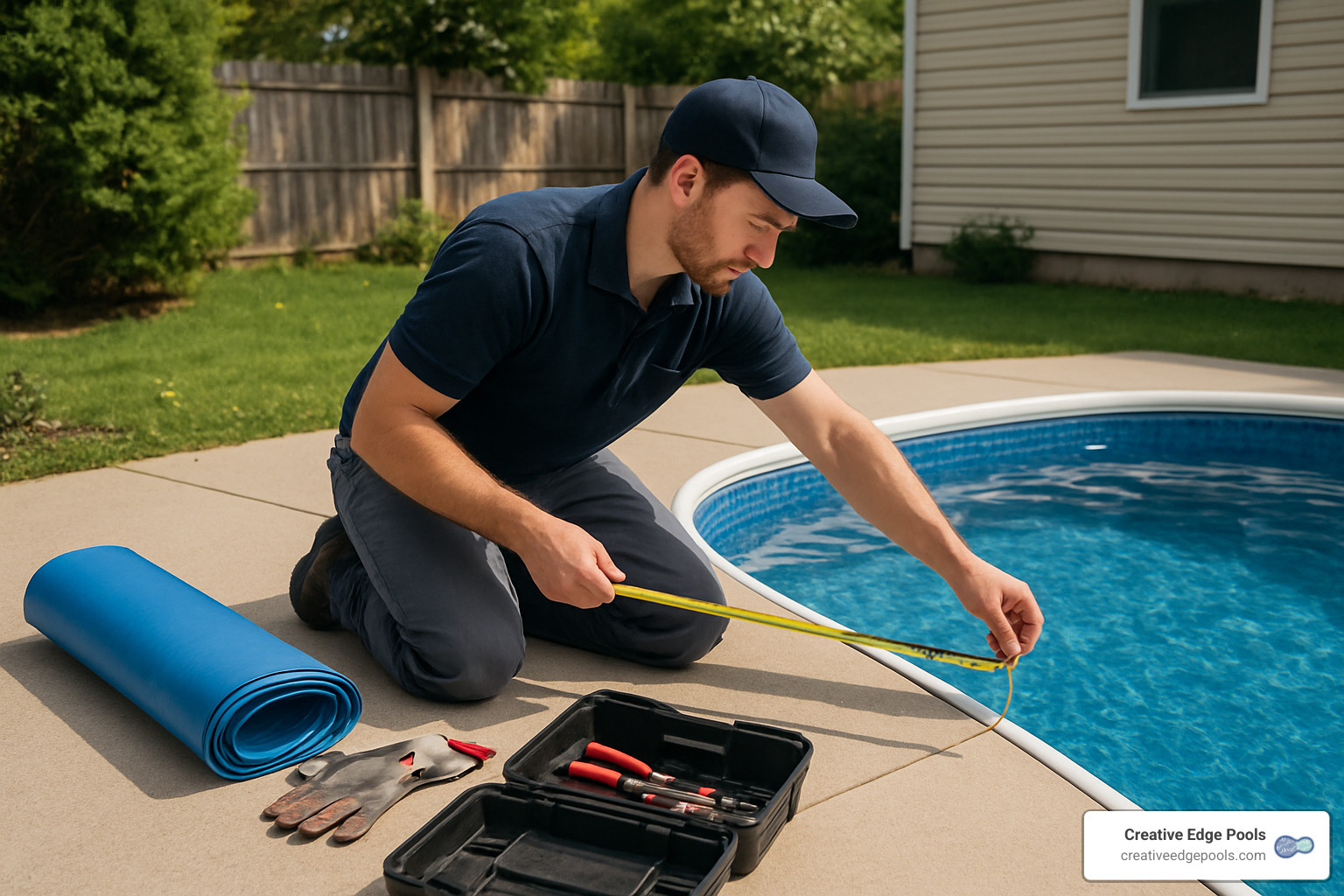
- Professional measurement: Precise templating of your pool, especially important for free-form shapes
- Floor preparation: Cleaning, smoothing, and repairing the pool floor
- Wall preparation: Cleaning walls and replacing any damaged track or coping
- Liner hanging: Carefully positioning and securing the liner
- Vacuum setting: Using vacuum suction to draw the liner into place
- Final fitting: Trimming and sealing around steps, skimmers, returns, and other features
- Water balancing: Initial chemical treatment of new water
The complexity of your pool directly impacts labor costs. A simple rectangular pool with standard features will be at the lower end of the labor range, while free-form pools with custom features can push labor costs toward the upper end or beyond.
Additional Line Items You Might Miss
Several additional costs are often overlooked when budgeting for liner replacement:
- Permits: $100-$300 depending on locality
- Draining: $500-$700 for professional service
- Refilling: $60-$120 for municipal water (varies by region)
- Disposal fees: $200-$500 for old liner removal
- Vermiculite floor patching: Most contractors include a base allowance (typically one 50 lb bag or about 100 sq ft of coverage). More extensive repairs incur additional costs.
- Bead track replacement: $200-$400 if the existing track is damaged
- Coping repairs: $300-$1,000 depending on material and extent
- Chemical startup kit: $100-$200 for initial water treatment
One customer from Andover, MA shared their experience: “The quote seemed straightforward until we finded our pool floor needed extensive repair. The additional $800 for floor work wasn’t in our initial budget, but our contractor explained that skipping this step would likely lead to liner problems within a year or two.”
Timing, DIY, and Money-Saving Hacks
Let’s face it – replacing your pool liner isn’t cheap, but with some smart planning, you can significantly reduce the cost of replacing inground vinyl pool liner without cutting corners on quality. I’ve seen countless homeowners save hundreds (sometimes thousands) with these strategies.
DIY vs. Pro: Risk, Reward, and the Real Cost of Replacing Inground Vinyl Pool Liner
The DIY route tempts many homeowners with potential labor savings of $1,000-$2,500. While there’s certainly satisfaction in tackling a major project yourself, I’ve seen this decision backfire more often than not.
One customer from Methuen learned this lesson the hard way: “What I thought would save thousands ended up costing more. After three frustrating days of fighting wrinkles we couldn’t remove, we called Creative Edge. They had to start over with a new liner since ours was stretched beyond repair. Lesson learned!”
The reality is that proper liner installation requires specialized tools, multiple helpers, and experienced hands. What professionals complete in 1-2 days often takes DIYers 3-5 days, and without professional installation, you’ll likely void manufacturer warranties.
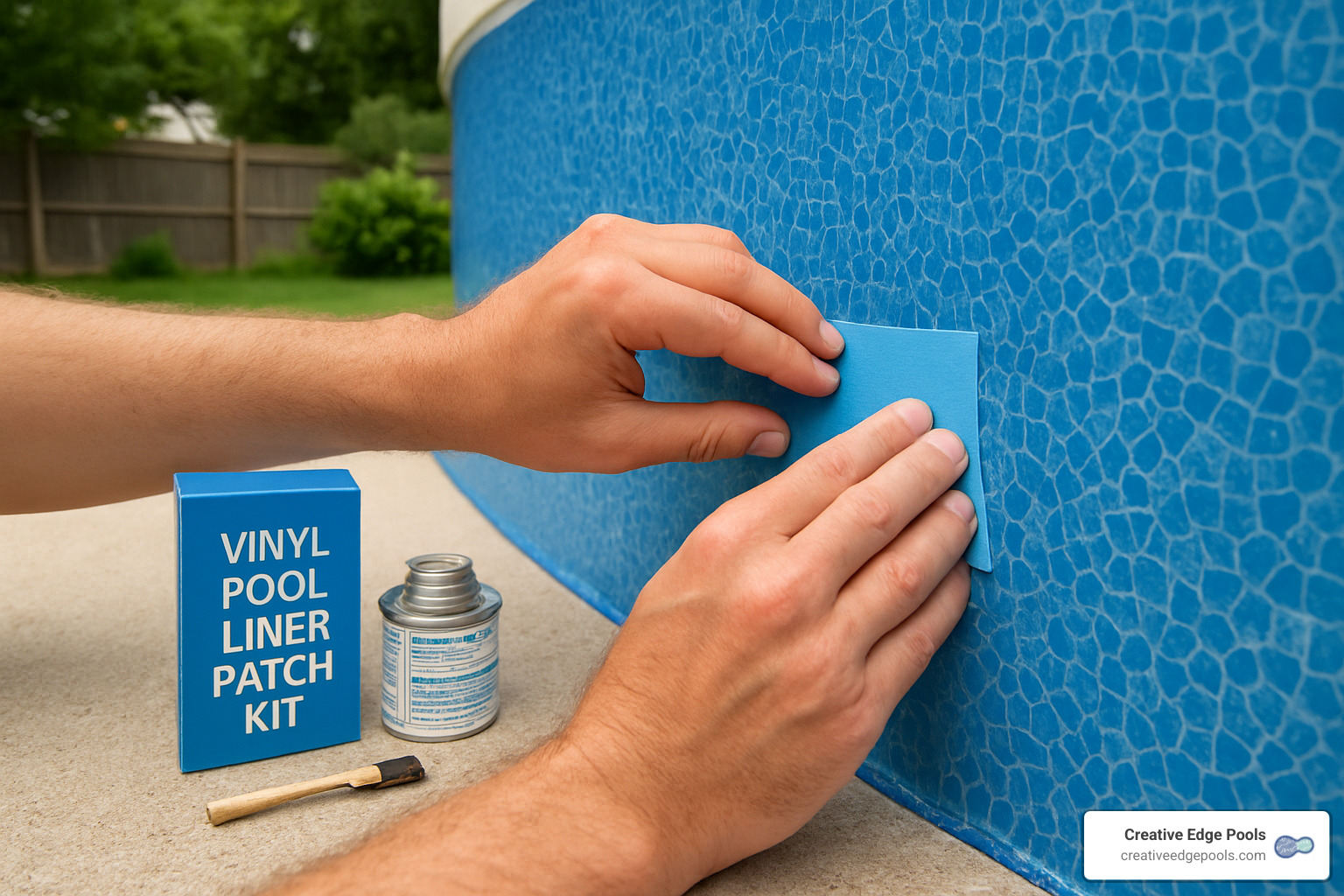
For small repairs, however, DIY can make perfect sense. Those minor tears or punctures can often be effectively handled with vinyl patch kits costing just $20-$50. Check out our Pool Liner Repair Kit Vinyl guide for step-by-step instructions.
Seasonal Strategies & Negotiation Tips
Timing is everything when it comes to saving on your liner replacement. Fall (September-November) is your sweet spot – most companies offer 5-15% discounts on labor as demand slows down. January and February often see material promotions as manufacturers clear inventory before the new season.
Always get multiple quotes – I recommend at least three from reputable companies. And don’t just look at the bottom line! Request itemized quotes so you can compare apples to apples and identify potential savings. Sometimes companies bundle their services differently, hiding costs in unexpected places.
One clever approach I’ve seen work well: Ask about remnant or overstock liners. If you have a standard-sized rectangular pool, you might score a significant discount on material that would otherwise go unused.
“We saved nearly $800 by scheduling our replacement in October,” shares a customer from Nashua. “Not only was the price better, but the crew seemed less rushed and took extra care with every detail.”
Maintenance Habits That Extend Liner Life
The most cost-effective strategy isn’t about finding the cheapest replacement – it’s making your current liner last longer! Consider these proven practices:
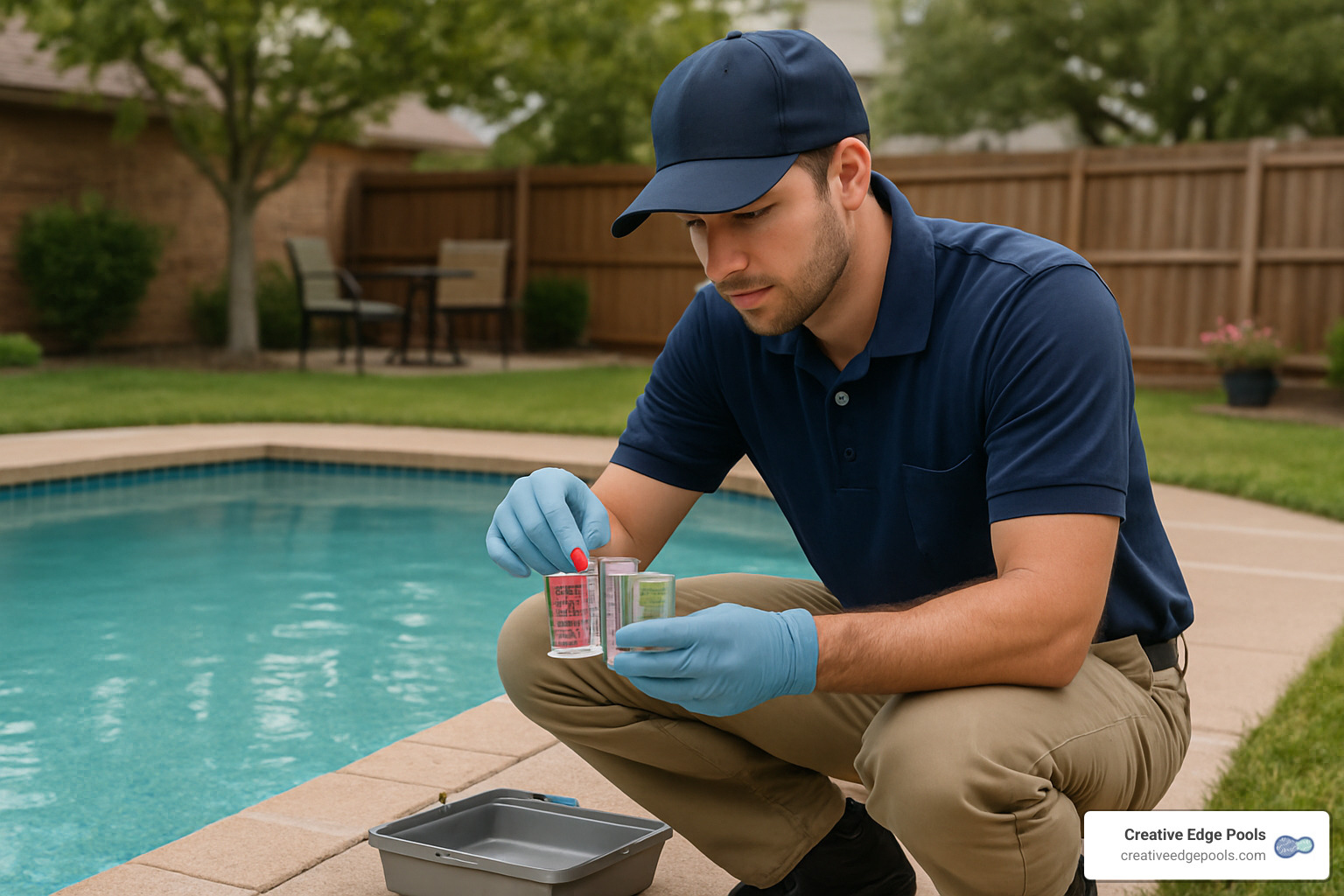
Maintain balanced water chemistry – Test weekly and adjust as needed. Improper pH is the #1 cause of premature liner failure. Extremely high chlorine can bleach and weaken vinyl over time. Our article on How Long Does a Vinyl Pool Liner Last? dives deeper into this topic.
Use a pool cover when your pool isn’t in use. UV damage significantly shortens liner life, and a simple cover can add years to your investment. Similarly, maintaining proper water levels prevents the exposed liner from suffering UV damage and stress.
Address small issues promptly – that tiny hole won’t fix itself, and waiting often means a larger repair bill. Small tears can be easily patched if caught early.
One of our long-term clients from Nashua has this success story: “By following Creative Edge’s maintenance recommendations religiously, we’ve gotten 17 years from our 28-mil liner—well beyond the expected lifespan. The extra attention to water chemistry has paid off tremendously.”
Keep sharp objects away from your liner – seems obvious, but those pool toys, cleaning tools, and even jewelry can be silent killers. And watch those water temperatures – extremely high heat accelerates vinyl breakdown.
With these strategies, you’ll not only reduce the immediate cost of replacing inground vinyl pool liner, but you’ll also extend the intervals between replacements, saving thousands over your pool’s lifetime.
Frequently Asked Questions About Inground Vinyl Pool Liner Replacement Costs
How often should I budget for a new liner?
When it comes to planning for the future of your backyard oasis, timing is everything. Most inground vinyl pool liners have a lifespan of 10-15 years, though several factors can either shorten or extend this timeline.
If you’ve invested in a premium 28-mil liner, you’re likely to enjoy an extra 2-5 years of worry-free swimming compared to the standard 20-mil options. I’ve seen how proper water chemistry makes a tremendous difference—pools with regularly balanced water often push the upper limits of expected lifespan.
Your local climate plays a significant role too. Here in New England, our seasonal pools fare better than those in Florida or Arizona where year-round sunshine accelerates UV deterioration. As one customer in Concord told me last summer, “Our north-facing pool has outlasted our neighbor’s by three years already!”
The way you use your pool matters just as much. Family pools with energetic kids, dogs who love to swim, and frequent pool volleyball games will naturally experience more wear than a pool used primarily for gentle lap swimming.
My advice? Create a dedicated pool fund by setting aside $300-$500 annually. This approach ensures you’ll have the approximately $5,500 needed for the cost of replacing inground vinyl pool liner when the time comes, without feeling the financial strain all at once.
Can a new liner be installed over an old one?
I get this question quite frequently, and I always give a straightforward answer: no, installing a new liner over an existing one is never a good idea—even if it seems like a shortcut to savings.
When we drain a pool to replace the liner, the old vinyl becomes brittle and prone to cracking. Leaving it in place creates an uneven surface that almost guarantees wrinkles in your new liner. These wrinkles aren’t just unsightly—they create weak points that dramatically reduce your liner’s lifespan.
Moisture is another enemy. Any water trapped between the two liners becomes a breeding ground for mold and bacteria, leading to discoloration and deterioration from underneath where you can’t see it happening.
Perhaps most importantly, every major liner manufacturer will void their warranty if their product is installed over an existing liner. As one of my customers in Nashua learned the hard way: “The $800 I thought I’d save by keeping the old liner ended up costing me $5,000 when the new one failed after just 18 months and wasn’t covered under warranty.”
The cost of replacing inground vinyl pool liner properly includes complete removal of the old material—it’s an investment in longevity that always pays off.
How long does replacement take and do I need a permit?
When planning your liner replacement, timing expectations help ensure your summer isn’t unexpectedly interrupted. For most standard rectangular pools (up to 16’x32′), our experienced teams can complete the entire process in 1-2 days. Larger pools or those with custom shapes typically require 2-4 days, while projects involving significant floor or wall repairs might extend to 3-5 days.
This timeline includes everything from initial draining to the installation of your beautiful new liner and beginning the refill process. Complete filling and chemical balancing usually takes an additional day, though this doesn’t require our team to remain on-site.
Regarding permits, the requirements vary throughout our service area. Most towns in Eastern Massachusetts and Southern New Hampshire do require permits for full liner replacements, with fees typically ranging from $100-$300. Some communities have exemptions for “like-for-like” replacements, while others—particularly those with water conservation concerns—have special requirements for pool draining.
“Navigating local permitting can be confusing,” admits one of our recent Andover customers. “Having Creative Edge handle all that paperwork was worth its weight in gold.”
We include all permitting as part of our comprehensive service package. Our familiarity with local requirements across dozens of communities means we can steer these regulations efficiently, ensuring your project proceeds without bureaucratic headaches.
Conclusion
Replacing your inground vinyl pool liner is a significant investment in your backyard sanctuary—one that pays dividends in family enjoyment for years to come. While the cost of replacing inground vinyl pool liner typically falls between $4,500 and $6,500, your specific circumstances will ultimately determine your final price tag.
Here at Creative Edge Pools, we recognize that every swimming pool has its own unique character, just like every homeowner has their own distinct budget considerations. As a family-owned business with deep roots in Eastern Massachusetts and Southern New Hampshire, we take pride in providing crystal-clear, detailed estimates that account for every aspect of your project.
What sets us apart is our comprehensive approach to your entire outdoor living space. When we handle your liner replacement, we’re not just focused on the pool itself—we can seamlessly integrate any additional landscaping or masonry work that might improve your poolside experience. This holistic perspective means you’re working with one trusted partner rather than coordinating multiple contractors.
While budget matters (and we respect that), true value comes from quality materials installed by experienced professionals who stand firmly behind their craftsmanship. A properly installed vinyl liner from our team will provide years of worry-free swimming, making the investment worthwhile over the long haul. Our customers often tell us the peace of mind alone was worth choosing a reputable installer.
Ready to breathe new life into your pool with a fresh liner? We’d love to visit your home for a personalized consultation that addresses your specific pool configuration and aesthetic preferences. With decades of experience under our belts and an unwavering commitment to quality, we ensure your liner replacement proceeds smoothly from initial measurement to final water balance.
For more detailed information about our inground vinyl pool liner replacement services, including materials, process, and additional options, visit our detailed service page.
Your backyard oasis deserves the best—and so do you. Let’s create something beautiful together that will serve your family for many summers to come.
