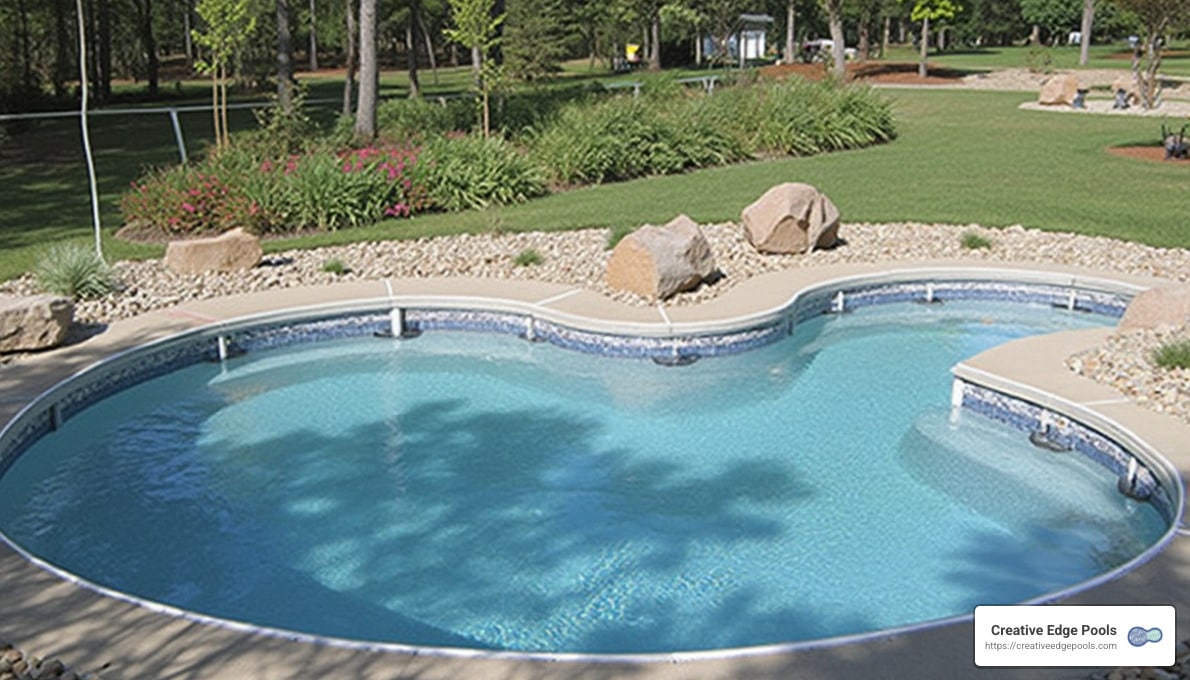
Cost of Installing a Gunite Pool: 2025 Ultimate Guide
Understanding the Cost of Installing a Gunite Pool
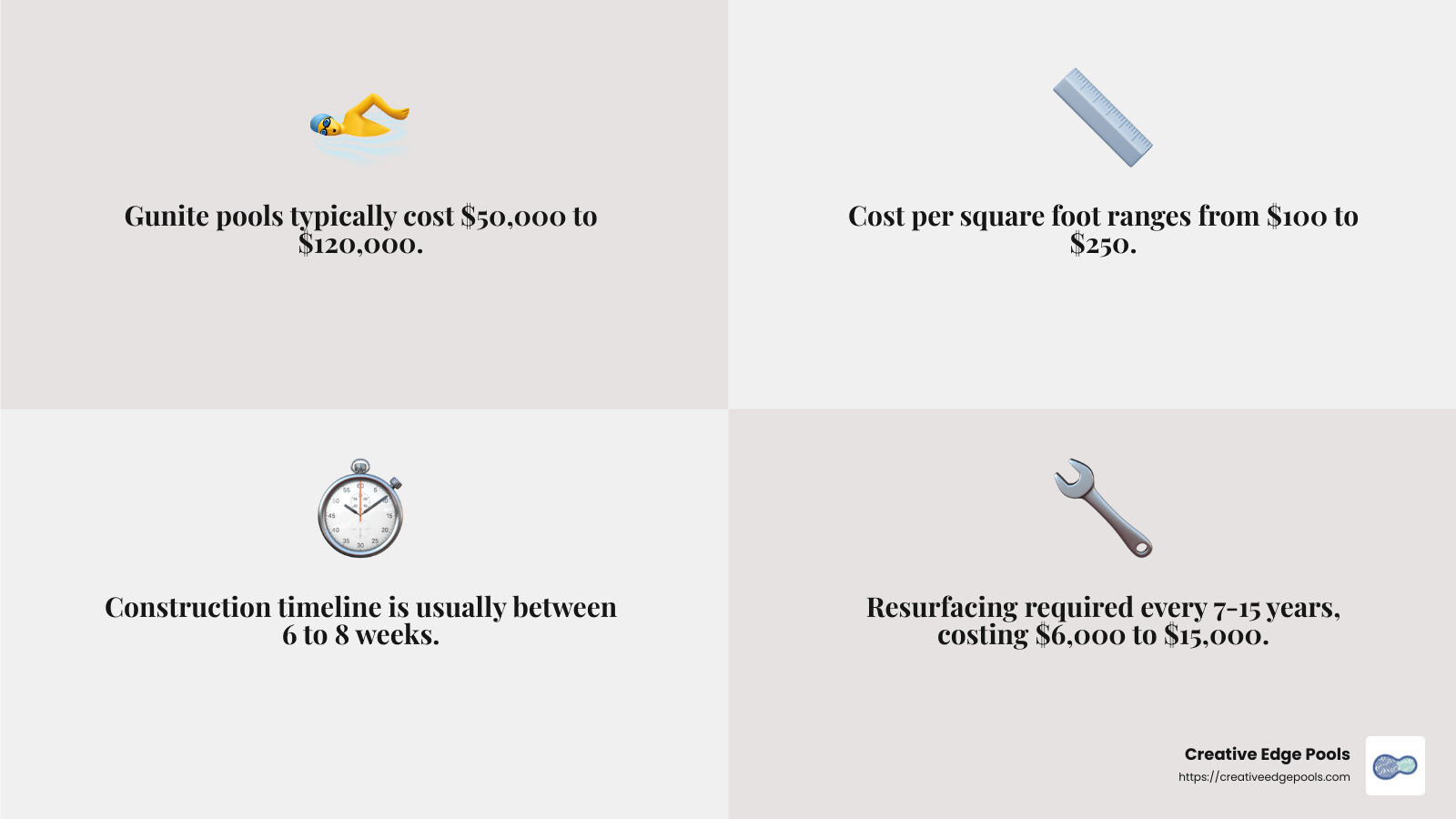
The cost of installing a gunite pool typically ranges between $50,000 and $120,000, with most homeowners paying around $100 to $250 per square foot. Factors like size, depth, materials, and extra features (think spas or waterfalls) can push prices higher or lower. Here’s a quick breakdown:
- Average cost: $50,000–$120,000
- Cost per square foot: $100–$250
- Resurfacing every 7–15 years: $6,000–$15,000
- Typical timeline: 6–8 weeks
Before diving into your backyard change, it’s crucial to have clarity about these costs. No two gunite pools are exactly alike, so pinpointing costs early helps you avoid surprises and make smarter decisions. As a long-time pool builder, I’ve seen that transparent budgeting from the start can make all the difference.
I’m David Brabant, owner of Creative Edge Pools, and I’ve spent over 30 years working hands-on with homeowners in Massachusetts and New Hampshire, guiding them through the cost of installing a gunite pool. Let’s break down everything you need to know to budget accurately and create your dream backyard retreat.
Similar topics to cost of installing a gunite pool:
– gunite pool resurfacing price
– concrete inground pool cost
– gunite swimming pool cost
What is a Gunite Pool?
Before we dive deeper into the cost of installing a gunite pool, let’s start with the basics. If you’re picturing a giant concrete mixing truck rolling into your yard, you’re not too far off—but gunite pools have their own unique charm (and process).
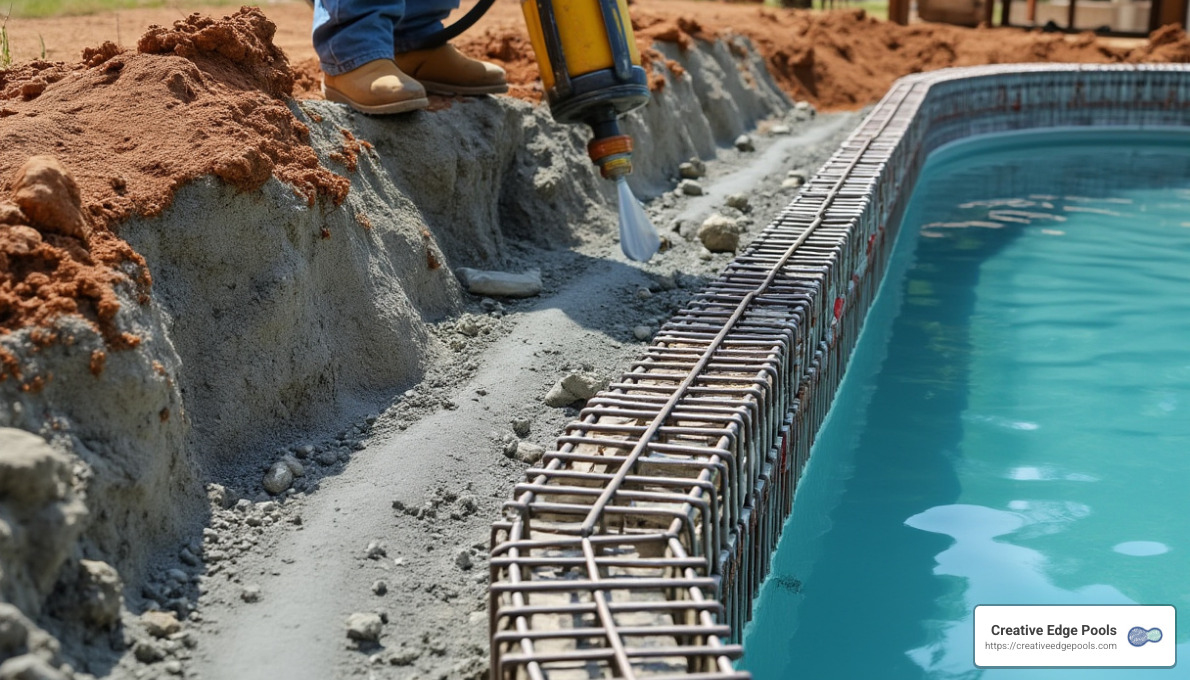
Gunite is a specialized mixture of cement, sand, and water that’s sprayed onto a carefully constructed steel rebar framework. Think of the rebar as the skeleton of your pool—it forms the shape and provides the structural strength you’ll enjoy for decades. Once the gunite mixture hardens, you get a solid, incredibly durable pool that’s practically built to last forever (okay, realistically, it’s 50+ years—but that’s pretty close!).
Unlike prefabricated alternatives, gunite pools are constructed right in your backyard from scratch. The process begins with excavation and site preparation, followed by the installation of that robust steel reinforcement. Next comes the gunite spraying itself, which is done using a high-pressure hose for precision and strength.
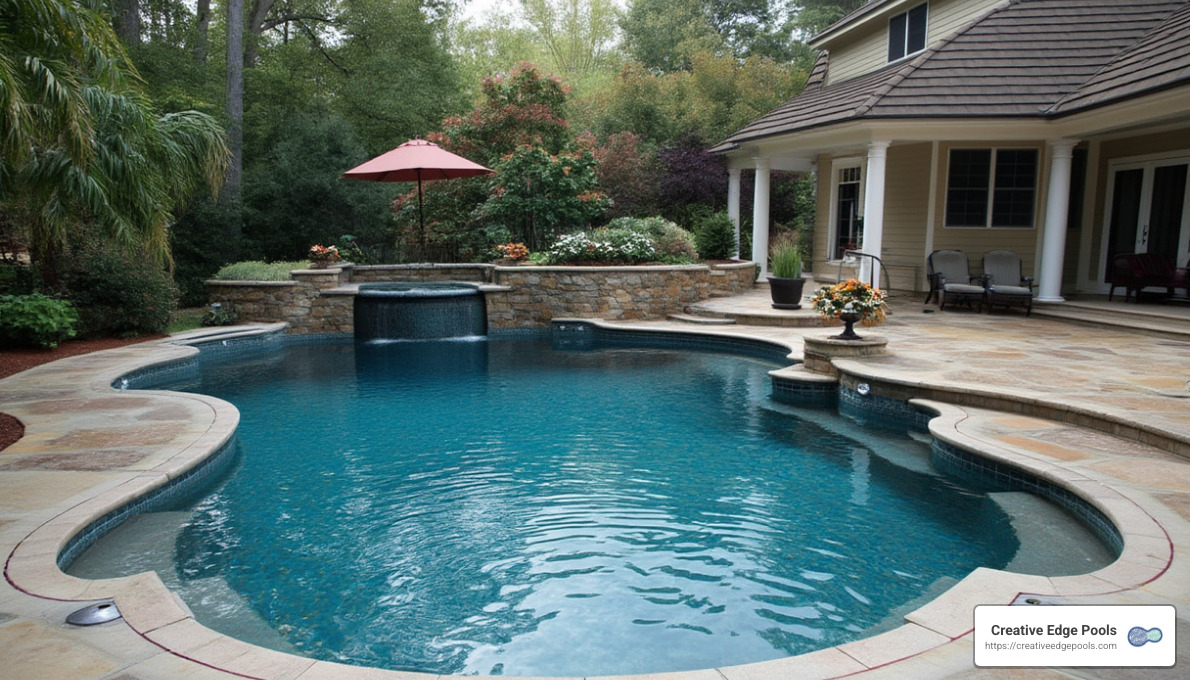
The beauty of gunite pools lies in this flexibility. Want a classic rectangle for neat simplicity? Done! Dreaming of a free-form tropical lagoon complete with curves and custom steps? Absolutely possible. The customization potential is virtually limitless.
One homeowner we worked with in Lexington, MA put it perfectly: “What sold me on gunite was knowing I could create exactly what I wanted. The design flexibility made the higher upfront cost worth every penny.”
Yes, the upfront cost of installing a gunite pool tends to be higher compared to fiberglass or vinyl liner pools—but for good reason. You’re not just paying for a basic swimming hole; you’re investing in a sturdy, tailor-made backyard oasis designed specifically to match your taste, lifestyle, and property layout.
And when properly maintained, your gunite pool doesn’t just look amazing—it becomes an integral part of your home’s value and your family’s memories for generations.
Factors Affecting the Cost of Installing a Gunite Pool
When it comes to planning your dream backyard retreat, understanding exactly what drives the cost of installing a gunite pool can save you a lot of time—and headaches. After all, the more you know upfront, the smoother your project will go.
Let’s explore the main factors that influence your final price tag, so you can budget with confidence and clarity.
How Pool Size and Depth Affect the Cost of Installing a Gunite Pool
As you might suspect, larger pools cost more because they require more materials, labor, and excavation work. For example, a cozy 10′ x 20′ pool (around 200 square feet) usually runs between $20,000 and $50,000. On the other hand, a slightly larger 14′ x 28′ pool (392 square feet) typically costs around $30,000 to $65,000, while an expansive 20′ x 40′ pool (800 square feet) can range anywhere from $80,000 to upwards of $200,000.
Depth also impacts cost significantly. A consistent, modest depth of around 4 to 5 feet tends to be economical. In comparison, pools with a deep end (for diving, for instance) require extra excavation, gunite, and labor. One homeowner we worked with in Southern New Hampshire saved nearly $8,000 simply by choosing a uniform 5.5-foot depth—instead of adding a diving area that required digging down over 8 feet!
Bottom line: If budget matters, consider scaling down a little or going with a consistent, shallower depth.
The Impact of Materials and Finishes on the Cost of Installing a Gunite Pool
The materials and finishes you choose aren’t just about looks—they also strongly impact the overall cost of installing a gunite pool.
For your pool’s interior finish, basic white plaster is the most cost-effective choice, costing about $4 to $5 per square foot. If you’d like something a bit fancier and more durable, you might explore quartz finishes, which add sparkle and longevity at around $8 to $12 per square foot. Pebble finishes step it up a notch further, providing a stunning natural look with premium longevity, typically costing between $12 and $20 per square foot. At the top end, tile finishes offer best durability and neat style, but they’ll set you back around $30 to $50 per square foot.
The coping—the decorative border around your pool’s edge—is another decision that impacts your total cost. Basic poured concrete coping is budget-friendly at approximately $6 to $10 per linear foot. Natural stone coping brings warmth and charm at roughly $40 to $55 per linear foot, while luxurious travertine is both cool underfoot and high-end, coming in around $45 to $60 per linear foot.
Then there’s your pool equipment. Standard filtration and pump systems typically range from $1,500 to $3,000. But upgrading to energy-efficient variable-speed pumps or saltwater systems—while initially pricier by about $2,000 to $5,000—can pay off with lower energy and chemical costs in the long run.
Site Preparation and Its Influence on Cost
Your backyard’s unique personality can also significantly impact the cost of installing a gunite pool. The easier it is for us to access and work on your property, the more manageable your costs.
For instance, easy accessibility for heavy equipment means costs remain standard. But tight or restricted access in urban or heavily landscaped neighborhoods might require specialized equipment or extra manual labor, adding an extra $3,000 to $8,000.
Terrain matters too. Flat and open yards are the easiest—and least expensive—to work with. If your yard has steep slopes, you’ll likely need retaining walls (adding about $5,000 to $15,000 to your budget) or extensive grading to create the right conditions for your pool.
Soil conditions are another wild card. Rocky areas or high water tables can cause excavation headaches. Hitting unexpected bedrock during excavation might add anywhere from $1,000 to $5,000. A client we worked with in Winchester, MA, finded exactly this scenario midway through excavation. Although the additional $4,200 for rock removal wasn’t initially budgeted, we helped offset these unforeseen costs by adjusting other aspects of their pool’s design.
Existing structures or obstacles, like large trees, buried utilities, or even old pools, can also drive up costs. Removing these can add between $2,000 and $10,000 depending on complexity and scale.
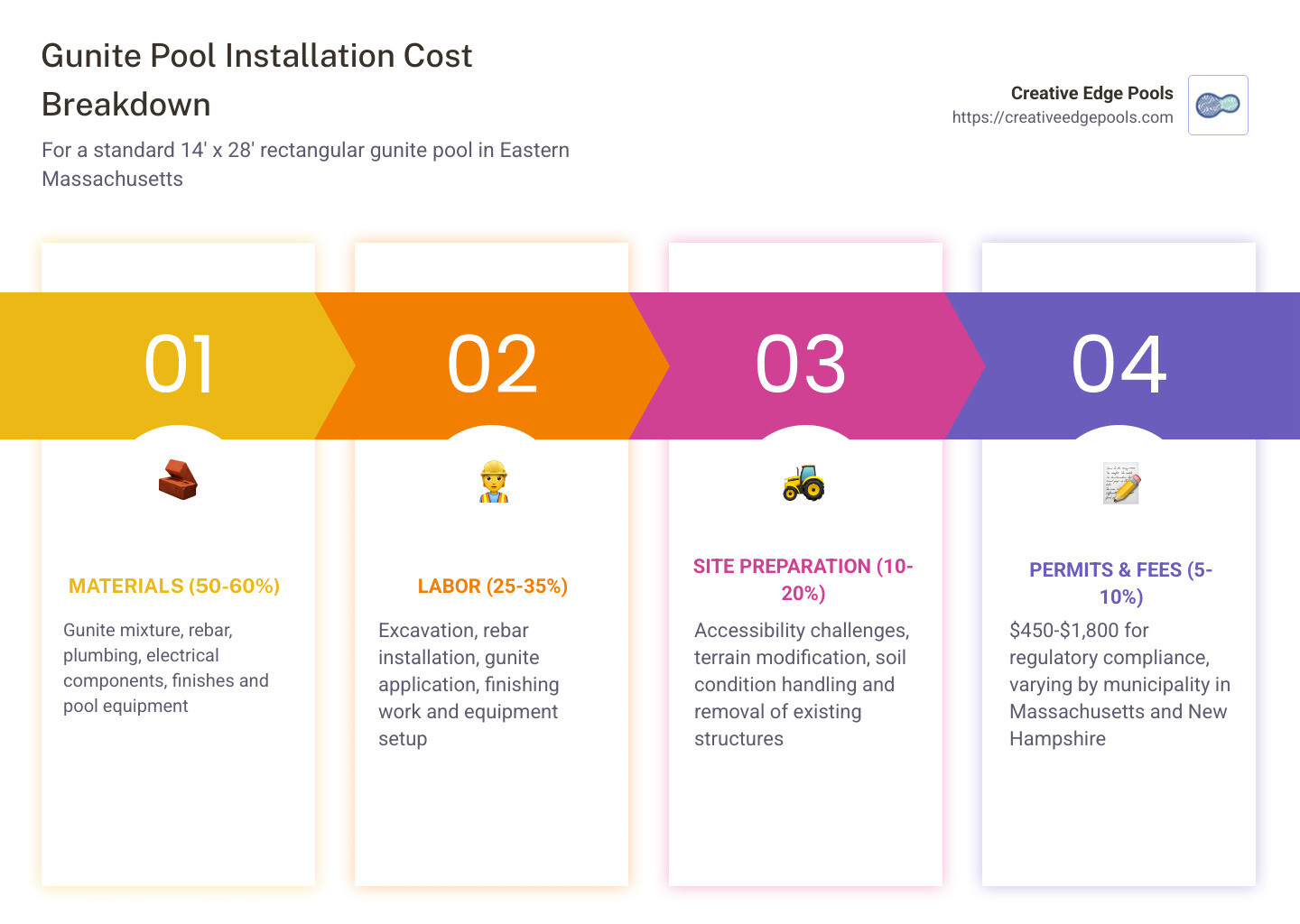
Finally, don’t overlook permits and regulations. Depending on your town’s specific requirements in Eastern Massachusetts or Southern New Hampshire, permit fees generally range from $450 to $1,800. Some municipalities have stricter rules on fencing, drainage, and setbacks, potentially adding additional expenses.
Regional price variations also play their part. Over the years, building pools throughout Massachusetts and New Hampshire, we’ve noticed that identical pool designs can vary by about $5,000 to $15,000 depending on local labor markets, permit fees, and availability of materials.
All these factors together show why the cost of installing a gunite pool isn’t just a simple, one-size-fits-all number. But don’t worry—a good pool builder will help you steer these factors from the start, finding creative solutions that match your vision and your budget.
Breakdown of Gunite Pool Installation Costs
We’ve explored the factors that influence the cost of installing a gunite pool, but let’s dive a little deeper into how these expenses break down. Knowing exactly where your investment is going can help you feel more confident in your budget and decisions.
Here’s a realistic look at the typical costs for installing a standard-sized, 14′ x 28′ rectangular gunite pool in Eastern Massachusetts or Southern New Hampshire:
Material Costs in Gunite Pool Construction
Materials usually make up about 50–60% of your total pool cost. The biggest chunk of this goes towards the actual gunite mixture, which typically costs around $3,000–$5,000, and the steel rebar framework, coming in around $2,000–$4,000, depending on the complexity of your design.
But materials extend well beyond just concrete and rebar. Your pool will need plumbing and electrical components, which can add roughly $3,000–$7,000. This includes all the pipes, wiring, lighting, and filtration system components that keep your pool clean and sparkling.
The interior finish you choose significantly affects your bottom line. Standard white plaster is the most budget-friendly at around $4,000–$5,000. Premium quartz or pebble finishes, however, are more durable, luxurious, and visually impressive—but you’ll need to budget between $8,000–$12,000 for quartz, or even higher ($12,000–$20,000) for pebble finishes. Tile is the top-of-the-line option, costing around $30–$50 per square foot, but it’s exceptionally long-lasting and adds a real “wow” factor.
Don’t overlook coping and tile work around the pool edges, either. This detail can run from $3,000 to $10,000 depending on materials—natural stone and travertine are more premium choices, while poured concrete is more wallet-friendly.
Lastly, you’ll need pool equipment like pumps, filters, and heaters, ranging from around $2,500 for basic systems to as much as $8,000 if you opt for energy-efficient and high-end equipment.
One of our recent clients in Hingham, MA initially hesitated at the extra $6,800 cost of upgrading from basic plaster to a pebble finish. But after seeing the luxurious look and added durability, they couldn’t be happier—proof that sometimes the extra investment pays off in satisfaction and longevity.
Labor Costs for Gunite Pool Installation
Materials don’t install themselves (if only, right?). Labor usually accounts for around 30–40% of the cost of installing a gunite pool. The good news: you’re paying for highly skilled and experienced professionals who ensure your pool will last for decades.
First, excavation gets your project rolling—literally. Clearing and digging out your pool’s shape generally costs between $3,000–$7,000, depending on your site’s complexity and accessibility. Next, installing plumbing and electrical lines typically adds another $2,500–$5,000.
The crucial task of building your pool’s internal skeleton—the rebar framework—requires skilled labor, usually costing $2,000–$4,000. Applying the gunite itself is a specialized skill that’s half science and half art. This critical step typically runs around $5,000–$8,000, and as our founder David Brabant always emphasizes, “The quality of your gunite application determines the longevity of your pool. This isn’t the area to pinch pennies!”
The finishing touches, including applying the interior finish and installing decking around your pool, add another $3,000–$7,000 for finishing and anywhere from $6,000–$15,000 for decking. Of course, your choice of decking material (basic concrete vs. neat natural stone or brick pavers) greatly influences the final cost.
Labor rates in Massachusetts and Southern New Hampshire do run higher than national averages—expect to pay $35–$75 per hour for pool contractors, while specialists like electricians can charge $50–$200 per hour. The good news? You’re investing in craftsmanship and expertise, ensuring your dream pool becomes a reality built to stand the test of time.
Ongoing Maintenance and Long-Term Costs
When budgeting for your dream backyard, the cost of installing a gunite pool isn’t the finish line—it’s just the beginning. Like a beautiful home or a classic car, your gunite pool will need ongoing care to keep it at its best.
On average, regular pool maintenance runs around $80 to $150 per month during swimming season. This fee covers essentials like balancing chemicals, routine cleaning, equipment checks, and seasonal opening and closing services. You can save by tackling these tasks yourself, though most homeowners we work with prefer leaving it to the pros. As our longtime client Janet from Andover, MA says, “My weekends are short enough—I’d rather be swimming than scrubbing!”
Another ongoing expense to factor into your budget is energy costs. Pumps, heaters, and lighting typically add around $100 to $300 monthly to your electric bill. Opting for energy-efficient equipment can greatly reduce these expenses, paying for itself over the long haul by lowering monthly bills.
One of the bigger ticket items you’ll encounter down the road is resurfacing your gunite pool. Depending on the size and finish, resurfacing typically costs between $6,000 and $15,000. Most gunite pools need resurfacing every 7 to 15 years, so be sure to factor this into your long-term planning. A client in Salem, NH told us, “We were caught off-guard when our pool needed resurfacing after just 8 years—we’d planned on 12. Knowing that upfront would have helped us budget better.”
Other periodic expenses will pop up now and then as well. For example, your pool’s pump typically needs replacing every 8 to 12 years, costing around $500 to $1,500. Every 5 to 7 years, expect to replace your filter media, adding another $300 to $500 to the tally. Heaters generally need maintenance or replacing every 7 to 10 years, which can run from $1,500 to $3,500, and pool covers usually need replacing every 5 to 7 years at a cost of $1,200 to $3,000.
Despite these ongoing expenses, a well-maintained gunite pool offers unbeatable longevity—often lasting 50 years or more. In fact, investing in regular maintenance helps ensure you’ll enjoy decades of family fun and backyard relaxation.
For even more helpful insights about caring properly for your pool, check out this scientific research on gunite pool maintenance.
Comparing the Cost of Gunite Pools to Other Pool Types
If you’re weighing up the cost of installing a gunite pool, it’s helpful to see how it stacks up against other common pool types. Each option—gunite, fiberglass, and vinyl liner—has its own set of pros and cons when it comes to initial costs, ongoing maintenance, lifespan, and customization potential.
Let’s start with gunite pools, the premium option. They typically run between $50,000 and $120,000 upfront, with annual maintenance costs averaging about $2,700–$4,000. While this might seem high initially, you’re investing in best customization possibilities and a robust structure built to last 50+ years.
On the other hand, fiberglass pools often cost less upfront—typically between $30,000 and $85,000—and require minimal annual maintenance, averaging only about $500–$1,500 per year. Sounds appealing, right? But there’s a catch: fiberglass pools come as pre-made shells, limiting you to a set of predefined shapes and sizes. Installation can be quicker (usually around 1–3 weeks compared to 6–8 weeks for gunite), but their lifespan usually tops out around 25–35 years, roughly half that of gunite.
Vinyl liner pools offer the lowest initial investment, generally costing between $25,000 and $65,000. Annual maintenance is moderate, sitting around $1,000–$2,500. But here’s the thing—you’ll need to replace that vinyl liner every 7–10 years, and that’s a $4,000–$7,000 bill each time. Over the years, these replacements add up, narrowing the price gap between vinyl and gunite pools significantly. Plus, vinyl pools have limited design flexibility and durability, which could be a drawback if you’re dreaming of something truly unique for your backyard.
To sum it up clearly, here’s a handy side-by-side comparison:
| Pool Type | Initial Cost | Lifespan | Annual Maintenance | Customization |
|---|---|---|---|---|
| Gunite | $50,000–$120,000 | 50+ years | High ($2,700–$4,000) | Unlimited |
| Fiberglass | $30,000–$85,000 | 25–35 years | Low ($500–$1,500) | Limited (pre-made shells) |
| Vinyl Liner | $25,000–$65,000 | Liner: 7–10 years | Medium ($1,000–$2,500) | Somewhat limited |
When thinking long-term, it’s worth noting that gunite pools typically add the most resale value to your home—usually increasing home value by about 5–7%. According to the Remodeling Impact Report, homeowners with gunite pools in markets like Massachusetts and New Hampshire often see a return on investment (ROI) of roughly 56%. Not bad, right?
One of our clients in Scituate, MA, shared a great insight: “We initially considered fiberglass due to the lower upfront costs, but our sloped yard needed a custom design. Gunite cost more at first, but we knew we’d get exactly what we envisioned—and we wouldn’t have to replace it in our lifetime.”
Comparing the cost of installing a gunite pool with fiberglass or vinyl comes down to your priorities. If you’re after a fully customized, long-lasting backyard masterpiece that’s truly built to last, the extra upfront investment in a gunite pool makes perfect sense.
For more in-depth comparisons, check out our page on comparing the cost of gunite inground pools to other types of pools.
How to Save Money on Your Gunite Pool Installation
While the cost of installing a gunite pool is certainly a significant investment, there are plenty of smart ways to get the backyard of your dreams without breaking the bank.
One of the easiest and most effective strategies is to build a smaller pool. Reducing your pool’s size even slightly can lead to big savings, often $10,000 to $20,000. You might be surprised: a 12′ x 24′ pool, for instance, still offers plenty of space for relaxation and fun, while keeping more money in your wallet. One of our Lexington clients scaled down by only four feet and happily reported saving nearly $12,000. Their take? “We honestly don’t miss the extra space—and we put that savings toward patio furniture and landscaping instead.”
Another straightforward way to trim costs is choosing simpler shapes like rectangles or ovals. While free-form or elaborately curved pools can look stunning, their complexity means increased labor and higher material expenses. Opting for a clean, straightforward shape often saves homeowners between $3,000 and $8,000 without sacrificing style or functionality.
You can also keep initial costs lower by limiting extras up front. We frequently suggest a phased approach to our customers. Rather than adding every bell and whistle right away, start with your essential pool design and gradually add features like waterfalls, specialized lighting, automation, or even an attached spa in future seasons. For example, choosing basic pool lighting instead of color-changing LED systems could save you $1,500 to $3,000 upfront. Similarly, picking standard tile over intricate glass mosaic patterns can save $3,000 to $10,000 initially. One Winchester family took this advice, opting for standard white plaster rather than a premium pebble finish, saving about $7,000. They’re planning to upgrade when it’s time for regular resurfacing in 7-10 years—a practical choice that keeps costs manageable over time.
The timing of your pool build can also impact the bottom line. Building during the off-season—like fall and winter—often means contractors have greater schedule flexibility and may offer more competitive pricing. We’ve routinely seen homeowners in Massachusetts and New Hampshire save 5-10% by scheduling their pool installations during these quieter months.
Don’t underestimate the power of comparison shopping. Always get multiple quotes from reputable local pool builders to ensure you’re receiving fair and accurate pricing. Aim for at least three detailed quotes. Be cautious, though—quotes significantly lower than others might signal hidden fees down the road or substandard workmanship. At Creative Edge Pools, we pride ourselves on transparency, so we always recommend homeowners thoroughly evaluate both price and quality.
Taking on some pool care tasks yourself can also save serious money over time. Learning basic DIY maintenance, such as routine cleaning and chemical balancing, could save you around $1,000 to $2,000 annually. Plus, many of our customers enjoy the hands-on experience—it’s a great way to get familiar with your pool and notice small issues before they become costly problems.
Lastly, consider carefully which equipment you choose. While opting for cheaper items upfront, like a single-speed pump over an energy-efficient variable-speed model, can save $800 to $1,200 initially, it usually results in higher energy bills down the road. Some cost-saving measures are smart investments; others can end up costing you more over the life of your pool.
In short, the cost of installing a gunite pool doesn’t have to be overwhelming. With thoughtful planning, strategic choices, and a clear understanding of your options, you can keep your budget under control. For even more tips on saving money on your gunite pool, visit our detailed guide: Understanding the Factors That Affect the Cost of Gunite Inground Pools.
Frequently Asked Questions about the Cost of Installing a Gunite Pool
How much does it cost to install a gunite pool?
The cost of installing a gunite pool typically ranges from $50,000 to $120,000 for a complete backyard oasis. To break this down a bit more clearly, expect to pay around $100 to $250 per square foot. For instance, if you’re picturing a standard 14′ x 28′ pool, the basic structure and materials usually run between $30,000 and $65,000. Once you add decking, equipment, landscaping, and special features like waterfalls or lighting, the total cost can easily climb to $80,000–$100,000.
Of course, your exact cost depends heavily on your location and property specifics. Here in Eastern Massachusetts and Southern New Hampshire—where Creative Edge Pools operates—the cost tends to be roughly 10%–15% higher than the national average. Why? Labor rates are higher, permitting processes can be stricter, and our window for construction each year is shorter due to New England winters.
As one of our happy homeowners in Hingham once shared, “When I saw the national averages online, I panicked a bit. But once I started getting quotes locally, I realized the numbers made sense for our area. It’s definitely a ‘you get what you pay for’ situation here.”
How long does it take to build a gunite pool?
From the day we start digging your dream pool to that first refreshing cannonball splash, it typically takes around 6–8 weeks. But remember—that’s just the physical construction. From the first consultation and custom design meetings through permitting, excavation, and even weather delays, it’s smart to budget 3–6 months total from start to finish.
Here’s a simplified breakdown of the timeline you can expect:
- Design & permitting typically takes about 2–8 weeks, depending on your town’s approval process.
- Excavation happens fast—usually just a day or two.
- Steel and plumbing installation usually takes about 3–5 days.
- Gunite application is completed in a single day (but requires curing time of 7–10 days afterward).
- Tile and coping installation takes roughly 3–5 days.
- Interior finish (like plaster or pebble) requires another 1–2 days.
- Decking and landscaping around your pool usually takes 1–2 weeks.
- Equipment installation and final startup add another 2–3 days.
Sometimes, things take longer. Permit delays (particularly common in coastal areas of Massachusetts), unexpected weather, or tricky excavation sites (like hitting ledge rock) can add weeks. One family in Salem, NH told us, “We planned to swim by Memorial Day, but spring rains delayed us almost three weeks. Having realistic expectations from the start would have helped ease the disappointment.”
The key is to start the planning process early—ideally several months before you want your first dip. That way, any surprises won’t feel quite as frustrating.
Does a gunite pool add value to my home?
Absolutely! A beautifully designed and properly installed gunite pool typically boosts your home’s value by about 5%–7%. According to the National Association of Realtors’ Remodeling Impact Report, homeowners typically recover around 56% of their pool investment when it comes time to sell—especially appealing in markets like Massachusetts and New Hampshire.
But it’s not just financial value that counts. Time and again, homeowners tell us the real return is in enjoyment and lifestyle improvements. In fact, surveys show that 95% of homeowners who added a pool report greater enjoyment of their home, and 86% say they now entertain friends and family more often.
Local real estate pros also agree—especially in upscale neighborhoods—a quality gunite pool can be a major selling point. As one realtor in Lexington told us, “For luxury homebuyers, a well-built gunite pool becomes a deciding factor. They appreciate the longevity and custom design compared to fiberglass or vinyl alternatives.”
Just remember, the exact value a pool adds can vary based on your specific neighborhood, local climate, and how well the pool integrates with your overall landscape and home design. The bottom line: a thoughtfully designed gunite pool isn’t just a personal indulgence—it’s an investment in your home’s future.
Conclusion
Investing in your dream backyard with a gunite pool is a big decision—one that comes with a significant financial commitment. But the truth is, when you clearly understand the cost of installing a gunite pool, you set yourself up for long-term satisfaction and success.
At Creative Edge Pools, we’ve spent decades helping homeowners throughout Eastern Massachusetts and Southern New Hampshire bring their perfect pool visions to life. Time and again, we’ve noticed one common theme: homeowners who go into their pool project with eyes wide open to costs and expectations end up happiest in the long run.
That initial price tag can feel overwhelming. But remember, you’re not just paying for a simple swimming hole. With a gunite pool, you’re investing in something truly special—a customizable, durable, and beautiful feature custom specifically to your family and property. This is an investment that can transform your entire outdoor living experience, lasting 50 years or more when properly cared for.
As one of our Scituate clients recently shared: “We were initially hesitant about the cost, but now—three years into having our gunite pool—we wouldn’t change a thing. Understanding the full cost upfront let us choose features that fit our needs and budget perfectly. Honestly, it’s the best investment we’ve ever made in our home.”
Beyond the pool itself, our comprehensive backyard development approach integrates your new pool seamlessly into your entire outdoor space. Whether it’s landscaping, masonry, or lighting, we take every element into consideration, creating an outdoor oasis that improves your quality of life and boosts your home’s value.
Ready to take the next step toward your backyard dream? Let’s chat! At Creative Edge Pools, we’re always here to answer your questions, walk you through every detail, and provide a personalized quote custom specifically to your home.
Contact Creative Edge Pools today for a no-obligation consultation. Together, we’ll create a customized gunite pool that’s ideal for your lifestyle, your family, and yes—your budget.
More info about gunite pool costs