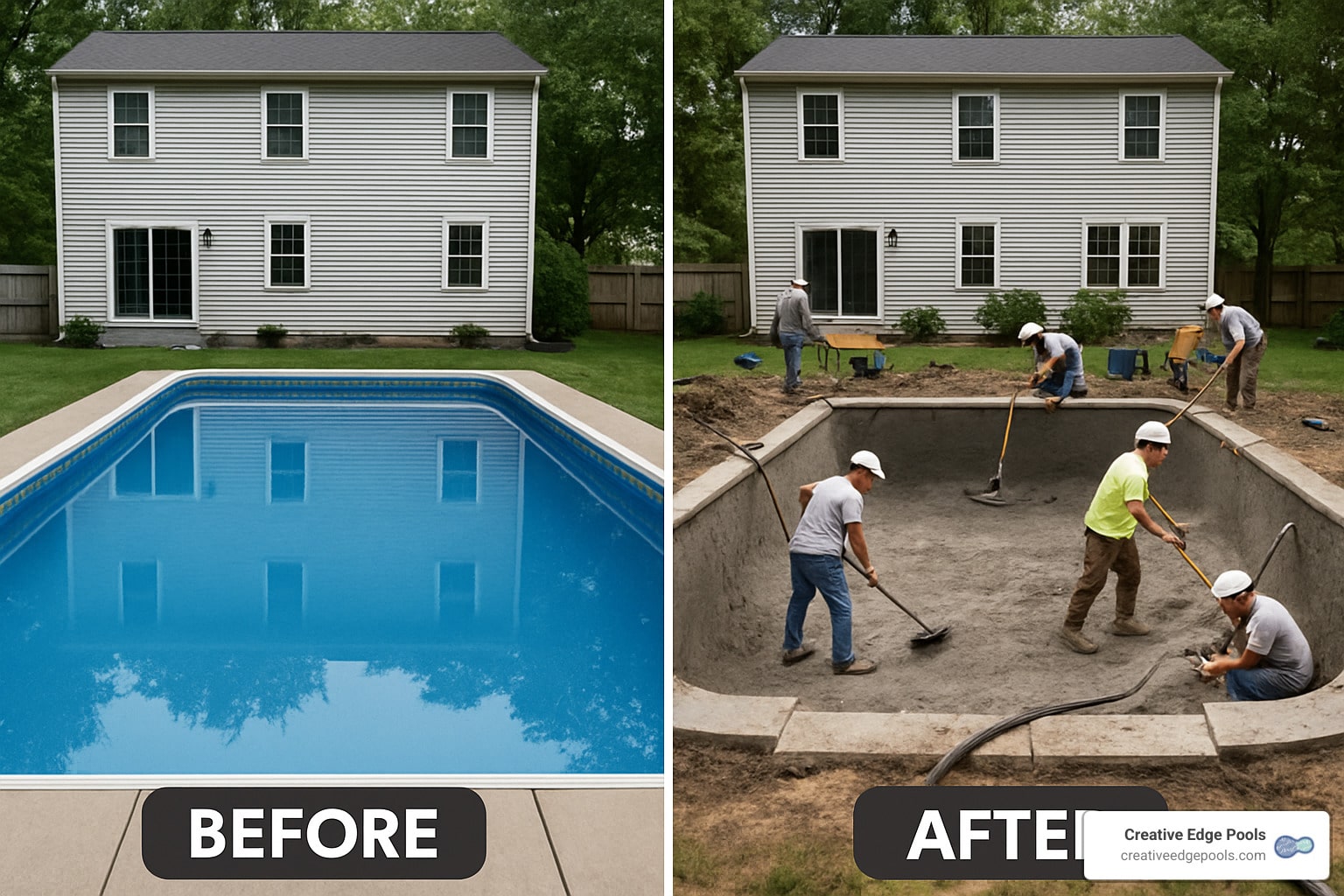
convert liner pool to gunite cost: 7 Powerful Reasons in 2025
Understanding the True Cost of Pool Conversion
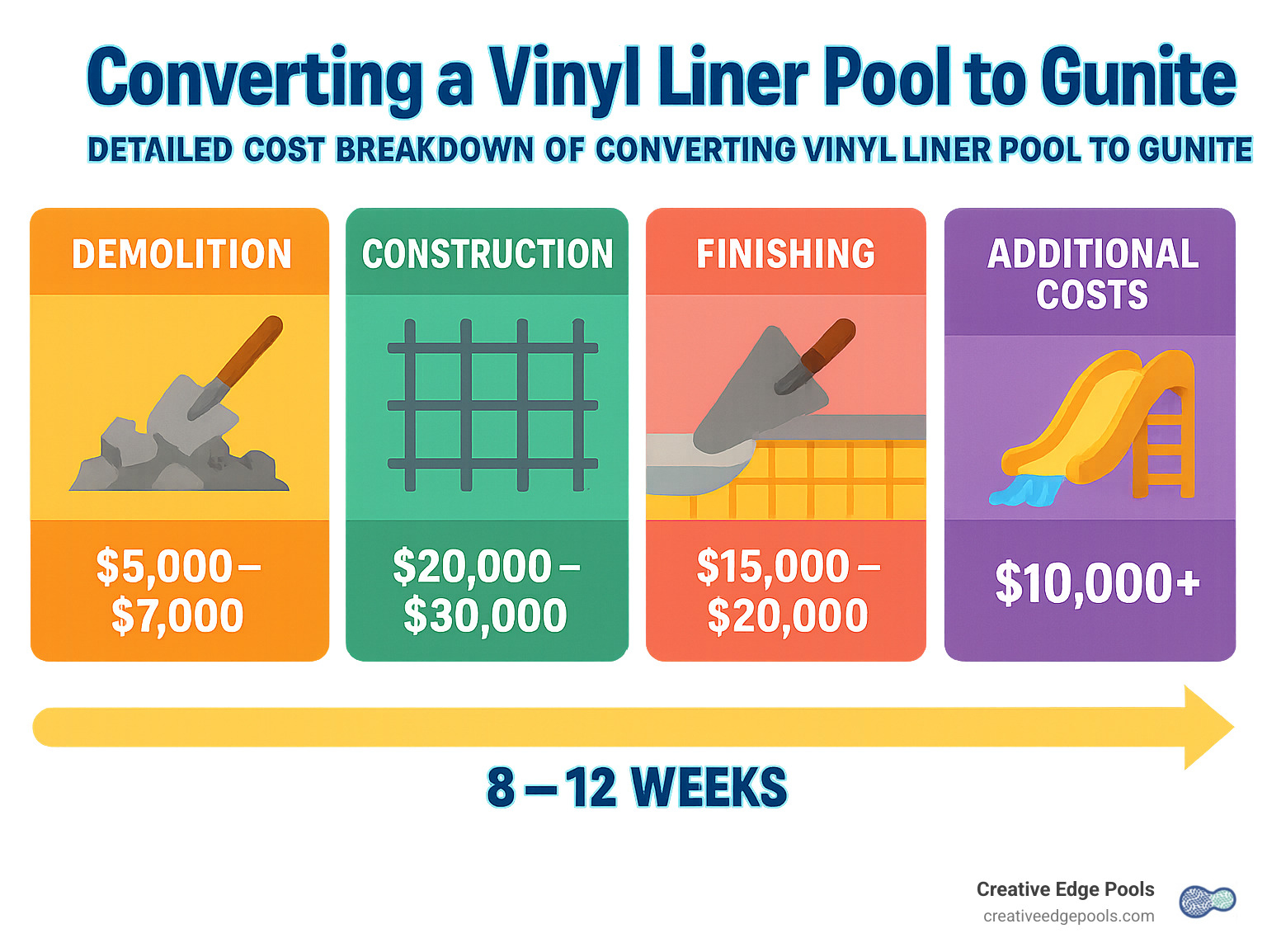
Converting a liner pool to gunite cost typically ranges from $50,000 to $65,000 for an average-sized pool, which is about the same as installing a new gunite pool from scratch. The only potential savings comes from reduced excavation costs, usually around $3,000-$5,000.
| Conversion Cost Component | Price Range |
|---|---|
| Demolition & Removal | $5,000 – $7,000 |
| Rebar Framework | $5,000 – $8,000 |
| Gunite Application | $10,000 – $15,000 |
| Plumbing & Electrical | $5,000 – $7,000 |
| Finishing (Plaster, Tile, Coping) | $15,000 – $20,000 |
| Additional Features | $10,000+ |
Many homeowners with aging vinyl liner pools consider converting to gunite for its durability, customization options, and reduced long-term maintenance. While vinyl liners need replacement every 5-9 years (costing $2,500-$4,500 each time), a properly maintained gunite pool can last decades before needing significant resurfacing.
Converting your pool isn’t simply about filling the existing hole with concrete – it’s a major construction project requiring demolition, reinforcement, and completely new systems. The process typically takes 8-12 weeks, significantly longer than the 1-2 days needed for a vinyl liner replacement.
I’m David Brabant, owner of Creative Edge Pools with over thirty years of experience in swimming pool construction, and I’ve personally overseen dozens of vinyl-to-gunite conversion projects where the convert liner pool to gunite cost was justified by homeowners seeking long-term value and custom features unavailable with vinyl liners.
Find more about convert liner pool to gunite cost:
– 15×30 gunite pool cost
– shotcrete pool cost
Why This Guide Matters
When homeowners in Massachusetts and New Hampshire call us about their aging vinyl liner pools, we often hear the same frustrations: another liner replacement looming, limited design options, and concerns about long-term value. If you’re weighing the convert liner pool to gunite cost against continued vinyl liner maintenance, this comprehensive guide will help you make an informed decision.
Converting to gunite isn’t just about durability—though a properly built gunite shell can last 50+ years compared to vinyl’s 5-9 year liner lifespan. It’s also about open uping design possibilities like custom shapes, integrated spas, tanning ledges, and built-in seating that simply aren’t possible with a vinyl liner pool.
For many of our clients, the conversion represents a significant investment in their property. A well-designed gunite pool can boost your home’s value and create a resort-like backyard experience that vinyl simply can’t match. And while the upfront convert liner pool to gunite cost is substantial, the long-term maintenance savings often justify the investment for those planning to stay in their homes for 7+ years.
Vinyl vs. Gunite: Key Differences & Why Homeowners Convert
Before diving into the convert liner pool to gunite cost, it’s important to understand the fundamental differences between these two pool types that drive homeowners to make the switch.
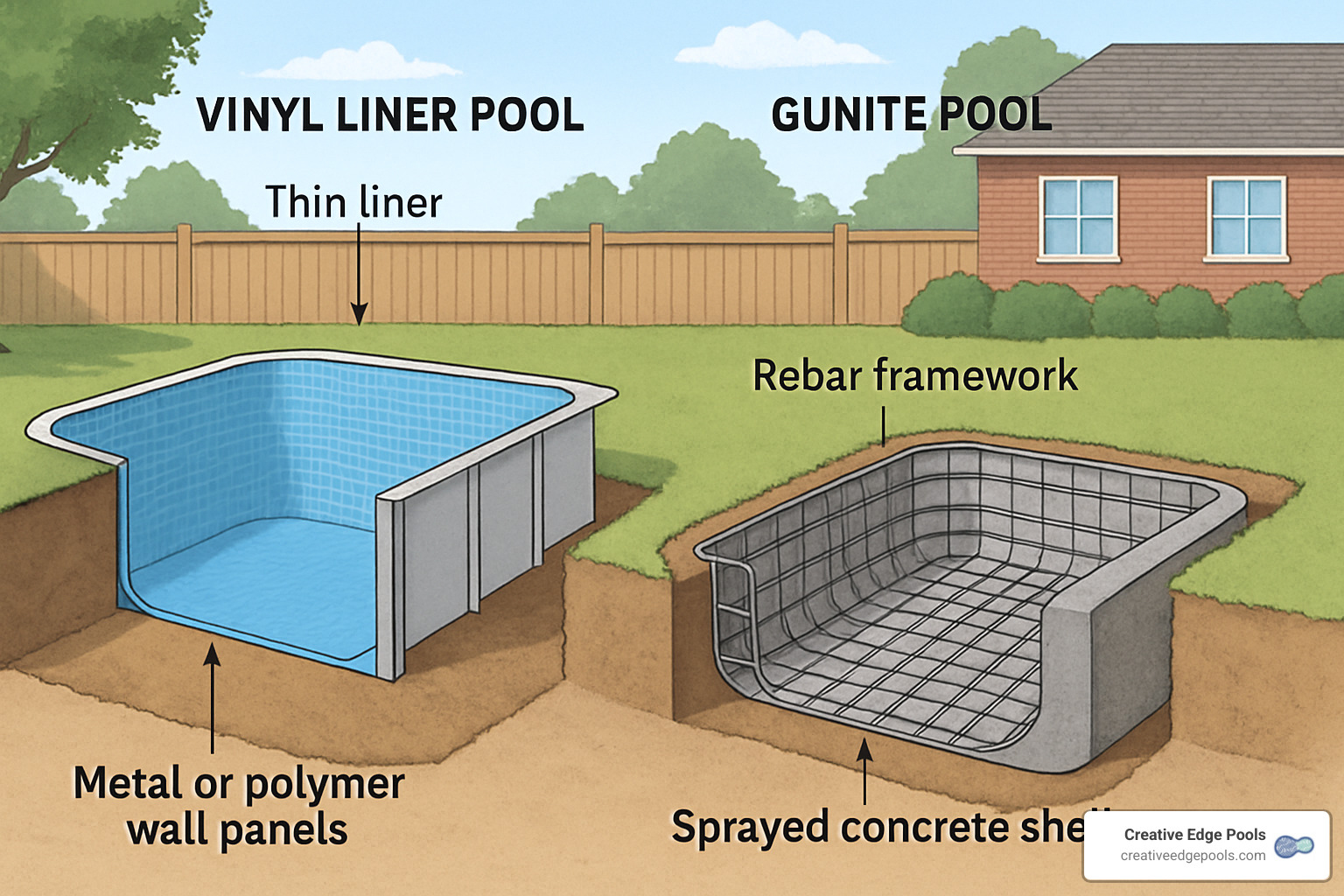
When I meet with homeowners considering a pool conversion, I always start by explaining what they’re actually dealing with. Your vinyl liner pool has a thin vinyl membrane (usually just 20-30 mil thick) that’s essentially a water-holding “bag” supported by wall panels made of metal, polymer, or composite materials. It’s like having a sophisticated above-ground pool that’s been sunk into the earth.
Gunite, on the other hand, is a completely different animal. We create a sturdy skeleton of engineered steel rebar, then spray a cement-sand-water mixture onto this framework. The result? A rock-solid, monolithic concrete shell that stands the test of time.
One of the first things swimmers notice is the difference in feel. Vinyl liners are smooth and somewhat soft underfoot – many people love this sensation. Gunite has a slightly rougher texture, though modern finishing options can create smoother surfaces. I’ve had clients who initially missed their vinyl’s softness but quickly came to appreciate the substantial, permanent feel of gunite beneath their feet.
When it comes to design possibilities, there’s simply no comparison. As I often tell my clients, “With vinyl, you’re limited to what liner patterns are available and what shapes the prefabricated wall panels can create. With gunite, if you can dream it, we can build it.” Want a free-form lagoon with integrated spa and beach entry? Only gunite can deliver that vision.
The maintenance costs over a decade look quite different:
For vinyl liner pools, you’re looking at approximately $7,000, including at least one liner replacement (which becomes inevitable around year 7-9).
Gunite maintenance runs higher at $15,000-$27,000 over that same decade, covering regular maintenance and potentially minor resurfacing.
But here’s the key: this higher maintenance cost for gunite is spread over a much longer lifespan – often 50+ years for the shell itself – making the annual cost potentially lower when you look at the big picture.
The impact on your home’s value shouldn’t be overlooked either. Working across Eastern Massachusetts, I’ve consistently seen gunite pools add more resale value than vinyl liner pools. In upscale neighborhoods, real estate professionals in our network report gunite pools commanding $15,000-$25,000 more in home value compared to similar properties with vinyl pools.
Our New England climate creates special considerations too. Vinyl liner pools can be more vulnerable to frost heave during our harsh winters. I’ve seen many vinyl pools develop wrinkles and wall damage after particularly cold seasons. Properly constructed gunite pools with appropriate winterizing typically withstand these seasonal temperature changes much better.
Got pets? If your furry friends enjoy a swim, gunite offers superior resistance to claw damage. Even a thicker 28 mil vinyl liner can be punctured by active dogs, leading to repairs or premature replacement – an ongoing concern I hear from many dog-owning clients.
For those interested in the technical differences between gunite and shotcrete construction methods, check out our detailed comparison page.
Pros & Cons Snapshot
When weighing your options, consider these key differences:
Vinyl Liner Pools offer a smooth surface feel that many swimmers love and come with a lower initial installation cost. They can be installed relatively quickly (2-3 weeks) and have a lower 10-year maintenance cost upfront. The downside? You’ll face liner replacement every 5-9 years, have limited design options, and always worry about tears and punctures. The overall lifespan is significantly shorter than gunite.
Gunite Pools provide exceptional durability with a 50+ year shell lifespan and unlimited design options that can truly personalize your backyard. They typically bring better resale value, are completely pet-friendly, and can incorporate complex water features that vinyl simply can’t support. The trade-offs include a higher initial cost, longer construction time (2-4 months), slightly rougher surface texture, and higher 10-year maintenance costs spread over a much longer lifespan.
As one of our clients who completed a conversion recently told me: “I replaced my vinyl liner three times in 15 years before converting to gunite. Looking back, I wish I’d made the switch sooner—the convert liner pool to gunite cost was worth every penny for the peace of mind and design flexibility.”
Breaking Down the convert liner pool to gunite cost
When homeowners first call us about the convert liner pool to gunite cost, there’s often a hopeful assumption: “I already have a hole in the ground, so this should be much cheaper than building a new pool, right?” I wish it were that simple!
The truth is, converting your vinyl liner pool to gunite is essentially building a new pool with a small discount for the existing excavation. Let me walk you through what this really means for your wallet.
That existing hole typically saves you about $3,000-$5,000 in excavation costs – helpful, but a relatively small portion of the overall project. To put this in perspective, here’s how the long-term costs actually compare:
| Expense Category | Vinyl Liner (20-year period) | Gunite Conversion (20-year period) |
|---|---|---|
| Initial Cost/Conversion | $50,000 (new pool) | $50,000-$65,000 (conversion) |
| Liner Replacements | $10,000-$18,000 (3-4 replacements) | $0 |
| Resurfacing | $0 | $8,000-$15,000 (once at 15-20 years) |
| Chemical Usage | Higher (vinyl requires more) | Lower (30% less chlorine needed) |
| Energy Costs | Comparable | Comparable |
| Total 20-Year Cost | $60,000-$68,000+ | $58,000-$80,000 |
When viewed over a 20-year period (which is how long most families stay in their homes), the numbers tell an interesting story. While gunite has a higher upfront cost, the elimination of repeated liner replacements helps offset this difference over time.
Core Cost Components of convert liner pool to gunite cost
Let’s break down where your money actually goes during a conversion:
Demolition and Removal ($5,000-$7,000) – This isn’t just pulling out a liner; we’re completely dismantling the existing structure. We remove the vinyl liner, take apart the steel or polymer walls, and prepare everything for new construction. It’s dusty, noisy work that requires heavy equipment and proper disposal.
Steel Reinforcement and Gunite Shell ($15,000-$23,000) – This is the heart of your new pool. We create a precisely engineered steel rebar framework – think of it as your pool’s skeleton – then specialized crews spray the gunite mixture onto this framework. This creates that incredibly strong, monolithic concrete structure that can last generations.
Plumbing and Electrical Upgrades ($5,000-$7,000) – Most vinyl pool plumbing systems simply won’t work for a gunite pool. We typically need to install larger pipes, more efficient returns, and better skimmers. Electrical systems often need upgrades too, especially if you’re adding features like LED lighting or automation.
Interior Finish ($5,000-$15,000+) – Here’s where you have choices. Basic white plaster starts around $5,000-$7,000, while quartz aggregates run $7,000-$10,000. Premium pebble finishes cost $10,000-$15,000 but offer exceptional durability and a natural feel. For the ultimate luxury, all-tile interiors start at $25,000 but can last decades.
Coping and Tile ($5,000-$10,000) – The waterline tile and coping (the material that caps the edge of your pool) are both functional and decorative elements. Options range from standard precast concrete to beautiful natural stones like bluestone or travertine.
Design Extras (Variable) – This is where many homeowners find the real value in conversion. Features like tanning ledges, built-in seating, beach entries, and integrated spas add $5,000-$20,000+ to your project, but these customizations are often why people make the switch in the first place.

You can learn more about the fascinating science behind shotcrete application that makes gunite pools so durable on Wikipedia’s shotcrete page.
Hidden Charges & Potential Savings in convert liner pool to gunite cost
After 30 years in this business, I’ve learned to be upfront about potential surprise costs. Here’s what might not be in the initial estimate:
Soil Testing and Engineering ($1,000-$1,500) – Especially important in New England where our soil conditions can be challenging. This isn’t just bureaucratic paperwork – it ensures your pool won’t crack or shift over time.
Permits and Inspections ($500-$2,000) – These costs vary widely between towns in Massachusetts and New Hampshire. Some municipalities treat conversions like new construction, requiring multiple inspections throughout the process.
Deck Removal and Replacement ($10,000-$30,000+) – We often need to remove existing decking to access the pool structure. While this adds cost, it’s also an opportunity to upgrade to premium materials that complement your new gunite pool.
Water Fill and Chemistry Startup ($300-$1,000) – Filling a 20,000-gallon pool costs $100-$400 in most areas, plus the initial chemical balancing requires professional attention to protect your new interior finish.
Financing Costs (Variable) – If you’re financing your conversion, remember to factor in interest and fees into your total project cost.
Now for the good news – you can save in several ways:
Your existing hole provides an excavation credit of $3,000-$5,000, which is the primary cost advantage of conversion versus new construction.
Sometimes newer pumps, filters, or heaters may be reusable, though most conversions include new equipment for optimal performance with your gunite pool.
Many homeowners opt for phased construction, completing the core conversion first, then adding premium features like upgraded decking or water features in subsequent years.
New Gunite Build vs. Conversion: Dollar-for-Dollar
I’m always honest with my clients: the convert liner pool to gunite cost is nearly equivalent to building a new gunite pool from scratch. The primary financial advantage is that excavation savings of $3,000-$5,000.
However, conversion offers other benefits that aren’t strictly financial:
Your existing landscaping experiences less disruption. For homes with mature trees and established gardens, this can be a significant advantage.
In some towns across Massachusetts and New Hampshire, conversions face fewer permitting problems than new construction.
While maintaining the basic location, conversion allows you to completely reimagine the pool’s shape, depth, and features.
As one of our clients in Andover recently told me: “We considered both options—removing our old vinyl pool completely or converting to gunite. The convert liner pool to gunite cost was similar either way, but conversion meant less disruption to our mature landscaping, which was priceless to us.”
The Step-by-Step Conversion Process & Timeline
Converting your vinyl liner pool to gunite isn’t something that happens overnight—it’s a comprehensive construction project that typically takes 8-12 weeks from start to finish. Understanding what happens when will help you plan your summer and set realistic expectations for your backyard change.
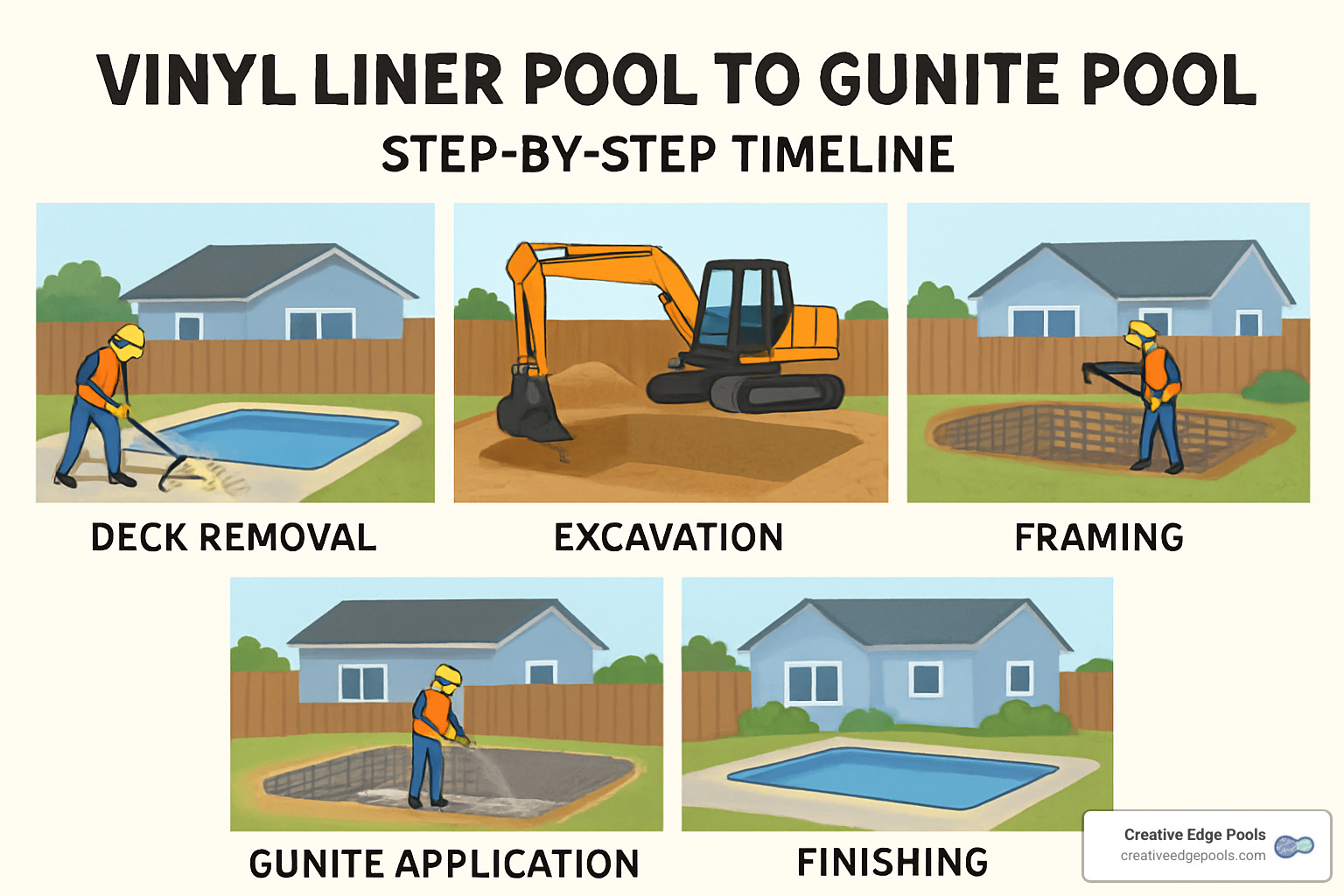
When I talk with homeowners about the convert liner pool to gunite cost, I always make sure they understand the timeline is part of that investment. The process begins with careful planning—we’ll assess your site, take detailed measurements, and create engineering plans for permits. This pre-construction phase usually takes 1-3 weeks, during which you’ll also select materials and finalize your contract.
Once demolition begins, things start moving quickly. We’ll drain your existing pool, remove the vinyl liner, and dismantle those wall panels and floor systems. This demolition phase typically takes about a week, and it’s when your backyard starts to look like a construction zone—fair warning!
The site preparation phase is where our experience really shines. We’ll set precise elevations using laser transit equipment, test and compact the soil, and address any drainage issues we find. This 1-2 week process creates the stable foundation your new gunite pool needs for decades of enjoyment.
Next comes what I consider the most exciting part—building the actual structure of your new pool. Over 2-3 weeks, we’ll install all-new plumbing lines and equipment, build the steel rebar framework (the skeleton of your pool), and engineer a strong bond beam around the upper edge. This metalwork might not look pretty, but it’s the backbone of your pool’s strength.
Then comes gunite day! This is when a specialized crew applies the concrete mixture to your rebar framework. The application itself only takes a day, but what follows is non-negotiable: a 28-30 day curing period. As I tell all my clients, “We can’t rush Mother Nature on this one.” During this month, we’ll regularly mist the shell to ensure proper curing—this patience pays dividends in long-term durability.
While the shell cures, we don’t sit idle. We’ll begin installing your waterline tile and coping. Once curing is complete, we’ll apply your chosen interior surface—whether that’s classic plaster, a quartz aggregate, or a pebble finish. Your deck construction or restoration happens during this 2-3 week finishing phase as well.
The final week is all about startup and training. We’ll fill your new pool, balance the chemicals, test all equipment, and most importantly, show you how to care for your investment. By this point, you’re probably more than ready for that first swim!
Weather can throw a wrench in even the best-planned timelines, especially here in New England. Rain delays during excavation or extreme temperatures during finishing can extend your project by a week or two. We always build some flexibility into our schedules for these inevitable New England weather surprises.
For more detailed information about our renovation process, visit our Gunite Pool Renovations page.
Week-by-Week Milestones
I find that homeowners appreciate knowing exactly what to expect as their project progresses, so here’s how a typical conversion unfolds:
Weeks 1-2:
Your permits get secured, we begin preparing the site, and your existing pool gets drained as we remove that old liner. This is when the reality of the project starts to sink in!
Weeks 3-4:
Out come the wall panels and floor, and in go new plumbing trenches. The rough-in plumbing gets completed, setting the stage for your pool’s circulatory system.
Weeks 5-6:
This is when your pool really takes shape as we construct the steel rebar cage—it looks like a giant metal sculpture in your yard! We’ll complete all electrical work and then apply the gunite to create your pool shell.
Weeks 7-10:
While your gunite cures (this waiting period is crucial), we don’t waste time. We’ll begin installing waterline tile and coping to frame your pool beautifully.
Weeks 11-12:
The home stretch! We apply your interior finish, fill the pool, establish the chemical balance, and conduct final inspections. Then comes the best part—handing you the keys to your new backyard oasis.
As Sarah from Andover told me after her conversion last summer: “The convert liner pool to gunite cost included more waiting than I expected, but watching our boring rectangle transform into a resort-style pool with a tanning ledge and built-in spa was like watching an HGTV show in my own backyard. Worth every penny and every week of construction dust!”
Design Upgrades, Property Value & Alternatives
One of the biggest thrills of taking on the convert liner pool to gunite cost is the chance to completely reimagine your backyard. When homeowners call us about conversion, they’re often most excited about the design possibilities that simply don’t exist with vinyl liners.
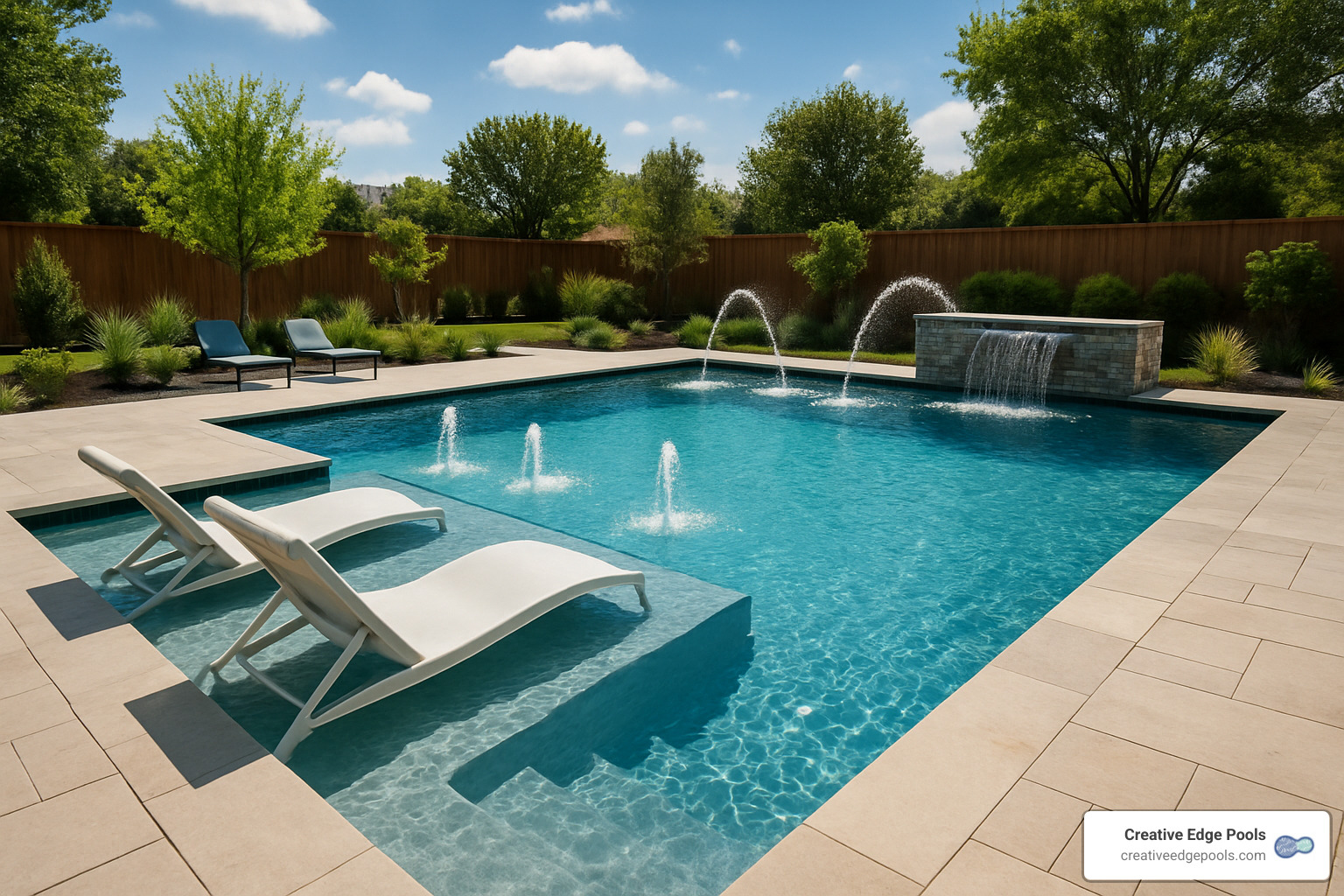
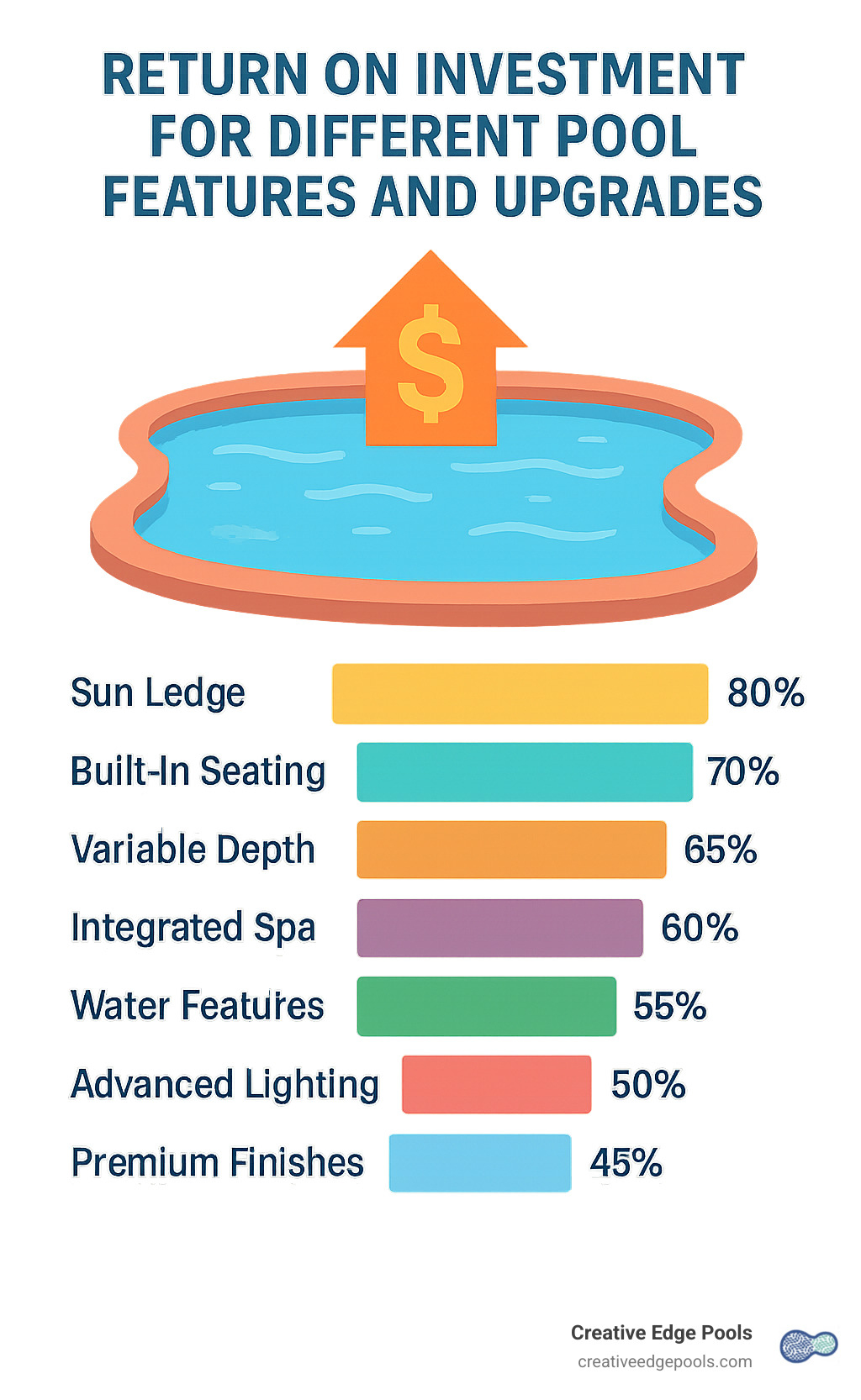
I remember working with a family in Andover who converted their rectangular vinyl pool into a freeform gunite masterpiece with a sun ledge where their grandkids now spend hours playing in just 8 inches of water. These sun ledges (sometimes called tanning ledges) typically add $3,000-$5,000 to your project, but they transform how you use your pool, creating a perfect spot for lounge chairs or supervised toddler play.
Built-in seating and swim-outs are another popular upgrade ($2,000-$4,000) that my clients absolutely love. Instead of perching on the edge of your pool, you can have comfortable benches built right into the sides – perfect for conversations or just relaxing with a drink while staying cool.
The freedom to create variable depth profiles is something vinyl pools simply can’t match. With gunite, we can design gradual beach entries for easy access, deep diving areas, and everything in between – all in the same pool. This customization is especially valuable for families with both young children and teenagers.
For year-round enjoyment, nothing beats an integrated spa. While this is one of the pricier upgrades ($12,000-$20,000), the ability to enjoy your backyard even during our New England winters makes it one of our most requested features during conversions.
The visual and sensory elements really bring a gunite pool to life. Water features like sheer descents, deck jets, or bubbler fountains create that resort feeling. Advanced LED lighting systems transform your nighttime swims with color-changing displays that vinyl pools can’t match. And the premium finishes available for gunite – from glass bead aggregates to pebble finishes – create a stunning look and feel underfoot that vinyl simply can’t replicate.
When it comes to home value, Boston-area real estate agents tell us that a well-designed gunite pool typically adds 5-8% to a home’s value in premium neighborhoods, compared to just 3-5% for vinyl. For a $750,000 home, that difference could mean recouping a significant portion of your convert liner pool to gunite cost when you sell.
Want to explore more about what a gunite pool might cost? Visit our Cost of Gunite Pool page for detailed pricing information.
When an Improved Vinyl Refresh Makes More Sense
I’ll be honest – while we specialize in gunite pools, the convert liner pool to gunite cost isn’t right for everyone. Sometimes, giving your vinyl pool a high-end makeover makes more financial sense.
If you’re planning to move within the next 2-5 years, you might not recoup the full conversion investment. In these cases, I often recommend upgrading your existing vinyl pool instead. A premium liner replacement with one of the luxury patterns now available ($3,000-$5,000) can dramatically change your pool’s appearance.
Budget constraints are another valid reason to stick with vinyl. If you’re working with less than $50,000, you can still make impressive improvements. Upgraded coping materials like bluestone ($5,000-$8,000) can transform the look of your pool edge. Modern LED lighting ($1,500-$3,000) brings nighttime drama without breaking the bank. And new decking materials ($10,000-$20,000) can completely change your pool area’s atmosphere.
I worked with a family in Lexington last year who wasn’t ready for the full convert liner pool to gunite cost but wanted a more upscale look. We installed a “trutile” vinyl liner with a ceramic tile pattern at the waterline and paired it with bluestone coping. Their neighbors now mistake it for a gunite pool at first glance!
As my colleague Tom likes to say, “A well-designed vinyl pool with cantilever bluestone coping and grass edging can achieve that Hamptons/Cape Cod aesthetic that many associate with gunite pools.” While it won’t have all the custom features or longevity of gunite, it’s a smart middle ground for many homeowners.
The best choice depends on your timeline, budget, and how you use your pool. During our initial consultations, we’ll help you weigh these factors honestly to determine if the convert liner pool to gunite cost makes sense for your specific situation.
Permits, Contractor Selection & Frequently Asked Questions
Navigating the permit process and finding the right builder can feel overwhelming when you’re considering the convert liner pool to gunite cost. As someone who’s guided countless homeowners through this journey, I can tell you that preparation makes all the difference.
In Massachusetts and New Hampshire, most towns require several permits for pool conversions. You’ll typically need a building permit for the structural work, an electrical permit for any wiring changes, and a plumbing permit for the new circulation system. Many communities also require zoning verification to confirm your project meets setback requirements and coverage limitations. These permits generally cost between $500-$2,000 depending on your town and project scope.
When choosing a contractor for your conversion, think of it as finding a partner for a significant relationship—because that’s exactly what it is! Look for builders with specific vinyl-to-gunite conversion experience, not just general pool construction. Ask potential contractors how many conversion projects they’ve completed in the past two years.
“I interviewed five contractors before my conversion project,” shared one of our Lexington clients. “The difference in knowledge between those who specialized in conversions versus general pool builders was night and day.”
Always verify current licenses and insurance coverage—request certificates directly from their insurance company. And don’t just skim the contract! Ensure every aspect of your project is clearly specified in writing, from materials to timeline to payment schedule.
When collecting bids, create a standardized checklist of requirements so you’re comparing apples-to-apples. One savvy approach is asking each contractor to provide line-item pricing for core components like demolition, shell construction, plumbing, and finishes.
Need help finding qualified gunite pool builders in your area? Visit our Gunite Pool Builders Near Me page for guidance.
FAQ #1 – Do I need a full rebuild or can the existing walls stay?
Answer: Almost every vinyl-to-gunite conversion requires complete removal of the existing structure. The thin steel or polymer walls in vinyl pools simply weren’t engineered to support the weight and pressure of a gunite shell.
Think of it this way: vinyl pool walls are typically just 0.050″ thick metal or plastic panels—about the thickness of a credit card. A proper gunite shell needs at least 8 inches of concrete reinforced with steel rebar. They’re completely different structural systems.
The only part we sometimes retain is the actual excavated hole, though even that usually requires modification to accommodate thicker gunite walls and any design changes you might want. The excavation savings is where that $3,000-$5,000 credit comes from in the overall convert liner pool to gunite cost.
FAQ #2 – How long will my yard be out of commission?
Answer: Be prepared for 8-12 weeks of active construction, with the most intense activity during the first month or so. The second half of the project includes that crucial 28-30 day curing period for the gunite shell—a time when visible progress seems to slow, but the foundation for your pool’s long-term durability is being established.
New England weather is always a wild card in construction timelines. We typically schedule conversions during spring and summer to minimize delays. Starting in early spring generally allows for completion before you miss too much swimming season.
Many of our clients use this construction period as an opportunity to refresh their entire outdoor space. As one Winchester homeowner told us, “We coordinated our pool conversion with a patio expansion and landscape redesign. It was one season of disruption for a complete backyard change.”
FAQ #3 – Will converting to gunite boost my home’s resale value?
Answer: In most cases, yes—though the value increase rarely covers the full convert liner pool to gunite cost. Real estate data from Eastern Massachusetts shows that gunite pools typically add 5-8% to a home’s value, while vinyl liner pools add just 3-5%.
For a $750,000 home, this difference represents $15,000-$22,500 in additional value. Significant, but not enough to justify conversion solely for resale purposes.
The equation changes if you’ll enjoy the pool yourself for several years before selling. Most homeowners recoup about 60-70% of their investment at sale, but they’ve also gained years of enjoyment from a superior pool experience.
The greatest value impact occurs in luxury home markets and properties where the pool serves as the centerpiece of a comprehensive outdoor living space with features like outdoor kitchens, fire features, and professional landscaping.
As one of our clients in Andover put it: “We converted our vinyl pool to gunite five years before selling. While we didn’t recover the entire cost, the gunite pool was a major selling point that helped our home stand out in a competitive market—and we enjoyed those five years with a pool we truly loved.”
Conclusion
Let’s be honest – converting a vinyl liner pool to gunite isn’t a small project. With convert liner pool to gunite cost typically ranging from $50,000 to $65,000, it represents a significant investment in your home and lifestyle. But as we’ve explored throughout this guide, those dollars buy you something truly valuable: decades of durability, unlimited design possibilities, and the peace of mind that comes from owning a premium swimming pool.
I’ve seen how these conversions transform not just the pool itself, but the entire backyard experience. There’s something special about watching a family’s reaction when they see their dated vinyl pool reborn as a stunning gunite masterpiece – complete with features they never thought possible in their own backyard.
At Creative Edge Pools, our approach has always been about more than just building pools. As a family-owned business serving Eastern Massachusetts and Southern New Hampshire for decades, we understand that your backyard is an extension of your home and a reflection of your lifestyle. That’s why we offer comprehensive services that go beyond the pool itself – from integrated landscaping to custom masonry work – creating outdoor spaces where the gunite pool serves as the stunning centerpiece.
When homeowners call us to discuss the convert liner pool to gunite cost, we always take time to help them see the bigger picture. Yes, the investment is substantial, but it’s spread across decades of enjoyment rather than repeated liner replacements and limitations. Many clients tell us years later that their only regret was not making the switch sooner.
The true value of your conversion extends far beyond the water itself. It’s in the summer evenings spent poolside with friends, the weekends where your kids never want to leave the backyard, and the quiet mornings enjoying coffee on your sun ledge. These moments – these memories – are what make the investment worthwhile.
Whether you’re ready to start planning your conversion or still weighing your options, we’re here to provide straightforward advice based on your specific situation. Our transparent approach means you’ll understand exactly what’s included in your convert liner pool to gunite cost from day one – no surprises, just clear communication throughout the process.
For more information about our gunite pool installation services throughout Massachusetts and New Hampshire, visit our service area page or reach out for a personal consultation.
The pool of your dreams isn’t just about having somewhere to swim – it’s about creating a backyard sanctuary that improves your lifestyle and adds beauty and value to your home for years to come. And that’s something truly worth investing in.