
Average price for pool liner installation: Smart 2025
Your Guide to Pool Liner Replacement Costs
The average price for pool liner installation ranges from $2,400 to $3,800 for most homeowners, with costs varying based on pool type, size, and liner quality. Here’s a quick breakdown:
Quick Cost Breakdown:
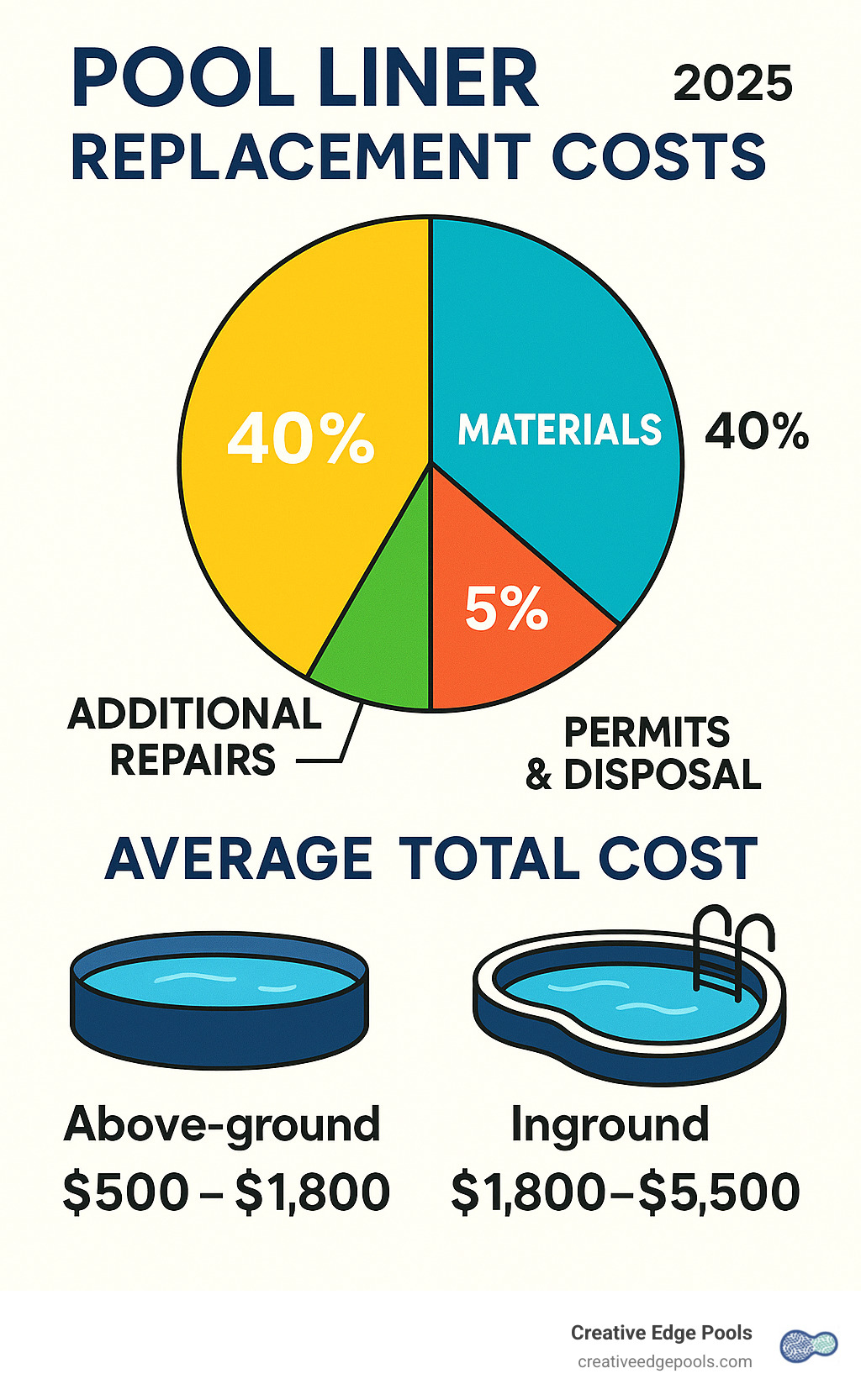
- Above-ground pools: $500 – $1,800 (materials + installation)
- Inground pools: $1,800 – $5,500 (materials + installation)
- Labor costs: $1,000 – $2,500 for inground, $250 – $800 for above-ground
- Materials only: $300 – $1,500 depending on liner type and thickness
Pool liner replacement is a significant home improvement project. One day you’re enjoying crystal-clear water, and the next you’re looking at a faded, wrinkled, or torn liner, wondering about the cost to fix it.
The numbers above are national averages; your actual costs will depend on key factors. Pool size is a major driver—a standard 16×32 inground pool costs less than a custom free-form design. The liner type also matters, with basic overlap liners starting around $200 for materials while premium beaded liners can exceed $1,000.
With over thirty years of industry experience, it’s clear that understanding the costs upfront can save you thousands and prevent costly mistakes.
Average price for pool liner installation terms made easy:
- 16×32 inground pool liner replacement cost
- in ground pool liner prices
- cost of liner pool installed
Understanding the National Averages
Nationally, the cost to replace a pool liner averages around $2,500, but projects can range from $350 for a simple above-ground liner to over $5,800 for a complex inground installation. For inground pools, expect a range of $1,800 to $5,500, which highlights the importance of getting a detailed quote. Above-ground pool liner replacement is less expensive, typically falling between $500 and $900. The cost per square foot for installation generally averages around $5, including materials and labor.
Cost of Replacing Inground Vinyl Pool Liner
Signs Your Pool Liner Needs Replacement
Knowing the signs of a failing liner can save you from bigger headaches and bills. Pool liners typically last 10 to 15 years, though some can last up to 20 years with diligent care. Here are key indicators that it’s time for a replacement:
- Cracking and Tearing: This is the most obvious sign. Vinyl can become brittle from UV exposure and improper chemical balance. Small cracks can become large tears, leading to significant water loss.
- Fading and Staining: A once-vibrant liner turning a dull, patchy gray indicates sun damage and wear. While cosmetic, extensive fading can mean the liner’s structural integrity is compromised.
- Wrinkles and Stretching: A liner that has lost its shape or is excessively wrinkled can be a tripping hazard and may indicate underlying issues with groundwater or the liner itself.
- Leaks and Water Loss: If you’re constantly adding water beyond normal evaporation, you likely have a leak. Persistent or multiple leaks are a strong sign the liner is failing.
- Brittle Texture: A healthy vinyl liner should feel smooth and pliable. If it feels stiff or rigid, the plasticizers have degraded, making it prone to cracking.
- Popped-Out Beads or Bulging: If the bead that snaps into the pool’s track frequently pops out, or the liner bulges from the walls, it has likely stretched with age and lost its shape.
Ignoring these signs can lead to damage to the pool’s structure and subfloor. A timely replacement prevents these costly secondary repairs.
Pool Liners Replacement
Key Factors Influencing the Average Price for Pool Liner Installation
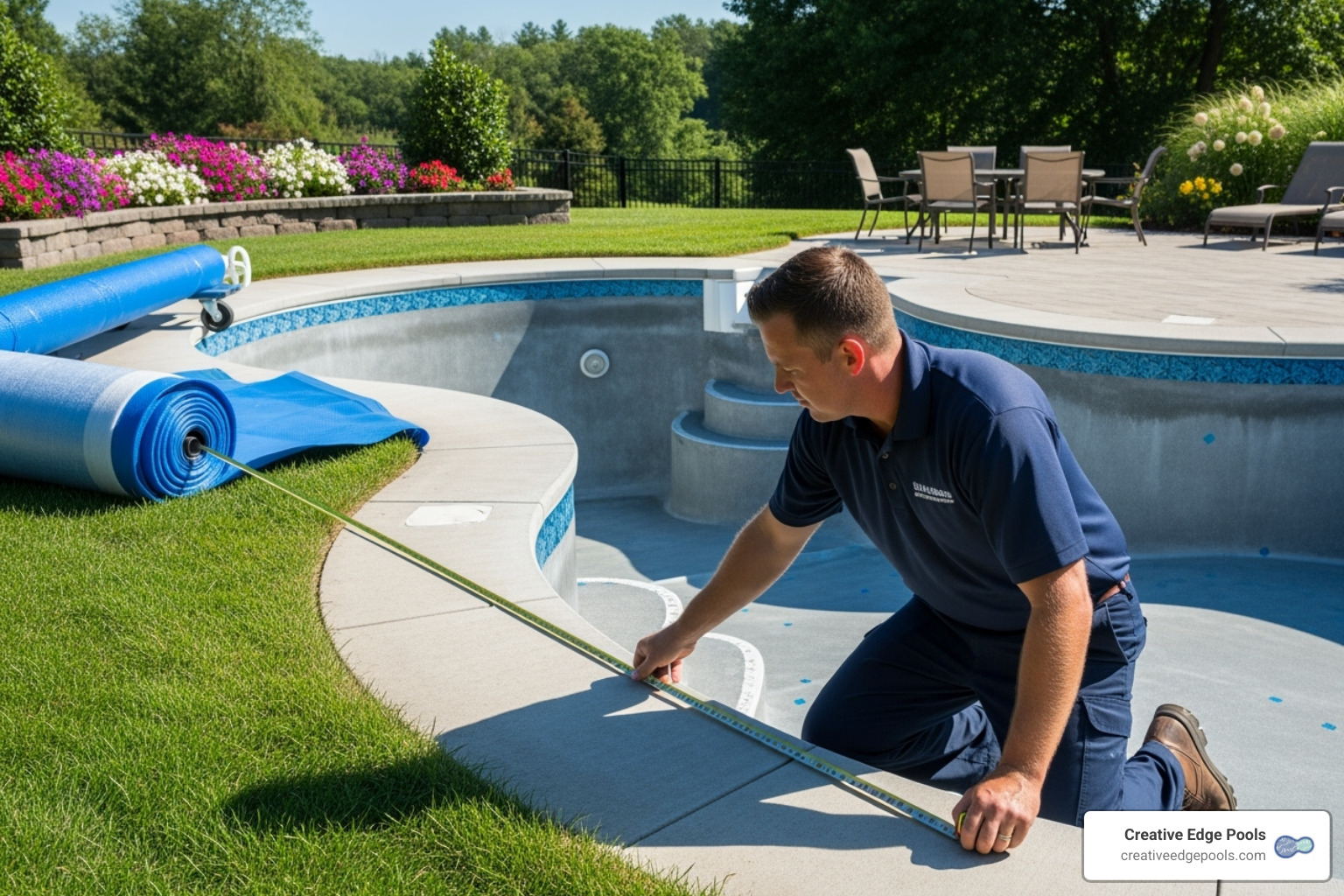
When homeowners ask about pool liner replacement, the first question is always about cost. The average price for pool liner installation depends on several key factors that can dramatically swing your final bill. The biggest cost drivers are whether your pool is above-ground or inground, the type and thickness of the liner, and the size and complexity of your pool. Let’s explore each of these so you can budget accordingly.
Inground vs. Above-Ground: A Major Cost Divider
The type of pool you have is the biggest factor in determining cost.
Above-ground pools are the budget-friendly option. Most customers pay around $700 for a complete replacement, with typical costs ranging from $500 to $900. The labor portion is relatively low, between $250 and $800, as the installation is more straightforward.
Inground pools are more expensive and complex. The average cost is around $1,800, but projects often range from $1,200 to $2,100, and can be much higher for larger or custom pools. Labor costs alone typically run $1,000 to $2,500. This is because inground pools often have intricate shapes, built-in steps, and require more precise measuring and careful installation. Sometimes the pool’s base needs repair work after removing the old liner.
Installing Above Ground Pool Liner
Inground Pool Liner Installation Cost
How Liner Material and Thickness Impact the Average Price for Pool Liner Installation
Not all pool liners are created equal, and your choices here will significantly impact your final bill. The type of liner and its thickness affect durability, installation complexity, and longevity.
Vinyl liner types fall into three main categories. Overlap liners ($200-$600) are the most affordable, draping over the pool edge. Beaded liners ($500-$1,000) snap into a track for a clean, seamless look, common on inground pools. Unibead liners ($400-$900) are versatile and can function as either an overlap or beaded liner.
Liner thickness is measured in “mils” (1/1,000th of an inch). The industry standard is 20-mil thickness, which offers a good balance of durability and cost. You can upgrade to thicker 27-mil, 28-mil, or 30-mil liners. A 28-mil liner typically costs $200 to $400 more than a 20-mil liner, while a 30-mil liner can add $700 to $1,000 to your total cost.
A well-installed 20-mil liner can last just as long as a 30-mil one with proper care. The quality of the vinyl and the precision of the installation often matter more than thickness alone. Thicker liners are less likely to puncture but aren’t automatically the better choice for everyone.
Vinyl Liner Pools Prices
How Pool Size, Shape, and Features Affect Cost
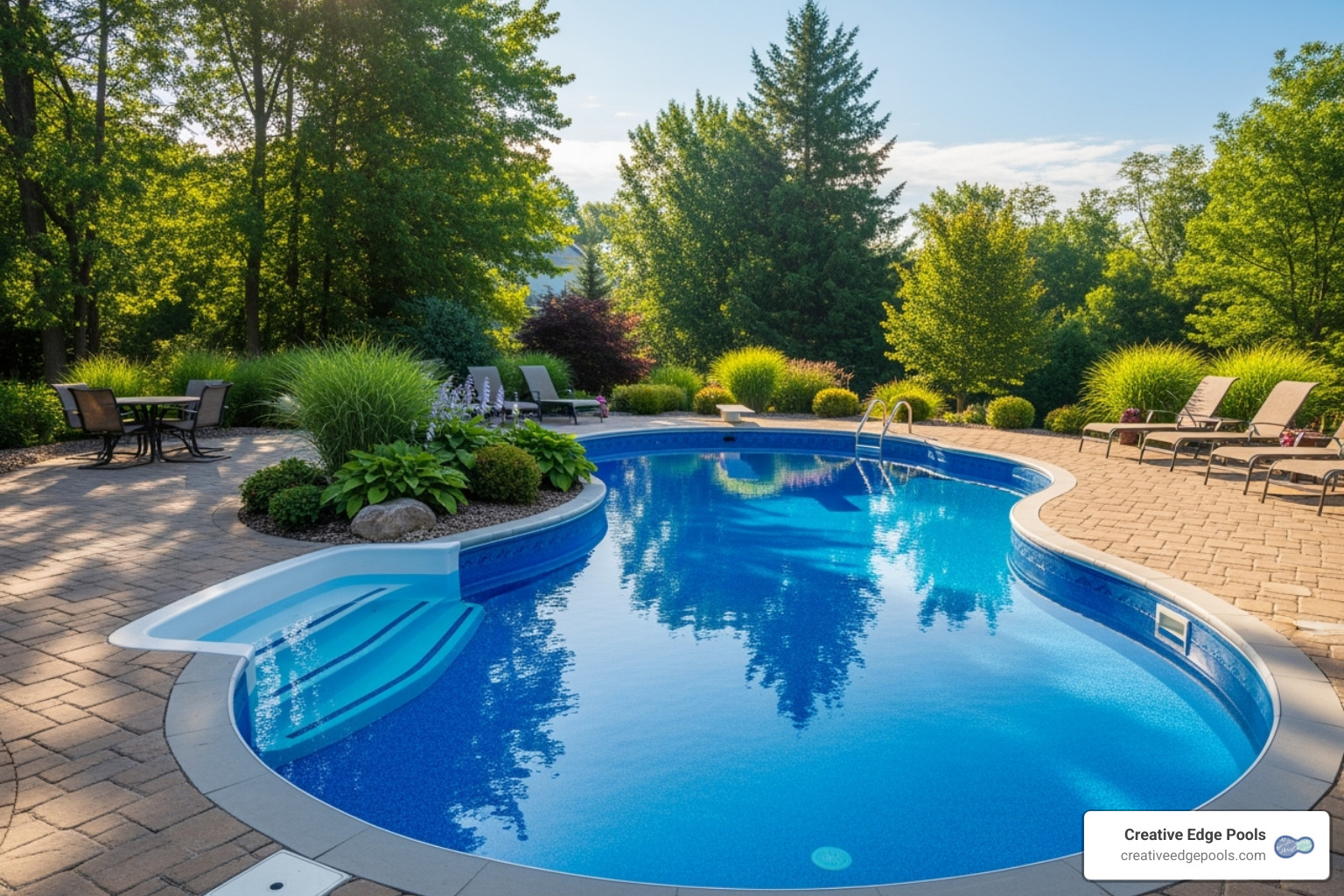
Pool size and shape have a huge impact on your average price for pool liner installation. Bigger pools need more material and labor, while complex shapes require more skill.
For standard rectangular inground pools, here are typical total costs (liner and installation):
- 12×24 ft: $1,300 – $2,300
- 14×28 ft: $1,700 – $2,600
- 16×32 ft: $2,100 – $3,000 (can reach $3,000-$7,500 in some markets)
- 18×36 ft: $2,400 – $3,700
- 20×40 ft: $3,000 – $5,500 (can reach $7,500-$8,000 in high-cost areas)
Custom shapes and free-form pools are where costs climb. Kidney-shaped, L-shaped, or free-form designs require time-consuming, precise measurements and a more challenging installation. These liners are almost always custom-fabricated, which adds to the material cost.
Custom features also increase the cost. Vinyl-over steps, where the liner covers built-in steps, are more complex to install than separate thermoplastic steps. In-wall ladders, water features, or slides all require precise cutting and sealing, adding to labor time and cost.
16×32 Inground Pool Liner Replacement Cost
Additional Costs and Money-Saving Tips
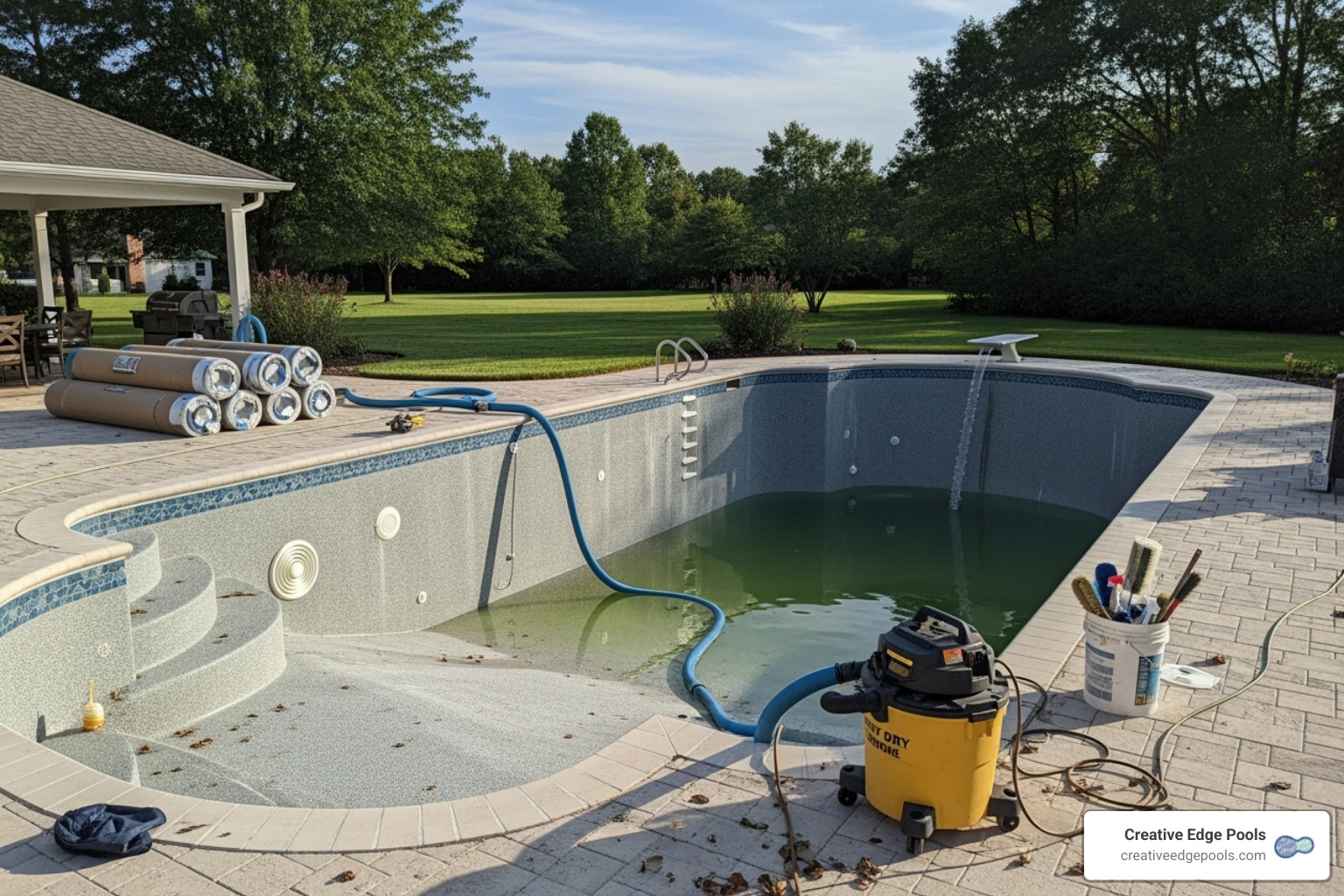
The average price for pool liner installation can get more complicated once the old liner is removed. What starts as a straightforward replacement can reveal underlying issues. Here’s a look at potential extra costs and some tips to keep your budget in check.
Labor, Prep Work, and Other Potential Fees
It’s important to prepare for the unexpected. Once an old liner is removed, professionals might find issues that need addressing. Beyond the liner itself, budget for these potential costs:
- Labor: The biggest extra cost. Expect $1,000 to $2,500 for inground pools and $250 to $800 for above-ground pools.
- Draining and Refilling: Professional draining runs $500 to $700. Refilling with a garden hose is cheaper ($60-$120) than water delivery by truck.
- Old Liner Disposal: This adds $75 to $150 to your bill.
- Pool Floor Repair: Professionals often find damage to the vermiculite or sand base. Basic repairs run $300 to $600, but extensive damage will cost more.
- Permit Fees: Depending on your location, permits can range from $150 to $300.
- Wall Foam: For heated pools, adding wall foam insulation costs $50 to $150 in labor and can help save on energy.
Pool Liner Replacement Process
Repair vs. Replace, DIY, and How to Save
Should you patch it or replace it? For small tears in a newer liner, a $20 to $50 patch kit might be a temporary fix. For a liner that is over 10 years old, brittle, or has widespread damage, replacement is the smarter financial choice.
As for DIY installation, while it’s tempting to save on labor, it is strongly advised against for a full replacement. The risks of wrinkles, tears, and voiding your warranty are high. A botched DIY job often costs more to fix than professional installation would have in the first place. Professional installers have the expertise to handle unexpected issues and typically offer warranties on their workmanship.
Here are some smart ways to manage the average price for pool liner installation:
- Get multiple quotes from licensed, insured professionals to ensure fair market pricing.
- Schedule during the off-season (fall or winter) for better pricing and availability.
- Choose simple designs over custom patterns to save on material costs.
- Proper maintenance is your best long-term money-saver. Correct water chemistry and using a pool cover can extend your liner’s life by years.
- Understand your warranty. Most liners have 20-year limited warranties that are often prorated after the first few years.
Making an informed decision is key. Proper planning and working with a transparent professional can save homeowners thousands of dollars and result in a backyard space that families will enjoy for decades.
