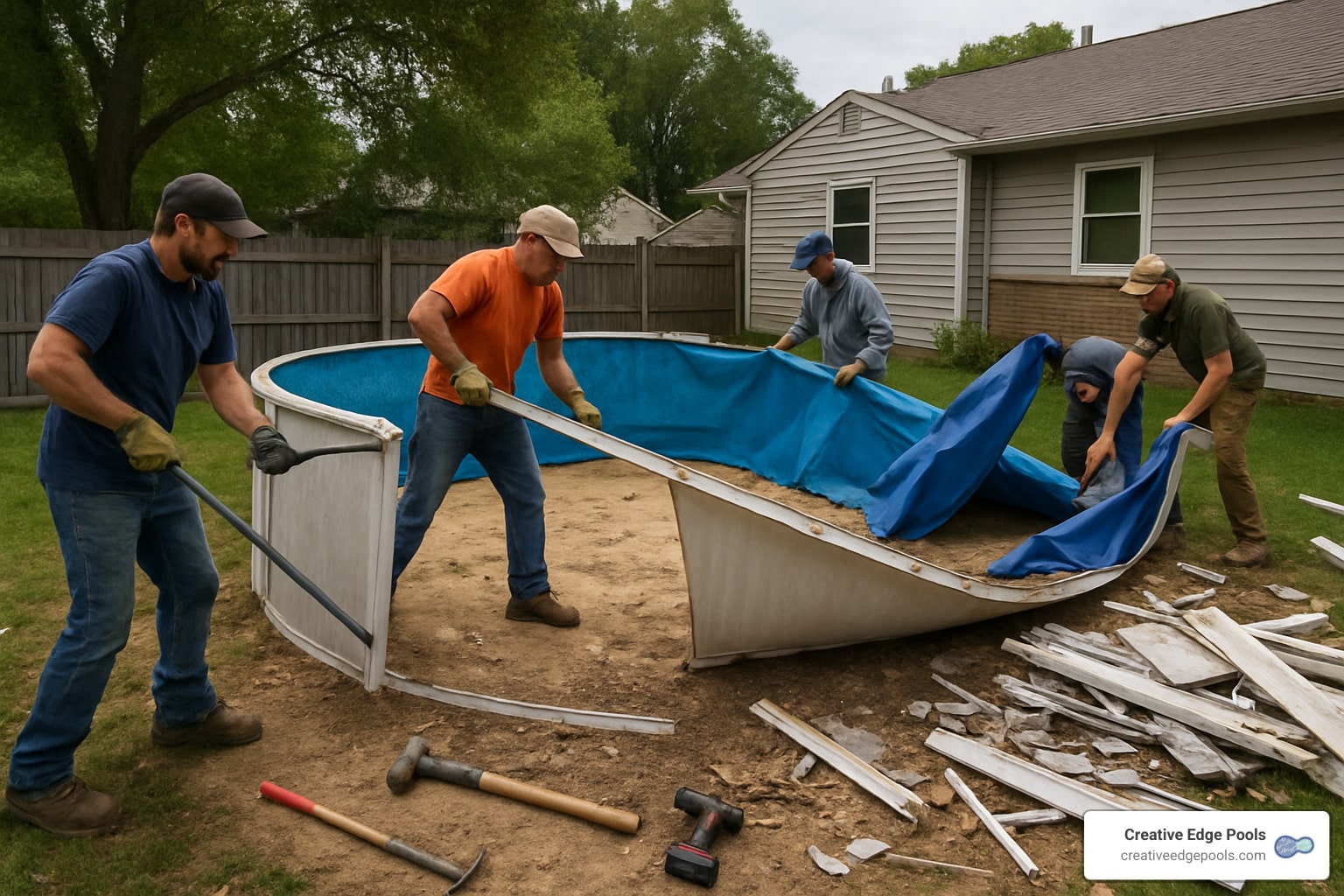
Cost to Remove an Above Ground Pool: 2025 Powerful Price Guide
Why Understanding Above Ground Pool Removal Costs Matters
The cost to remove an above ground pool ranges from $300 to $5,000, with most homeowners paying around $900 for complete removal and disposal. Here’s what you need to know:
Quick Cost Overview:
– Basic pool removal only: $300-$800
– Pool + deck removal: $1,000-$3,500
– Pool + deck + backfill: $1,500-$5,000
– National average: $900
– Timeline: 1-4 hours (professional) vs 3-5 days (DIY)
Your once-beloved above ground pool might now feel more like a backyard burden. Maybe the kids have outgrown it, maintenance costs keep climbing, or you’re dreaming of a beautiful garden where that aging pool sits. One homeowner shared: “We got a $500 removal quote and offered that payment at closing” when selling their home, showing how pool removal can actually become a selling point.
Key factors that drive costs include:
– Pool size and diameter
– Deck and fencing removal
– Site accessibility
– Local disposal fees
– Labor rates in your area
The decision to remove your pool opens up exciting possibilities for your yard. From fire pits to gardens to open lawn space, you’re about to reclaim valuable real estate.
I’m David Brabant, owner of Creative Edge Pools with over 30 years in the swimming pool industry, and I’ve guided countless homeowners through understanding the cost to remove an above ground pool and planning their next backyard chapter. My hands-on experience spans everything from installation to removal, giving me unique insight into what truly drives these costs.
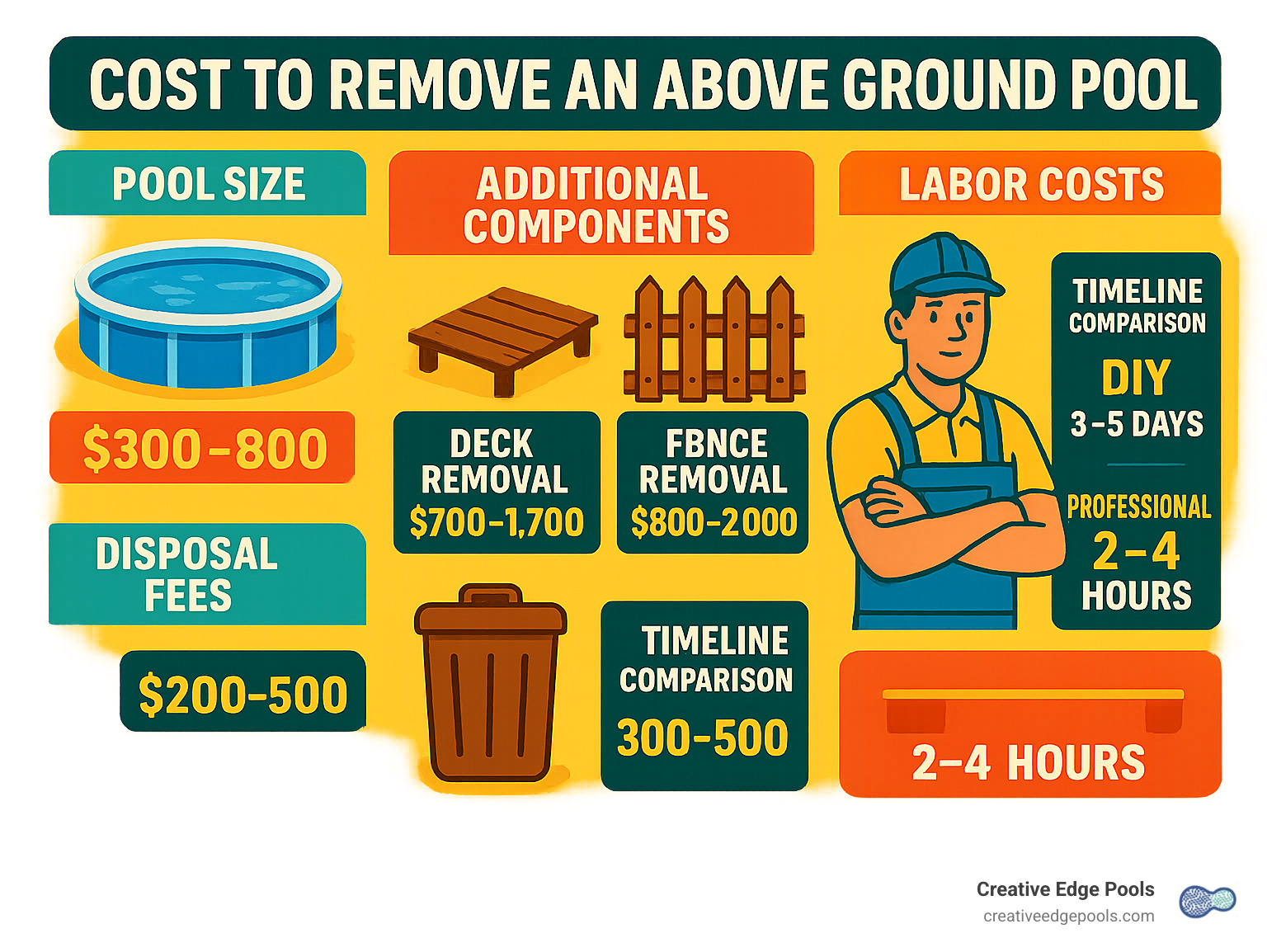
Understanding the True Cost to Remove an Above Ground Pool
Let’s get straight to the numbers that matter most to you. When homeowners call us about pool removal, they’re often surprised by how much the cost to remove an above ground pool can vary. One neighbor might pay $500 while another spends $3,000 – and both could be getting fair deals.
The truth is, there’s no one-size-fits-all price for pool removal. Your final cost depends on factors like pool size, what extras need removing, and where you live. But understanding the baseline helps you plan your budget and avoid surprises.
Average 2025 Cost to Remove an Above Ground Pool
Here’s what most homeowners can expect: the cost to remove an above ground pool typically runs between $475 and $2,500, with $900 being the sweet spot for a standard removal. We’ve handled jobs as low as $300 for a simple pool-only removal, and others reaching $5,000 when extensive decking and landscaping restoration were part of the package.
Labor makes up the biggest chunk of your bill – usually 60-80% of the total cost. Think about it: removing a pool requires skilled workers, specialized equipment, and careful disposal of materials. That expertise comes at a price.
Where you live matters too. A removal that costs $800 in a rural area might run $1,500 in Boston due to higher labor rates and disposal fees. It’s just the reality of different markets.
| Removal Type | DIY Cost | Professional Cost | Time Required |
|---|---|---|---|
| Pool Only | $100-$500 | $300-$800 | 3-5 days vs 2-4 hours |
| Pool + Deck | $300-$1,000 | $1,000-$3,500 | 5-7 days vs 4-8 hours |
| Pool + Deck + Backfill | $500-$1,500 | $1,500-$5,000 | 7-10 days vs 1-2 days |
Cost to Remove an Above Ground Pool by Size
Pool size is probably the biggest factor in determining your final bill. The cost to remove an above ground pool scales pretty directly with diameter.
Small pools (12 feet or less) typically cost $500-$1,200 to remove. These are the quickest jobs – our crew can usually wrap up a basic removal in 1-2 hours. Less material means lower disposal costs too.
Medium pools (12-18 feet) fall in the $1,200-$2,000 range. This is where most homeowners land. These pools hit the sweet spot of manageable size without being too complex for removal.
Large pools (18 feet and up) run $2,000-$3,500 for removal. Here’s where things get more involved. A 30-foot pool generates roughly twice the debris of a 15-foot model, which means more trips to the dump and higher disposal fees.
Cost Breakdown Line-Item by Line-Item
Want to know exactly where your money goes? Here’s how removal costs break down in real terms.
Labor costs range from $300-$2,000 depending on your location and job complexity. In our area of Eastern Massachusetts and Southern New Hampshire, skilled demolition work commands fair wages, especially when it involves careful dismantling rather than just hauling away debris.
Pool draining typically costs $175-$225, though many contractors bundle this into their total price. The water has to go somewhere, and if your pool has been chemically treated, proper disposal matters.
Dumpster rental runs about $300-$500 for most jobs. Some contractors prefer junk removal services at around $300, which can be more convenient since they handle the logistics.
Recycling fees add $100-$300 to your bill. The good news? Much of your pool can be recycled. Steel walls have scrap value, and responsible disposal of vinyl liners and other materials is just good practice.
If you’re going the DIY route, equipment rental will cost $200-$500 per day. An excavator or other heavy equipment might seem like overkill, but it makes the job infinitely easier and safer.
Landscaping repair adds $4-$10 per square foot if you want the area properly restored. This includes bringing in quality soil, grading, and either seeding or sodding the space where your pool once sat.
According to latest research on pool removal costs, these price ranges align with national trends, though regional variations can be significant.
What Drives the Price? Key Factors & Hidden Fees
If you’re wondering why the cost to remove an above ground pool varies so dramatically from one project to another, you’re not alone. After three decades of helping homeowners with pool projects, I’ve seen how seemingly small differences can add hundreds or even thousands to your final bill.
The truth is, what looks like a straightforward job often involves hidden complexities that only become apparent once work begins. Let me walk you through the key factors that really drive costs, so you won’t be caught off guard.
Size, Material & Condition
Your pool’s diameter is the biggest cost driver, but the material and condition matter more than most people realize. Steel-frame pools that have been standing for years often develop rust or structural damage that makes dismantling tricky. When walls are severely corroded, they can’t simply be unbolted – they require careful cutting and handling to prevent collapse.
I’ve worked on pools where the entire wall structure gave way during removal, creating a mess that took hours to clean up safely. On the flip side, resin pools are lighter and easier to handle, but they require different disposal methods since they can’t be recycled like metal frames.
Pool age and condition directly impact labor time. A well-maintained 10-year-old pool with quality hardware comes apart like clockwork. A 20-year-old pool with rusted bolts and deteriorated components? That’s a different story entirely.
Extras: Decks, Stairs, Fencing
Here’s where many homeowners get sticker shock. Deck removal typically adds $700-$1,700 to your project, while fence removal can tack on another $800-$2,000. These aren’t just “extras” – they’re often integral parts of your pool setup that must be addressed.
Lumber demolition involves more than unscrewing a few boards. We need to remove every fastener, properly dispose of treated lumber (which has special disposal requirements), and often repair ground damage caused by deck footings. Safety railings and stairs require careful dismantling to avoid injury and property damage.
The age and construction method of your deck makes a huge difference too. Older decks built with galvanized screws come apart relatively easily. Decks built with construction adhesive or badly rusted hardware? Plan on extra time and cost.
Access & Labor Rates
Equipment clearance can make or break your budget. If we can back a truck up to your pool and use proper equipment, removal goes smoothly. But if your pool sits behind a narrow gate or under low-hanging trees, everything changes.
Hand demolition takes dramatically longer than machine work. What might be a 2-hour job with proper access can become a full-day project when everything has to be carried out piece by piece. I’ve seen projects where poor access doubled the total cost.
Geographic location plays a huge role in labor rates. What costs $50 per hour in rural New Hampshire might run $100+ per hour in the Boston metro area. This isn’t just about wages – urban areas also have higher disposal fees, stricter regulations, and more complex logistics.
Disposal, Recycling & Water Drainage Regulations
Disposal fees vary wildly depending on your location and local regulations. The good news? Metal recycling can actually offset some costs. Steel pool frames often have $100-$300 in scrap value, which we pass along to homeowners.
Plastic liners and resin components are a different story – these typically incur disposal fees of $200-$500 since they can’t be recycled in most areas.
Water drainage has become increasingly regulated. Pool water contains chemicals that can’t simply be dumped in your yard or storm drains. Professional drainage into municipal sewer systems typically costs $175-$225, but it ensures you’re compliant with environmental regulations that are getting stricter every year.
Permits, Inspections & HOA Rules
While above ground pool removal rarely requires demolition permits, you’ll likely need a dumpster permit ($10-$75) if we’re using a large container. HOA rules can add complexity – some communities have specific requirements about contractor hours, noise levels, or restoration standards.
Historic districts sometimes have additional requirements that can add time and cost to your project. It’s always worth checking local regulations before starting, as violation fines can far exceed the cost of proper permits.
Latest research on pool removal costs
DIY vs Hiring a Pro – Which Saves More?
This decision involves much more than just comparing price tags. After helping hundreds of homeowners through pool removal projects, I’ve learned that the “savings” from DIY aren’t always what they seem on paper.
DIY Cost & Challenges of Above Ground Pool Removal
Yes, DIY removal can save you $300-$5,000 in labor costs. But before you grab your toolbox, let’s talk about what you’re really signing up for.
You’ll need to rent or buy quite a bit of equipment. A submersible pump runs $40-$70 per day for draining. Add a socket wrench set for hardware removal, utility knife for liner cutting, reciprocating saw for stubborn components, and proper safety gear. Don’t forget the dumpster rental at $300-$500, plus a truck to haul metal to recycling centers.
The real cost? Your time and energy. Most DIY projects stretch 3-5 days of backbreaking work. One homeowner recently shared: “We thought we’d save money doing it ourselves, but after three days of work and two trips to urgent care for cuts, we wished we’d hired professionals from the start.”
Essential tools you’ll need: submersible pump, socket wrenches, utility knife, reciprocating saw, safety equipment, dumpster rental, and transportation for recycling. The rental costs alone often reach $500-$800 before you factor in your time.
What a Professional Above Ground Pool Removal Service Includes
Professional removal takes a completely different approach. When you hire experienced crews, you’re getting complete pool draining with proper chemical water disposal, full dismantling of the pool structure, and material sorting for recycling versus disposal.
The service includes debris hauling and site cleanup, basic site grading and restoration, plus liability insurance and warranties on the work. No trips to the dump, no wrestling with twisted metal, no wondering if you’re disposing of materials legally.
More info about Pool Demolition
Most importantly, professionals know how to handle unexpected problems. Pool walls that won’t come apart, underground utilities, or structural damage that makes removal dangerous – we’ve seen it all and know how to adapt.
Project Duration, Safety & Liability Comparison
Here’s where the difference becomes crystal clear. Professional crews complete basic removal in 2-4 hours, or up to 8 hours when extensive decking is involved. DIY projects typically take 3-5 days minimum, often stretching to weeks when complications arise.
Safety considerations are serious. Pool walls under tension can snap unexpectedly. Improper lifting techniques lead to back injuries. We’ve seen DIY attempts result in property damage when structures collapse onto fences, landscaping, or even neighboring property.
Professional crews carry liability insurance and have the experience to handle these risks safely. When something goes wrong on a DIY project, you’re responsible for any damage – and trust me, the cost to remove an above ground pool can quickly escalate beyond your savings if accidents happen.
The decision ultimately comes down to your comfort level with risk, available time, and physical capability. While DIY can save money upfront, many homeowners find that professional removal offers better value when you factor in time, safety, and peace of mind.
Step-by-Step: How an Above Ground Pool Gets Removed
Ever wondered what actually happens when the removal crew shows up? Understanding the process helps you see exactly what you’re paying for and makes the cost to remove an above ground pool feel more justified.
The entire process typically takes 2-4 hours for professionals versus 3-5 days for DIY attempts. Here’s how it unfolds from start to finish.
Preparing & Draining the Pool
The first step isn’t just pulling a plug and walking away. Pool water contains chemicals that can’t simply be dumped into your yard or storm drains – it’ll kill your grass and potentially violate local environmental regulations.
Professional crews start by neutralizing pool chemicals using testing kits to ensure the water meets municipal discharge standards. Then they connect submersible pumps to approved drainage points, typically your home’s sanitary sewer connection.
The draining process takes 2-4 hours depending on your pool size and local drainage requirements. We’ve seen homeowners try to speed this up by opening multiple drain points, only to flood their basement or damage their septic system. Patience here prevents expensive mistakes.
Dismantling, Sorting & Hauling Materials
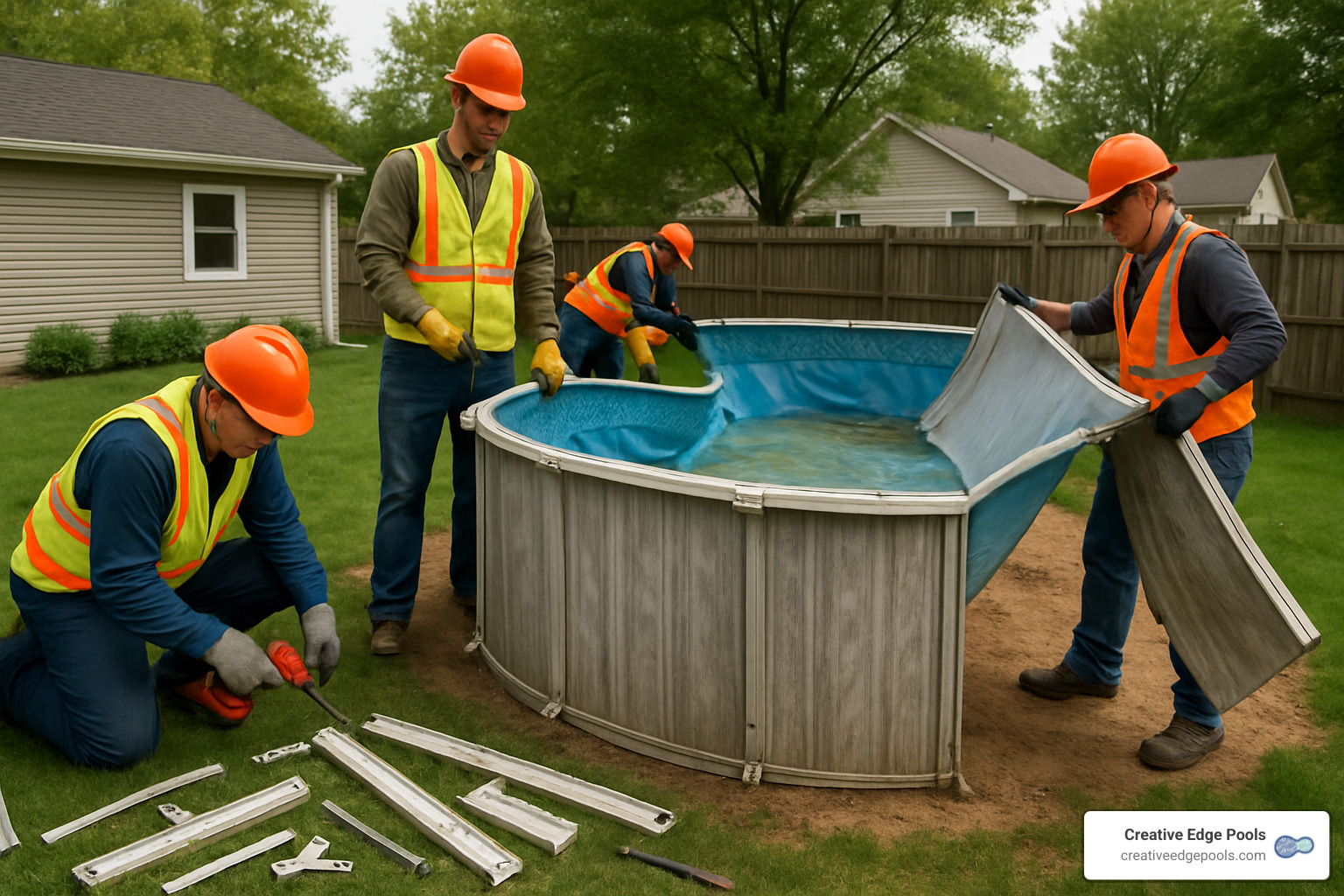
Once drained, the real work begins. Professional crews follow a systematic dismantling approach that maximizes recycling value and minimizes damage to your yard.
Top rails and coping come off first, followed by disconnecting the filter system and any electrical components. The pool liner gets carefully cut and folded – rushing this step can create a tangled mess that’s harder to haul away.
Wall panels are unbolted methodically, starting from one point and working around the perimeter. We’ve learned that trying to remove multiple sections simultaneously often leads to bent panels that are harder to handle and transport.
The bottom track and hardware removal requires attention to detail. All bolts, screws, and metal components get sorted into containers for recycling. This organization actually saves money on disposal fees and can generate $100-$300 in scrap metal value for steel-frame pools.
Material sorting happens in real-time – metal components head to recycling, while liners and plastic parts get bagged for proper disposal. This systematic approach is why professional removal often costs less than expected when you factor in the recycling credits.
Backfilling & Landscaping After Removal
If your pool sat partially below ground level, you’ll need soil delivery and placement to restore your yard’s grade. This isn’t just dumping dirt and calling it done.
Proper compaction prevents settling that could create dangerous depressions in your lawn months later. Professional crews use plate compactors or hand tampers to ensure the soil won’t sink over time.
Grading for drainage ensures water flows away from your home’s foundation. We’ve seen DIY backfill jobs that created water collection points, leading to basement flooding during heavy rains.
The final step involves seeding or sodding to restore your lawn. Many homeowners are surprised by how quickly grass establishes over properly prepared soil – you could have a beautiful lawn within 4-6 weeks.
More info about Cost to Fill a Pool with Dirt
The entire timeline from start to finished landscape typically runs 1-2 days for professional crews when backfilling is included. Compare that to the 7-10 days most DIY projects require, and the professional cost to remove an above ground pool starts looking like excellent value for your time and peace of mind.
Budget Hacks & Value Boosters After Removal
Once you’ve made the decision to remove your pool, there are several smart strategies to minimize the cost to remove an above ground pool while maximizing the value you get from your investment.
Timing can save you serious money. Pool removal companies are typically busiest during spring and summer when homeowners are planning backyard projects. By scheduling your removal during off-peak seasons like fall or winter, you might secure 10-20% discounts. One of our clients saved $400 simply by waiting until November instead of rushing to remove their pool in May.
Bundling projects together often open ups package pricing that benefits everyone. If you’re planning to install a deck, create a patio, or do major landscaping where your pool currently sits, discuss these plans with contractors upfront. Many companies, including Creative Edge Pools, offer better rates when handling multiple aspects of your backyard change.
DIY preparation work can trim professional labor time significantly. Draining the pool yourself using a rented submersible pump saves 2-3 hours of professional time. Removing pool accessories like ladders, skimmers, and lighting ahead of time also reduces the crew’s workload. Just remember to follow local regulations for water disposal.
Your old pool equipment has value – don’t just throw it away. Steel pool frames typically bring $100-$300 in scrap metal value, and that money goes directly back in your pocket. Pool pumps, filters, and ladders in decent condition can sell for $200-$500 on marketplace platforms. We’ve seen homeowners recoup nearly half their removal costs through smart recycling and resale.
The real value boost comes from what you do with the space afterward. That newly reclaimed area becomes a blank canvas for your backyard dreams. Popular options include cozy fire pit areas with seating, extended decks for entertaining, or native plant gardens that require minimal maintenance. Some homeowners create open lawn spaces perfect for kids’ activities or outdoor games.
One family we worked with transformed their former pool area into an outdoor kitchen space that became the heart of their summer entertaining. Another created a meditation garden with native New England plants that actually increased their property value more than the pool ever did.
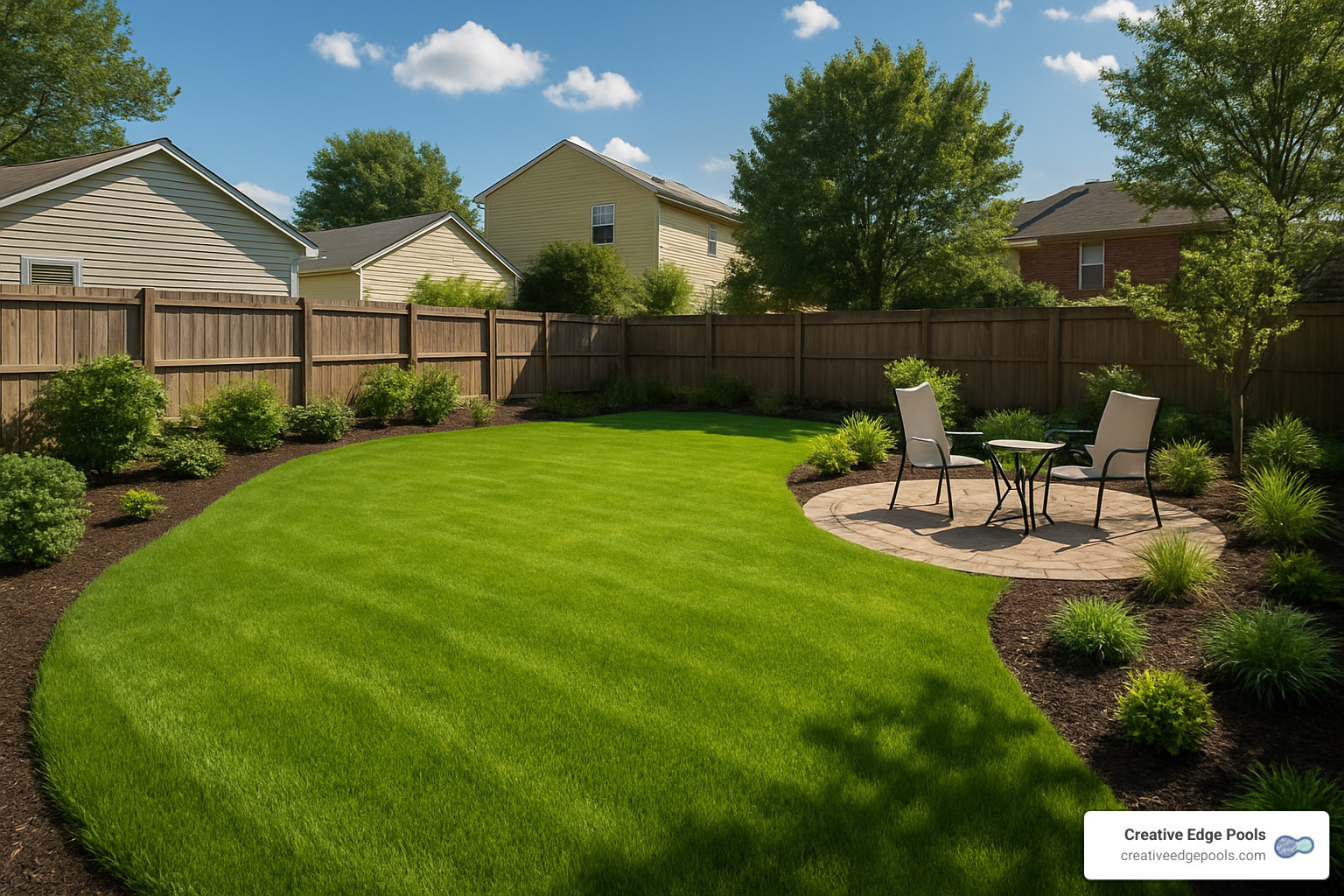
The key is planning ahead. Before removal day arrives, sketch out your vision for the space. This helps contractors understand your long-term goals and might influence how they grade and prepare the area, potentially saving you money on future projects.
Frequently Asked Questions about the Cost to Remove an Above Ground Pool
How long does it take and what permits are required?
When homeowners ask about timeline, I always tell them that professional removal typically takes 1-4 hours for just the pool structure. If you’ve got extensive decking around your pool, expect the project to stretch to a full day – around 8 hours total.
DIY projects are a completely different story. Most homeowners underestimate the time commitment and end up spending 3-5 days of hard physical labor. One client recently told me, “I thought I’d knock it out over a weekend, but it took me three weeks working evenings and weekends!”
Permit requirements vary dramatically by location. The good news is that most areas don’t require demolition permits for above ground pools since they’re considered temporary structures. However, you’ll likely need a dumpster permit that costs $10-$75 depending on your municipality.
I always recommend checking with your local building department before starting any removal project. Some HOAs have specific guidelines about removal timing or restoration requirements that could affect your timeline and costs.
Can I sell or recycle parts to offset the cost to remove an above ground pool?
This is one of my favorite questions because the answer can really help your budget! The cost to remove an above ground pool becomes much more manageable when you factor in potential recovery from recycling and resale.
Steel frames are your biggest money-maker – they typically bring $100-$300 in scrap value depending on current metal prices and the condition of your frame. We’ve had clients who recovered nearly half their removal costs just from the metal recycling.
Pool equipment holds surprising resale value if it’s in decent working condition. Pumps, filters, ladders, and cleaning equipment can easily bring $200-$500 on marketplace platforms. One homeowner recently told us they sold their complete filtration system for $350, which covered a third of their removal costs.
Plastic components have minimal resale value but proper recycling reduces your disposal fees. Every bit helps when you’re trying to manage the overall project budget.
The key is planning ahead – if you’re thinking about removal, start researching current scrap metal prices and checking online marketplaces to see what similar equipment is selling for in your area.
Does removing my pool increase property value?
This question comes up constantly, and the answer depends on your specific situation and local market conditions. Pool removal can absolutely increase property value, especially in certain circumstances.
The biggest value boost happens when your pool dominates a small yard or when it’s clearly aging and would require major repairs for the next homeowner. We’ve seen cases where removing an old, deteriorating pool opened up valuable yard space that appealed to a much broader range of buyers.
Market research suggests that removing an aging above ground pool can increase buyer appeal by 15-25%, particularly among families with young children who prefer safer, open yard space for activities and play areas.
Your neighborhood context matters tremendously. If you’re in an area where few homes have pools, yours might be seen as a maintenance burden rather than an amenity. Conversely, if pools are common and expected, removal might not add the same value.
The reality is that maintenance savings alone can be a huge selling point. When potential buyers see an open, usable yard instead of an aging pool that needs constant chemical balancing, cleaning, and seasonal maintenance, they often view it as a major advantage.
More info about Pool Removal Cost
Conclusion & Next Steps
You’ve now got the complete picture of what goes into the cost to remove an above ground pool – from the baseline $300-$800 for basic removal to $5,000 for comprehensive projects with decking and full site restoration. The key is understanding that every pool removal is unique, shaped by factors like size, access, and your vision for the space afterward.
The decision to remove your pool marks the beginning of an exciting change. We’ve seen homeowners turn their former pool areas into beautiful fire pit gathering spaces, thriving vegetable gardens, and open lawns where kids can actually play soccer. One client recently told us, “I wish we’d done this years ago – we’ve used this space more in six months than we used the pool in five years.”
At Creative Edge Pools, we’ve been helping families throughout Eastern Massachusetts and Southern New Hampshire steer these transitions for over three decades. Our approach goes beyond just hauling away your old pool – we help you envision what comes next and ensure the removal process sets you up for success.
The financial benefits often surprise homeowners too. Beyond eliminating those annual maintenance costs of $500-$1,500, many find their property becomes more appealing to potential buyers. As one real estate agent in our area put it, “Homes with reclaimed yard space consistently show faster and often at higher prices.”
Your next step is simpler than you might think. We provide transparent, detailed estimates that explain exactly where every dollar goes. No hidden fees, no surprise charges – just honest pricing based on your specific situation and goals.
Whether you’re dealing with a compact 12-foot pool or a sprawling 30-foot setup with extensive decking, we’ll walk you through the entire process. From proper water disposal to maximizing recycling value to preparing your site for whatever comes next, we handle the details so you can focus on planning your new backyard.
Ready to reclaim your space and boost your home’s value? Let’s talk about your specific situation and create a removal plan that works for your budget and timeline.
More info about Pool Removal Cost