Pool design and construction: Top 5 Expert Secrets 2025
Pool design and construction can transform even the simplest backyard into a luxurious oasis. Whether dreaming of a sleek, modern pool or a classic, neat design, the process requires expertise and a deep understanding of materials, landscape, and homeowner needs. Here’s a quick overview to get started:
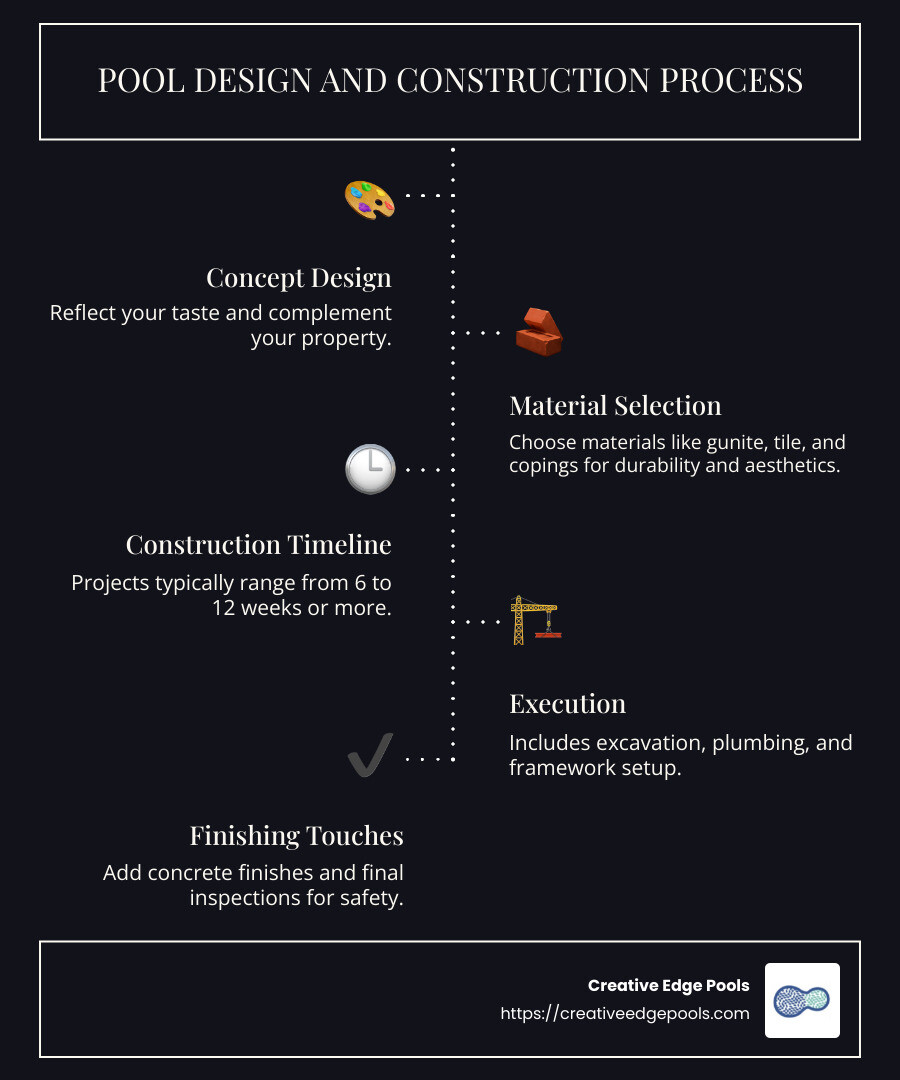
- Design Concept: Reflects your taste and complements your property.
- Construction Timeline: Typically ranges from 6 to 12 weeks or more.
- Materials: Choice of gunite, tile, and copings that improve durability and style.
Every pool project is unique, blending functionality with aesthetics to enrich your outdoor living space. Before diving deep into the intricacies of design and construction, consider what truly resonates with your lifestyle and vision.
I’m David Brabant, the owner of Creative Edge Pools, bringing over 30 years of expertise in Pool design and construction. My journey from field operations to ownership gives me a comprehensive understanding of changing your backyard into a personal paradise. Let’s explore how we can turn your vision into reality.
Quick look at Pool design and construction:
– pool installation
– swimming pool contractor
– gunite pool
Choosing Your Pool Type and Location
When it comes to pool design and construction, choosing the right type and location for your pool is crucial. These decisions not only affect the aesthetics but also the functionality and cost of your project.
Pool Type
There are several types of pools to consider, each offering unique benefits:
- Gunite Pools: Known for their durability and versatility, gunite pools can be customized to fit any shape or size. They are a popular choice for those looking for a long-lasting and custom design.
- Vinyl Liner Pools: These are generally less expensive than gunite pools and offer a smooth surface. They come in various shapes and sizes, but their liners may require replacement every 5-9 years.
- Fiberglass Pools: These pools are pre-molded and offer quick installation. They are low maintenance and come in limited shapes but are less customizable than gunite pools.
Location
Selecting the right location for your pool can improve its usability and your enjoyment:
- Sun Exposure: Placing your pool in an area that receives ample sunlight can help maintain water temperature and reduce heating costs.
- Wind Protection: Consider natural windbreaks like trees or install fences to reduce water evaporation and keep the pool area comfortable.
- Accessibility: Ensure your pool is easily accessible from your home and consider the view from both the pool and the house for optimal enjoyment.
Backyard Development
Changing your backyard into a cohesive outdoor environment requires thoughtful planning:
- Integration with Landscaping: Your pool should complement your existing landscape. Consider features like patios, decks, and gardens that can improve your pool area.
- Outdoor Amenities: Incorporate features such as outdoor kitchens, fire pits, or seating areas to create a multifunctional space.
- Seasonal Use: Adding features like heating, lighting, and weatherproof structures can extend the usability of your pool area throughout different seasons.
Choosing the right pool type and location is the foundation of a successful pool project. With careful planning and the right choices, your backyard can become a stunning oasis that improves your lifestyle and home value.
Next, we’ll dig into designing and planning your inground pool, exploring various design options and planning techniques to bring your vision to life.
Designing and Planning Your Inground Pool
Designing your inground pool is where creativity meets practicality. This stage involves exploring design options and using tools like 3D model renditions to visualize your dream pool. Let’s explore how you can make informed decisions that reflect your style and needs.
Design Options
When it comes to pool design and construction, there are endless possibilities. Here are some popular design elements to consider:
- Shape and Size: From classic rectangles to freeform designs, the shape of your pool can set the tone for your backyard oasis. Consider how the pool will fit within your landscape and its intended use.
- Features and Upgrades: Add excitement with water features like waterfalls or fountains. Consider tanning ledges, spa additions, or unique lighting to improve your pool’s ambiance.
- Materials and Finishes: Choose materials that not only look great but also stand the test of time. Gunite pools, for instance, offer a durable and customizable option.
Planning
Effective planning is essential to ensure your pool is both functional and beautiful:
- Budgeting: Determine a budget that includes all aspects of the project, from initial design to final landscaping touches. This will help guide your choices and prevent unexpected expenses.
- Timeline: Work with your pool contractor to establish a timeline that accounts for every phase of the project, from design to completion.
- Permits and Regulations: Ensure you comply with local zoning requirements and obtain necessary permits. An experienced contractor can help steer these complexities.
3D Model Renditions
Visualizing your pool before construction begins can save time and money. 3D model renditions allow you to see how different designs will look in your space:
- Realistic Views: Get a lifelike view of your pool, complete with landscaping and outdoor amenities. This helps you make informed decisions about design elements.
- Adjustments: Easily make changes to the design before construction starts, ensuring the final product aligns with your vision.
- Improved Communication: Share the 3D model with your contractor to ensure everyone is on the same page, reducing the risk of misunderstandings or errors.
Designing and planning your inground pool is an exciting journey. With the right design options, careful planning, and the power of 3D modeling, you can bring your dream pool to life, creating a stunning centerpiece for your backyard.
Next, we’ll explore the pool design and construction process, detailing the steps involved in turning your plans into reality.
The Pool Design and Construction Process
Once you’ve finalized your pool design and planning, it’s time to bring your vision to life. The pool design and construction process involves several key stages, each crucial to building a durable and stunning pool.
Excavation
Excavation is the first physical step in constructing your pool. This involves:
- Site Preparation: Clearing the area of debris, trees, and any existing structures.
- Digging the Hole: Using heavy machinery, a precise hole is dug according to your pool’s design. This sets the stage for the rest of the construction.
The excavation process is foundational. It ensures your pool is properly shaped and positioned within your landscape.
Plumbing and Electrical Lines
With the site ready, the next step is installing the plumbing and electrical lines:
- Plumbing: High-quality pipes are laid to ensure efficient water circulation and filtration. Proper plumbing is vital for maintaining water quality and pool functionality.
- Electrical Lines: These power your pool’s lighting, heating, and any additional features like fountains or spa jets. Ensuring these lines are safely and correctly installed is crucial for both functionality and safety.
Framework
The framework stage provides the structural backbone of your pool:
- Steel Rebar Installation: A steel rebar framework is constructed within the excavated hole. This adds strength and stability, supporting the pool’s shape and resisting ground pressure.
- Strength and Stability: The rebar framework ensures your pool can withstand environmental stresses over time.
Concrete Finishes
Finally, the pool takes shape with concrete finishes:
- Gunite Application: Gunite, a mixture of cement and sand, is sprayed over the rebar framework. This method allows for a smooth, seamless pool surface and offers flexibility in design.
- Curing and Finishing: Once applied, the gunite must cure properly to ensure durability. After curing, the pool is finished with plaster or another surface material of your choice, providing the final aesthetic touch.
Concrete finishes not only improve the pool’s appearance but also contribute to its longevity and safety.
This detailed process ensures your pool is built to last, offering years of enjoyment. Next, we’ll dig into key considerations in pool design and construction, including permits, inspections, and safety features.
Key Considerations in Pool Design and Construction
When it comes to pool design and construction, there are several key considerations to keep in mind. These elements not only ensure the safety and legality of your pool but also contribute to a seamless construction process.
Permits and Inspections
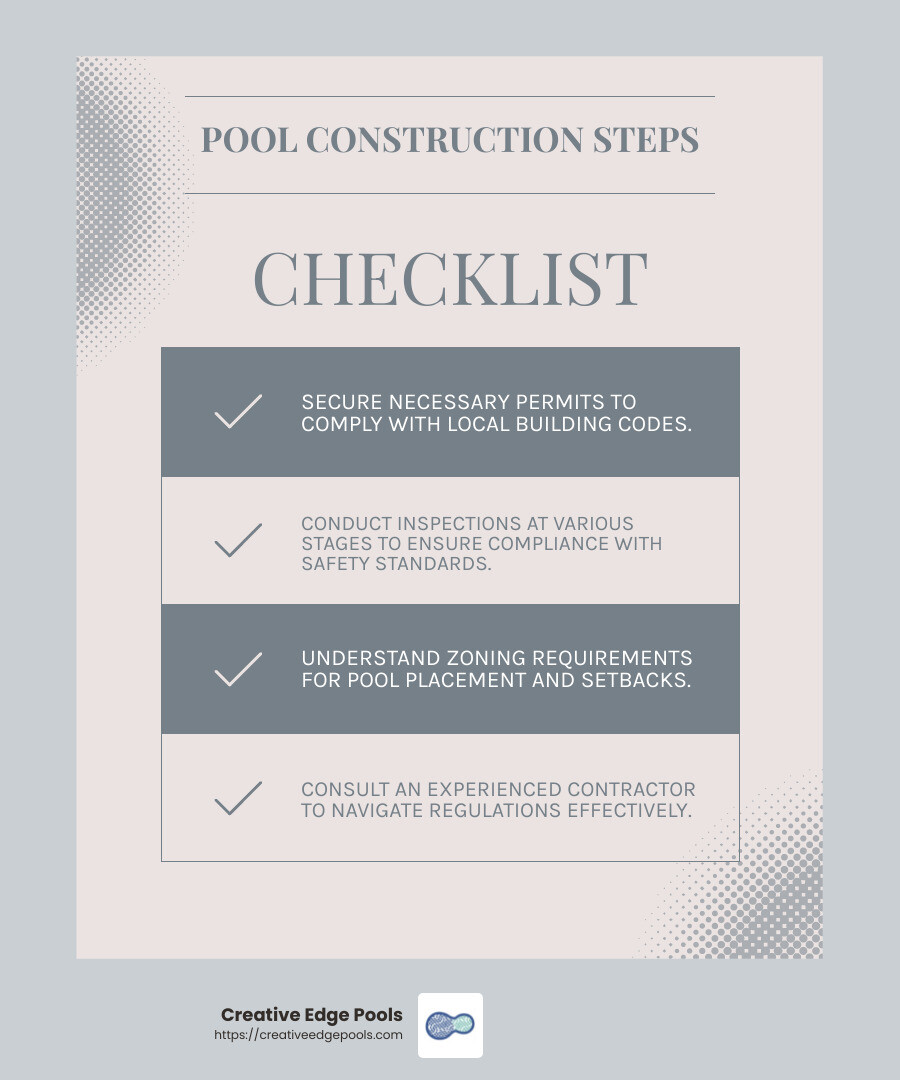
Before any construction begins, securing the necessary permits is crucial. Permits ensure that your pool complies with local building codes and regulations. Failing to obtain them can lead to costly fines or even the removal of your pool.
Once construction is underway, inspections are essential at various stages to ensure compliance with safety and building standards. These inspections verify that everything from plumbing to electrical work meets required codes. Choosing a pool builder who offers a comprehensive package, including permits and inspections, can save you time and stress.
Zoning Requirements
Zoning requirements vary by state and municipality. They dictate where you can build your pool and include rules about setbacks, pool fence barriers, and more. An experienced pool contractor can help steer these regulations to ensure your pool is compliant.
For example, some areas require specific distances between the pool and property lines or existing structures. Understanding these requirements early on can prevent costly redesigns or relocations.
Safety Features
Safety is a top priority in pool construction. Incorporating safety features from the start can protect both current and future users. Common safety features include:
- Pool Fences: These barriers prevent unsupervised access, especially important for households with children.
- Safety Covers: These covers can support weight and prevent accidental falls into the pool.
- Alarms: Pool alarms alert you if someone enters the pool area unexpectedly.
- Suction Entrapment Protection: Devices that prevent swimmers from being trapped by pool drains.
These features not only provide peace of mind but are often required by law in many areas.
By addressing permits, inspections, zoning requirements, and safety features early in the planning stage, you can ensure a smoother construction process and a safer pool environment. Next, we’ll address some frequently asked questions about pool design and construction, helping to clarify common concerns and misconceptions.
Frequently Asked Questions about Pool Design and Construction
How to design and build a pool?
Designing and building a pool is a multi-step process that begins with choosing the right pool type and location. Popular types include gunite, vinyl, and fiberglass pools. Each has its own benefits, with gunite being favored for its durability and customization options.
Location is key. Consider factors like sunlight, wind exposure, and proximity to trees. A pool in a sunny spot will naturally heat up, reducing energy costs. However, too much wind can cool the water and increase evaporation.
Next, you’ll need permits. These ensure your pool meets local building codes and zoning requirements. An experienced pool contractor can help steer this process, ensuring all necessary paperwork is in place.
Excavation is the first physical step in construction. This involves digging out the pool shape and setting the foundation. It’s one of the biggest costs due to the heavy machinery and labor involved.
After excavation, plumbing and electrical lines are installed, followed by the pool’s framework and finishes. This stage requires precision to ensure everything functions correctly.
What is the biggest cost of building a pool?
The biggest cost in pool construction often comes down to excavation and labor. Excavation requires specialized machinery and skilled operators to shape the land according to the pool design.
Labor costs can vary depending on the complexity of your design and the materials used. For example, custom features like waterfalls or intricate tile work will increase labor costs.
Materials themselves also contribute significantly to the total cost. Gunite pools, for instance, are more expensive than vinyl but offer greater durability and customization.
Do you need a degree to design pools?
Designing pools does not necessarily require a specific degree, but knowledge in architecture or civil engineering can be very beneficial. These fields provide the technical skills needed to create safe and efficient designs.
While a degree is not mandatory, many successful pool designers have backgrounds in these areas. Understanding structural integrity, water dynamics, and material properties is crucial for creating reliable pool designs.
By addressing these questions, we hope to clarify the pool design and construction process. Whether you’re considering a new build or a renovation, understanding these fundamentals will help guide your decisions.
Conclusion
At Creative Edge Pools, we believe in changing backyards into stunning personal retreats. Our expertise in custom gunite pools sets us apart, offering homeowners in Eastern Massachusetts and Southern New Hampshire a chance to bring their pool dreams to life.
Gunite pools are known for their durability and flexibility in design. They allow us to craft unique shapes and incorporate features like tanning ledges, waterfalls, and integrated spas. This flexibility means your pool will not only be a place to swim but also a centerpiece for your outdoor living space.
But we don’t stop at the pool. Our comprehensive backyard service ensures that every element of your outdoor area complements your new pool. From landscape design and masonry to outdoor kitchens and entertainment areas, we handle it all. This holistic approach means you enjoy a seamless experience from concept to completion.
We pride ourselves on our family-owned values, bringing a personal touch to every project. Our clients are part of our extended family, and we work closely with you to ensure your vision is realized.
If you’re ready to transform your backyard into an oasis, explore our Gunite Pool Installation services. Let us help you create a space where memories are made and relaxation is paramount.
Thank you for considering Creative Edge Pools. We look forward to being part of your journey to a beautiful backyard retreat.