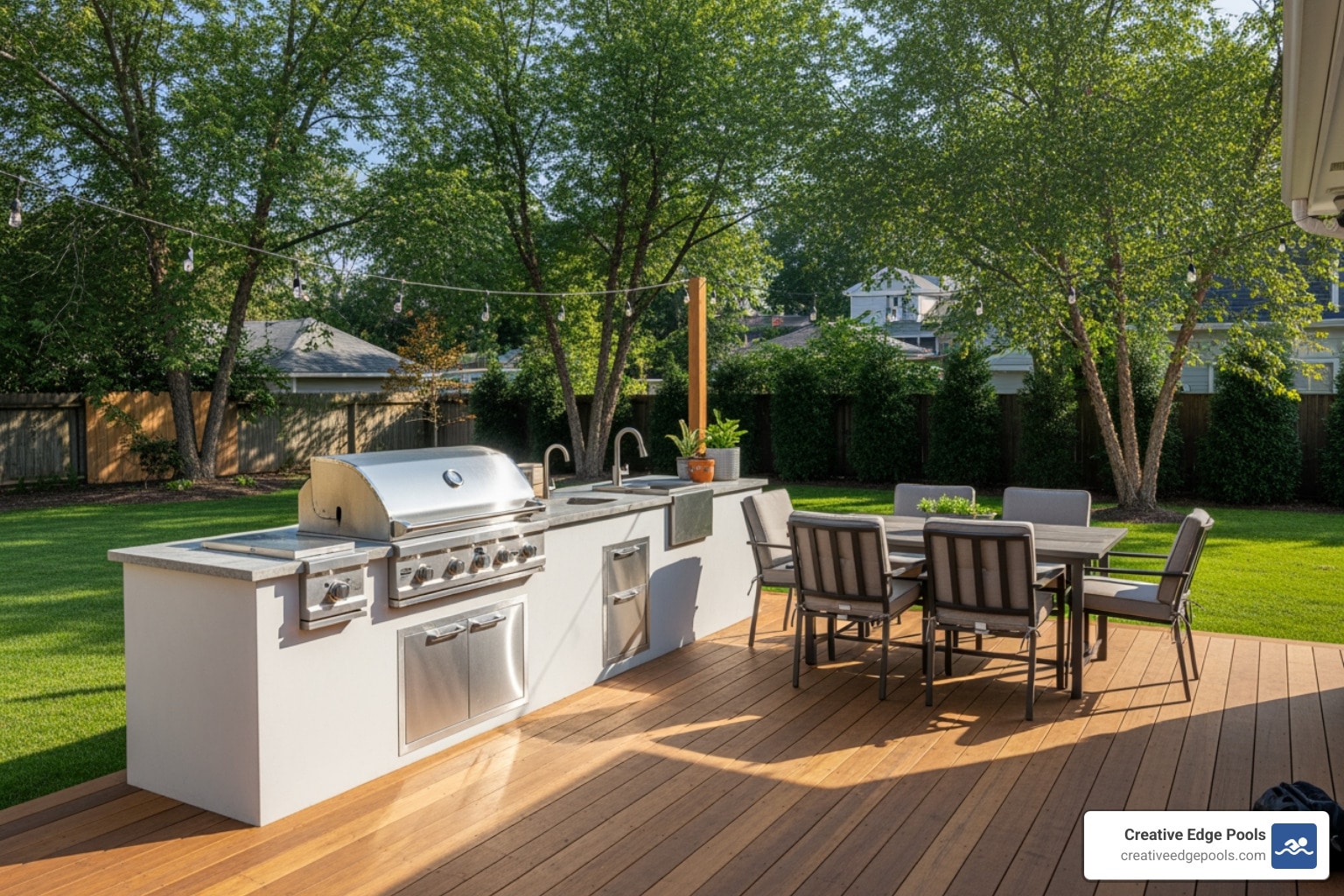
Why an Outdoor Kitchen and Deck is the Ultimate Backyard Investment
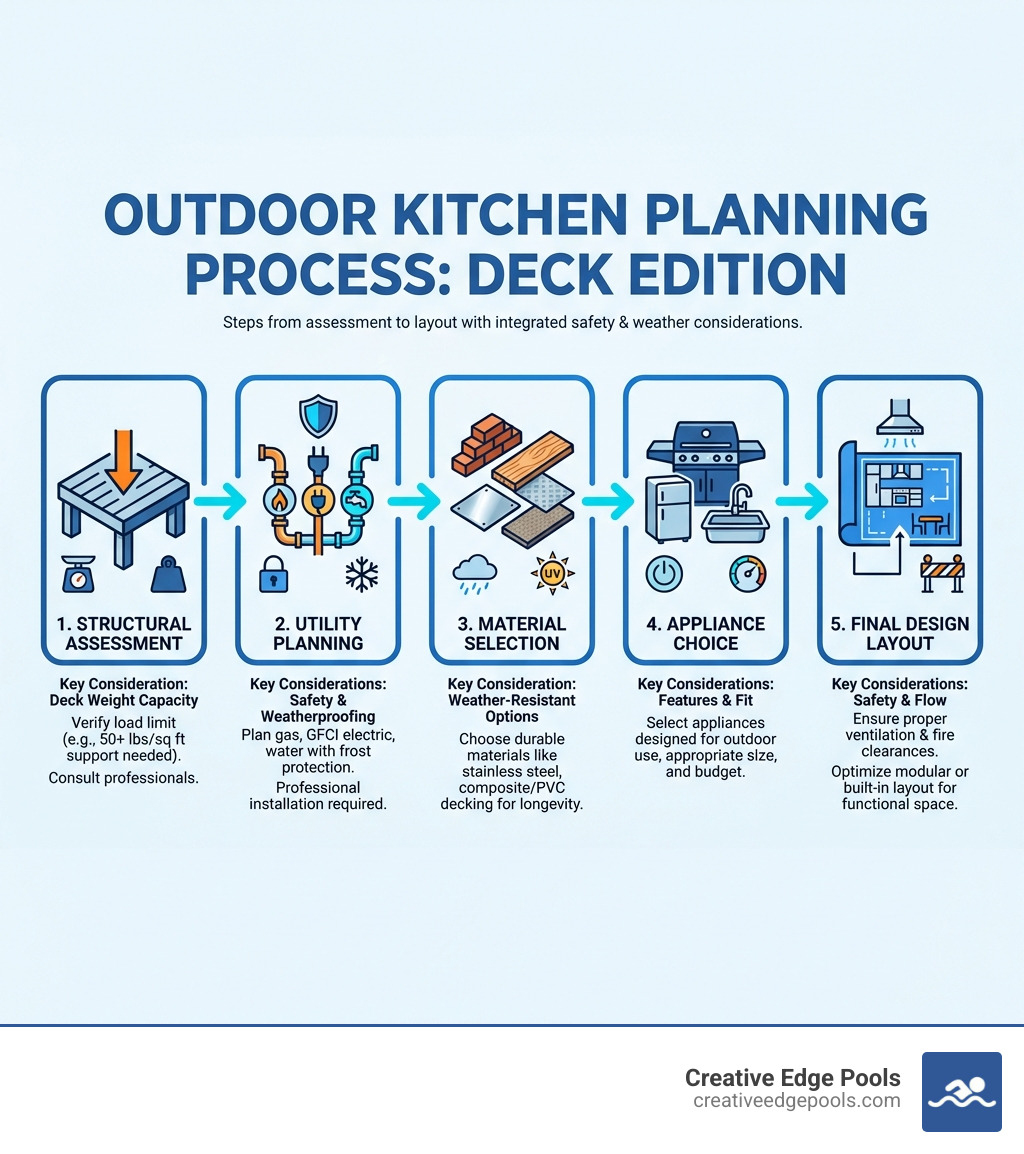
An outdoor kitchen and deck transforms your backyard into a functional entertainment space that extends your living area outdoors. Here’s what you need to know before starting your project:
Quick Planning Checklist:
- Structural Capacity – Most decks support 50 lbs per square foot; verify your deck can handle kitchen weight
- Utilities – Plan for gas lines, GFCI electrical outlets, and water supply with frost protection
- Materials – Choose weather-resistant options like stainless steel appliances and composite/PVC decking
- Safety – Ensure proper ventilation, fire clearances, and professional utility installation
- Design – Consider modular vs. built-in layouts based on your space and budget
The outdoor kitchen has become the centerpiece of modern backyard living. As one industry expert notes, “Building the ultimate outdoor kitchen deck is like turning your backyard into a five-star restaurant – minus the servers and the bills.”
For homeowners in Eastern Massachusetts and Southern New Hampshire, an outdoor kitchen on your deck offers more than just a cooking space. It creates a lifestyle upgrade that keeps summer heat and cooking messes outside while bringing family and friends together in a comfortable outdoor environment.
The key to success lies in proper planning. Your deck must support the weight of appliances, counters, and people. You’ll need professional utility hookups for safety. And you’ll want durable materials that withstand New England’s weather fluctuations—from humid summers to freezing winters.
Whether you’re adding a simple grill station or a full outdoor kitchen with a sink, refrigerator, and dining area, the right design improves both your daily life and your home’s value. Most well-executed outdoor kitchens add significant resale value, particularly in markets where outdoor living spaces are highly desired.
Benefits of Integrating an Outdoor Kitchen and Deck
An outdoor kitchen on a deck is a smart investment that improves your home and lifestyle. In New England, where we cherish good weather, it transforms your backyard into a true extension of your indoor living space.
Key benefits include:
- Improved Living and Entertainment Space: Create a dynamic area for gatherings. Whether hosting a summer barbecue or a cozy dinner, your outdoor kitchen becomes a social hub, allowing you to cook while remaining part of the conversation.
- Increased Home Value: High-quality outdoor kitchens add significant value. They are attractive features for buyers, expanding usable living space and making your property more competitive in the market.
- Convenience and Functionality: Eliminate trips between the indoor kitchen and patio. Having everything for prep, cooking, and serving at your fingertips makes entertaining less stressful and keeps cooking heat and messes out of your main house.
- Lifestyle Upgrade: An outdoor kitchen encourages more time spent outdoors, fostering a connection with nature and providing a relaxing escape from daily routines.
Structural Requirements: Weight Capacity and Reinforcement
Ensuring structural integrity is critical. An outdoor kitchen adds substantial weight from appliances, cabinetry, and countertops.
Decks are typically rated for a 50 pounds per square foot (psf) design load, consisting of:
- Dead Load: The weight of the deck structure itself (approx. 10 psf).
- Live Load: The weight of people, furniture, and kitchen components (approx. 40 psf).
Heavy items like built-in grills or stone accents (adding 15-20 psf) can quickly exceed capacity. To ensure safety:
- Assess Existing Deck: A professional should evaluate joist size, spacing, and foundations to determine if they can handle the additional load.
- Reinforcement Options:
- Adding Joists: Reducing spacing to increase support in the kitchen area.
- Larger Beams: Reinforcing with stronger lumber or steel.
- Additional Posts: Adding footings directly beneath heavy components.
- Helical Piles: These large screws driven into stable soil provide exceptional support. Expert Mike Holmes calls them “brilliant” for deck foundations.
- New Deck Planning: We design for weight from the start using doubled joists, 12-inch spacing, and dedicated concrete footings.
Systems like Trex Ready™ Outdoor Kitchens use durable 304-grade stainless steel, but still require this solid foundation.
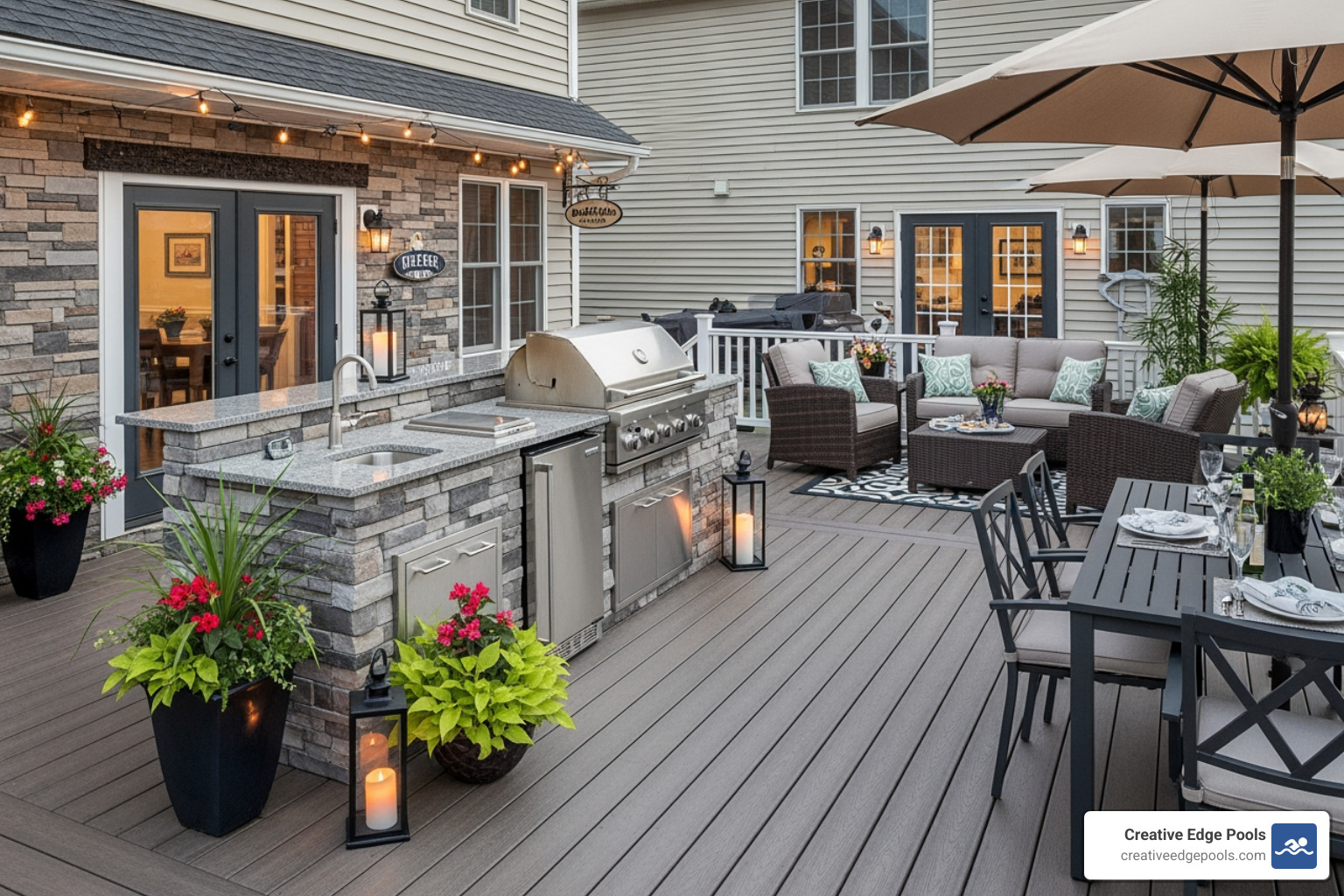
Essential Utilities and Safety for Your Outdoor Kitchen and Deck
A truly functional outdoor kitchen on a deck requires more than just a grill; it needs proper utility hookups for water, gas, and electricity. Integrating these safely and efficiently is a specialized task, especially in a region like Eastern MA and Southern NH, where we face diverse weather conditions.
Safe Utility Hookups for an Outdoor Kitchen and Deck
Ensuring the safe installation of utilities is non-negotiable. We always recommend hiring licensed professionals for all electrical, gas, and plumbing work. This is not only for safety but also to comply with local building codes and regulations, which can be complex.
- Gas Lines: If your outdoor kitchen includes a gas grill, burners, or a pizza oven, a dedicated gas line is essential. This can be natural gas or a propane line. A licensed plumber or gas fitter will ensure the line is properly sized, installed, and tested for leaks. They will also consider the best route for the line, often running it directly from your home’s main supply.
- Electricity: For lighting, refrigeration, blenders, and other appliances, you’ll need electricity. All outdoor electrical outlets must be Ground Fault Circuit Interrupter (GFCI) protected. GFCIs are crucial for outdoor safety as they detect ground faults and quickly shut off power, preventing electric shock. An outdoor-rated electrical panel might also be necessary. A licensed electrician will handle all wiring, ensuring it’s weatherproof and meets all safety standards.
- Water Supply: A sink in your outdoor kitchen dramatically increases its functionality, making food prep and cleanup a breeze. Installing a water line requires careful consideration, especially in our colder climate. Water lines must be:
- Buried Below Frost Level: To prevent freezing and bursting during winter, water lines should be buried below the frost line, which can be several feet deep in New England.
- Insulated: Even below the frost line, insulation can provide an extra layer of protection against extreme cold.
- Drainage: Proper drainage for the sink is also vital, either connecting to your home’s wastewater system or to a dedicated outdoor greywater system, always adhering to local regulations.
Fire Safety and Ventilation
When cooking with open flames and heat-generating appliances on a wooden or composite deck, fire safety becomes a paramount concern.
- Clearance and Placement: Always position grills and other heat sources several feet away from your house, deck railings, and any combustible materials like curtains, overhanging branches, or dry foliage. The National Fire Protection Agency emphasizes that a failure to clean the grill was a leading factor contributing to the fire in one-fifth of all grill structure fires.
- Fire-Rated Mats and Barriers: We highly recommend placing a fire-rated mat or a stone pad directly under your grill or any other high-heat appliance. This protects your deck surface from embers, grease splatters, and radiant heat.
- Ventilation: Proper ventilation is crucial for gas appliances and built-in grills. Ensure there is adequate airflow around and within your outdoor kitchen cabinetry. Appliance manufacturers are the best source for ideal spacing, but generally, leaving about 1-2 inches of space around the top and bottom of cabinetry, as well as between appliances, helps with heat dissipation and prevents dangerous gas buildup.
- Debris Removal: Regularly sweep your deck and clean your grill. Accumulation of leaves, grease, and other debris near cooking areas can pose a significant fire hazard.
- Emergency Preparedness: Keep a fire extinguisher or a bucket of sand readily accessible near your outdoor kitchen.
Material Selection and Appliance Integration
The materials you choose for your outdoor kitchen and deck will dictate its durability, aesthetic appeal, and how well it withstands the diverse weather conditions of Eastern MA and Southern NH. From harsh sun to freezing temperatures and humidity, selecting the right components is key.
Decking Materials: Wood vs. Composite vs. PVC
The foundation of your outdoor kitchen is your deck itself. The material greatly affects its suitability.
- Pressure-Treated Wood: This classic choice offers a natural look and is generally more affordable upfront. However, wood decks require the most maintenance, needing regular staining and weatherproofing to protect against moisture, pests, and the elements. While beautiful, it’s less resistant to heat and moisture from cooking, making it a higher maintenance option for an outdoor kitchen.
- Composite Decking: Made from a blend of wood fibers and recycled plastics, composite decking offers a great balance of durability and low maintenance. It resists rot, insects, and splintering, making it an “ideal platform” for an outdoor kitchen space. Brands like Trex, Fiberon, and TimberTech (mentioned in research) offer excellent options. While composite is more durable than wood, some types can still get hot in direct sunlight, and it’s wise to check manufacturer guidelines for temperature resistance near grills.
- PVC Decking: Composed of 100% plastic, PVC decking is exceptionally lightweight, moisture-proof, and highly resistant to stains, scratches, and fading. It’s particularly well-suited for coastal areas due to its resistance to saltwater corrosion, and it’s in “great shape” for building a worry-free backyard kitchen. PVC is an excellent choice for a low-maintenance, high-performance deck that can easily handle the demands of an outdoor kitchen.
Here’s a quick comparison:
| Feature | Pressure-Treated Wood | Composite Decking | PVC Decking |
|---|---|---|---|
| Initial Cost | Lower | Medium to High | High |
| Maintenance | High (staining, sealing) | Low | Very Low |
| Durability | Medium | High | Very High |
| Moisture Resistance | Low (needs sealing) | High | Excellent |
| Heat Resistance | Medium | Good (check specs) | Excellent |
| Weight | Medium | Medium | Low |
| Aesthetics | Natural wood look | Wood-look, various colors | Modern, consistent finish |
Selecting Appliances for an Outdoor Kitchen and Deck
The heart of your outdoor kitchen lies in its appliances. We recommend choosing outdoor-rated appliances specifically designed to withstand the elements.
- Grills: Often the centerpiece, your grill choice is crucial.
- Gas vs. Charcoal: Gas grills offer convenience and precise temperature control, while charcoal grills provide a distinct smoky flavor. For gas grills, consider stainless steel construction for durability and rust resistance. A higher BTU rating doesn’t necessarily mean a hotter grill; focus on heat distribution and overall build quality.
- Built-in vs. Freestanding: Built-in grills integrate seamlessly into your countertop, offering a polished look. Freestanding grills offer flexibility but might not achieve the same integrated aesthetic.
- Sinks: A sink provides invaluable convenience for handwashing, food prep, and quick cleanup. Even a compact bar sink can make a huge difference. Opt for stainless steel sinks and faucets for durability and resistance to corrosion.
- Refrigerators: An outdoor-rated refrigerator keeps beverages chilled and ingredients fresh, eliminating trips indoors. Look for units with robust construction and energy efficiency suitable for outdoor temperatures.
- Other Appliances: Depending on your culinary ambitions, consider:
- Side Burners: For sauces, sides, or boiling water.
- Pizza Ovens: A wood-fired pizza oven can be a fantastic addition for entertaining.
- Storage: Ample storage for utensils, cookware, and propane tanks is essential.
- Ice Makers: For ultimate refreshment on hot days.
For cabinetry, 304-grade stainless steel is a top choice due to its exceptional durability and resistance to rust and corrosion. In regions with significant weather fluctuations, like ours, powder-coated stainless steel cabinetry is usually your best option. The powder coating provides an extra layer of protection against the elements and chemical interactions, ensuring your outdoor kitchen looks great for years to come.
Design Layouts: Modular vs. Built-In Solutions
Designing the layout for your outdoor kitchen and deck is where functionality meets aesthetics. We approach this by considering your space, how you like to entertain, and your budget.
When planning the layout, we often apply the “work triangle” principle from indoor kitchen design, adapted for the outdoors. This means placing your primary cooking zone (grill), prep area (countertop/sink), and cold storage (refrigerator) in an efficient triangular configuration to minimize steps and maximize flow.
Key Design Considerations:
- Space Optimization: Consider the dimensions and shape of your deck. Ensure comfortable movement space around cooking areas (a 3-4 foot clearance is often recommended for safety and ease of use) and plan for adequate counter space for prep and serving.
- Integration with Other Amenities: Think about how your outdoor kitchen will interact with other amenities on your deck or in your backyard. Will it be near a dining area, a lounge, or even a pool? Integrating elements like a bar top counter for casual seating, or even incorporating lighting and sound systems, creates a truly cohesive outdoor living space.
- Coordination with Home Style: Your outdoor kitchen should complement your home’s architectural style and existing landscaping. This creates a seamless transition and improves the overall appeal of your property.
- Personal Touches: Don’t forget to add decorative elements that reflect your personality, such as potted plants, unique lighting fixtures, or outdoor art.
Modular vs. Built-In Kitchens
You have two main approaches to the construction of your outdoor kitchen:
- Built-In Outdoor Kitchens:
- Pros: These offer a highly customized, permanent, and seamless look. Appliances are integrated directly into custom-built cabinetry and countertops, creating a cohesive aesthetic that often matches or complements the home’s architecture. Built-in kitchens tend to have a higher-end appearance and can significantly improve home value. They allow for extensive customization, including unique islands, bar top counters, and durable finishes like stone accents.
- Cons: Built-in kitchens are typically heavier and require more extensive structural planning and potential deck reinforcement. They are less flexible, meaning once installed, their layout is difficult to change. The initial cost is generally higher, and installation is more complex, often requiring professional trades for utilities and construction.
- Modular Outdoor Kitchens:
- Pros: Modular kitchens consist of pre-fabricated units that can be combined and arranged to fit your space. They offer greater flexibility in design and placement, are often lighter, and can be easier and quicker to install. If you move or want to reconfigure your space, modular units can often be disassembled and rearranged. They can be a more budget-friendly option and may not require as much deck reinforcement as heavier built-in units.
- Cons: While increasingly sophisticated, modular kitchens might not offer the same level of custom integration or high-end aesthetic as a fully built-in system. There may be fewer options for unique finishes like extensive stone accents, and the seams between modules can sometimes be visible.
For homeowners looking for a balance, using modular, high-quality stainless steel cabinetry (like Trex Ready™ Outdoor Kitchens) as the base, then cladding or finishing it with materials like matching decking or stone veneers, can offer a semi-custom look with some of the benefits of modular flexibility.
Frequently Asked Questions about Outdoor Kitchen Decks
Can I build an outdoor kitchen under a deck?
Yes, but it requires specific safety measures:
- Ventilation: Range hoods or exhaust fans are essential to prevent trapped heat and smoke.
- Moisture Management: Use under-deck drainage systems to prevent mold and damage to cabinetry.
- Fireproofing: Use fire-resistant materials and ensure proper clearance from the structure above.
- Utilities: Professional installation is required to protect lines from pests and elements.
Can an outdoor kitchen be left uncovered on a deck?
While possible, it’s not ideal for longevity in New England. Exposure leads to:
- UV Damage: Fading finishes and brittle materials.
- Moisture Issues: Rust on metal and potential electrical failures.
- Debris and Pests: Accumulation of leaves and attraction of insects.
We recommend using appliance covers, pergolas, or roof extensions to protect your investment and reduce maintenance.
Does an outdoor kitchen increase home value?
Yes. It is a premium amenity that expands usable square footage. Value is driven by:
- Market Demand: Outdoor living is highly sought after by modern buyers.
- Curb Appeal: A well-designed kitchen creates a strong first impression.
- ROI: High-quality materials like stainless steel ensure a better return. Consult a local realtor in Eastern MA or Southern NH for specific market insights.
Conclusion
Creating an outdoor kitchen and deck is one of the most rewarding home improvements you can undertake. It transforms your backyard into a dynamic extension of your living space, offering unparalleled opportunities for entertainment, relaxation, and culinary adventures. From the sizzle of a gourmet meal on the grill to the laughter of friends gathered around a custom island, your outdoor kitchen will become the heart of your home’s exterior.
At Creative Edge Pools, we understand the unique challenges and opportunities of building in Eastern Massachusetts and Southern New Hampshire. With over 100 years of combined experience, our family-owned business is dedicated to bringing your homeowner visions to life. We specialize in full-service backyard development, from designing and installing gunite pools and spas to crafting the perfect hardscaping and decking that seamlessly integrates your outdoor kitchen.
We pride ourselves on our expert craftsmanship and our commitment to creating safe, durable, and beautiful outdoor spaces that withstand our New England climate. Whether you dream of a simple grill station or a luxurious, fully equipped outdoor culinary oasis, our team is ready to guide you through every step, ensuring your project is a resounding success.
Ready to transform your backyard into the ultimate outdoor living destination? Let’s build something extraordinary together.