
Swimming Pool Rust Stain Remover: 6 Powerful Solutions
Are unsightly rust stains marring the beauty of your flawless, shimmering pool dream? Look no further. Swimming pool rust stain remover is your go-to solution for reclaiming your backyard oasis’s pristine crystal-blue charm. Before diving deep into the methods, here’s a quick hit list to get you started;
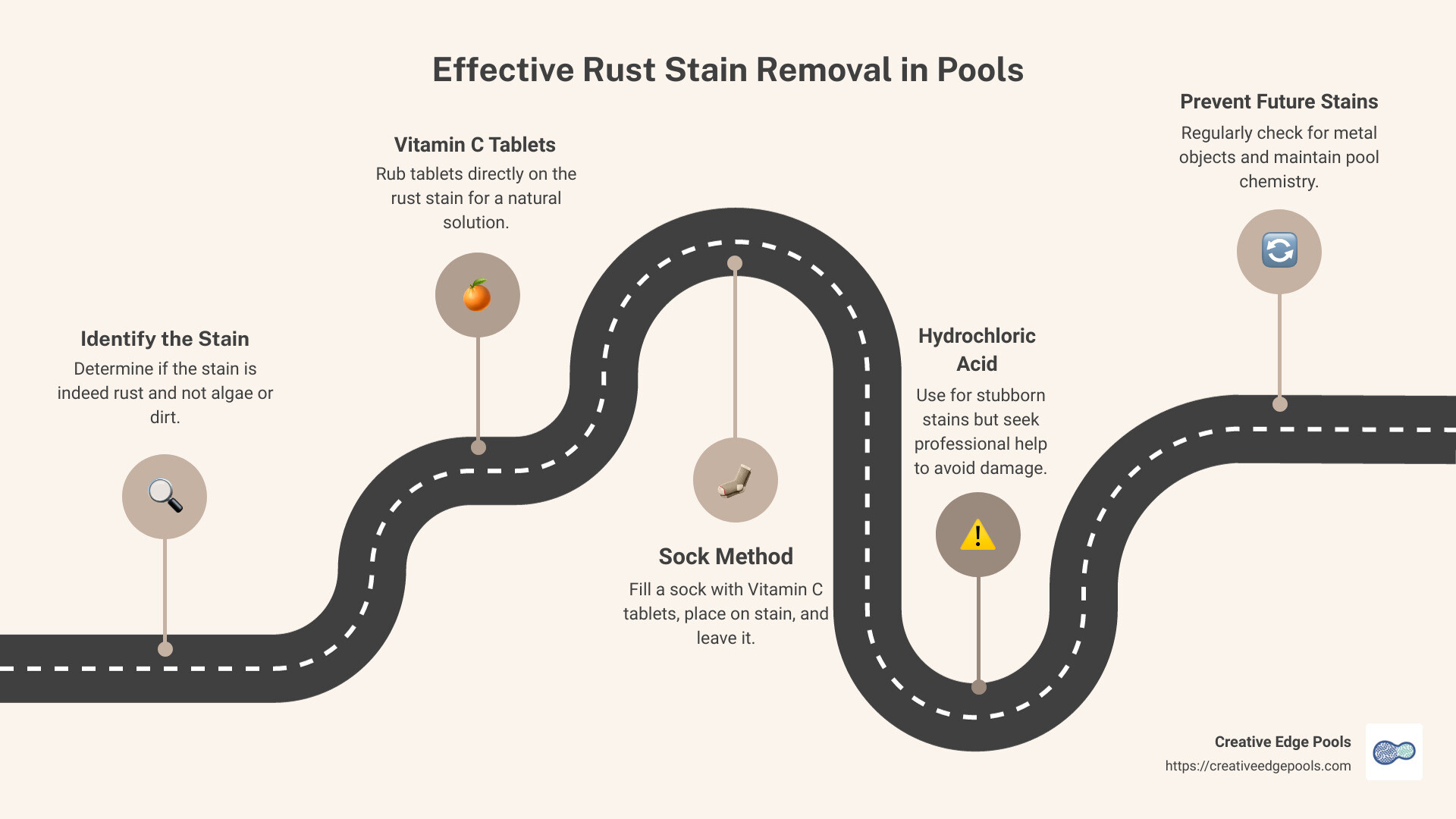
- Vitamin C Tablets: Rub directly on stains for a quick fix.
- Sock Method: Fill a sock with Vitamin C, place it on the stain, and let chemistry do the work.
- Hydrochloric Acid: For stubborn stains, though professional assistance is recommended.
Rust stains can turn even the most immaculate pools into eyesores. To help pool owners in Eastern Massachusetts and Southern New Hampshire maintain their pool’s allure, understanding the nature of rust stains is crucial. These stains often stem from metal objects left in the pool, corroded pool surfaces, or improper chemical use.
I’m David Brabant, owner of Creative Edge Pools. With over thirty years of experience, I’ve tackled every challenge imaginable, including the tricky task of swimming pool rust stain remover. Join me as we dig into understanding and eradicating these pesky stains to keep your pool picture-perfect.
Understanding Rust Stains in Pools
Rust stains in pools are more than just an aesthetic issue—they can signal deeper problems. Understanding their causes and how they interact with different pool surfaces is key to effective removal and prevention.
Causes of Rust Stains
Rust stains in swimming pools typically originate from metal objects. These can include nails, screws, or even hairpins that accidentally find their way into the pool. David Brabant, owner of Creative Edge Pools, notes, “The most common culprits are everyday items like bobby pins or screws that wind up in the pool—often without the owner’s knowledge.” In addition, rusty water pipes or well water can introduce iron into the pool, leading to stains. Another less obvious source is rebar tie wires that are too close to the pool’s surface, particularly in plaster pools.
Pool Surfaces and Corrosion Concerns
Different pool surfaces react differently to rust stains:
- Plaster Pools: These are more susceptible to stains due to their porous nature. Over time, the plaster layer can degrade, making it easier for rust to take hold. Regular acid washing can help, but it’s crucial to address the underlying cause of the rust.
- Vinyl Pools: While typically more resistant, vinyl pools aren’t immune. As vinyl ages, it loses resistance to UV rays and chemicals, making it vulnerable to rust from metals and minerals.
- Fiberglass Pools: These have a smooth, slick surface that generally resists staining. However, as the gel coat finish ages, scratches or cracks can appear, providing a foothold for rust.
Corrosion Concerns
Rust stains can indicate potential corrosion issues. For instance, if rusty pool coping or walls are present, this could point to a larger structural problem. It’s important to identify and rectify the source of rust to prevent recurring stains and potential damage to the pool’s integrity.
In the words of an experienced pool owner, “Finding the source of the rust is crucial before removing the stain. Otherwise, you’ll just keep treating the same spot over and over.”
Understanding these aspects of rust stains not only aids in effective removal but also helps in implementing preventive measures. With this knowledge, pool owners can maintain their pool’s pristine appearance and structural health.
In the next section, we’ll explore the top methods for swimming pool rust stain remover to tackle these issues head-on.
Top Methods for Swimming Pool Rust Stain Remover
When it comes to tackling rust stains in your pool, there are several effective methods to consider. Each technique has its own strengths, and choosing the right one depends on the severity and location of the stain. Here are some tried-and-true methods for swimming pool rust stain remover:
The Sock Method
This is a simple and effective DIY solution. Fill an old sock with a granular acid like sodium bisulfate (dry acid) or ascorbic acid (vitamin C). Tie the sock securely and use a pool pole to position it over the rust stain. Hold it in place for 5-15 minutes, allowing the acid to eat away at the rust. Brushing the area with a steel-bristled pool brush can improve the results.
Jandy Stain Master
The Jandy Stain Master is a specialized tool designed for precise stain removal. It siphons liquid acid, such as muriatic acid, from a bottle and delivers it directly to the pool surface. This tool is perfect for underwater acid washing of small areas, making it ideal for stubborn rust stains.
Vitamin C Tablets
Vitamin C tablets are a convenient alternative to granular acids. Simply crush them inside a sock and use it to scrub the stain. The mild acidity of vitamin C can effectively dissolve rust, making this a popular choice for pool owners.
Pipe Method
For stains caused by rebar tie wires in plaster pools, the pipe method can be useful. It involves using a PVC pipe to isolate the stain and pouring a small amount of acid through the pipe directly onto the rust. This targets the stain without affecting the surrounding plaster.
Plaster Repair
If rust stains have penetrated deep into the plaster, a more extensive solution may be required. This involves sanding down the affected area and applying a fresh layer of plaster. While this method is more labor-intensive, it can restore the pool’s surface to its original condition.
Underwater Sanding
For fiberglass pools with minor rust stains, underwater sanding can be an effective option. Using fine-grit sandpaper, gently sand the stained area until the rust is removed. This method helps maintain the integrity of the gel coat finish while eliminating unsightly stains.
Each of these methods offers a unique approach to rust stain removal. Selecting the right one depends on the specific needs of your pool. By addressing rust stains promptly and effectively, you can maintain the beauty and longevity of your swimming oasis.
In the following section, we’ll dig into prevention strategies to keep rust stains at bay and ensure your pool remains a sparkling retreat.
How to Prevent Rust Stains
Preventing rust stains in your pool is much easier than dealing with them after they appear. By understanding the sources of rust and taking proactive measures, you can keep your pool looking pristine. Here are some effective strategies to help you identify potential rust sources and maintain a rust-free pool environment.
Identify Rust Sources
Metal Objects: The most common culprits are small metal items like bottle caps, hairpins, or metal buttons that accidentally fall into the pool. These can start to rust quickly, especially if left undisturbed.
Recurring Rust Stains: If rust stains keep appearing in the same spot, it might be due to small cracks in the pool surface allowing water to reach rebar, causing “Concrete Cancer.” This requires professional attention to prevent further damage.
Metals in Water: Metals can enter your pool through the water source, especially in areas using well water or iron pipes. Regularly testing your pool water can help identify and manage metal levels.
Chemical Reactions: Using copper-based algaecides improperly can lead to “rust plating” when high chlorine levels react with copper. Avoid high chlorine concentrations when using these products.
Maintenance Tips
- Regular Cleaning: Routinely clean your pool to remove any metal debris. This prevents rust from forming and spreading.
- Water Testing: Regularly test your pool water for metal content and pH levels. Balance them accordingly to prevent corrosion.
- Inspect Pool Equipment: Check pool equipment, like ladders and rails, for rust. Replace or treat rust-prone parts promptly.
Protective Measures
- Use a Metal Sequestrant: This chemical binds to metals in the water, preventing them from oxidizing and staining your pool surfaces.
- Install a Filter: Consider a filter that specifically removes metals from your pool water, especially if you have a well water source.
- Seal Pool Cracks: Regularly inspect your pool for cracks and repair them immediately to prevent water from reaching the rebar.
By staying vigilant and following these steps, you can prevent rust stains from tarnishing your pool’s beauty. In our next section, we’ll address frequently asked questions about pool rust stain removal to further assist in maintaining your pool’s allure.
Frequently Asked Questions about Pool Rust Stain Removal
How to remove rust stains from a swimming pool?
Removing rust stains from a swimming pool can be a straightforward process with the right tools and techniques. Here are some effective methods:
- Shocking the Pool: This involves adding a high dose of chlorine to oxidize and break down organic materials. While not directly targeting rust, it can help in overall stain reduction when combined with other methods.
- Steel Brush: Using a steel-bristled brush can physically scrub away rust from pool surfaces, especially effective on plaster pools. However, be cautious with vinyl or fiberglass pools to avoid damage.
- Rust Removing Liquid: Specialized rust removers are available that can be applied directly to stains. Products like Whink Rust Stain Remover are formulated to dissolve rust without harming pool surfaces.
What is the most effective rust stain remover?
Several rust stain removers are popular for their effectiveness:
- Evapo-Rust: Known for its non-toxic and biodegradable formula, Evapo-Rust is safe for use in pools and effectively removes rust stains without scrubbing.
- WD-40 Specialist Rust Remover Soak: This product is designed to dissolve rust with minimal effort. It’s ideal for tackling larger areas or soaking removable parts.
- Jelmar CLR Pro: This industrial-strength cleaner is great for stubborn stains and safe for most pool surfaces when used as directed.
- Corroseal: While primarily a rust converter, Corroseal can be used to treat rust stains and prevent further rusting.
- Whink Rust Stain Remover: Specifically formulated for removing rust, Whink is a quick and easy solution for spot treatments.
Does muriatic acid remove rust in pools?
Muriatic acid, a form of hydrochloric acid, is a powerful agent for removing rust stains, especially on plaster surfaces. It works by etching away the stained layer, revealing a fresh surface beneath. Here’s how it’s used:
- Direct Application: Carefully apply muriatic acid to the rust stain using a brush or a tool like the Jandy Stain Master, which allows controlled application underwater.
- Cleaning Masonry: Besides rust removal, muriatic acid is effective for cleaning masonry, making it a versatile option for maintaining pool decks and surrounding areas.
However, using muriatic acid requires caution due to its corrosive nature. Always wear protective gear and follow safety guidelines to prevent accidents.
By employing these methods and products, you can effectively tackle rust stains and maintain the pristine condition of your pool.
Conclusion
At Creative Edge Pools, we understand the frustration rust stains can cause in your backyard oasis. That’s why we’re dedicated to providing custom pool solutions that not only restore the beauty of your pool but also improve your entire outdoor space.
Our family-owned business, operating in Eastern Massachusetts and Southern New Hampshire, specializes in designing and installing stunning gunite swimming pools custom to meet your vision. But we don’t stop there. Our comprehensive backyard development services include everything from landscaping to masonry, ensuring that every aspect of your outdoor area complements your home.
Whether you’re dealing with rust stains or considering a pool upgrade, our team is here to help. We offer expert advice and services to maintain your pool’s pristine condition, making it a welcoming retreat for you and your family.
Ready to transform your backyard into a paradise? Explore our services and see how we can bring your dream pool to life. Contact us today for a free estimate and let’s create an outdoor environment you’ll enjoy for years to come.
