Swimming Pool Removal Massachusetts: Top 5 Tips 2025
Swimming pool removal Massachusetts can transform your backyard into versatile and valuable space. Whether you’re looking to cut down on maintenance costs or increase the safety and usability of your outdoor area, understanding this process is crucial for homeowners. Here’s a quick overview:
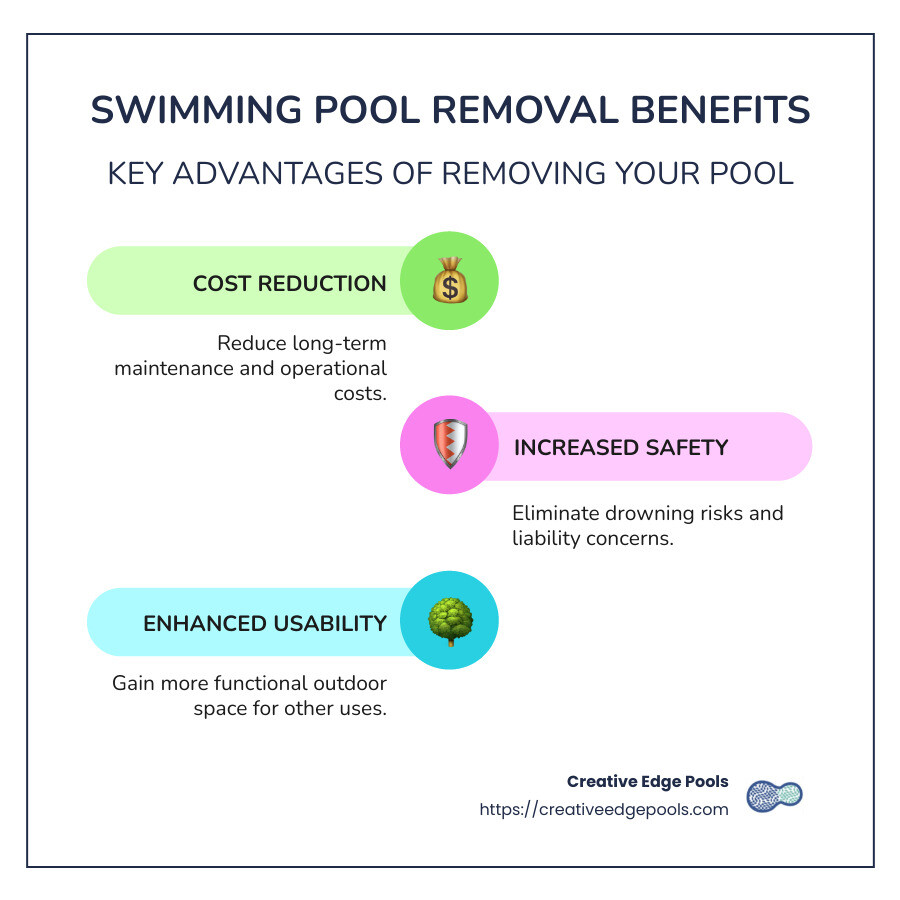
- Benefits: Save on maintenance, lower liability risks, increase property value, gain usable space.
- Types of Removal: Full removal (entire pool is demolished) vs. partial removal (partial demolition and fill).
- Costs: Affected by pool size, type, access, and local regulations. Always get a professional quote.
- Safety & Legal Requirements: Permits and adherence to regulations are essential for a hassle-free process.
I am David Brabant, owner of Creative Edge Pools, with over three decades in the swimming pool industry. Our team is dedicated to helping you steer the ins and outs of swimming pool removal Massachusetts, ensuring you reclaim your backyard efficiently and safely.
Understanding Swimming Pool Removal in Massachusetts
Swimming pool removal in Massachusetts can seem daunting, but understanding the process and your options makes it much easier. Let’s explore the different types of pool removal and the factors that influence the cost.
Types of Pool Removal
There are several types of pool removal, each suited to different needs and pool types:
- In-Ground Pools: These are permanent fixtures and can be complex to remove. The process involves draining the pool, demolishing the structure, and filling in the space. This can be done partially or fully, depending on your goals and budget.
- Above-Ground Pools: Typically easier to remove than in-ground pools, this process involves dismantling the pool structure and disposing of the materials. It’s usually less costly and time-consuming.
- Gunite Pools: Known for their durability, these pools require more effort to demolish. The concrete needs to be broken up and removed, which can be labor-intensive.
- Vinyl Liner Pools: These pools have a liner that can be removed before the structure is dismantled. The process is generally less intensive than removing a gunite pool.
Cost Factors
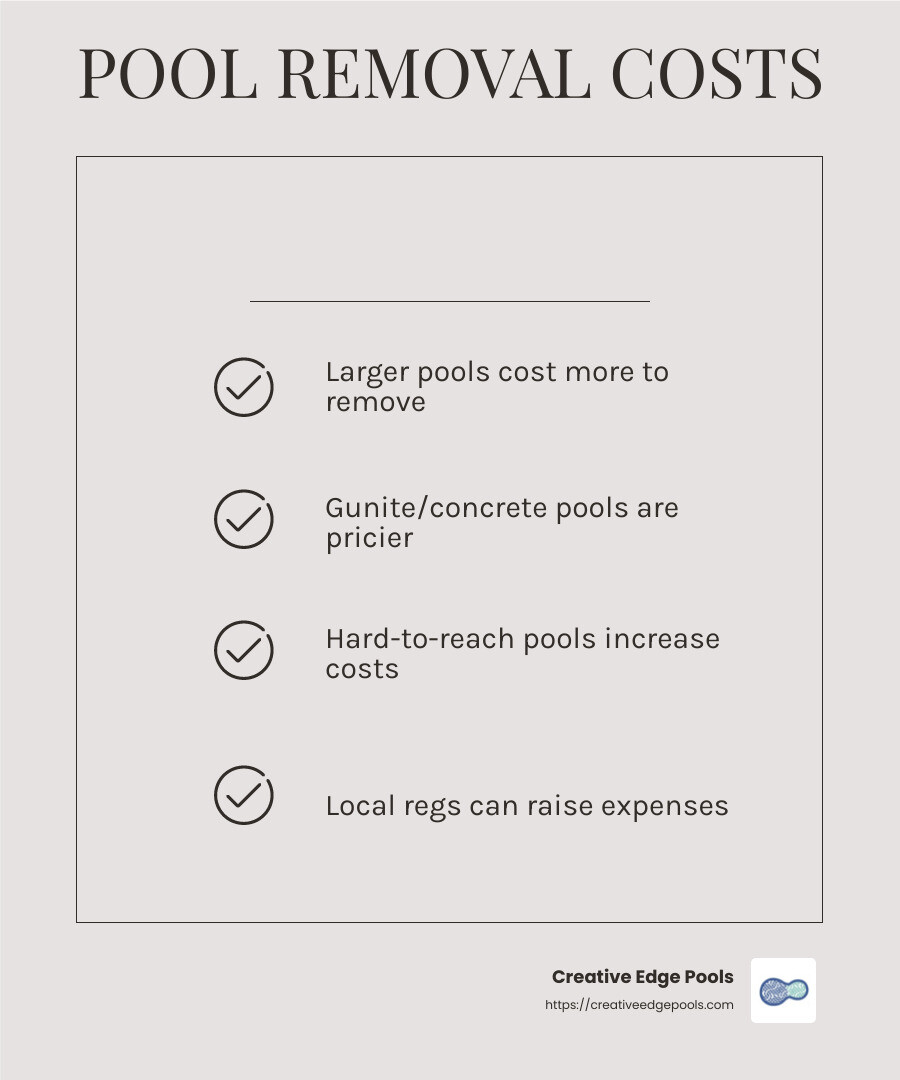
Several factors influence the cost of swimming pool removal in Massachusetts:
- Pool Size: Larger pools require more labor and materials to remove, increasing the overall cost.
- Pool Type: As mentioned, gunite pools tend to be more expensive to remove due to the complexity of breaking down concrete structures.
- Access: If your pool is in a hard-to-reach area, it might require special equipment or additional labor, which can drive up costs.
- Local Regulations: Massachusetts has specific regulations for pool removal. These rules can affect the cost, especially if permits are needed or if there are restrictions on how debris can be disposed of. It’s crucial to adhere to these regulations to avoid fines or legal issues. For more information on local regulations, visit the Massachusetts government environmental website.
In Massachusetts, the cost of pool removal can vary widely. It’s essential to get professional quotes and understand the scope of work involved. By considering these factors, you can make a well-informed decision and ensure a smooth transition in reclaiming your backyard space.
The Pool Removal Process
Removing a swimming pool is a big project. Whether you choose partial or full pool removal, understanding the steps involved will help you make the best decision for your property.
Demolition, Excavation, Fill-In, and Grading
Demolition is the first step in the pool removal process. For in-ground pools, this involves breaking up the pool structure, which could be concrete, gunite, or vinyl. Above-ground pools require dismantling the structure and removing all components.
Once the pool is demolished, excavation begins. This step involves removing all debris from the site. The debris is hauled away to a waste disposal facility, ensuring your backyard is free of old pool materials.
After excavation, the next step is fill-in. This involves filling the empty space with dirt or gravel. It’s crucial to use the right materials to ensure proper drainage and prevent future settling.
Finally, grading is performed to level the ground. This step is essential for restoring your yard to a usable state. Proper grading ensures the area is safe and ready for new landscaping or other projects.
Partial vs. Full Pool Removal
Partial Pool Removal: This method involves breaking holes in the pool floor for drainage and removing the top portions of the pool walls. The rest of the structure is left in place and covered with fill material. This option is typically less expensive and faster but may affect future landscaping or building projects due to potential structural instability.
Full Pool Removal: In this method, the entire pool structure is demolished and removed. This includes all concrete, gunite, or vinyl materials. Full removal provides a completely clean slate, offering the most flexibility for future use of the space. It’s a more thorough option, ensuring no structural remnants remain that could impact future projects.

Structural Stability
Choosing between partial and full removal often comes down to structural stability. Full removal is generally recommended if you plan to build on the site, as it ensures a solid foundation. Partial removal might suffice for simple landscaping but could pose risks if heavy structures are added later.
Understanding these steps and options will help you steer the pool removal process smoothly. By making informed choices, you can transform your backyard into a space that meets your needs and preferences.
Risks and Considerations
Legal and Safety Concerns
When it comes to swimming pool removal in Massachusetts, understanding the legal and safety aspects is crucial. These considerations ensure not only compliance with local laws but also the safety and integrity of your property.
Structural Damage: Removing a pool can impact the structural stability of your property. If not done correctly, it might lead to issues like soil erosion or uneven settling. This is especially true with partial removals, where remnants of the pool are left underground. Proper grading and fill-in are vital to prevent such problems.
Groundwater Contamination: Improper disposal of pool materials can lead to groundwater contamination. Pools often contain chemicals like chlorine, which can seep into the ground if the demolition debris is not managed correctly. Ensuring that all materials are disposed of in an environmentally-friendly manner is essential to protect local water sources.
Legal Restrictions and Permits: In Massachusetts, specific permits are required for pool removal. These permits ensure that the removal process meets local building codes and environmental regulations. Before starting the demolition, it’s important to check with your local city or town hall to understand what permits are necessary.
Disclosure Requirements: If you’re planning to sell your property, Massachusetts law requires you to disclose any significant changes to the property, including pool removal. This transparency helps future buyers understand the property’s history and ensures there are no surprises down the line.
Building Restrictions: Some areas have restrictions on how land can be used post-pool removal. For instance, certain zoning laws may limit the type of structures you can build on the site. It’s important to research these restrictions to avoid complications with future projects.
Navigating these legal and safety concerns can be complex, but they are essential to ensure a smooth and compliant pool removal process. By addressing these issues upfront, you can protect your property and avoid potential legal headaches.
Frequently Asked Questions about Swimming Pool Removal Massachusetts
What is the average cost of pool removal in Massachusetts?
The cost of swimming pool removal in Massachusetts can vary significantly based on several factors. On average, you might expect to pay between $3,000 and $10,000. Here’s why the price can differ:
- Pool Size: Larger pools typically cost more to remove because they involve more work and materials.
- Type of Pool: In-ground pools, especially those made of gunite or concrete, are generally more expensive to remove than above-ground or vinyl liner pools.
- Access: If your pool is in a hard-to-reach area, it could increase the cost due to the need for specialized equipment.
- Local Regulations: Some towns have specific rules about how pools must be removed, which can affect the cost. For example, whether concrete can be used as backfill or must be completely removed.
Can I fill in my pool myself?
While it’s technically possible for a homeowner to fill in their pool, it’s not recommended. Here’s why:
- Permits and Regulations: Massachusetts requires permits for pool removal, and doing it yourself might lead to non-compliance with local laws, resulting in fines or legal issues.
- Safety Concerns: Proper pool removal involves breaking up the pool structure, which can be dangerous without the right equipment and expertise.
- Quality of Work: Professional contractors ensure that the fill-in is done correctly, preventing future issues like sinkholes or drainage problems.
For these reasons, hiring professionals is often the best approach to ensure a safe and compliant pool removal process.
What are the benefits of professional pool removal?
Choosing a professional service for swimming pool removal in Massachusetts offers several benefits:
- Expertise and Experience: Professionals have the experience to handle complex demolitions and understand local regulations, ensuring a smooth process.
- Safety Assurance: They use the right tools and techniques to safely dismantle and remove the pool, reducing the risk of accidents.
- Quality Results: With proper grading and fill-in, professionals help avoid future structural issues, ensuring your yard is usable and safe.
- Time and Effort: Pool removal is labor-intensive. Professionals handle everything, saving you time and effort.
By opting for a professional service, you ensure that your pool removal is done efficiently, safely, and in compliance with all legal requirements.
Conclusion
Changing your backyard by removing an old pool can seem daunting, but with the right professionals, it becomes a seamless process. At Creative Edge Pools, we specialize in swimming pool removal in Massachusetts, offering a comprehensive service that aligns with your vision for your outdoor space.
Our team is equipped with the expertise to handle every aspect of pool removal—from demolition to site restoration. We ensure that your project is completed safely, efficiently, and in compliance with all local regulations. Our family-owned business takes pride in delivering personalized service, treating each project as if it were in our own backyard.
Choosing Creative Edge Pools means more than just removing a pool. It’s about reclaiming your outdoor space and opening up possibilities for new landscaping, gardens, or entertainment areas. Whether you want to create a lush garden, a play area for the kids, or an outdoor kitchen for hosting gatherings, we make it happen.
By trusting our professional services, you can enjoy a worry-free experience and look forward to a beautiful and functional backyard. Ready to make a change? Let us help you transform your space and breathe new life into your property.