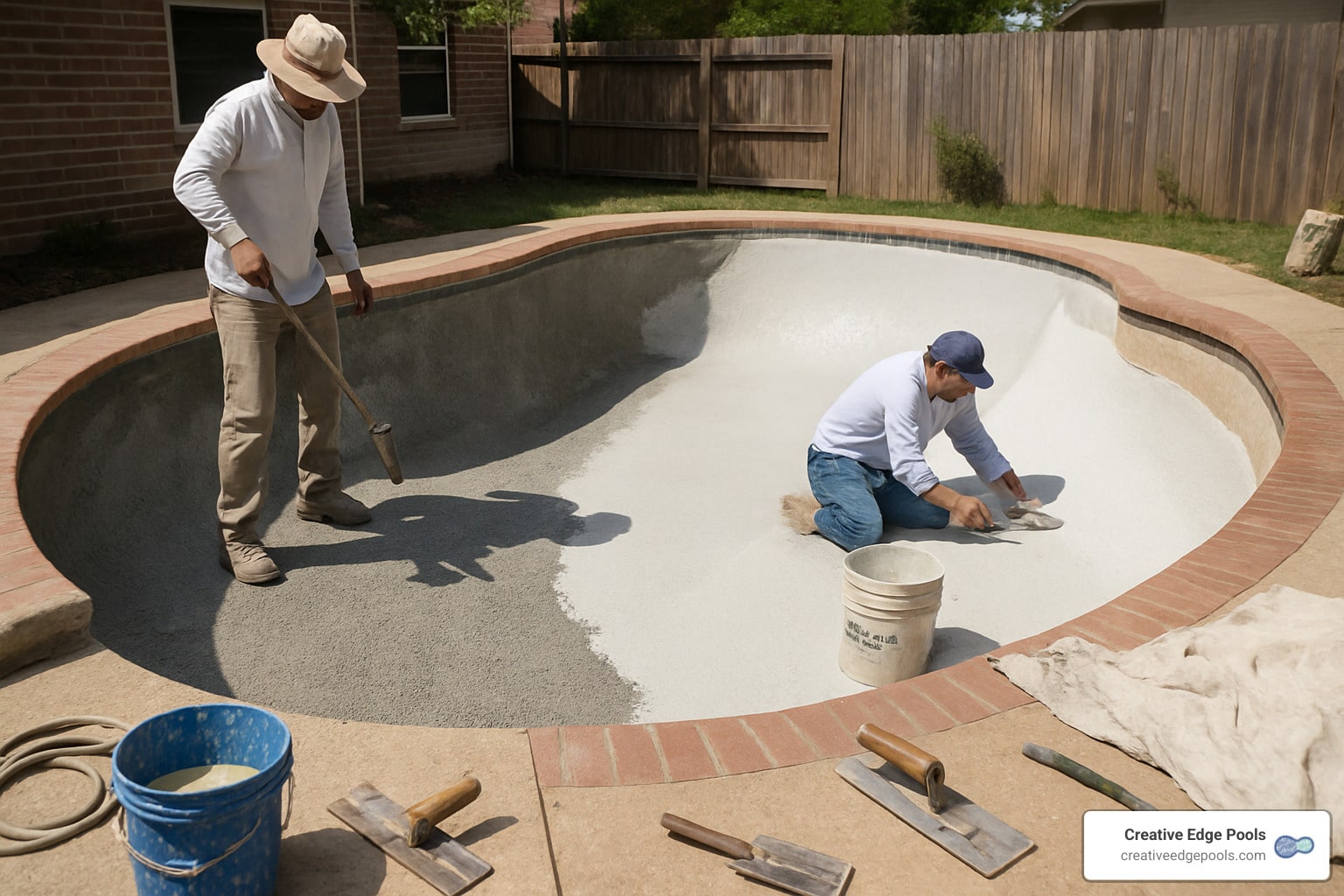
Resurface Gunite Pool Options: 7 Best Powerful Choices 2025
Revitalizing Your Pool: The Essential Guide to Resurface Options
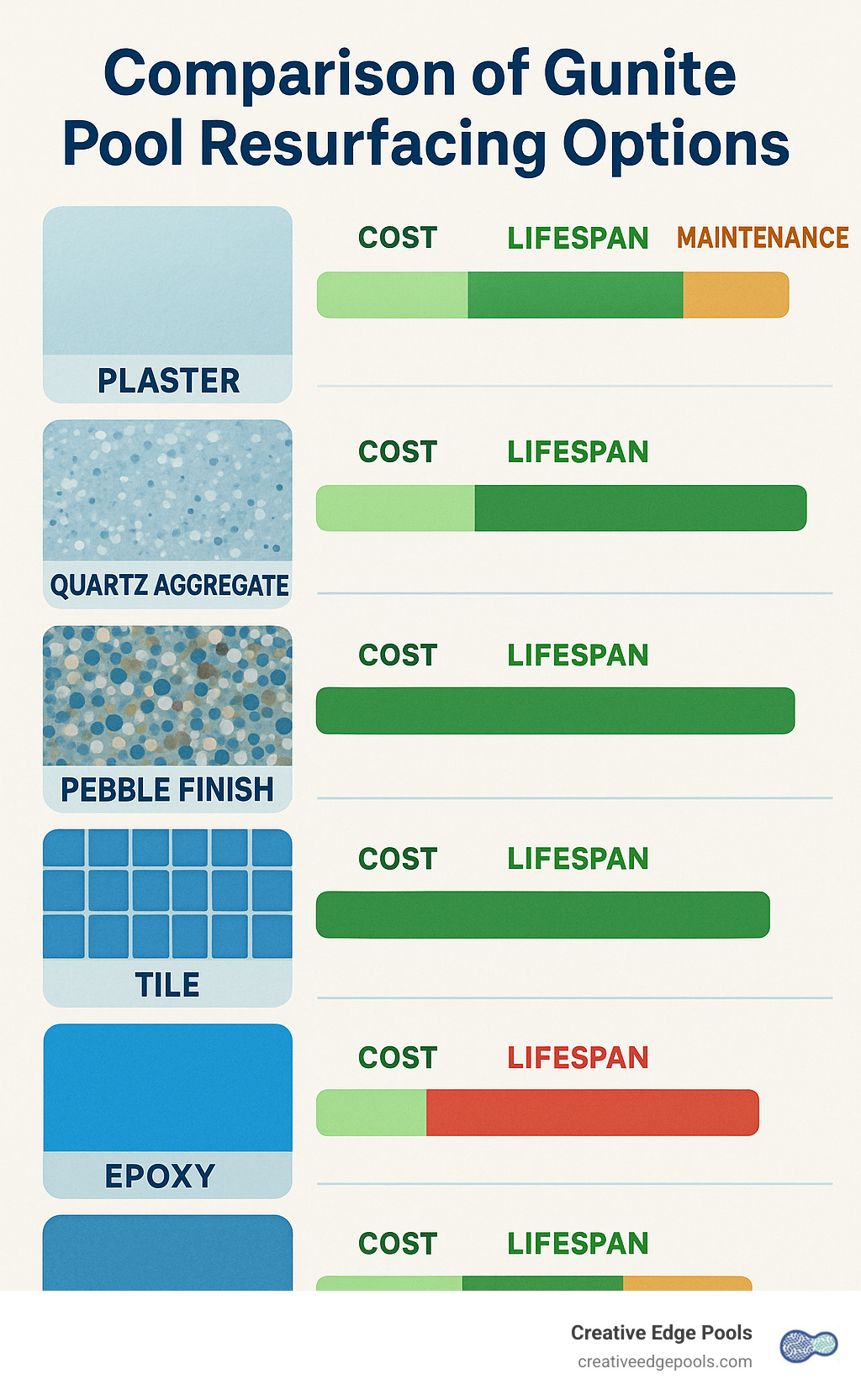
Resurface gunite pool options include plaster (marcite), quartz aggregate, pebble finish, tile, epoxy paint, and polymer coatings. Here’s a quick comparison:
| Material | Cost (per sq ft) | Lifespan | Best For |
|---|---|---|---|
| Plaster/Marcite | $4-7 | 7-10 years | Budget-conscious homeowners |
| Quartz Aggregate | $8-12 | 12-15 years | Balanced durability and cost |
| Pebble Finish | $10-15 | 15-20 years | Long-term investment, natural look |
| Tile | $20-30+ | 20-30 years | Luxury appearance, maximum longevity |
| Epoxy Paint | $1-3 | 2-5 years | Temporary solution, quick fix |
| Polymer Coatings | $9-14 | 10-15 years | Fast application, smooth texture |
Like your home’s roof or driveway, your swimming pool requires periodic renewal to maintain its beauty, safety, and functionality. Over time, even the most well-maintained gunite pools will show signs of wear—stains that won’t scrub away, rough surfaces that catch on swimsuits, or unexplained water loss that signals hidden leaks.
Timing matters. Most gunite pools require resurfacing every 10-15 years, though this varies based on maintenance practices, regional climate, and usage patterns. Harsh freeze-thaw cycles in New England can accelerate wear, while proper water chemistry can extend your surface’s lifespan.
Choosing the right material involves balancing immediate costs against long-term value. While plaster offers the most budget-friendly entry point, premium options like pebble aggregate or tile provide significantly longer lifespans and reduced maintenance needs—potentially saving money over decades of ownership.
I’m David Brabant, owner of Creative Edge Pools with over thirty years of experience in the swimming pool industry, including extensive work with resurface gunite pool options throughout Massachusetts and New Hampshire. I’ve personally overseen hundreds of pool resurfacing projects, helping homeowners select materials that match their unique needs and regional climate challenges.
Simple resurface gunite pool options glossary:
– gunite pool refinishing cost
– pebble tec pool cost
Why Resurfacing Matters: Signs & Timing
Resurfacing isn’t just a cosmetic upgrade—it’s essential maintenance that protects your pool’s structural integrity. In the harsh New England climate, where we experience significant freeze-thaw cycles, gunite pools face unique challenges that make timely resurfacing even more critical.
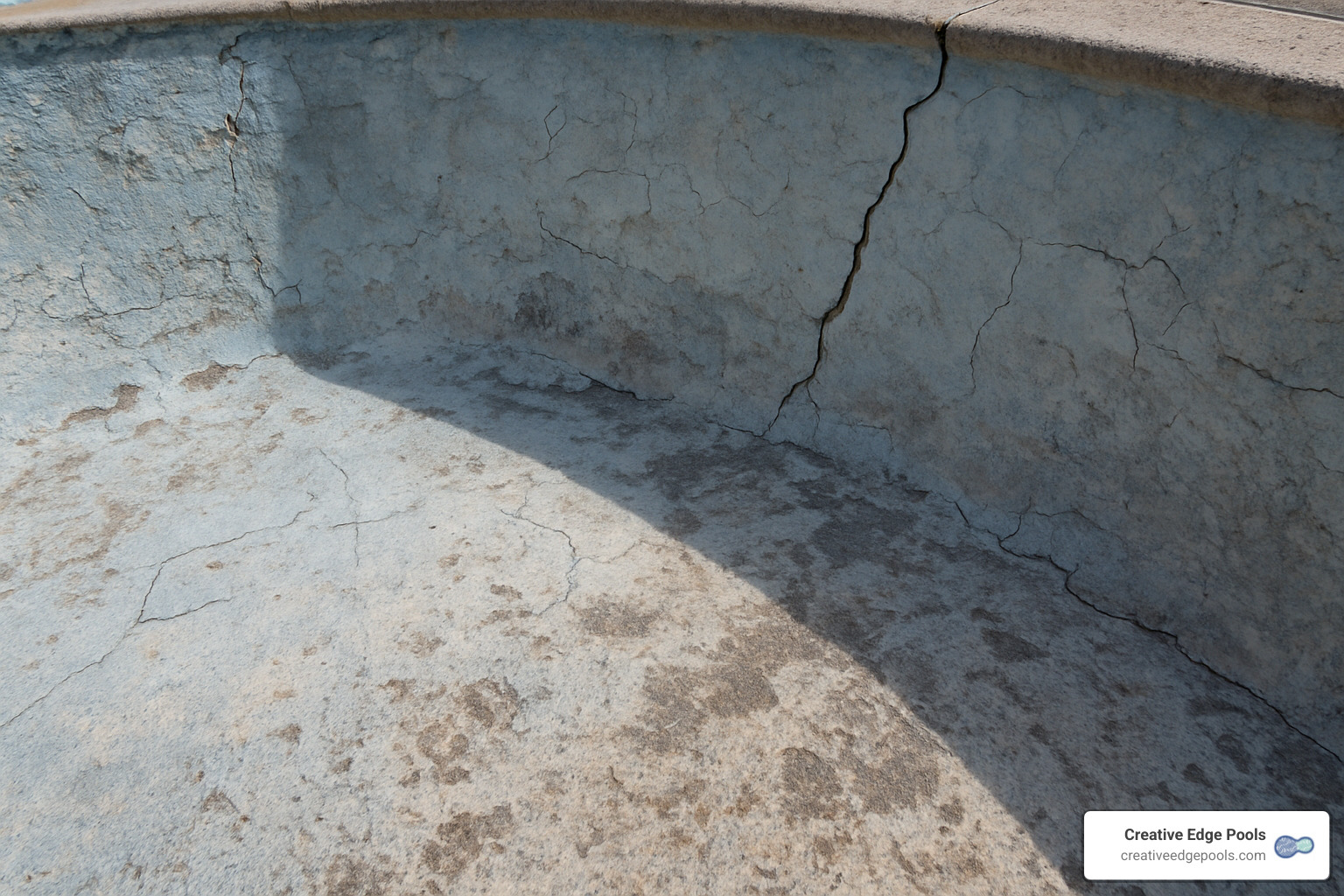
Think of your pool surface like your skin—it’s the protective barrier between the elements and what lies beneath. When water sneaks into tiny cracks in your pool’s surface during our Massachusetts winters, it freezes and expands, creating larger cracks that can compromise your entire pool shell.
Those chalky deposits you’ve been scrubbing? The rough patches that snag your swimsuit? That mysterious water loss? These aren’t just annoyances—they’re your pool sending SOS signals that it needs attention.
Most gunite pools follow a 10-15 year resurfacing cycle, but several factors might move up your timeline:
Water chemistry struggles can silently erode your surface. Heavy pool traffic accelerates wear patterns. And improper winterization in our New England climate can be particularly unforgiving on pool surfaces.
Regular check-ups help you spot trouble before it spirals. More info about gunite care
Early Warning Signs That Demand Action
Don’t wait until your pool becomes unusable before considering resurfacing. Your pool will tell you when it’s struggling—if you know what to look for.
Those persistent stains that laugh at your cleaning efforts are early warning signs. The chalky residue that appears no matter how perfectly you balance chemicals is another red flag. When the floor and walls feel like rough sandpaper against your feet, your surface is crying out for help.
Pay attention to visible cracks developing in the finish and areas where the gunite is becoming exposed. If you’re suddenly spending more on chemicals to maintain water balance, or noticing unexplained water loss, your surface integrity may be compromised.
Discoloration that refuses to respond to shock treatments isn’t just unsightly—it’s telling you something important about your pool’s health.
How Often Should You Do It?
The timing of your pool resurfacing depends on several key factors:
Climate Impact plays a huge role, especially here in Massachusetts and New Hampshire. Our dramatic seasonal shifts put extra stress on pool surfaces. The freeze-thaw cycles we experience each winter can accelerate deterioration.
Maintenance Habits make an enormous difference. I’ve seen carefully maintained pools with consistent water chemistry last years longer between resurfacings.
Pool Usage is straightforward—more swimmers mean more wear. That family pool with daily cannonball contests will need attention sooner than the “for occasional use only” showcase pool.
Your choice of resurface gunite pool options dramatically affects how long you can go between projects:
Traditional plaster gives you about 7-10 years of service. Upgrade to quartz aggregate and you’re looking at 12-15 years of durability. Premium pebble finishes can last 15-20 years, while tile installations might serve you for 20-30+ years.
For most residential pools in our New England service area, we recommend:
– A thorough visual inspection every 2-3 years
– Addressing minor spot repairs as they appear
– Planning for complete resurfacing every 10-15 years for plaster or quartz
– Extending to 15-20+ years between projects with pebble or tile finishes
Scientific research on gunite durability confirms that proper maintenance combined with timely resurfacing significantly extends your pool’s overall lifespan.
Resurface Gunite Pool Options: Comparing Today’s Top Surfaces
When it comes time to breathe new life into your aging gunite pool, you’re faced with more choices than ever before. Each resurface gunite pool option brings its own unique benefits, visual appeal, and price point.
Classic & Cost-Effective: White Plaster (Marcite)
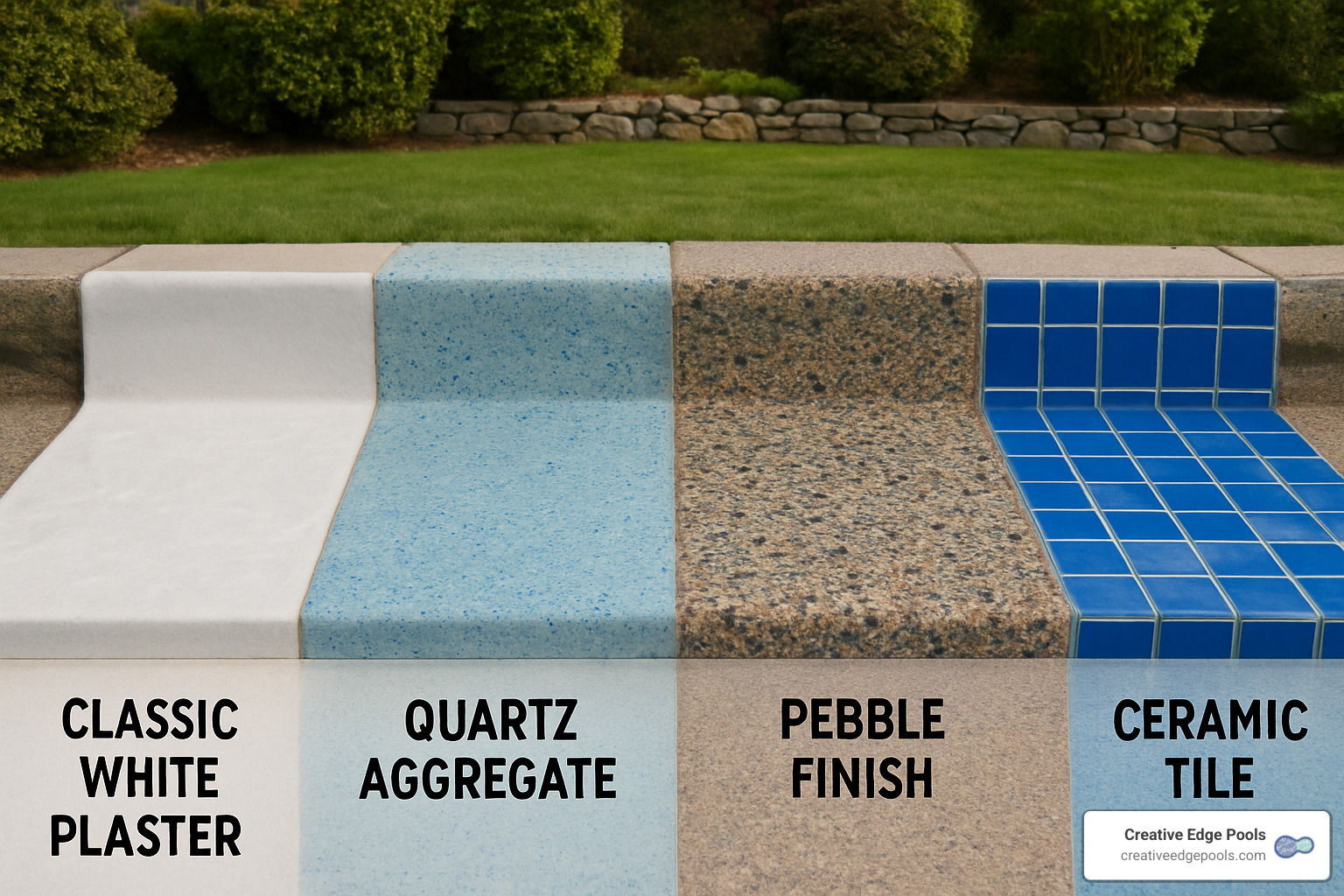
There’s something timeless about white plaster (or marcite). It’s the finish that most of us picture when we think “swimming pool” – that smooth, classic surface that transforms water into that inviting light blue.
White plaster blends cement with marble dust or silica sand to create the most budget-friendly resurface gunite pool option at $4-7 per square foot. It offers a smooth feel underfoot and creates that quintessential pool glow on sunny days.
With a lifespan of 7-10 years, it’s ideal for homeowners who might be selling within a decade or those working within tighter budgets. The smooth finish feels wonderful against skin, but it’s more vulnerable to staining and chemical imbalances than premium options.
Mid-Tier Upgrade: Quartz Aggregate Blends
Think of quartz aggregate finishes as plaster’s more resilient cousin. By blending traditional plaster with quartz particles, these finishes hit the sweet spot between affordability and durability.
At $8-12 per square foot, products like Diamond Brite or PebbleSheen offer a noticeable upgrade in longevity – typically lasting 12-15 years with proper care. The embedded quartz particles create a delightful sparkle effect when sunlight dances across your pool.
These finishes forgive minor chemistry fluctuations better than standard plaster, making them ideal for busy families who might occasionally miss a maintenance day. More info about quartz option
Premium Durability: Pebble & Stone Exposed Aggregates
For those seeking a more natural aesthetic with outstanding longevity, pebble finishes transform your pool into a lagoon-like retreat. These premium surfaces blend cement with small, smooth river stones or pebbles for a distinctly organic look and feel.
At $10-15 per square foot, pebble finishes represent a higher initial investment that pays dividends over time. With proper care, these surfaces routinely last 15-20+ years, making them particularly popular among clients who view their pools as long-term investments.
The textured surface provides excellent slip resistance – a feature many clients with young children or elderly family members particularly value. The natural appearance integrates beautifully with landscaped environments.
Luxe Statement: Full Tile Finishes
When only the absolute best will do, full tile finishes represent the pinnacle of resurface gunite pool options. Whether using glass, porcelain, or ceramic tiles, these surfaces transform your pool into a shimmering work of art that can last for decades.
At $20-30+ per square foot, tile represents a significant investment, but one that pays off with extraordinary longevity (20-30+ years) and best aesthetic possibilities. The smooth, non-porous surface resists algae growth and chemical damage while maintaining its appearance with minimal fading.
Glass tile creates particularly stunning effects, with light refracting through the tiles to create a jewel-like appearance underwater.
Quick Fixes: Epoxy & Rubber Pool Paints
Sometimes you need a temporary solution while planning for a more comprehensive renovation. That’s where epoxy and rubber-based pool paints come in – offering the most budget-friendly approach at just $1-3 per square foot.
These products can extend the life of an aging surface for a few seasons, temporarily sealing minor cracks and imperfections while providing a fresh look. With a lifespan of just 2-5 years, paint isn’t a long-term solution.
Alternative Tech: Fiberglass & Polymer Coatings
Innovation has brought exciting new options to the pool resurfacing market. Fiberglass overlays and thermal polymer coatings represent cutting-edge alternatives with some compelling advantages.
Priced in the mid-to-high range ($9-14 per square foot), products like AquaGuard 5000 and ecoFINISH offer smooth, non-porous surfaces that resist algae growth along with faster application and cure times. Many of these systems come with extended warranties of up to 15 years.
One significant advantage is the reduced downtime – a critical factor for commercial pools or homeowners eager to get back to swimming. Scientific research on dustless blasting confirms this approach can increase production rates dramatically while reducing dust pollution.
Budget, Timeline & Longevity—Finding Your Sweet Spot
When planning your gunite pool resurfacing project, three key factors typically drive decision-making: budget constraints, timeline requirements, and desired longevity. Finding the optimal balance between these elements is essential for a successful renovation.
The average cost to resurface a standard 1,000 square foot gunite pool ranges from approximately $4,000 for basic paint applications to over $30,000 for premium tile finishes. Most of our clients in Massachusetts and New Hampshire typically invest between $8,000 and $15,000 for quality mid-range finishes like quartz aggregate or standard pebble.
Here’s a tip: Instead of focusing solely on the upfront cost, consider the “cost per year of service”:
- Plaster at $6,000 lasting 8 years = $750 per year
- Pebble at $12,000 lasting 20 years = $600 per year
- Tile at $25,000 lasting 25+ years = $1,000 per year (but with higher property value impact)
When you break it down this way, premium materials might actually provide better long-term value despite the higher initial investment. More info about average cost
What Drives the Price Up or Down?
Your final bill will be influenced by several key factors:
Pool size and complexity plays a major role – that sprawling free-form pool with multiple levels will naturally cost more than a simple rectangle.
The current condition of your pool surface matters tremendously. If we’re dealing with multiple layers of old material, significant cracks, or delamination issues, we’ll need to address these problems before applying any new finish.
Access challenges to your backyard can affect costs. If your property has narrow gates, steep slopes, or obstructive landscaping, we may need specialized equipment or additional labor to transport materials.
Regional labor rates vary significantly, and here in Eastern Massachusetts and Southern New Hampshire, skilled pool plasterers command premium rates.
Your choice of material dramatically impacts cost, from basic plaster at $4-7 per square foot to luxury tile at $20-30+ per square foot.
Many homeowners also choose to incorporate add-on upgrades during resurfacing, such as replacing waterline tile, updating coping stones, adding LED lighting, or installing automation systems.
How Long Will It Take?
A gunite pool resurfacing project unfolds in several distinct phases:
The process begins with draining (1-2 days), carefully emptying your pool while monitoring for potential groundwater issues.
Next comes surface preparation (2-4 days), arguably the most crucial phase. This involves removing the old surface down to sound gunite, repairing structural issues, and preparing for the new finish.
The actual application of your chosen material (1-2 days) requires skilled technicians working with precision to ensure proper thickness and finish quality.
Then comes the curing period (7-14 days) which allows your new surface to properly set and harden before the pool is refilled. This step cannot be rushed without risking the finish quality and longevity.
Finally, we handle the fill and balance phase (2-3 days), carefully refilling the pool and adjusting the water chemistry to match the specific requirements of your new surface material.
From start to finish, most resurface gunite pool options require 2-3 weeks of total pool downtime. Weather conditions, contractor scheduling, and material selection can all impact this timeline.
Here in New England, the optimal window for resurfacing projects typically runs from late spring through early fall. More info about gunite pool prices
Decision Factors Beyond Price
When it’s time to choose among your resurface gunite pool options, your budget matters—but it shouldn’t be the only consideration. Several other factors will significantly impact how satisfied you’ll be with your renovation for years to come.
Climate-Specific Needs
Living in Massachusetts or New Hampshire means your pool faces unique environmental challenges that folks in warmer climates simply don’t worry about.
Our freeze-thaw cycles can be brutal on pool surfaces. When water seeps into tiny cracks and then freezes, it expands and can turn hairline cracks into major problems. That’s why premium aggregate finishes and properly applied quartz blends typically handle our winter stresses better than basic plaster.
Despite our northern location, our summer sun can still pack a punch. Those gorgeous colored finishes you’re eyeing? Some may fade faster than others when exposed to UV rays. Quartz and pebble materials generally maintain their color integrity much better than painted or dyed plaster options.
If you’re using a salt chlorine generator, it’s worth noting that salt systems can be more aggressive on certain surfaces. Pebble finishes and tile offer excellent salt resistance, while some plaster finishes may show accelerated wear when exposed to saltwater. More info about gunite pool prices
Maintenance Commitment
Be honest with yourself—how much time do you want to spend maintaining your pool?
Plaster surfaces demand more precise chemical balance to prevent etching and staining. You’ll need to be vigilant about testing and adjusting your water chemistry. On the flip side, aggregate and tile finishes are more forgiving of minor fluctuations.
The texture of your surface affects cleaning too. Textured pebble finishes may trap more debris but resist staining wonderfully. Smooth plaster surfaces show stains more readily but are easier to brush clean during your weekly maintenance.
Aesthetic Preferences
Your pool isn’t just for swimming—it’s a centerpiece of your outdoor living space.
Different surfaces create distinctly different water colors. White plaster produces that classic light blue that many people associate with a traditional pool. Darker aggregates create deeper blue or green tones that can look incredibly natural.
The feel underfoot matters too, especially for families with children or elderly swimmers. Smooth plaster feels quite different than textured pebble or polished aggregate.
Consider how your pool integrates with your landscape design. Natural stone or earth-toned pebble finishes often pair beautifully with rustic or naturalistic landscapes, while sleek tile or quartz options may better complement contemporary designs.
Resale Value Considerations
If selling your home might be on the horizon, factor this into your decision.
Neutral finishes with broad appeal may serve you better than highly personalized color choices. A recently resurfaced pool with a premium finish can become a significant selling point. In many cases, homeowners recoup more than their investment cost in the right market.
Keep good records of your resurfacing project, including material specifications and warranty information. This documentation reassures potential buyers and adds perceived value to your property.
DIY vs. Professional Resurfacing
Gunite pool resurfacing is one area where professional expertise truly matters.
Proper application of most finish materials requires specialized knowledge, tools, and techniques developed through years of experience. The equipment needed isn’t typically sitting in your garage. Professional-grade mixers, pumps, trowels, and blasting equipment are essential for quality results.
There are serious safety considerations too. Surface preparation often involves hazardous activities like chip-out work, chemical handling, and dust exposure requiring proper safety equipment and training.
Professional installations typically include warranty coverage that protects your investment. DIY work leaves you fully responsible for any failures, which can be costly to correct. More info about how to resurface a gunite pool
Common Mistakes to Avoid
Be aware of these common pitfalls:
Inadequate surface preparation is the leading cause of premature finish failure. Proper “chipout” down to sound gunite is essential—there are no shortcuts here.
Rushing the curing process can permanently damage your new surface. Each finish type has specific curing requirements, and filling too quickly or having improper water chemistry during startup can lead to discoloration, scaling, or delamination.
Don’t ignore structural issues. Address cracks, hollow spots, or other structural issues before applying new finish materials.
Choosing based solely on price often leads to disappointment. The lowest bid typically reflects compromises in materials, preparation, or application techniques that may lead to premature failure.
Frequently Asked Questions about Resurface Gunite Pool Options
What is the longest-lasting resurface gunite pool option?
When it comes to longevity, nothing beats a quality tile finish. Properly installed glass or porcelain tile pools can still look gorgeous after 25+ years! The secret to tile’s impressive lifespan is its completely inert nature—it simply doesn’t react with pool chemicals, UV rays, or even the occasional scratch from pool toys.
Right behind tile in the durability department are pebble and exposed aggregate finishes, typically lasting 15-20+ years with proper care. These finishes combine the natural durability of stone with modern cement technology, creating surfaces that stand up beautifully to our harsh New England winters.
While you’ll invest more initially for these premium options, they often prove more cost-effective in the long run when you consider the disruption and expense of more frequent resurfacing projects.
How much does it cost to resurface an average 1,000 sq ft gunite pool?
For a standard 1,000 square foot gunite pool in Massachusetts or New Hampshire, here’s what you can expect to invest:
Basic white plaster will typically run $4,000-7,000, making it the most budget-friendly option. Moving up to a quartz aggregate finish increases the investment to $8,000-12,000, but also significantly extends the lifespan and adds visual interest.
For those seeking premium durability, pebble or stone finishes generally range from $10,000-15,000, while a full tile application represents the luxury end at $20,000-30,000+.
If you’re looking for a temporary solution, epoxy paint applications cost just $1,000-3,000, though they’ll need to be redone much sooner. The newer polymer coating systems fall in the $9,000-14,000 range, offering a middle ground in both price and performance.
These estimates assume standard surface preparation—if your pool needs significant repairs or has difficult access issues, costs may increase.
Can I swim sooner if I choose fiberglass or eco-finish instead of plaster?
Absolutely! If minimizing pool downtime is a priority for you, the newer coating technologies offer a significant advantage.
Traditional cementitious materials require patience—basic plaster needs 7-10 days minimum before you can even fill the pool, while quartz and pebble finishes may need 7-14 days. Then comes another 7-14 days of careful chemical balancing before regular swimming. That’s potentially a month of looking at your empty pool during prime swimming season!
By contrast, modern alternatives dramatically shorten this timeline. Epoxy and polymer coatings typically allow filling within 24-72 hours, while fiberglass systems need just 48-96 hours before filling. Even better, once filled, you’re often swimming within 1-2 days rather than weeks.
This quick turnaround makes these systems particularly popular for vacation homeowners who don’t want to lose precious summer weekends, or for families who simply can’t imagine keeping the kids out of the pool for a month during summer break.
More info about how to resurface a gunite pool
Conclusion
Selecting the perfect resurface gunite pool option isn’t just about picking a material—it’s about making a thoughtful investment in your family’s outdoor enjoyment for years to come. Throughout this guide, we’ve explored everything from budget-friendly plaster to luxurious tile, helping you understand how each option balances cost, longevity, and aesthetics.
Here in New England, our unique climate presents special challenges for pool surfaces. Those freeze-thaw cycles that define our winters can be tough on pool finishes, making durability a particularly important consideration for homeowners in Massachusetts and New Hampshire.
When making your decision, focus on your specific situation rather than what might work for someone else. How long do you plan to stay in your home? If you’re looking at 5+ years, investing in a premium finish might actually save you money and hassle in the long run. How does your family use the pool? Active families with children might benefit from the durability and slip-resistance of aggregate finishes.
Be honest with yourself about your maintenance preferences too. Some finishes require more attentive care than others—if you’re not one to check water chemistry weekly, a more forgiving surface like pebble might be worth the extra investment.
Resurfacing also presents the perfect opportunity to consider a more comprehensive pool renovation. While your pool is drained, you might want to update aging waterline tile, replace cracked coping, or upgrade to energy-efficient equipment.
Perhaps most importantly, work with experienced professionals who understand our local conditions. The quality of installation can be just as crucial as your material choice—even the most premium finish won’t perform well if improperly applied.
At Creative Edge Pools, we’ve guided countless homeowners through this decision process, always focusing on your specific needs rather than pushing a one-size-fits-all solution. We’ve seen how the right resurfacing choice transforms not just the pool itself, but the entire backyard experience.
Whether you ultimately choose the budget-friendly approach of plaster, the balanced value of quartz, the premium durability of pebble, or the luxury of tile, proper installation and ongoing maintenance will maximize your investment. More info about professional gunite pool resurfacing