
Pvc Pool Repair Kit: The #1 Easy Fix 2025
Why Your Pool’s Vinyl Liner Deserves the Right Repair Kit
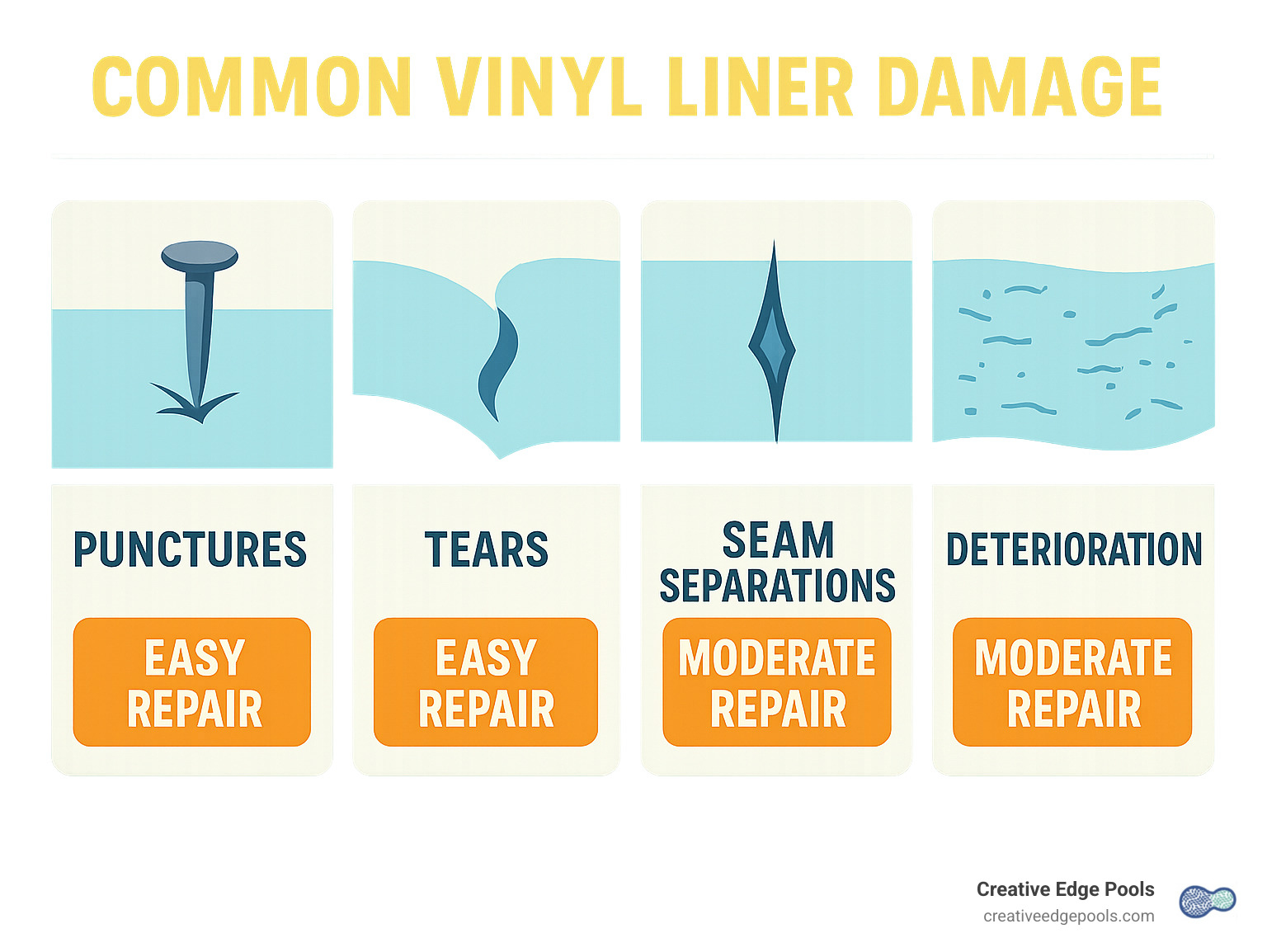
A pvc pool repair kit can save you hundreds of dollars and extend your liner’s life when tears, punctures, or holes appear. Here’s what you need to know:
- Best for small repairs: Holes under 2 inches, minor tears, punctures from sharp objects
- Key components: Waterproof vinyl cement (like HH-66), clear vinyl patches, applicator tool
- Works underwater: Quality kits allow repairs without draining your pool
- Cure time: 1-24 hours for full strength bond
- Cost: $12-40 vs. $500+ for professional liner replacement
Small tears in vinyl pool liners happen more often than you’d think. Winter damage, sharp pool toys, or simple wear and tear can quickly turn into costly problems if left unchecked. The good news? Most minor damage can be fixed permanently with the right repair approach.
Research shows that vinyl liner pools make up a significant portion of the 5 million residential pools across America. With the pool maintenance market growing rapidly, more homeowners are choosing DIY solutions that actually work. A properly applied patch using quality vinyl cement creates a bond stronger than the original liner material.
As David Brabant, owner of Creative Edge Pools with over 30 years in the swimming pool industry, I’ve seen countless liner repairs – both successful DIY fixes and botched attempts that required professional intervention. The key difference always comes down to choosing the right pvc pool repair kit and following proper application techniques.
For more detailed guides, check out our articles on:
Understanding and Selecting Your PVC Pool Repair Kit
This section will guide you through choosing the right kit and preparing for a successful, long-lasting repair. We’ll cover what comes in a standard kit and the crucial first steps before you even apply the patch.
What to Look For in a Vinyl Repair Kit
Picture this: it’s the hottest day of summer, your pool is calling your name, and then you notice that telltale drop in water level. Before you panic about expensive repairs, take a deep breath. The right pvc pool repair kit can turn this pool emergency into a simple weekend project.
Not all repair kits are created equal, though. I’ve seen too many homeowners grab the first cheap kit they find, only to watch their “fix” fail within weeks. Let’s make sure that doesn’t happen to you.
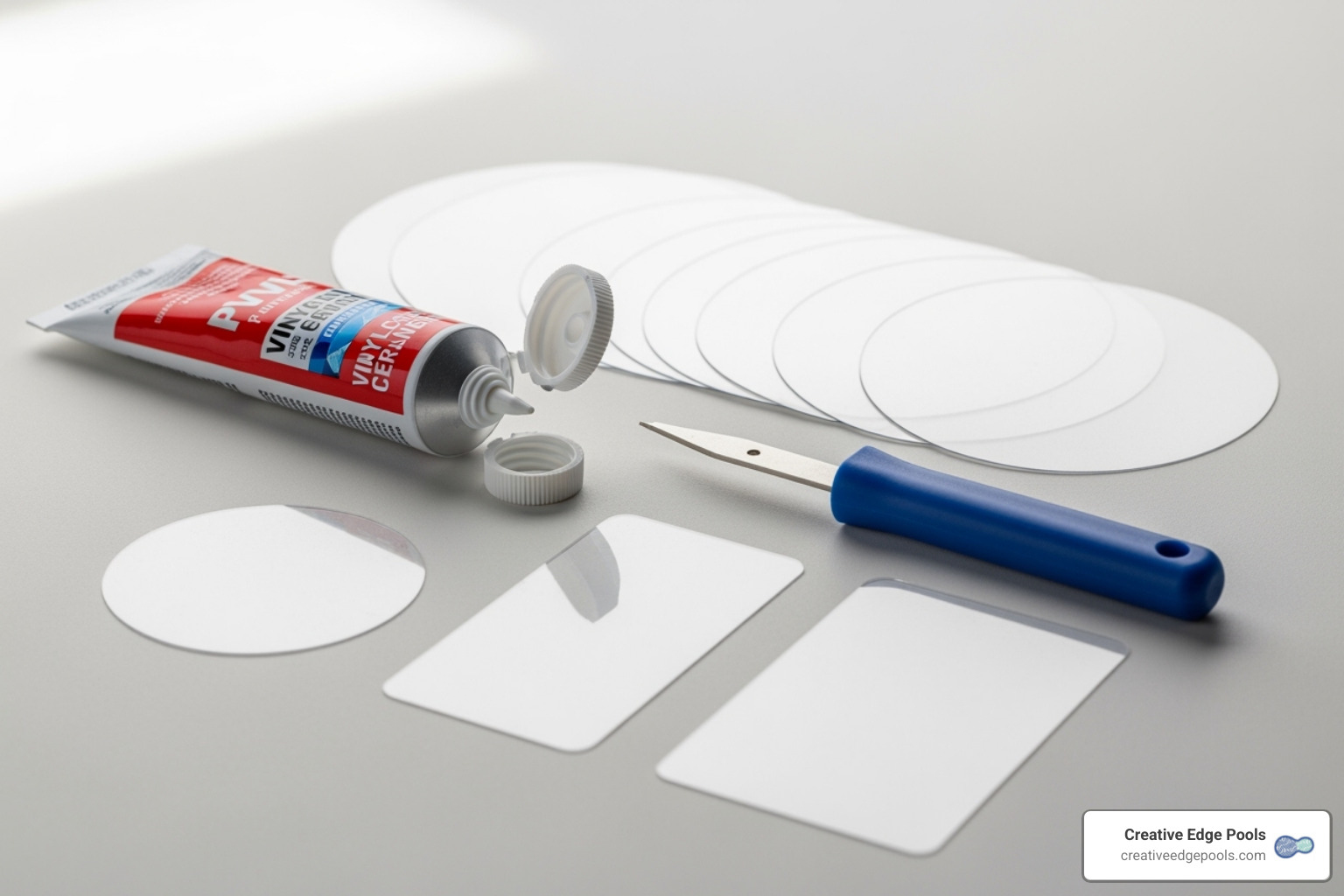
The adhesive is the heart and soul of any good repair kit. You’ll want to look for vinyl cement that creates what we call a “cold weld” – essentially melting the patch and liner together at a molecular level. A high-quality, industrial-strength vinyl cement is the gold standard here. It’s waterproof, handles temperature changes like a champ, and actually creates bonds stronger than the original vinyl.
When it comes to patch material, clear vinyl is your best friend. It’s like having an invisible bandage for your pool – the repair blends seamlessly with any liner pattern or color. Some kits offer colored patches, but unless you have a solid-colored liner, clear patches give you that “what tear?” look you’re after.
Don’t overlook the applicator tool that comes with your kit. A small brush or spreader might seem insignificant, but it’s crucial for getting that smooth, even coat of adhesive. Think of it like painting – you wouldn’t use your fingers when you have a perfectly good brush, right?
Here’s where modern kits really shine: underwater capability. The best pvc pool repair kit options let you fix leaks without draining your pool. Since most tears happen below the waterline (because that’s where all the action is), this feature can save you hundreds of dollars in water costs and days of waiting to get back to swimming.
A quality kit should include these essential components:
- Waterproof Vinyl Cement: The adhesive that creates a permanent, flexible bond.
- Clear Patch Material: Versatile vinyl that works with any liner design.
- Applicator Tool: A brush or dauber for smooth, even application.
- Clear Instructions: For both dry and underwater repair methods.
Prepping Your Pool Liner for a Perfect Patch
Here’s the thing about vinyl repairs – they’re only as good as the prep work you put in. I know it’s tempting to slap on a patch and call it a day, but taking time to properly prepare the surface is what separates repairs that last years from ones that fail in weeks.
Finding the leak comes first, and sometimes it feels like playing detective. If you can’t spot the damage right away, turn off your pump to create still water. A few drops of leak-locating dye will get drawn right to the hole, revealing your culprit. Mark the spot with a soft crayon – you’ll thank yourself later when you’re underwater trying to remember where that tiny puncture was.
Cleaning the area is absolutely critical. Any sunscreen, algae, or general pool grime will act like a barrier between your patch and the liner. For repairs above water, clean with mild soap and water, then follow up with isopropyl alcohol for the best bond. Underwater repairs are trickier, but a good scrub with a soft brush to remove loose debris makes all the difference.
If your liner feels particularly slick or glossy, light sanding with fine-grit sandpaper gives the adhesive something to grip onto. Just remember to clean again afterward – those tiny particles can sabotage your repair.
When cutting your patch, think bigger than you need. A two-inch overlap on all sides gives you plenty of bonding surface. Here’s a pro tip that’ll save you headaches later: round those corners. Sharp corners love to catch on pool cleaners, toys, and even swimmers, leading to lifted patches and repeat repairs.
How to Apply a Patch: Dry vs. Underwater Repairs
Now for the moment of truth – actually applying that patch. The process varies depending on whether you’re working above or below the waterline, but both methods can give you professional-quality results when done right.
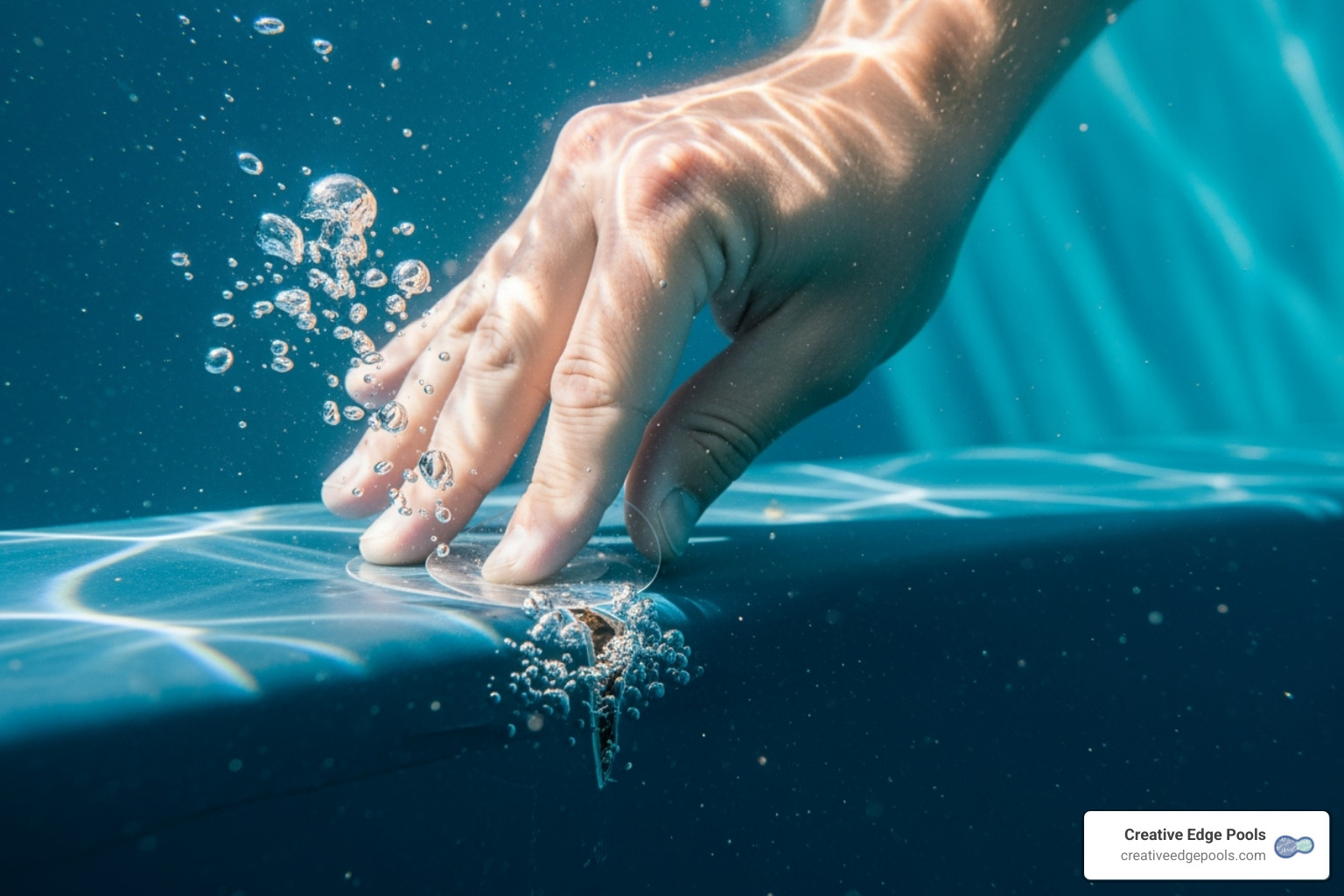
| Step | Dry Repair (Above Water) | Underwater Repair |
|---|---|---|
| 1. Adhesive Application | Apply a thin, even coat of adhesive to both the patch and the cleaned liner surface. | Apply adhesive only to the patch. |
| 2. Preparation | Wait 3-5 minutes for the adhesive to become tacky (sticky but not wet). | Fold the patch loosely onto itself (adhesive side in) to prevent premature sticking. |
| 3. Application | Position the patch carefully over the tear and press firmly from the center outward. | Carry the folded patch to the leak, unfold it, and immediately position it over the hole. |
| 4. Finishing | Use a small roller or the edge of a credit card to smooth out the patch and remove all air bubbles. | Press firmly from the center outward to push out all trapped water and air bubbles. |
Curing time is non-negotiable for both methods. While you might get away with an hour minimum, 24 hours gives you full bond strength and the confidence that your repair will last. I know it’s hard to wait when the pool is calling, but patience here pays dividends.
Learn about our recommended underwater repair methods and kits for more detailed guidance on getting professional results with your pvc pool repair kit.
After the Fix: Best Practices and FAQs
Congratulations! You’ve successfully patched your pool liner and can officially call yourself a pool repair hero. But hold on – we’re not quite done yet. To make sure your DIY repair lasts for years (not just weeks), there are some important best practices to follow and common questions to address.
Best Practices for a Long-Lasting PVC Pool Repair Kit Application
Your pvc pool repair kit repair is only as good as the care you give it afterward. Think of it like a fresh tattoo – it needs proper aftercare to heal correctly and look great for years to come.
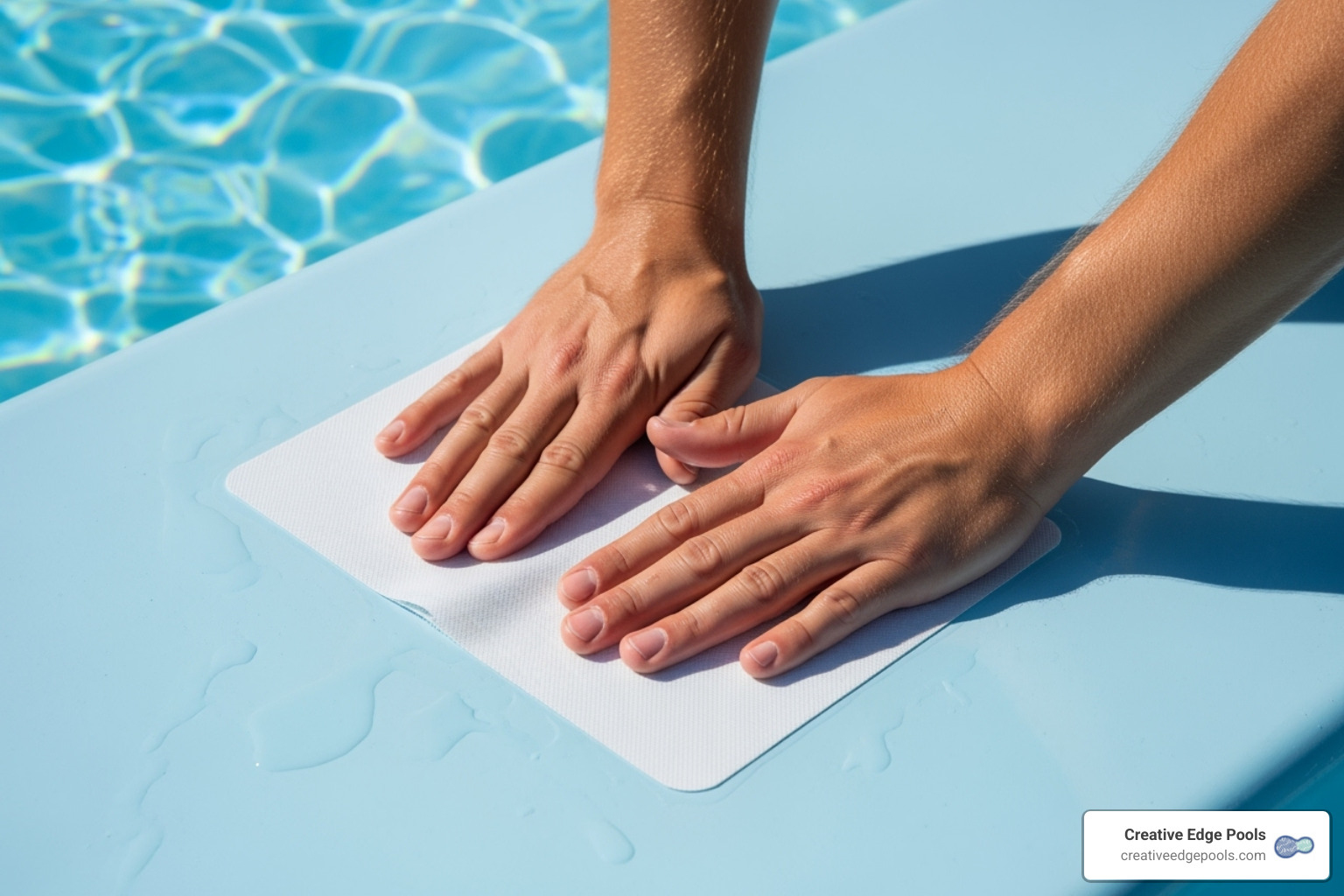
The 24-Hour Rule is Golden
I know it’s tempting to jump back in the pool immediately, but curing time is absolutely critical. While your kit might promise a one-hour bond, the strongest repairs happen after a full 24 hours. During this time, avoid swimming near the patch, resist the urge to poke at it, and definitely don’t scrub that area.
The 24-hour bond strength is what separates a repair that lasts one season from one that lasts five. Trust me on this – patience now saves headaches later.
Watch Out for These Common Mistakes
The biggest repair failures I see come from rushing the process. Insufficient cleaning tops the list – any sunscreen residue, algae, or dirt will prevent proper bonding. Sharp corners on patches are another culprit; they catch on pool cleaners and start peeling within weeks.
Air bubbles might seem harmless, but they create weak spots that eventually fail. And here’s one that surprises people: using too much adhesive actually weakens the bond. A thin, even coat works better than globbing it on thick.
Store Your Kit Properly
Your adhesive shelf life matters more than you think. Vinyl cement typically lasts 1-2 years when stored correctly. Keep that cap tight – air exposure turns good adhesive into useless goop. Store everything in a cool, dry place away from sunlight and extreme temperatures.
If your adhesive becomes thick or gummy, don’t try to use it anyway. You’ll just end up doing the repair twice.
Safety First, Always
Safety precautions aren’t just legal fine print. Work in well-ventilated areas because these fumes are no joke. Wear gloves to protect your skin, and keep safety glasses handy for splash protection. These adhesives are highly flammable, so no smoking or open flames nearby.
Keep everything away from kids and pets – vinyl cement isn’t something you want little hands getting into.
Proper storage extends your kit’s life and keeps your family safe. A locked toolbox or high shelf works perfectly.
For comprehensive guidance on maintaining your repair and exploring professional options when needed, check out More info about Creative Edge Pools’ vinyl liner repair services.
Can I Use This Kit on Other Items?
Here’s a fun secret: your pvc pool repair kit is basically a superhero tool disguised as pool equipment. The same strong, waterproof bonding that fixes your liner works wonders on other vinyl items around your home.
Beyond the Pool
Those inflatables that seem to deflate overnight? Your kit handles them perfectly. Pool toys, air mattresses, even that giant flamingo float – they all use similar vinyl materials that respond beautifully to your repair kit’s magic touch.
Vinyl furniture on your patio can get a new lease on life with a well-placed patch. Small tears in outdoor cushions or chair covers are no match for quality vinyl cement.
Got camping gear? Your kit can rescue punctured air mattresses and keep your outdoor trips comfortable. The same cleaning, patching, and curing principles apply to these thinner materials.
The Versatility Factor
The key is understanding that if it’s made of vinyl or PVC and needs a flexible, strong repair, your pvc pool repair kit is probably up to the task. This makes it one of the most valuable tools in your household repair arsenal.
Just remember to test repairs thoroughly, especially on items where safety matters (like inflatable boats). When in doubt about a specific application, Ask Creative Edge Pools about versatile repair solutions.
When to Call a Professional Instead of DIY
I love a good DIY success story, but sometimes the smartest move is knowing when to step back and call in the experts. Your pvc pool repair kit is fantastic for small repairs, but it’s not meant to solve every pool problem.
Size Matters
Large tears beyond a couple inches need professional attention. Trying to patch a massive hole with a standard kit is like using duct tape to fix a broken window – it might hold temporarily, but failure is inevitable.
Seam damage is particularly tricky. When liner seams start separating, it usually signals bigger issues with age or installation. A simple patch won’t address the underlying problem.
When Your Liner is Telling You Something
Multiple leaks scattered across your liner often mean the material itself is breaking down. If you find yourself playing whack-a-mole with leaks, it’s time for a professional assessment.
Brittle liner material that feels stiff or cracks easily won’t hold patches well, no matter how perfectly you apply them. After 10-15 years, most liners are ready for retirement, not more patches.
The Tricky Stuff
Some leaks hide in impossible spots – behind fittings, under steps, or in corners where you can’t get proper access or pressure. Professional technicians have specialized tools and techniques for these challenging locations.
At Creative Edge Pools, we’ve seen it all over our 30+ years in the business. We’re always honest about when DIY makes sense and when professional intervention will save you time and money in the long run.
Don’t let a small problem become a major headache. If you’re dealing with extensive damage or just feel overwhelmed, we’re here to help. Contact us for a professional pool assessment and we’ll guide you toward the best solution for your specific situation.
Like us on Facebook!
