
Pool Waterfalls Installation: 7 Powerful Steps for Stunning Results
Transform Your Backyard with the Perfect Pool Waterfall
If you’re looking for Pool Waterfalls Installation guidance, here’s a quick overview of the process:
- Planning: Choose waterfall style and location
- Materials: Select between natural stone, faux rock, or prefabricated kits
- Plumbing: Install proper sized pipes (1.5″-3″ depending on flow)
- Structure: Build foundation and waterfall framework
- Water System: Connect pump (flow rate should be 2× the width of spillway)
- Finishing: Apply waterproofing and decorative elements
- Testing: Adjust flow and check for leaks
Building a pool waterfall is one of the most rewarding additions you can make to your outdoor living space. Pool Waterfalls Installation combines aesthetic beauty with practical benefits, creating a soothing atmosphere while improving water circulation and oxygenation. The gentle sound of cascading water masks background noise, creating your own private oasis where stress melts away.
Modern waterfall kits have made installation more accessible than ever. What once required specialized masonry skills can now be accomplished with modular components that install in as little as one day. Whether you’re looking for a simple sheer descent waterfall or a dramatic rock formation with hidden grottos, today’s options range from $1,000 for basic models to $25,000+ for elaborate custom designs.
I’m David Brabant, owner of Creative Edge Pools with over thirty years in the swimming pool industry, and I’ve overseen hundreds of Pool Waterfalls Installation projects throughout Massachusetts and New Hampshire, changing ordinary pools into extraordinary backyard retreats.

Benefits & Considerations Before You Build
Thinking about adding a waterfall to your pool? Let’s wade through the good, the challenging, and everything in between before you take the plunge on your Pool Waterfalls Installation project. There’s more to these beautiful water features than meets the eye! If you’re curious about the long-standing history of ornamental water elements, the Wikipedia article on Water features offers an interesting overview.
The Pros That Make a Splash
Picture yourself relaxing by your pool while water gently cascades over stones, creating that perfect soundtrack to your summer afternoons. That’s just the beginning of what a pool waterfall offers.
The aesthetic change is dramatic – your ordinary pool becomes an extraordinary retreat with the dynamic movement of flowing water. But beyond beauty, there’s function too. That soothing sound doesn’t just relax you; it creates a natural sound barrier that masks neighborhood noise, traffic, or the hum of pool equipment.
Your water quality gets a boost as well. The constant circulation helps distribute chemicals more evenly throughout your pool, and we’ve noticed our waterfall-equipped pools typically need less manual skimming. Plus, during those scorching Massachusetts summers when pool water feels more like bath water, your waterfall helps cool things down through aeration and evaporation.
The splashing action introduces oxygen into your water – creating a healthier swimming environment and helping prevent algae growth. Kids absolutely love playing around waterfalls too, adding another dimension of fun to your backyard. And let’s not forget the therapeutic vibe – there’s something inherently calming about moving water that transforms your pool time into a truly restorative experience.
When it comes time to sell your home, that professionally installed waterfall might just help seal the deal, potentially increasing your property’s appeal and value.
Potential Drawbacks to Factor In
Being realistic about the challenges helps ensure your waterfall brings joy, not headaches. Those beautiful cascading surfaces will need regular attention – calcium deposits and algae can build up, requiring scrubbing every 1-3 months. Your initial investment will vary widely based on style: a simple cascade might run $1,000-$4,000, while elaborate grotto-style installations can add 10-15% to your overall pool construction costs.
Your monthly energy bills will reflect the addition too, with dedicated waterfall pumps typically adding $30-$50 per month. Water loss is another consideration – increased evaporation and splash means more frequent refilling. Here in New England, proper winterization becomes critical to prevent freeze damage to your waterfall components.
Space requirements matter as well. Substantial waterfalls need adequate room both in and around your pool, which might limit other design elements you’re considering. And while natural stone creates an authentic look, it brings considerations around structural load and long-term durability, especially through our freeze-thaw cycles.
Algae can find happy homes in the nooks and crannies of waterfall rocks if circulation isn’t properly designed, so thoughtful planning matters. For those interested in the health benefits of water features, the CDC offers research on water-exercise health that highlights how therapeutic water environments can contribute to wellbeing.
Weighing these pros and cons carefully will help ensure your Pool Waterfalls Installation improves your swimming experience for years to come, rather than becoming a source of regret. With proper planning, the right design, and realistic expectations, the sound of falling water could become the soundtrack to your family’s favorite summer memories.
Design & Planning: Styles, Materials, Location
The success of your Pool Waterfalls Installation largely depends on thoughtful planning. Let’s explore the various styles, materials, and location considerations to help you create the backyard oasis you’ve been dreaming about.
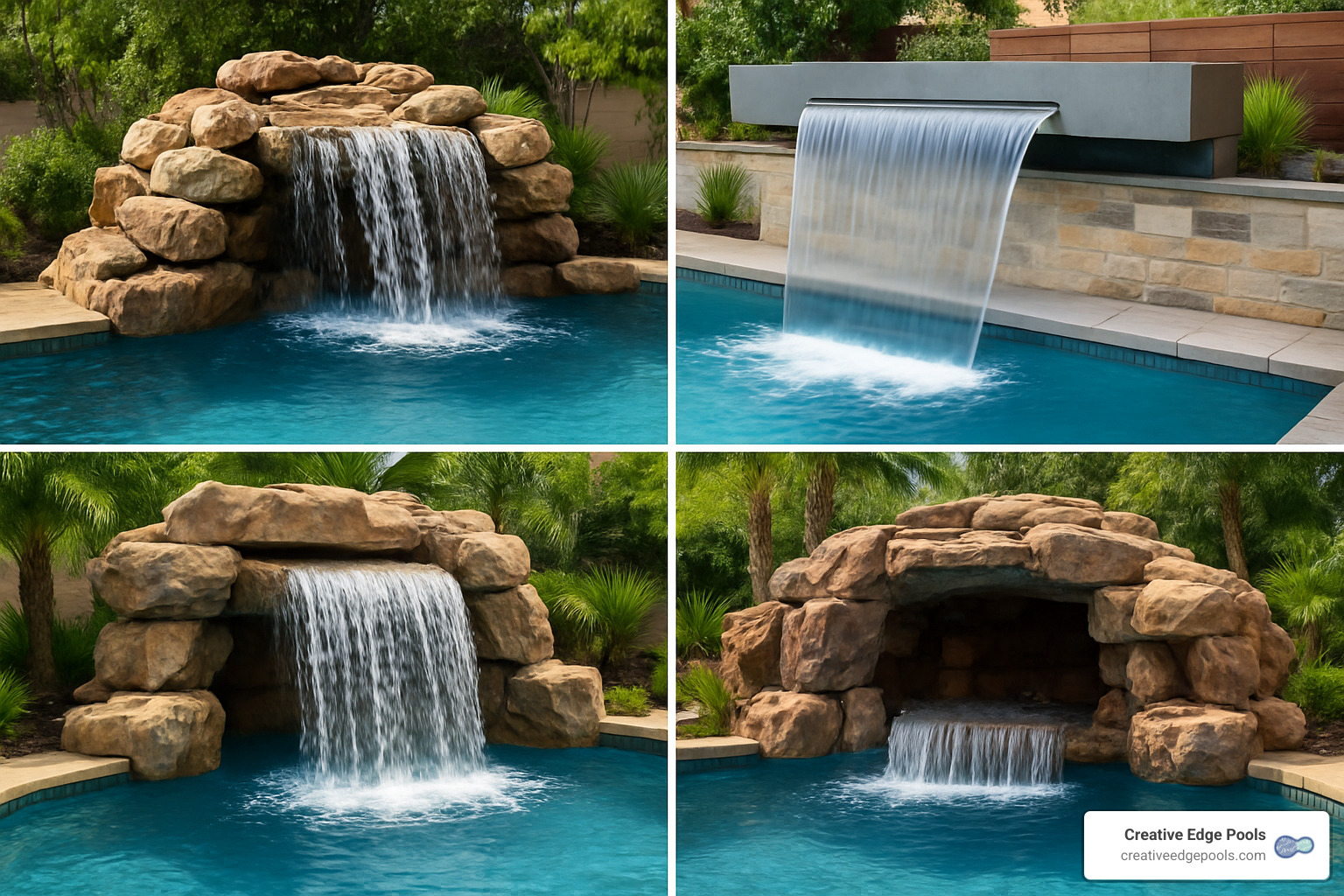
Matching Waterfall Type to Pool Shape
Your pool’s shape should guide your waterfall style choice—think of them as dance partners that need to complement each other perfectly.
Rock Waterfalls create that natural, cascading effect that pairs beautifully with freeform pools. There’s something magical about water tumbling over stones that instantly transports you to a mountain stream or tropical resort. Our New England clients often choose these for their rustic charm that blends with wooded surroundings.
For those with modern, geometric pools, Sheer Descents offer neat simplicity. These create a smooth, transparent sheet of water that catches light beautifully—especially at sunset when the water seems to glow. They’re sleek, contemporary, and perfect for minimalist designs.
Want something truly unique? Rain Curtains mimic gentle rainfall using small precision nozzles. We’ve installed these for clients who love the gentle patter of rain without the actual weather! They’re particularly stunning when backlit with color-changing LEDs for evening entertaining.
Scuppers offer architectural interest with their controlled water streams flowing from metal troughs built into walls. They’re perfect for formal pool designs and create a distinctive sound as water falls from various heights.
If you have a spa-pool combination, Spillways create that gentle overflow effect between the two bodies of water. It’s both visually appealing and functional—helping maintain water levels while adding that soothing sound element.
For the ultimate wow factor, Fire and Water Bowls combine cascading water with flames for dramatic visual contrast. These statement pieces create an instant resort feel and become natural gathering spots in the evening.
Material Comparison: Real vs. Faux Rock
The materials you choose impact not just appearance but also installation complexity, maintenance requirements, and budget.
Natural Stone offers best authenticity—each piece is unique with natural variations in color and texture. However, it comes with considerations: it’s heavy (often requiring additional structural support), typically more expensive, and offers less design flexibility since you’re working with nature’s shapes. The upside? Nothing looks more genuine than the real thing, and properly installed natural stone waterfalls can last generations with periodic sealing and cleaning.
Faux Rock has come incredibly far in recent years. Many of our clients are genuinely surprised when they learn their waterfall isn’t natural stone! These lightweight alternatives allow for easier installation, greater design flexibility, and often cost significantly less. Modern manufacturing techniques incorporate real stone molds with crushed stone and sand finishes for remarkable realism. They’re also much easier to work with if you’re considering a DIY approach.
Prefabricated Concrete Kits offer a middle ground—durable like natural stone but with faster installation (typically 1-2 days). The trade-off is limited customization options and potential visible seams if not properly installed. However, they require minimal maintenance and offer good value for the investment.
For contemporary designs, Metal and Glass elements create striking modern waterfalls. These materials work beautifully for sheer descents and scuppers, adding an architectural element to your pool design. While they can be more costly for custom work, they require minimal maintenance—usually just simple cleaning.
Picking the Perfect Spot
Strategic placement maximizes your waterfall’s impact while minimizing potential headaches down the road.
Visibility should be your first consideration—position your waterfall where it can be enjoyed from your main outdoor living spaces and through windows from inside your home. After all, a beautiful waterfall should be seen and heard!
Finding the right Sun/Shade Balance helps control algae growth (too much sun can encourage algae) while still allowing enough light to highlight the water’s movement and sparkle. In our New England climate, partial shade often works best.
Pay attention to Wind Direction when planning your waterfall. Prevailing winds can carry spray and increase water loss through evaporation. We always take time to observe a property’s natural air flow patterns before finalizing waterfall placement.
Practical considerations matter too. Plumbing Access to existing systems can significantly reduce installation costs. Similarly, ensuring proper Structural Support for your waterfall’s weight is critical—especially for natural stone installations that can add substantial loads to pool edges.
Don’t forget to account for the Splash Zone when positioning furniture, electrical fixtures, or sensitive landscaping. Even modest waterfalls create some spray, and that radius increases with water volume and height.
By carefully considering these design elements, your Pool Waterfalls Installation will improve your backyard for years to come. Want more inspiration? Check out our additional resources on Pool Hardscapes and Backyard Pool Landscaping Ideas to help you envision the possibilities.
Plumbing, Pumps & Budget Prep
Getting the plumbing and pump setup right is where the magic happens in your Pool Waterfalls Installation. Think of it as the hidden heartbeat of your waterfall – you won’t see it, but it’s what brings your beautiful cascade to life!
Calculating Waterfall Flow & Head Loss
Creating that perfect water flow isn’t just about aesthetics – it’s about physics. For a waterfall that looks and sounds amazing, you’ll want to aim for about 5 gallons per minute (GPM) for each foot of your waterfall’s width.
Picture it this way: a delicate, whisper-thin sheet of water needs at least 3 GPM per foot, while a dramatic, rushing cascade might demand up to 10 GPM per foot. So for that gorgeous 3-foot wide waterfall you’ve been dreaming about? You’re looking at roughly 15 GPM for that perfect flow.
Choosing the right pipe size is equally crucial – and this is where many DIYers get tripped up. For most standard installations (under 60 feet of pipe run), 1.5″ diameter pipe will do the trick. But if your waterfall is wider than 5 feet or your pipe run exceeds 60 feet, you’ll need to bump up to 2″ pipe. For those truly spectacular waterfall features pumping over 140 GPM, you’ll need to consider 2.5″ or even 3″ pipe.
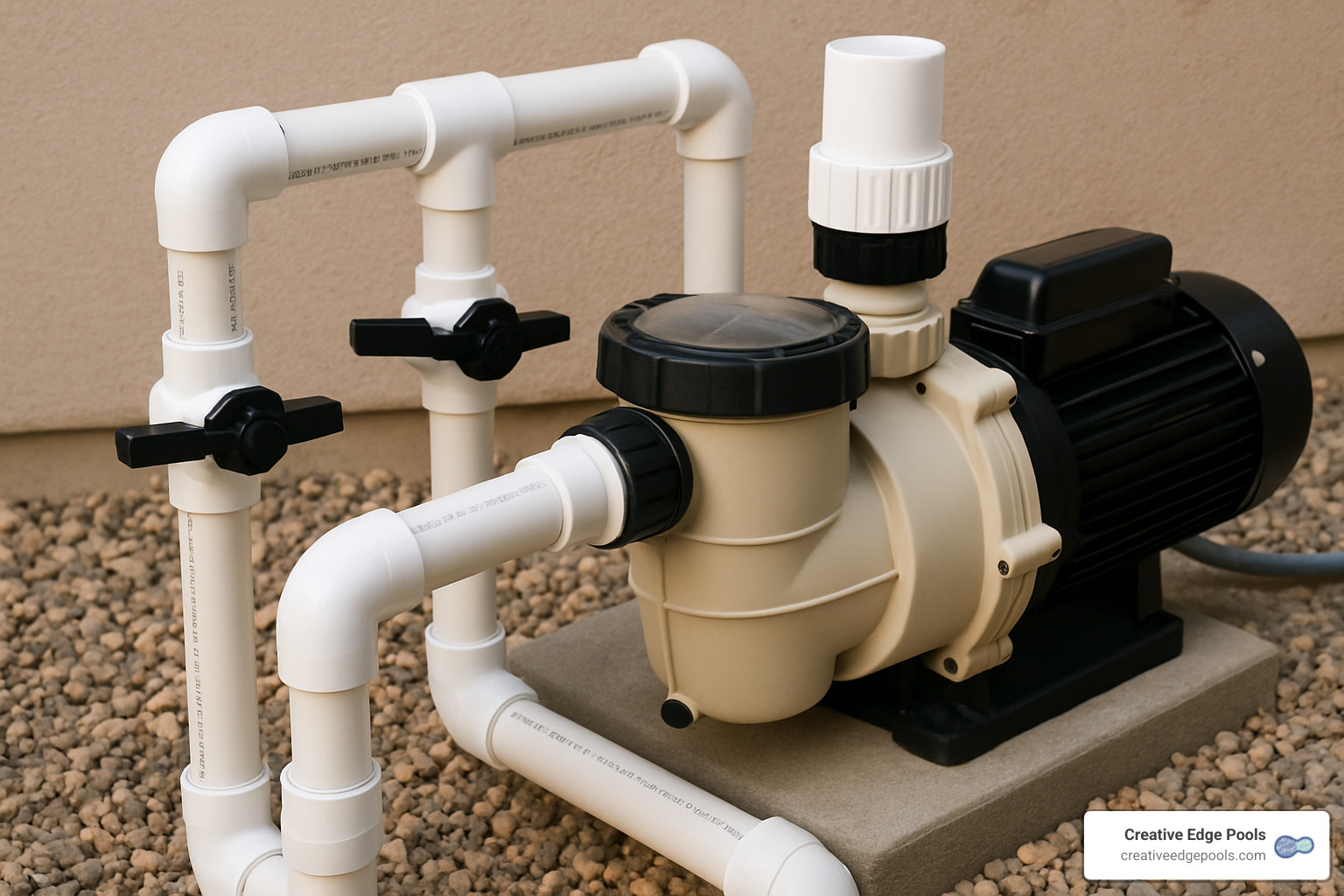
Head loss (the pressure you lose due to friction in the pipes) increases with every foot of pipe and every bend or fitting you add. Here in New England, we’ve found that upgrading from 1.5″ to 2″ pipe on longer runs makes a dramatic difference in performance – it’s like giving your waterfall room to breathe!
When selecting your pump, consider both flow rate and head pressure. Based on our real-world installations, here’s what you can expect:
- A modest 0.5 HP pump delivers about 26 GPM at 50′ head
- A mid-range 1.0 HP pump provides approximately 68 GPM at 50′ head
- A powerful 2.0 HP pump generates roughly 106 GPM at 50′ head
Budget Breakdown: DIY Kit vs. Custom Build
Let’s talk money – because understanding the investment upfront helps prevent those “oh no” moments halfway through your project.
For the handy homeowners looking at DIY waterfall kits, you’re generally looking at $1,000-$2,500 for a basic sheer descent (3-4 feet wide). Want something more natural-looking? Faux rock cascade kits with accent pieces typically run $2,000-$5,000. Don’t forget to budget another $300-$800 for installation supplies like plumbing and mortar, plus $400-$1,200 for a quality pump and control valve.
If you’re dreaming bigger or prefer professional installation, custom-built waterfalls start around $3,000-$7,000 for a simple cascade or spillway. Medium-sized rock waterfalls (about 4-6 feet high) typically fall in the $8,000-$15,000 range, while those spectacular grottos with seating areas can reach $15,000-$25,000+. Want that magical nighttime glow? Budget another $500-$2,000 for integrated lighting.

Beyond the initial build, remember to factor in the ongoing costs: about $30-$50 monthly for the additional electricity to run your waterfall pump, some increase in water usage (especially in windy areas), and roughly $100-$300 annually for maintenance supplies.
At Creative Edge Pools, we’ve found that investing in quality components upfront—particularly pumps and valves—saves our clients significantly in the long run. A properly sized pump with a three-way valve system allows you to easily adjust flow or shut off the waterfall without affecting your pool’s filtration. It’s these little details that make the difference between a waterfall that’s a constant joy versus one that becomes a maintenance headache.
Pool Waterfalls Installation Guide
Ready to turn your backyard dreams into reality? Let’s walk through the actual Pool Waterfalls Installation process together. Whether you’re installing a prefab kit or creating a custom cascade, these steps will guide you through changing your pool into a personal paradise.
Step 1 – Planning for Pool Waterfalls Installation: Site Prep
The foundation of a successful waterfall starts with thorough preparation. Before you lift the first stone or connect the first pipe, take time to properly prepare your site.
Begin by marking your chosen location with stakes and bright ribbon – this simple step prevents costly mistakes later. Always contact your local utility companies to mark underground lines before any digging begins. Safety first!
When working with your pool’s bond beam, calculate the notch dimensions carefully. A good rule of thumb is to allow an extra inch on each side of your waterfall unit and about 3.5 inches below. If you’re working with rebar, remember to offset the steel pattern based on your waterfall width – for example, a 12-inch waterfall needs about 14 inches of total offset.
Set up a dedicated staging area away from the pool edge where you can safely store materials and tools without risk of them tumbling into your pool. And don’t forget to establish a clean water source nearby – you’ll need it for mixing mortar and cleaning tools throughout the project.
Step 2 – Rough Plumbing & Electrical
Good plumbing is the unsung hero of any beautiful waterfall. This phase creates the foundation for proper water flow and longevity.
Install schedule 40 PVC pipe (never use the thinner schedule 20) from your equipment area to the waterfall location. Include ball valves for flow control and unions at strategic points – future you will thank present you when service is needed down the road! If you’re using your main pool pump, install a three-way valve to allow for independent waterfall operation.
For any lighting features, run electrical conduit alongside your plumbing, but keep a safe separation between them. Always pressure test all plumbing connections before covering them – finding a leak after everything is encased in concrete is a nightmare scenario we want to help you avoid.
If you’re installing multiple waterfalls, each unit should have its own valve for balancing flow. Uneven water distribution is one of the most common issues we see with multi-waterfall installations at Creative Edge Pools.
Step 3 – Building the Structure
This is where your waterfall begins to take shape, with the approach varying based on your chosen style.
For Prefabricated Kits:
Carefully notch the bond beam according to the manufacturer’s specifications – precision matters here. Connect your PVC plumbing to the waterfall unit before setting it in place. Use tile shims to ensure the unit is perfectly level – even a slight tilt will create uneven water flow. Once positioned, backfill around the unit with concrete brown coat, and place plywood and weights over the waterfall until the concrete fully cures.
For Natural or Artificial Rock Waterfalls:
Start with a stable base of compacted sand or gravel. Apply waterproofing to the entire area where water will flow – skipping this step invites future leaks. Install your first layer of rocks or artificial pieces, securing them with mortar or construction adhesive as appropriate for your materials. Continue building layers upward, incorporating your plumbing as you go. Pay special attention to creating a level spillway – this detail makes the difference between a professional-looking cascade and an amateur-looking trickle.
Step 4 – Finishing Touches & Leak Test
The final phase ensures everything not only works perfectly but looks stunning too.
Once all concrete work is complete, remove any protective grout guards. If applicable to your design, cut and set tile under the spillway lip using thin-set mortar – this creates a clean edge for water to flow over. Apply waterproof sealant to all joints and seams, paying special attention to areas where water will make direct contact.
Install any lighting fixtures according to your design plan, making sure all electrical connections are properly sealed and waterproofed. Then comes the moment of truth – conduct a 24-hour water test to check for leaks before proceeding further.
Fine-tune the waterfall by adjusting the flow rate using your installed ball valves until you achieve the perfect effect – whether that’s a gentle trickle or a dramatic cascade. Finally, thoroughly clean up any construction debris before filling your pool.
Step 5 – DIY Pool Waterfalls Installation Safety Tips
Your safety is always the top priority during any Pool Waterfalls Installation project.
Always wear appropriate protective equipment including gloves, eye protection, and sturdy footwear – flip flops have no place on a construction site! When working with pumps or lighting, turn off and lock out electrical breakers to prevent accidents.
Practice proper lifting techniques and never hesitate to ask for help with heavy materials. A pulled back can derail your project for weeks. Keep curious children and pets well away from your construction area, and never work alone when handling heavy materials or working near water.
Follow all manufacturer guidelines for product-specific safety measures, and ensure all electrical work meets local codes and includes proper GFCI protection. In New England’s climate, proper electrical protection is especially important given our seasonal moisture and temperature swings.
For comprehensive guidance on integrating your waterfall with surrounding landscape elements, the American Society of Landscape Architects provides excellent resources on creating cohesive outdoor living spaces that complement water features.
Taking these precautions ensures your waterfall installation experience is as smooth and safe as the beautiful cascade you’re creating. Before you know it, you’ll be enjoying the soothing sounds of your very own backyard oasis!
Maintenance, Troubleshooting & Upgrades
Keeping your waterfall looking and running its best doesn’t have to be complicated. With some regular TLC, your aquatic feature will continue to be the star of your backyard for years to come.
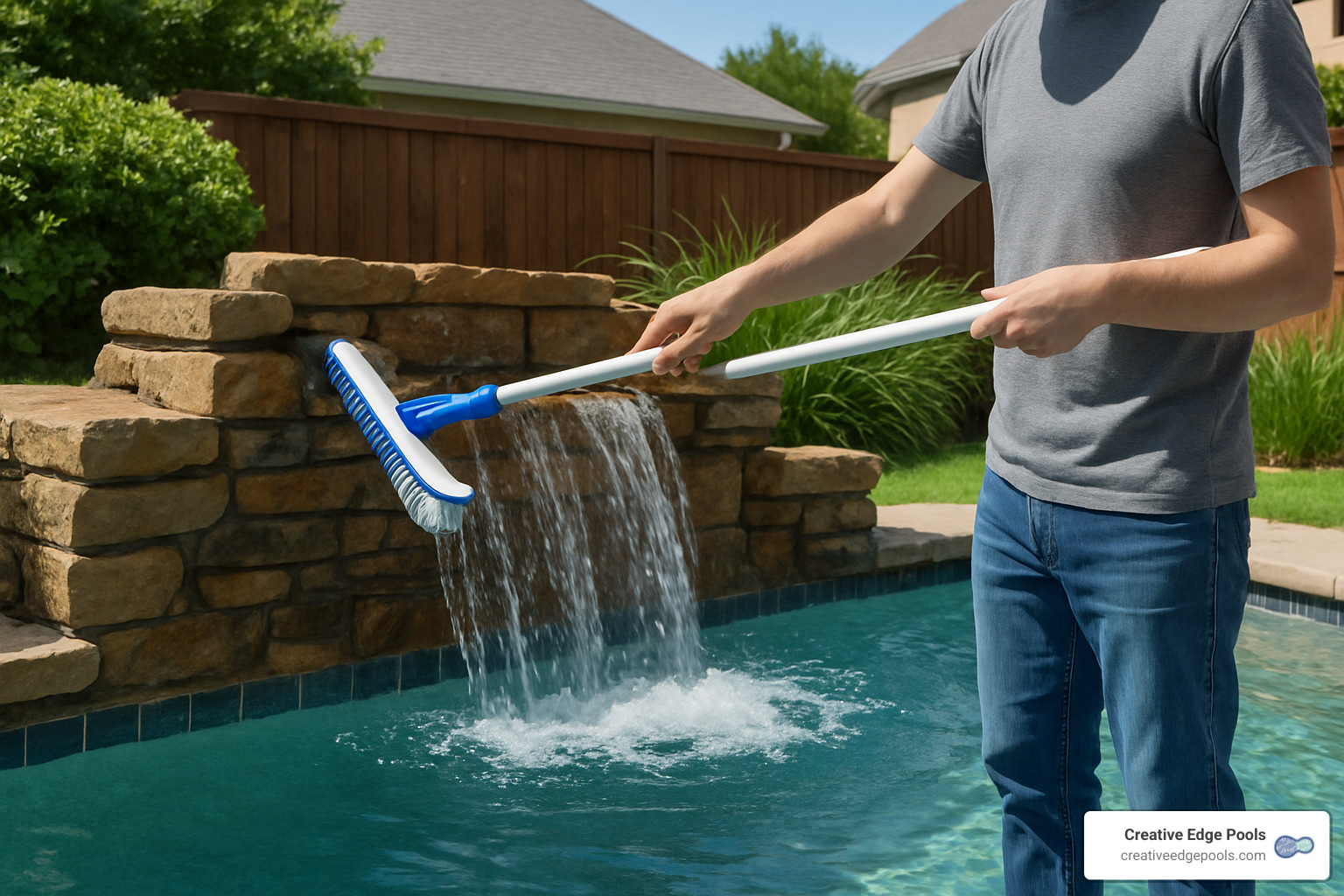
Your Pool Waterfalls Installation deserves a little attention throughout the year. Think of it as caring for a prized garden feature – a bit of regular maintenance prevents bigger headaches down the road. We recommend giving your waterfall a quick once-over each week during swimming season to remove any leaves or debris that might have accumulated. This simple habit keeps water flowing smoothly and prevents potential clogs.
Once a month, take a soft brush and some mild pool-safe detergent to gently scrub the waterfall surfaces. This prevents the twin enemies of beautiful waterfalls: algae and calcium buildup. Those white chalky deposits might look intimidating, but they’re no match for a specialty calcium remover designed for pool features. Just apply with a brush according to the product instructions, let it work its magic, and rinse thoroughly.
Every three months, it’s worth inspecting the nuts and bolts of your system – check your pump, plumbing connections, and valves for any signs of wear or leaks. Small problems caught early are much easier (and cheaper) to fix.
Here in New England, we can’t ignore winter’s approach. Before the first freeze, be sure to drain all waterfall plumbing completely. Water expands when frozen, and even a small amount left in pipes can cause expensive damage. Some of our clients choose to cover their stone features for additional protection from harsh freeze-thaw cycles.
Quick Fixes for Common Pool Waterfalls Installation Issues
Even the best-designed waterfalls can develop quirks over time. Here are the most common issues we see and how to address them:
When you notice uneven water flow across your waterfall, the culprit is usually debris caught in the spillway opening or a slightly unleveled installation. Take a thin plastic card or similar tool and gently slide it along the opening to dislodge any trapped material. If you have multiple water inlets, adjusting the flow valves can help balance the display.
If your waterfall’s flow has noticeably decreased, start by checking your pump basket and impeller for debris. It’s amazing what can find its way into these components! Also check your filter – backwashing if applicable – and inspect pipes for any restrictions. Sometimes the simplest solutions solve the biggest headaches.
Leaks are probably the most concerning issue for waterfall owners. Small cracks in mortar or loose fittings are often the culprits. For hairline cracks, a quality silicone sealant can work wonders. Larger cracks may require a proper patching compound. If you notice leaking around pipe connections, replacing the fittings usually solves the problem.
When your peaceful waterfall sounds more like a noisy washing machine, there’s likely air in the system or issues with the pump. Make sure your pump is properly primed and check for air leaks in the suction lines. Worn bearings in the pump can also create unusual noises and may need lubrication or replacement.
Winter damage is unfortunately common in our region. If you notice structural issues after the spring thaw, it’s usually due to water that remained in the system and froze. While some repairs are DIY-friendly, significant structural damage might require professional assessment. More info about Hardscaping and Landscaping can help with restoration ideas.
FAQ – Pool Waterfalls Installation
How often should I clean and reseal my waterfall?
The maintenance schedule depends on your waterfall material. Natural stone needs annual resealing to prevent water absorption and deterioration. If you have a faux rock or concrete waterfall, you can typically go 2-3 years between resealing applications. During swimming season, monthly cleaning keeps everything looking fresh, while quarterly deep cleaning prevents long-term issues. The effort is minimal compared to the extended life and beauty you’ll enjoy.
Can a waterfall be added to an existing pool without a remodel?
Absolutely! We’ve added beautiful waterfalls to pools that have been around for decades. Sheer descents and prefabricated rock kits are particularly retrofit-friendly. The key factors are having access to run new plumbing lines and ensuring your pool structure can support the additional weight. With some creative planning, your existing pool can enjoy all the benefits of a modern waterfall feature without major reconstruction.
What pump size keeps a 3-ft sheer descent looking smooth?
For that perfect, Instagram-worthy 3-foot sheer descent, you’ll want approximately 15 GPM (5 GPM per foot) of water flow. In most installations with standard plumbing runs, a 0.5 HP to 0.75 HP pump handles this beautifully. If you’re using your main filtration system to power the waterfall, just make sure the pump is properly sized to handle both jobs. The right flow creates that smooth, glass-like water curtain that makes sheer descents so mesmerizing.
Conclusion
There’s something magical about the sound of cascading water in your own backyard. After guiding you through the ins and outs of Pool Waterfalls Installation, I hope you’re feeling inspired to create your own backyard paradise.
The journey from planning to completion might seem complex, but the rewards are truly worth every effort. Whether you’ve chosen a sleek sheer descent or a natural rock formation, your new waterfall will transform ordinary swimming sessions into extraordinary experiences. The soothing sounds will mask neighborhood noise, while the visual impact will make your pool the envy of friends and family.
Success comes down to thoughtful preparation and understanding the hydraulics involved. Take your time with each step, especially when sizing pumps and planning plumbing routes. These behind-the-scenes elements might not be visible in the final product, but they’re essential for a waterfall that functions flawlessly for years to come.
At Creative Edge Pools, we’ve seen how waterfalls change the entire feel of a backyard. As a family-owned business serving Eastern Massachusetts and Southern New Hampshire for decades, we’ve helped countless homeowners turn their waterfall dreams into reality. Each project is unique – just like each family we work with.
If you find yourself wanting professional guidance for your Pool Waterfalls Installation, our team offers comprehensive design and installation services. We can integrate a beautiful waterfall into your existing pool or include it as part of a complete backyard change. Our specialty in gunite pool construction allows us to create custom waterfall features that blend perfectly with your landscape and lifestyle.
A well-designed waterfall isn’t just about aesthetics – it’s about creating a backdrop for life’s precious moments. From children giggling as they play under the cascade to adults unwinding after a long day, your waterfall will provide joy and relaxation for years to come.
Ready to dive into your waterfall project? Start collecting ideas, take measurements, and let your imagination flow. Your personal backyard retreat is closer than you think!
Learn more about our inground waterfall services
