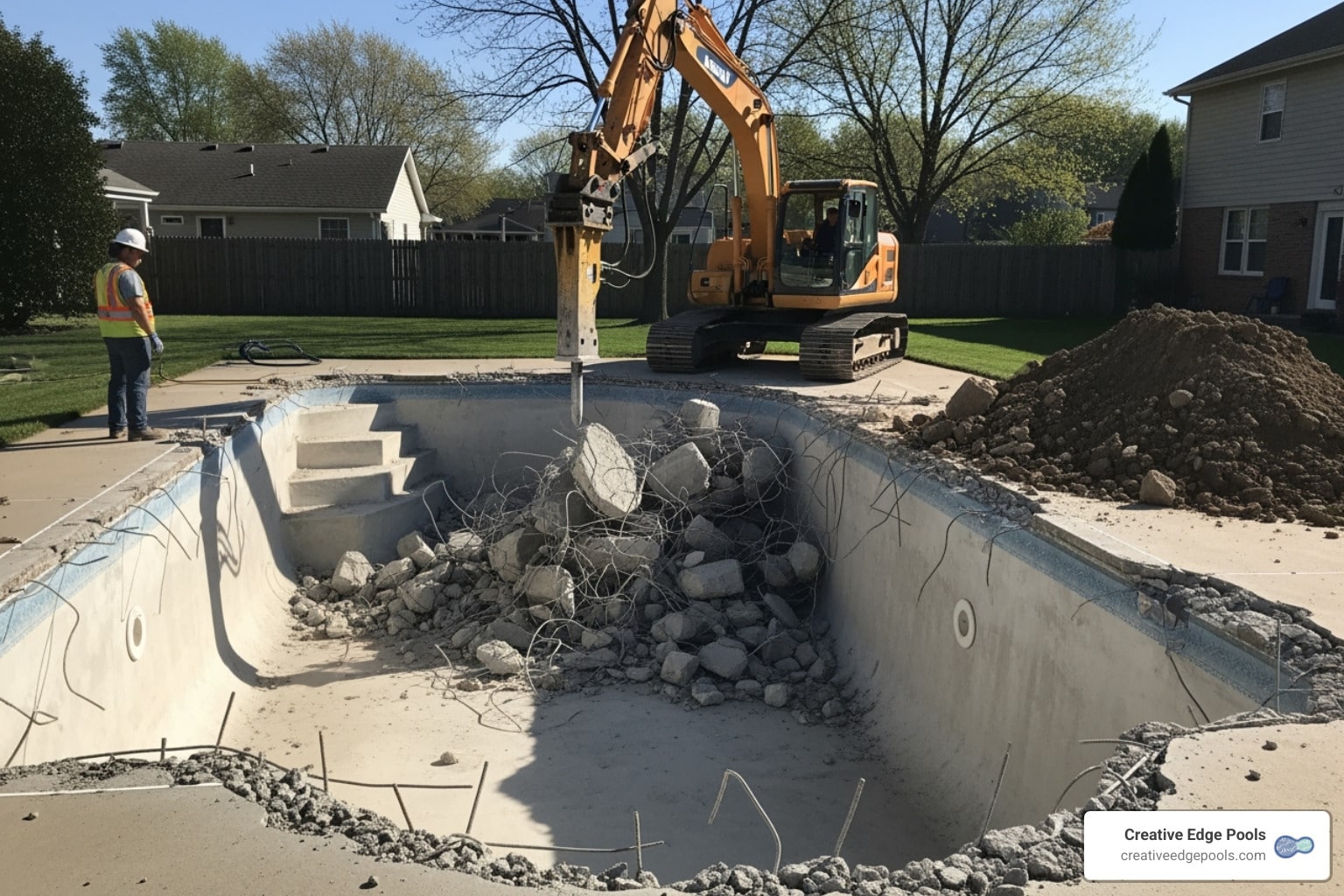
Pool Removal Permit: 3 Essential Steps to Avoid Fines
Why You Can’t Just Fill in Your Pool: The Essentials of Permits
A pool removal permit is a legal requirement in most municipalities to ensure your demolition is safe, compliant, and protects your property value. You might think filling in an old pool is a simple weekend job, but the reality is far more complex. Doing it wrong can lead to fines from $200 to $1,000, serious structural problems, and major complications when you try to sell your home.
Here’s a quick overview of what’s typically required:
- Permits: A building/demolition permit is needed before work begins, along with separate permits for utility disconnections.
- Documentation: You’ll need a site plan, proof of a licensed contractor, and compaction testing results.
- Process: Expect a final inspection to verify the work is completed to code.
- Costs & Timeline: Permit fees generally run $100-$500, with an approval timeline of 5-8 business days in most areas.
With over 30 years of experience in the pool and site development industry, it’s clear that bypassing the pool removal permit process leads to costly mistakes. Navigating these regulations, especially in areas like Massachusetts and New Hampshire, is crucial to avoid expensive pitfalls.
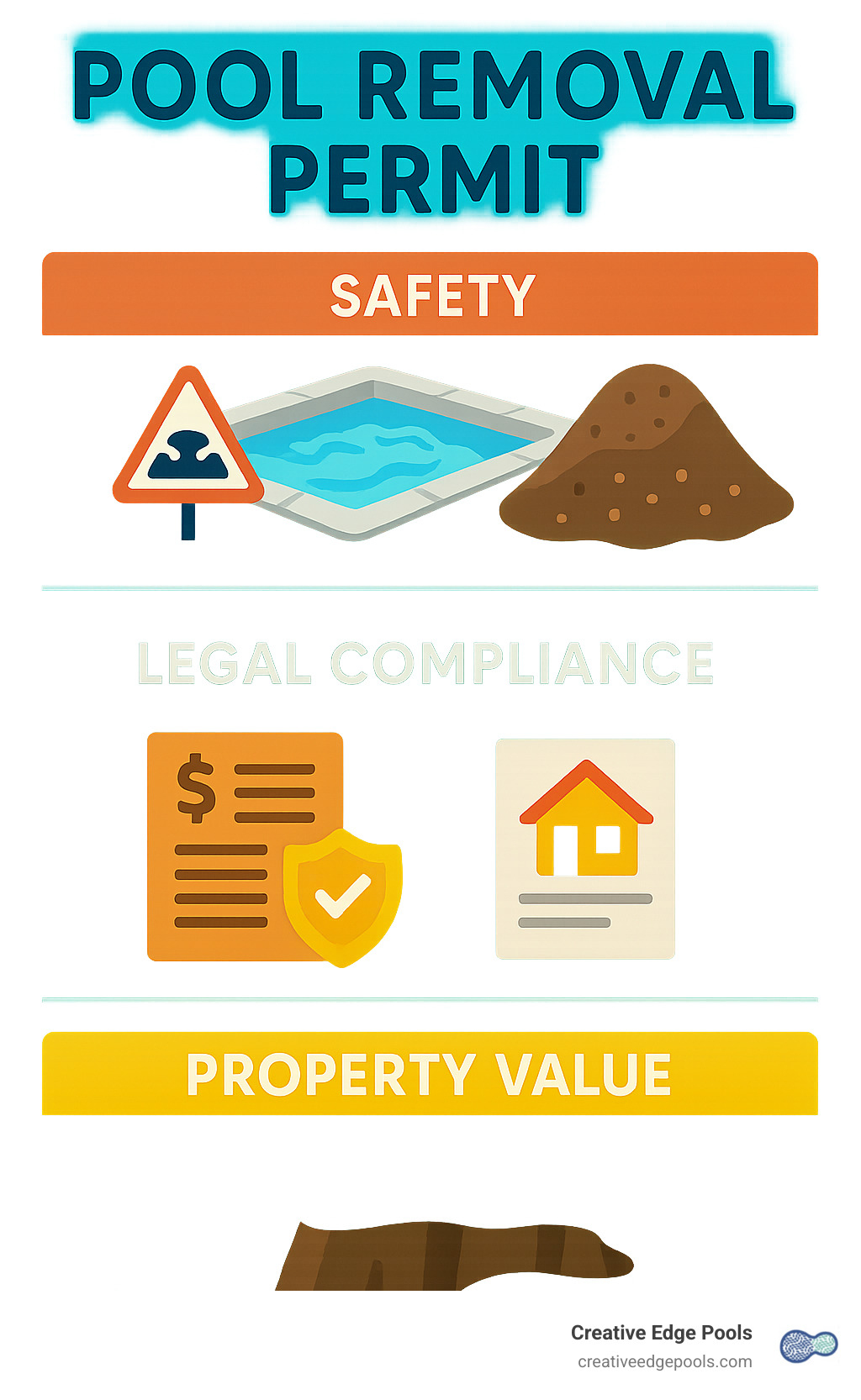
The “Why” Behind the Paperwork: Safety, Legality, and Property Value
A pool removal permit isn’t just red tape; it’s about safety, legal compliance, and protecting your investment.
- Safety: Removing a pool leaves a large void. Without proper engineering, this can lead to sinkholes or ground settling, damaging any future structures like a patio or shed. Permits mandate specific backfill materials and compaction standards (typically 90-95% density) to ensure the ground is stable and safe.
- Legal Compliance: Your pool was built with a permit, creating a public record. Removing it without a corresponding pool removal permit creates a discrepancy that can halt a future home sale. Beyond that, unpermitted work can lead to fines of up to $1,000 and other penalties.
- Property Value: A properly removed and documented pool can increase your property’s appeal by reclaiming yard space. However, an improper removal can become a liability. No future buyer wants to find buried debris or unstable ground. A permit provides official documentation that the job was done right, giving buyers confidence and protecting your property’s value.
Full vs. Partial Removal: How Your Choice Affects Permit Needs
You have two main options for pool removal: partial or full. Your choice affects the permit, cost, and future use of the space.
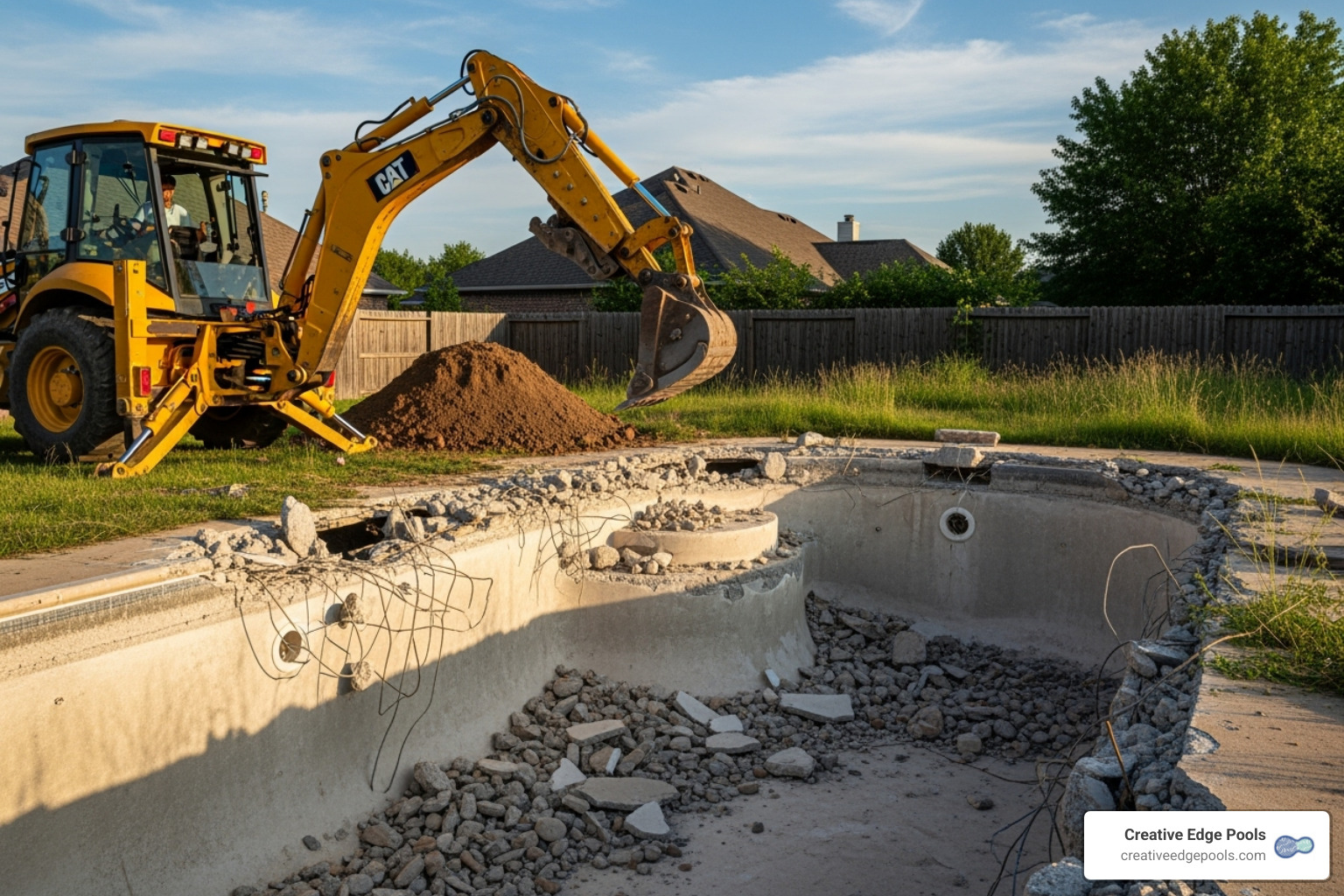
Partial Pool Removal (Fill-in): The top portion of the pool is demolished, holes are punched in the bottom for drainage, and the cavity is backfilled. The rest of the shell remains buried. This is often cheaper but limits future use of the land to non-structural purposes like a lawn or garden.
Full Pool Removal: The entire pool structure and all related debris are demolished and hauled away. This is more expensive but leaves you with a clean slate, allowing you to build anything from a new garage to an accessory dwelling unit, provided the ground is properly compacted.
Both methods require a pool removal permit, but the requirements for a full removal are often more stringent, sometimes needing a geotechnical engineer’s report. Here’s a quick comparison:
| Feature | Partial Pool Removal (Fill-in) | Full Pool Removal |
|---|---|---|
| Method | Break bottom, demolish top 1-3 ft of walls, backfill. Pool shell remains. | Entire pool shell, deck, and equipment removed. All debris hauled away. |
| Cost Impact | Generally less expensive ($3,500 – $10,000) | More expensive ($10,000 – $15,000+) |
| Permit Complexity | Requires permit; specific depth/drainage requirements | Requires permit; often needs geotechnical report and stricter compaction oversight |
| Future Land Use | Limited to open space, garden, lawn (no permanent structures) | Can build structures, driveways, anything you desire (with proper compaction) |
| Property Value Impact | May require disclosure; can impact sales prospects | No disclosure of buried structure; broadens buyer appeal; can increase value |
Inground vs. Above-Ground Pools: Permit needs for inground pools are almost universal due to the major excavation and backfill. For above-ground pools, requirements vary. Small, seasonal pools may not need a removal permit, but larger, more permanent installations often do. Always check with your local municipality.
Your Step-by-Step Guide to the Pool Removal Permit Process
Navigating the pool removal permit process can seem daunting, but it follows a predictable path. While every municipality in New Hampshire and Massachusetts has its own specific rules, a quick call to your local building department can clarify requirements and prevent surprises.
Typical Costs and Documentation for a Pool Removal Permit
The permit itself is usually a minor part of the overall project cost, but the paperwork is crucial. Expect to pay between $100 to $500 for the permit, though some towns base fees on project value. You may also need separate, smaller permits for electrical and plumbing disconnections.
To get started, you’ll typically need the following documents:
- Completed Application Form: Basic information about your property, the contractor, and the scope of work.
- Site Plan: A clear drawing showing property lines, existing structures, and the pool’s location. It should detail the removal method and type of fill material.
- Contractor’s License and Insurance: Proof that you are working with a qualified and insured professional.
- Proof of Ownership: A copy of your property deed or a recent tax record.
- Utility Disconnection Confirmation: Documentation showing that gas, electrical, and water lines have been safely disconnected by licensed professionals.
- Geotechnical Engineer Report: Often required for full removals, especially if you plan to build on the site later. This report specifies the engineered fill and compaction standards.
These costs are an investment in a job done right.
Understanding the Application Process for a Pool Removal Permit
Once your documents are in order, it’s time to apply. The key to a smooth process is a complete and accurate application.
1. Submission: Most towns now offer online application portals, which are the fastest way to submit documents and track your progress. In-person submission at the local building department is also an option. An incomplete application will cause delays, so double-check that every form is filled out and signed.
2. Review: The building department will review your application to ensure it complies with local codes and zoning regulations. It’s common to receive comments or requests for more information. Responding to these requests promptly is the best way to keep your application moving.
3. Approval and Timeline: An initial review typically takes 5 to 8 business days. If corrections are needed, the entire process might take 1 to 3 weeks. It is critical that you do not start any work until the permit is in your hand, as doing so can result in fines and penalties.
Who Handles the Paperwork?
While the homeowner is ultimately responsible, an experienced contractor will typically manage the entire permit application process. They are often familiar with local regulations, which helps avoid common mistakes and delays. The homeowner will still need to sign as the property owner, but the contractor can handle the details.
From Permit to Paradise: The Post-Approval Removal Process
With your pool removal permit approved, the change of your backyard can begin. This phase involves careful demolition, backfilling, and inspections to ensure the final result is safe, stable, and ready for its new purpose.
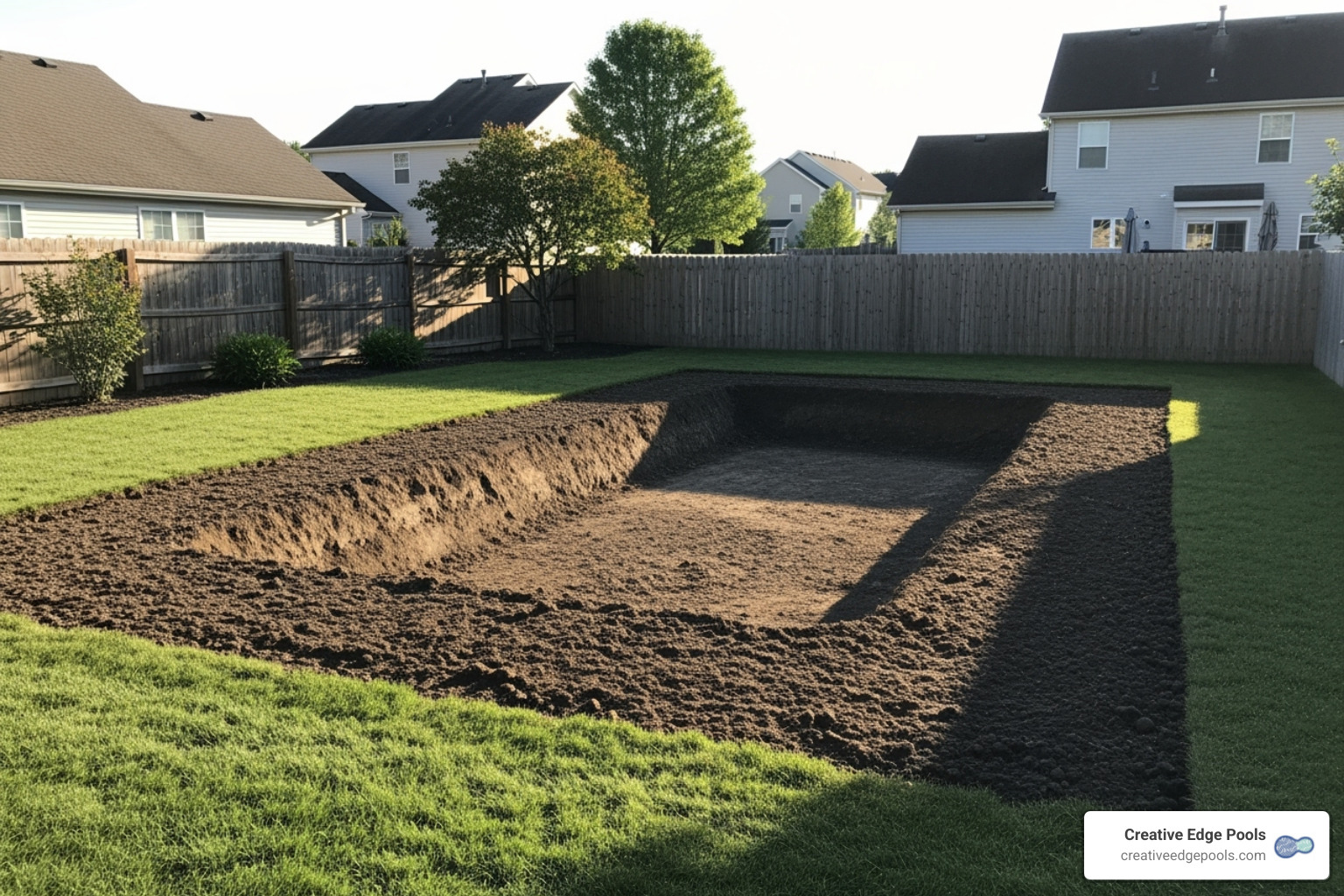
The Main Event: Demolition, Backfilling, and Compaction
Executing the removal correctly is essential to meet the standards of your pool removal permit and ensure a lasting, quality result.
Draining and Demolition
First, the pool must be drained according to local environmental regulations. Chlorinated water often cannot be discharged into storm sewers, so it must be handled properly. Once empty, demolition begins based on your chosen method (partial or full). For partial removals, drainage holes are broken in the pool floor and the top walls are demolished to a depth specified by local code. For full removals, the entire structure is broken up and hauled away to an approved facility.
Backfilling and Compaction
This is the most critical step for preventing future problems like sinkholes. The process involves:
- Using Approved Fill: Use only clean, engineered fill, free of organic material and debris.
- Layering and Compacting: The fill is added in layers (typically 6-12 inches thick), with each layer mechanically compacted.
- Meeting Density Standards: Specialized equipment is used to test and ensure the soil reaches 90% to 95% minimum compaction density, a standard required by most permits.
For projects where a new structure will be built, a geotechnical engineer often oversees this process to certify the compaction.
Required Inspections
Your permit will require at least two key inspections:
- Pre-backfill Inspection: An inspector verifies that demolition is complete and drainage is adequate (for partial removals) before any fill is added.
- Final Inspection: After backfilling and grading, the inspector confirms the site is safe, stable, and all permit conditions have been met.
These inspections are your assurance that the work was done to code.
Handling the Unexpected and Finalizing Your Project
Even the best-laid plans can encounter surprises. Here’s how common issues are handled to keep your project on track.

Dealing with Utilities
Before any digging, a call to Call 811 Before You Dig is mandatory to mark public utility lines. If unmarked private lines are encountered, work stops until they can be safely rerouted. Additionally, all utilities that served the pool must be professionally capped by licensed plumbers and electricians. This is a non-negotiable safety requirement for passing your final inspection.
Final Grading and Your New Space
After compaction, the site is graded to ensure proper water drainage away from your home and create a smooth, level surface. Your reclaimed yard is now a blank canvas, ready to be transformed into a lush garden, expansive patio, or outdoor kitchen.