
Why Pool Fountains Transform Your Backyard Experience
Pool fountains for inground pools are water features that add visual interest, soothing sounds, and practical benefits to your swimming area. They range from simple spray jets to elaborate cascading waterfalls, and most connect directly to your pool’s existing filtration system.
Quick Overview: What You Need to Know
- Types Available: Nozzle jets, fan sprays, floating fountains, wall-mounted units, scuppers, and bubblers
- Power Source: Most run off your pool’s filtration system through return lines
- Key Benefits: Water aeration, cooling effect, sound masking, and increased property value
- Cost Range: Entry-level options start around $500-$1,000; custom installations can reach $3,000-$5,000+
- Installation: Can be added to existing pools or designed into new construction
Pool fountains bring resort-quality ambiance to your own backyard. They are easy to install and powered by your pool’s water filtration system. Modern variable speed pumps like the IntelliFlo can operate at different speeds (from 450 to 3450 RPM), giving you complete control over your fountain’s flow and energy consumption.
Whether you’re building a new gunite pool or upgrading an existing setup, fountains offer aesthetic and functional advantages. They help circulate water, reduce algae growth through aeration, and create a focal point that lifts your entire outdoor space for homeowners in Eastern Massachusetts and Southern New Hampshire.
The Benefits of Adding Pool Fountains for Inground Pools
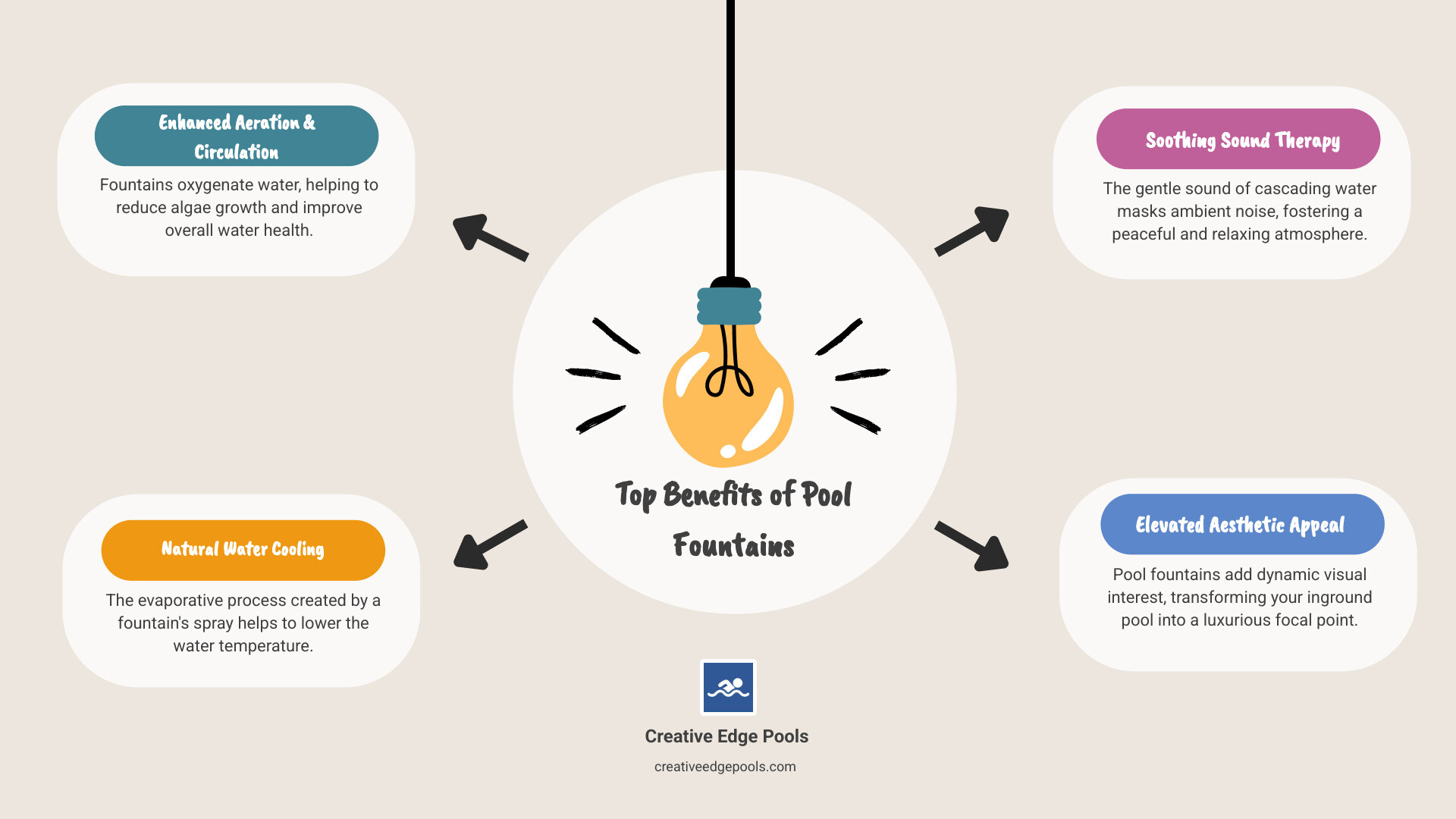
Adding a pool fountain isn’t just about aesthetics; it brings practical benefits that improve your swimming experience and pool health. Here’s a closer look at the advantages:
- Aeration: As water is sprayed into the air, it absorbs oxygen. This naturally oxygenates your pool water, which can reduce chemical demand, inhibit algae growth, and keep water sparkling fresh.
- Water Cooling: During warm summer months in Eastern MA and Southern NH, fountains help cool pool water through evaporative cooling as water droplets interact with the air.
- Evaporation Reduction: By keeping surface water moving, fountains can prevent the formation of a stagnant, warmer layer that evaporates more quickly, depending on humidity and wind.
- Sound Therapy: The gentle sound of splashing water creates a tranquil ambiance, masking unwanted noises from neighbors or traffic. This “white noise” transforms your backyard into a peaceful oasis.
- Property Value: An inground pool with a well-designed fountain is a significant asset, adding luxury and sophistication that improves curb appeal and market value.
- Aesthetic Distinction: Fountains create a dynamic focal point, adding movement and a touch of distinction to your pool area, making it truly unique.
At Creative Edge Pools, we understand that these improvements add even more value to your pool and allow you to further tailor your space to your specific needs.
Exploring the Different Types of Water Features
From subtle shimmers to dramatic displays, there’s a fountain type to match every aesthetic and budget in Massachusetts and New Hampshire.
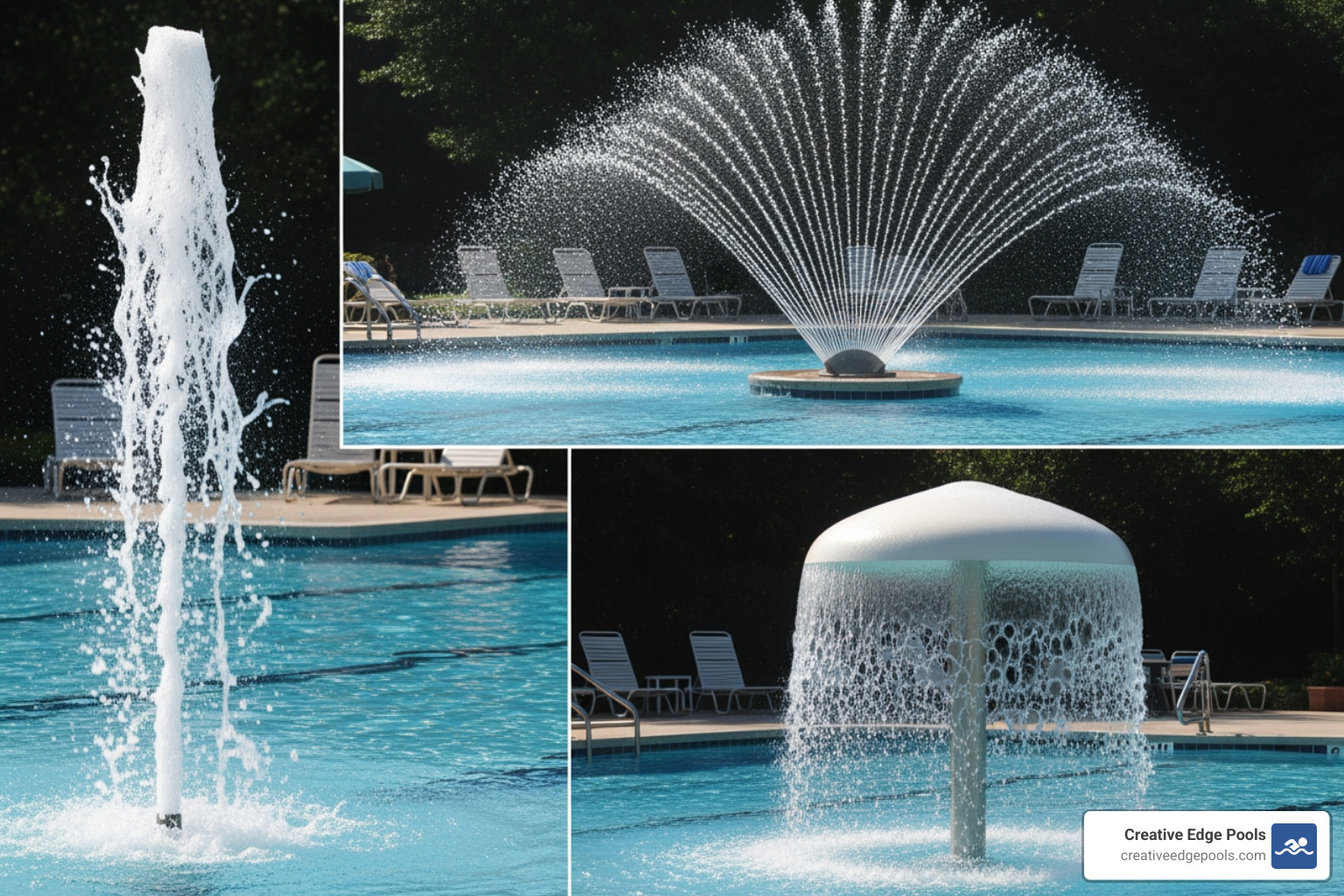
- Nozzle Jets: Simple and common, creating a single, focused stream. Prices range from approximately £867 to £1284.
- Fan Sprays: These create a fan-shaped sheet of water, excellent for privacy screens. Prices range from £1,454 to £2,229.
- Floating Fountains: Self-contained units that float on the surface. They are easy to install and offer flexibility as they can be moved around.
- Wall-Mounted Units: Integrated into the pool wall, these offer a sleek look and can include sheer descent waterfalls or laminar jets.
- LED Integration: Many modern fountains include LED lighting for dynamic night-time displays. Some options don’t even require external wiring.
- Scuppers: Decorative openings made of copper or stone that create a steady stream, prized for architectural elegance.
- Bubblers: Installed flush with the deck or sun shelf, these send small, aerated streams upward.
| Feature | Stationary Pool Fountains | Floating Pool Fountains |
|---|---|---|
| Installation | Fixed, built into structure; more complex | Easy, placed in water; movable |
| Power | Taps into return line; integrated plumbing | Self-contained or connects to return |
| Aesthetics | Architectural, permanent look | Flexible, can be temporary |
| Maintenance | Requires nozzle cleaning; fixed repairs | Easy access; removable for winter |
| Cost | Generally higher due to customization | Often lower entry cost |
Popular Styles of Pool Fountains for Inground Pools
- Grecian Tiers: Multiple levels from which water gracefully cascades, adding sophisticated, timeless beauty.
- Flower Sprays: Playful fountains creating a water pattern resembling a blooming flower, often adjustable.
- Waterfall Cascades: A broad, flowing sheet of water that spills into the pool, offering an immersive sound experience.
- Modern Blade Cascades: For a contemporary look, these offer a sleek, uninterrupted sheet of water, often made of stainless steel.
- Unique Sculptural Fountains: Artistic options like Spherical, Heron, or Cobra fountains allow for bold artistic statements.
How Pool Fountains Work and Power Your Backyard Oasis
Most pool fountains for inground pools integrate with your pool’s existing infrastructure. Here’s the breakdown:
- Filtration System as the Heart: Your fountain is typically powered by the same pump that circulates water through your filter.
- The Journey of Water: Water is drawn through skimmers (suction side), pushed through the filter, and returned via return lines (pressure side). Most fountains tap into these return lines.
- Variable Speed Pumps: Modern systems like the IntelliFlo® allow precise control. By adjusting RPMs (from 450 to 3450), you can change a gentle trickle into a dramatic geyser. These pumps are also highly energy-efficient, potentially reducing energy costs by up to 90%.
- Automation Integration: Systems like IntelliTouch allow you to program schedules or control your fountain remotely via a smartphone app, adjusting flow and lighting without stepping outside.
Installation and Customization Considerations
Whether integrating into a new gunite pool or retrofitting an existing one, thoughtful planning ensures a functional result.
- Gunite Pools: These offer unparalleled flexibility. Fountains can be molded directly into the pool shell or a raised beam during construction, with all plumbing hidden.
- Plumbing: We often recommend dedicated lines for complex features to allow independent control. Simpler retrofits can tap into existing return lines.
- Base Plates: Stationary fountains often require a base plate for stability, typically costing between £154 and £409.
- Retrofitting: You can add fountains to existing pools using floating units, deck-mounted options, or by replacing return jet eyeballs with fountain attachments.
- Custom Designs: Materials like stainless steel, copper, or natural stone can be used to create bespoke designs. Lead times for custom orders are typically 10-14 days.
- Flow Rates: Different fountains require specific flow rates. Variable speed pumps allow you to fine-tune the display for optimal aesthetics and energy use.
Maintenance and Cost Analysis
Maintaining Your Pool Fountain
- Strainer Baskets: Regularly clean the pump’s strainer basket (at least weekly) to ensure consistent water flow to your fountain.
- Nozzle Cleaning: Inspect and clean nozzles using a small brush to remove mineral deposits like calcium that can disrupt spray patterns.
- Winterizing: In Eastern MA and Southern NH, proper winterization is vital. Remove detachable fountains and drain built-in lines to prevent freeze damage.
- Water Chemistry: Balanced pH and calcium levels minimize scale buildup on fountain components.
Typical Costs for Inground Pool Fountains
- Entry-Level ($500 – $1,000): Basic deck-mounted or return-line attached sprayers. Simple floating flower fountains can be even cheaper.
- Mid-Range ($1,500 – $3,000): Integrated features like multi-tiered designs, scuppers, or simple sheer descent waterfalls, often including installation.
- Luxury Custom ($3,000 – $10,000+): Bespoke designs, elaborate cascades, or premium materials like natural stone. These require professional plumbing and electrical integration.
- Energy Costs: Using a variable speed pump can reduce long-term operational costs by up to 90% compared to older single-speed pumps.
Frequently Asked Questions about Inground Pool Fountains
Do pool fountains help cool the water?
Yes, through evaporative cooling. As water is sprayed, some evaporates, absorbing heat and slightly decreasing the overall water temperature, making for a more refreshing swim on hot days.
Can I install a fountain in an existing inground pool?
Absolutely. Floating fountains are the easiest to add. Deck-mounted or return-line fountains are also popular retrofit options that connect to existing jets with minimal structural changes.
Are LED pool fountains battery-powered or wired?
They can be both. Smaller floating units are often battery or solar-powered. Larger, permanent installations are typically hardwired into the pool’s electrical system for consistent power and automation integration. Wired installations must follow safety standards like GFCI protection.
Conclusion
Adding pool fountains for inground pools is an investment in ambiance and functionality. Whether you choose a classic Grecian tier or a modern blade cascade, these features transform your backyard into an extraordinary oasis.
At Creative Edge Pools, we specialize in designing and renovating gunite pools in Eastern MA and Southern NH. With over 100 years of combined experience, our family-owned business is dedicated to bringing your vision to life with expert craftsmanship.
Transform your backyard with professional pool waterfall installation
