Pebble Tec Pool Cost 2025: 10 Powerful Price Secrets Revealed
Understanding Pebble Tec Pool Costs: Your Complete Pricing Guide
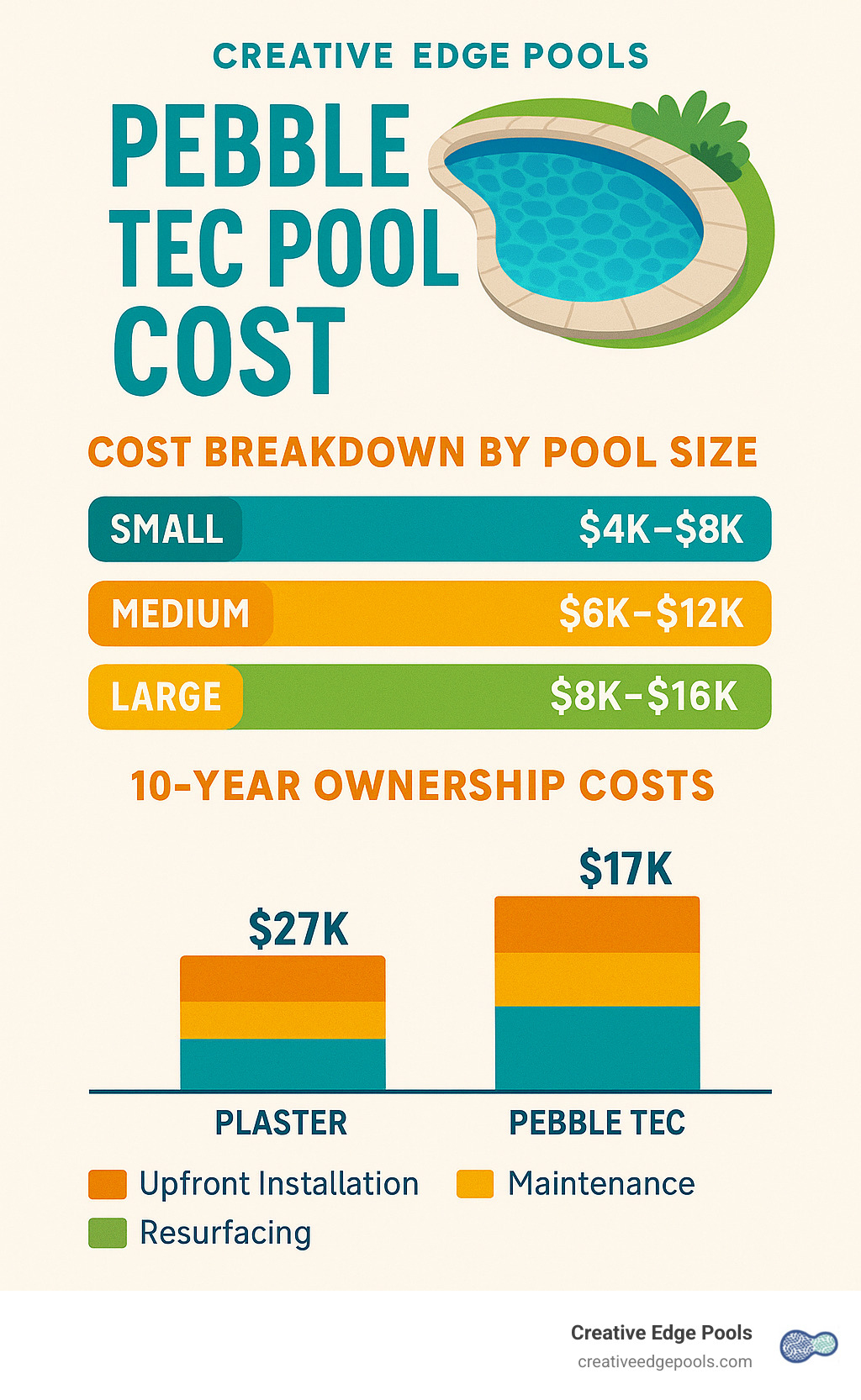
Pebble tec pool cost typically ranges from $10 to $20 per square foot, with total resurfacing projects running between $4,000 and $16,000 for most backyard pools. Here’s what you need to know:
Quick Cost Overview:
– Per Square Foot: $10-$20 installed
– Small Pool (400 sq ft): $4,000-$8,000
– Medium Pool (600 sq ft): $6,000-$12,000
– Large Pool (800 sq ft): $8,000-$16,000
– Lifespan: 15-25 years vs. 5-10 years for plaster
– Premium over plaster: $5,000-$10,000 upfront
As one homeowner put it: “Your kids’ begging has finally paid off, and now, you’re getting a pool.” But choosing the right finish involves more than just upfront costs. Pebble Tec uses natural river pebbles embedded in cement to create a durable, slip-resistant surface that can last 25 years or more with proper care.
The investment makes sense when you consider the long-term picture. While plaster might cost $27,000 over ten years with frequent resurfacing, a Pebble Tec pool typically runs just $17,000-$20,000 over the same period.
I’m David Brabant, owner of Creative Edge Pools with over thirty years in the swimming pool industry, and I’ve helped hundreds of homeowners steer pebble tec pool cost decisions throughout Massachusetts and New Hampshire. My hands-on experience from warehouse work to excavation gives me unique insight into what drives these pricing factors.
What Makes Pebble Tec Stand Out?
Picture walking into a mountain stream with smooth river rocks beneath your feet—that’s the experience Pebble Tec brings to your backyard pool. This premium finish uses natural river-pebble aggregate mixed into a cement base, creating a surface that looks and feels like nature carved it herself.
The magic happens in that unique texture. Unlike smooth plaster that can turn into a slip-and-slide when wet, Pebble Tec’s natural texture provides excellent slip resistance. Your kids can run around the shallow end without you holding your breath, and grandparents can enter the pool with confidence. It’s safety that doesn’t look like safety equipment—just beautiful, natural stone. Research on pool surface safety confirms that textured surfaces significantly reduce slip incidents compared to smooth finishes.
What really sets Pebble Tec apart is its staying power. While traditional plaster starts showing its age after 5-10 years, Pebble Tec finishes can last 15-25 years with proper care. Think about it—that’s potentially watching your toddler learn to swim, graduate high school, and bring their own kids over for pool parties, all on the same beautiful surface.
The color palette offers something for every backyard vision. Whether you’re going for subtle earth tones that complement a desert landscape or vibrant blues that make you feel like you’re swimming in the Caribbean, there’s a Pebble Tec option that fits. Plus, since it’s made from eco-friendly materials like natural stone, you’re making a choice that’s kinder to the environment.
One thing I love about working with Pebble Tec is how it performs in our New England climate. The surface handles freeze-thaw cycles better than plaster, and the 25-year lifespan means fewer disruptions to your family’s pool enjoyment over the decades.

Benefits & Drawbacks at a Glance
Let’s be honest about what you’re getting into with Pebble Tec. The durability is outstanding—we’re talking 15-25 years of beautiful pool surfaces. The stain resistance means that red wine splash from your pool party won’t haunt you forever. And the natural slip resistance I mentioned? That’s a real safety win for families.
But there’s a trade-off. The upfront price premium can add $5,000-$10,000 to your pebble tec pool cost compared to basic plaster. Some people also find the roughness on feet takes getting used to—think of it like the difference between walking on a smooth sidewalk versus a pebbled path.
One client described it perfectly: “It feels like I’m swimming in a natural lagoon, but my daughter complained about it being scratchy at first. Now she loves the texture for playing games where she needs good grip.”
Types & Grades of Pebble Tec Finishes
Not all Pebble Tec finishes are created equal, and understanding your options helps you make the right choice for your family and budget.
PebbleTec Original is the classic option—full aggregate exposure that gives you the most authentic river rock feel. It’s typically the most budget-friendly while still delivering all those durability benefits we talked about.
PebbleSheen takes the edge off that texture by polishing the surface smoother. This upgrade usually adds $1,500-$5,500 to your project, but families with young kids often find it worth every penny. You keep the durability but gain comfort for little feet.
PebbleBrilliance mixes glass beads into the aggregate, creating stunning light effects that dance underwater. It’s like having your own private resort pool—definitely a premium option that shows in both appearance and price.
PebbleFina gives you the smoothest finish, almost like traditional plaster but with aggregate durability. Just keep in mind that this polished option may not last quite as long as the more textured varieties. Sometimes the smoothest path isn’t always the most durable one.
Pebble Tec Pool Cost Breakdown
Understanding your pebble tec pool cost involves more than just multiplying square footage by price per foot. While that $10-$20 per square foot range gives you a starting point, several factors can push your total project between $4,000 and $16,000.
Material costs eat up about half your budget. Those beautiful river pebbles don’t come cheap, and neither does the specialized cement that holds everything together. The rest goes to skilled labor—and trust me, you want experienced hands applying your finish.
Here’s where things get interesting: preparation work can make or break your budget. Some contractors might suggest a “skim coat” over your existing surface to save money. Don’t fall for it. As one pool owner finded the hard way, “skim coats are cheaper to apply but produce a very thin layer prone to failure.”
We always recommend full chip-out to the gunite shell. Yes, it adds $5,000-$7,000 to your project, but it’s the difference between a finish that lasts 25 years versus one that starts failing in five.
Additional expenses that catch homeowners off guard include waterline tile replacement at $8-15 per linear foot, permits running $200-$800, and the cost to refill and balance your pool chemistry. If your backyard has tricky access, expect equipment fees that can add thousands.
Seasonal timing matters more than you might think. Schedule your resurfacing during fall or early spring, and you could save 10-20%. Contractors offer better rates when they’re not swamped with summer projects.
Many homeowners are surprised to learn that financing options make these projects more manageable. Spreading the cost over monthly payments often makes the upgrade from basic plaster to Pebble Tec a no-brainer.
Average Pebble Tec Pool Cost by Size
Let’s talk real numbers. Your pebble tec pool cost depends heavily on your pool’s surface area, but here’s what most homeowners actually pay:
| Pool Type | Surface Area | Low-End Cost | High-End Cost |
|---|---|---|---|
| Plunge Pool | 60-160 sq ft | $600-$1,600 | $1,600-$3,200 |
| Small Backyard | 200-400 sq ft | $2,000-$4,000 | $4,000-$8,000 |
| Standard Pool | 400-800 sq ft | $4,000-$8,000 | $8,000-$16,000 |
| Large Pool | 800-1,000 sq ft | $8,000-$10,000 | $16,000-$20,000 |
| Extra Large | 1,000-1,500+ sq ft | $10,000-$15,000 | $20,000-$30,000+ |
Simple rectangular pools land toward the lower end of these ranges. Custom shapes with steps, benches, and curves push you higher. One homeowner with a kidney-shaped pool and integrated spa paid $18,000 for what would have been a $12,000 project on a basic rectangle.
The difference between low and high-end costs often comes down to finish grade and color choices. Standard colors in PebbleTec Original hit the lower range, while premium PebbleSheen in exotic colors reaches the upper limits.
Pebble Tec Pool Cost by Region
Your pebble tec pool cost changes dramatically depending on where you live. Here in Massachusetts and New Hampshire, we see costs running 10-15% above national averages—and there are good reasons why.
Northeast pricing factors include higher skilled labor rates at $55-$70 per hour compared to $45-$65 nationally. Our shorter construction season means contractors charge premium rates during peak months. Plus, specialized materials often require longer transportation from manufacturing centers.
Sunbelt states like Florida and Arizona enjoy advantages we don’t have up north. Year-round construction seasons mean contractors can offer competitive rates without seasonal premiums. Higher contractor density creates price competition, and local material sourcing keeps transportation costs down.
Pool accessibility can add $2,000-$5,000 anywhere in the country. If your pool requires crane access or hand-carrying materials through narrow gates, expect significant upcharges regardless of your location.
Climate impacts matter too. Freeze-thaw cycles in northern regions require specific installation techniques and materials that southern contractors don’t need to consider. For detailed information about our regional approach to gunite pool projects, check out our gunite pool resurfacing price guide.
Cost of Upgrades & Custom Features
Once you’ve settled on basic Pebble Tec, the upgrade options can quickly expand your budget—sometimes in wonderful ways.
Color upgrades vary wildly in cost. Standard earth tones typically don’t add extra charges, but premium options can tack on $1,500-$4,000. One homeowner paid $4,000 for Blue Granite, while another got a similar upgrade for $1,600. The lesson? Get multiple quotes for color upgrades.
PebbleSheen’s smoother finish typically adds $1,500-$5,500 depending on pool size. One parent told us after feeling a completed PebbleTec surface, “it’s much too rough for me & the kids.” That family wished they’d invested in the smoother option from the start.
Integrated spa features can add $3,000-$8,000 to your project. Water features range from simple spillways at $2,000 to elaborate rock waterfalls costing $10,000 or more. LED lighting integration runs $1,000-$3,000 and creates stunning nighttime effects.
Custom mosaic inlays offer another personalization option at $500-$2,000 per design. Some homeowners add family crests, nautical themes, or geometric patterns that become conversation pieces.
Here’s what we always tell DIY-minded homeowners: you can handle pool draining and debris removal yourself, but leave the finish application to certified professionals. The specialized techniques, timing, and curing requirements make this one area where cutting corners costs more in the long run.
Pebble Tec vs. Traditional Pool Finishes
When you’re weighing pebble tec pool cost against other options, it helps to see the bigger picture. That initial price tag might make you wince a little, but let’s talk about what you’re actually getting for your money.
Traditional white plaster runs about $6-$8 per square foot, which sounds pretty appealing when you’re looking at that $10-$20 range for Pebble Tec. For a typical 1,088 square foot pool, you’re looking at around $4,352 for plaster versus $10,800+ for Pebble Tec. That’s a significant difference upfront, no question about it.
But here’s where things get interesting. Plaster has been around since the 1960s, and while it’s proven itself as a reliable choice, it comes with some drawbacks that become obvious pretty quickly. That smooth, uniform surface starts showing stains and wear much sooner than you’d expect. Plus, it has a tendency to develop that chalky appearance that screams “this pool needs work.”
Aggregate finishes from various manufacturers fall somewhere in the middle at $6-$15 per square foot. They offer some of the benefits of premium finishes without the full investment, but quality can be hit-or-miss depending on who’s making them.
On the budget end, epoxy paint coatings cost just $1-$2 per square foot. They’re tempting if you’re trying to stretch every dollar, but you’ll be repainting every 6-10 years, which gets old fast.
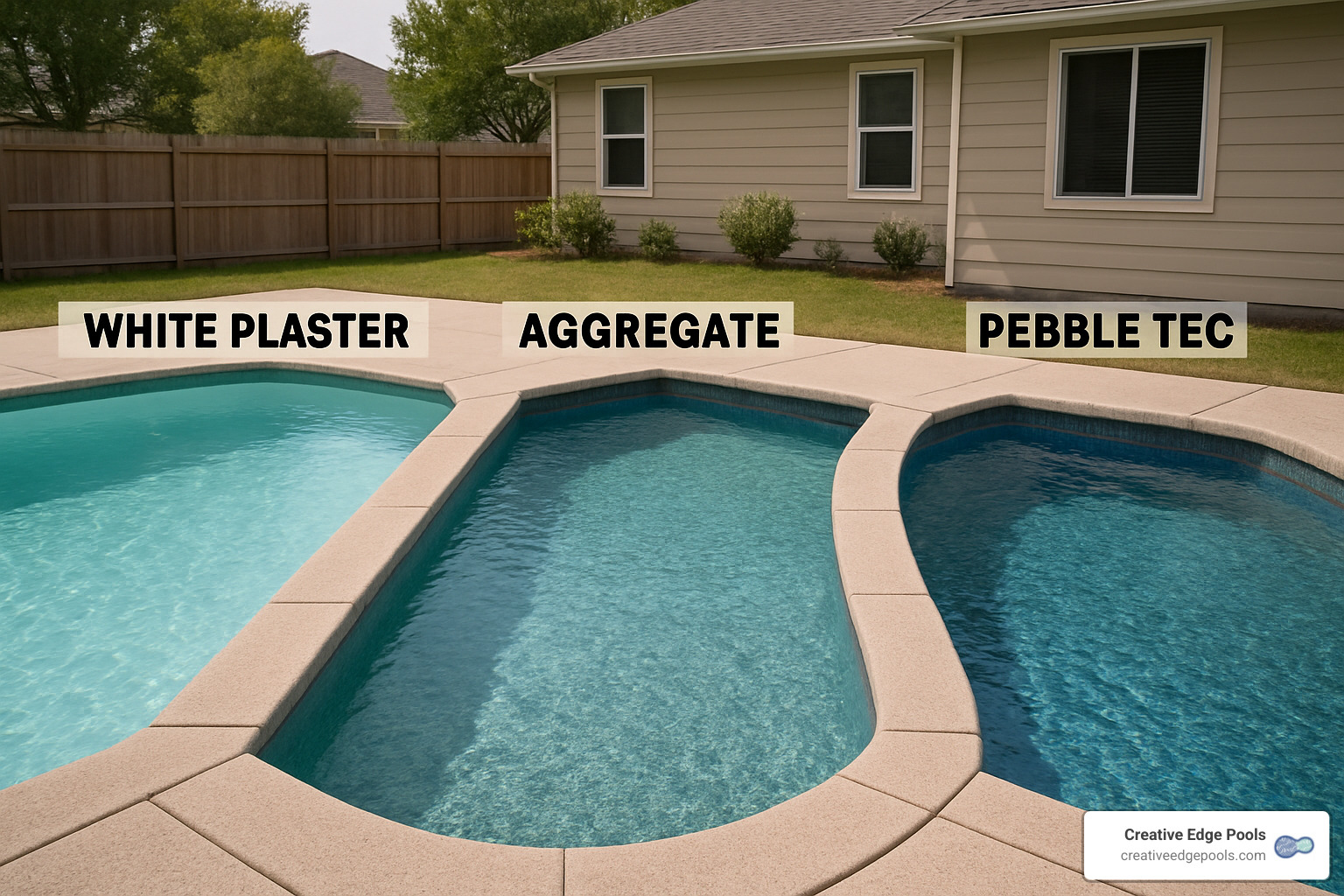
The visual difference is striking when you see them side by side. Plaster gives you that classic, clean pool look that’s been popular for decades. But Pebble Tec creates something that looks like nature designed it—like stepping into a mountain creek or peaceful riverbed. If you’re going for that natural oasis feel in your backyard, there’s really no comparison.
Durability & Lifespan Comparison
This is where the numbers start telling a very different story about value. Plaster typically lasts 5-10 years before you’re looking at complete resurfacing. Despite decades of improvements since its introduction in the 1960s, that marble-based material still struggles with staining and can harbor bacteria in its porous surface.
Pebble Tec, on the other hand, delivers 15-25 years of beautiful, functional surface with proper care. That’s not just marketing talk—it’s what we see in the field year after year. The natural stone aggregates resist chemical damage far better than plaster’s calcium carbonate base.
Here’s something most homeowners don’t realize: plaster pools often need acid washing every 3-5 years just to keep them looking decent. With Pebble Tec, you typically don’t need acid washing at all. In fact, harsh acid treatments can actually damage the surface, so you’re saving money and effort on maintenance.
The textured surface also works in your favor by hiding minor stains and normal wear that would be glaringly obvious on smooth plaster. It’s like the difference between a white shirt and a patterned one—the pattern naturally camouflages everyday life.
Upfront Cost vs. 10-Year Ownership
Let’s crunch some real numbers to see how this plays out over time. When you factor in all the costs of pool ownership, the picture changes dramatically.
For a plaster pool over 10 years, you’re looking at the initial $4,352 installation, plus $1,500-$2,400 for those acid washing cycles, another $4,352 for complete resurfacing around year eight, and an extra $2,000-$3,000 in maintenance chemicals. That adds up to around $27,000 over a decade.
With Pebble Tec, you pay $10,800 upfront, maybe $0-$500 for minimal cleaning needs, no resurfacing required, and you’ll actually use fewer chemicals thanks to the surface properties. Your total comes to roughly $17,000-$20,000 over the same ten years.
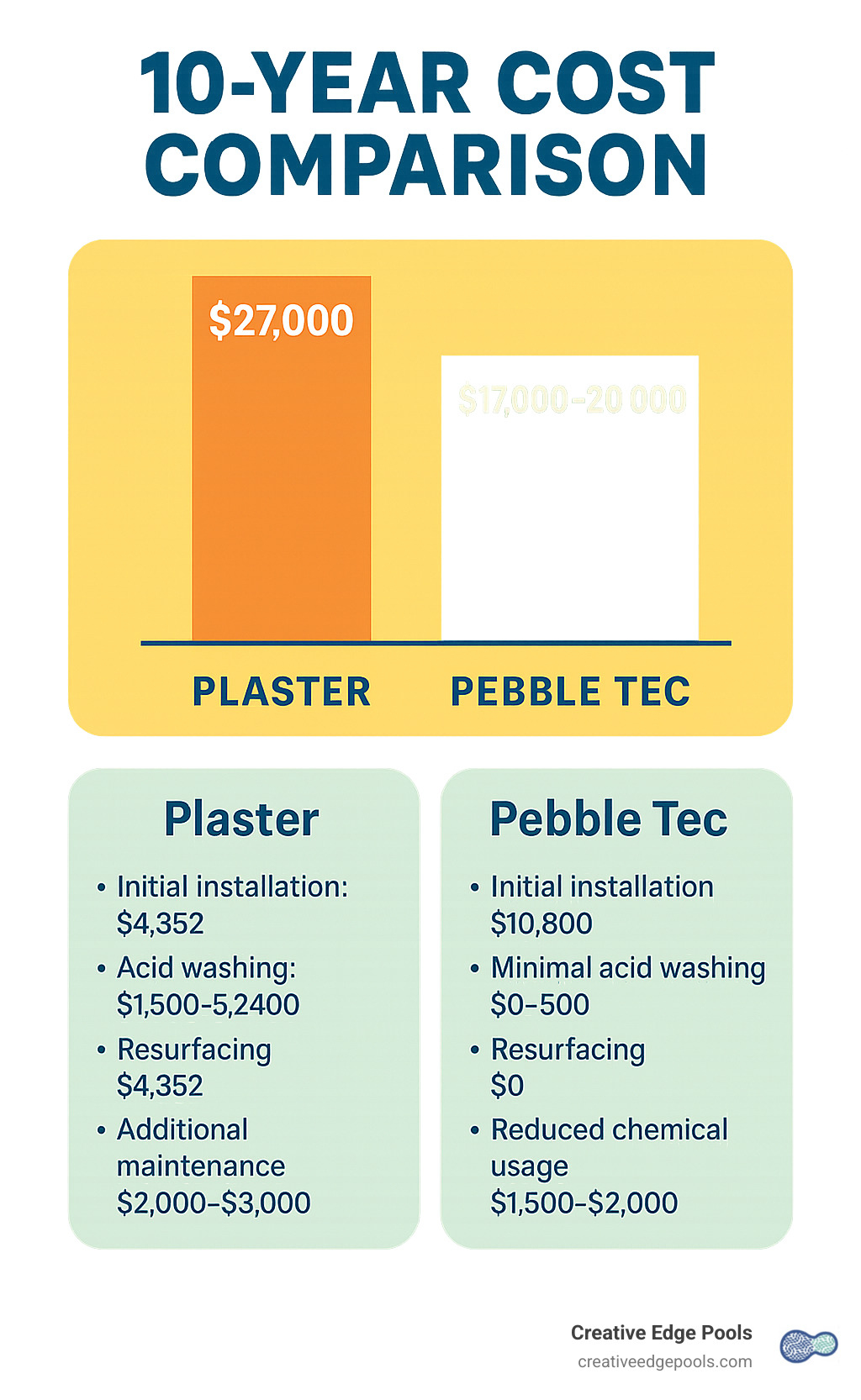
So despite that higher upfront investment, Pebble Tec can actually save you $7,000-$10,000 over a decade while giving you a pool that looks better and performs better the entire time. When you think about it that way, the premium starts looking like a pretty smart investment in your family’s enjoyment and your property’s value.
Installation & Maintenance Essentials
Getting your Pebble Tec finish installed properly makes all the difference between a surface that lasts 15 years versus one that might fail within five. I’ve seen too many homeowners learn this lesson the hard way when they went with the lowest bidder who cut corners.
Only work with authorized installers certified by Pebble Technology International. This certification isn’t just a piece of paper—it means the contractor knows the proper techniques and can offer warranty coverage that protects your investment. Trust me, this isn’t the place to save a few dollars.
When it comes to preparation, we always recommend full chip-out to the gunite shell rather than skim coating over existing plaster. One industry expert put it perfectly: “skim-coat resurfacing is analogous to roofing over existing shingles and results in a much thinner, less durable finish.” Yes, full chip-out adds $5,000-$7,000 to your pebble tec pool cost, but it ensures proper thickness—3/8″ on walls and 1/2″ on floors—for long-term performance.
The complete resurfacing process typically takes 1-2 weeks from start to splash. This includes draining, surface removal, application, curing, and refilling. I know it seems like a long time to be without your pool, but rushing this process is like trying to bake a cake faster by turning up the oven—it just doesn’t work.
Proper curing is absolutely critical for long-term performance. The surface must cure underwater for optimal strength, and the startup chemistry needs careful management during those vulnerable first few weeks. Think of it like a broken bone that needs time to heal properly.
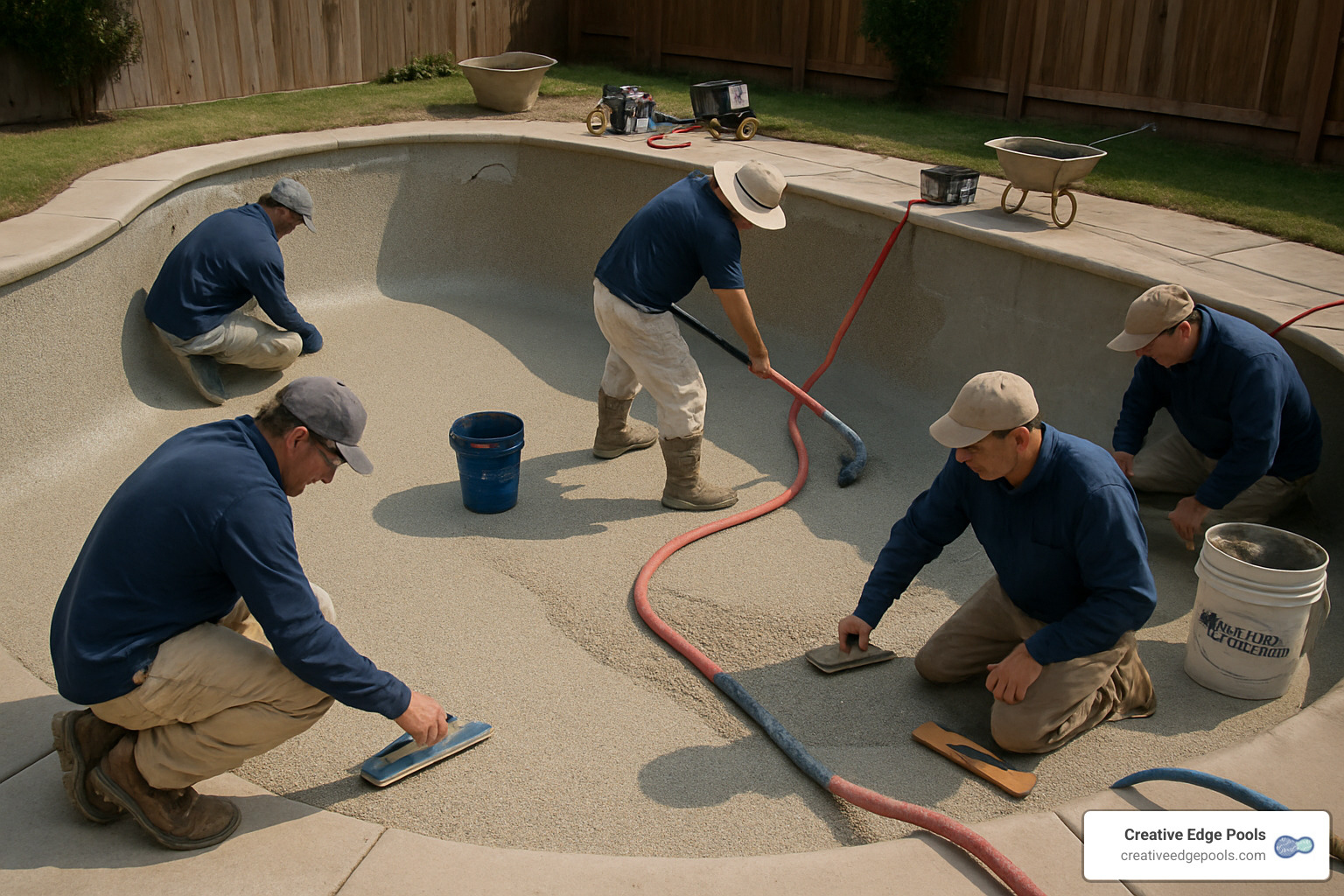
Step-by-Step Resurfacing Process
Understanding what happens during installation helps you know what to expect and ensures your contractor isn’t skipping steps.
First, we drain your pool completely and remove all loose material. Any structural repairs get handled at this stage—it’s much easier to fix gunite issues now than after the new finish is applied.
Next comes the demolition phase. All old plaster gets chipped out using pneumatic tools and flat chisels. We remove material at least two inches beyond any hollow spots to ensure we get everything. This is messy work, but it’s essential for proper adhesion.
Surface preparation follows, where we acid-etch or sandblast the gunite shell to create the right bonding surface. Any penetrations get packed with hydraulic cement. This step determines how well your new finish will stick.
The bond coat application comes next—a specialized bonding agent that ensures proper adhesion between the gunite and new finish. Think of it as the glue that holds everything together.
Now for the main event: Pebble Tec application. The aggregate mixture gets pneumatically applied in consistent thickness. This requires skilled applicators who know how to achieve uniform coverage and proper texture. You’ll be amazed watching this process—it’s part art, part science.
Within 18-24 hours, we perform the exposure wash to reveal the aggregate and achieve the desired texture. Timing is everything here—too early or too late can affect the final appearance.
The acid rinse and cleanup removes any residual cement film and prepares the surface for filling. Finally, we refill your pool and carefully manage startup chemistry to protect the new surface during the critical first 30 days.
Must-Do Maintenance Tips
Taking care of your Pebble Tec finish isn’t complicated, but there are some key things that make a huge difference in how long it lasts and how good it looks.
Water chemistry management is your most important job. Keep pH between 7.2-7.6 and total alkalinity at 80-120 ppm. Monitor calcium hardness to prevent scaling, and avoid prolonged chemical imbalances that can etch the surface. I tell my customers that consistent chemistry beats perfect chemistry—small variations are fine, but big swings will damage any pool finish.
Weekly brushing keeps your surface looking great. Use nylon, combo (50/50 nylon and stainless steel), or polypropylene brushes for regular cleaning. Wire brushes can remove stubborn algae, but use them sparingly to avoid surface damage. Think of brushing like vacuuming your carpet—regular light cleaning beats occasional heavy scrubbing.
Avoid acid washing unless absolutely necessary, as it can harm the Pebble Tec finish. Instead, use chlorine washes or power washing followed by appropriate stain removers. For specific stain issues, check our swimming pool rust stain remover guide for safe, effective solutions.
Be careful about draining your pool. While Pebble Tec pools can be drained, limit empty periods to 2-4 days maximum. Extended empty periods increase risk of surface cracking from sun exposure and soil movement. If you must drain for repairs, plan the work carefully to minimize exposure time.
Quarterly inspections help catch small problems before they become expensive ones. Look for loose aggregate, staining, or areas that need attention. Most issues are much easier and cheaper to fix when caught early.
Frequently Asked Questions about Pebble Tec Pool Cost
How much does it cost to resurface an existing pool with Pebble Tec?
When homeowners call asking about pebble tec pool cost for resurfacing, I typically tell them to expect $5,000-$15,000 for most residential pools. But like everything in the pool business, the real answer is “it depends.”
The biggest factor is your pool’s size. We calculate surface area by measuring length times width, then applying a depth factor for the sloped areas. Multiply that total by $10-$20 per square foot to get your base cost. A typical 600 square foot pool runs $6,000-$12,000, while an 800 square foot pool might cost $8,000-$16,000.
Your current surface condition makes a huge difference too. If your existing plaster is in rough shape with lots of hollow spots or damage, we’ll need more prep work. Regional labor rates also vary significantly—here in Massachusetts and New Hampshire, skilled applicators command higher rates than in some other markets.
Don’t forget about access complexity. If we need special equipment to reach your pool or have to hand-carry materials through tight spaces, that adds to labor costs. I’ve seen projects where difficult access added $2,000-$3,000 to the total.
Can Pebble Tec be applied over existing plaster or is full chip-out required?
This is probably the most important question you can ask, and I always give the same answer: full chip-out to the gunite shell is essential for long-term success.
I know it’s tempting to save money with a skim-coat application over existing plaster. Some contractors offer this option at a lower price point. But in my thirty years of experience, I’ve seen too many skim-coat jobs fail prematurely.
Full chip-out gives you proper thickness—3/8 inch on walls and 1/2 inch on floors. This thickness provides the durability that makes Pebble Tec worth the investment. It also ensures optimal adhesion to the gunite shell and maintains proper alignment with your existing tile lines.
Skim-coating creates a much thinner application, sometimes as little as 1/16 inch in spots. One homeowner told me, “I paid extra for a skim-coat and regret it—planning full chip-out next time.” The thin application can’t smooth existing surface irregularities and has a much higher failure risk.
Yes, full chip-out adds $5,000-$7,000 to your project cost. But when you’re already investing in a premium finish that should last 15-25 years, cutting corners on preparation doesn’t make financial sense.
How long will a Pebble Tec finish really last?
This question gets to the heart of why pebble tec pool cost makes sense as a long-term investment. With proper care, you can expect 15-25 years of service life—sometimes even longer.
I’ve seen Pebble Tec surfaces that look excellent after 20+ years, which is remarkable when you consider that traditional plaster typically needs replacement every 5-10 years. The natural stone aggregates resist chemical degradation, UV damage, and physical wear much better than calcium carbonate-based plaster.
Proper water chemistry is the biggest factor in longevity. Keep your pH between 7.2-7.6 and total alkalinity at 80-120 ppm. Chemical imbalances can etch any pool surface, but Pebble Tec is much more forgiving than plaster.
Regular brushing with nylon or combo brushes helps too, along with avoiding harsh acid washing that can damage the surface. Climate plays a role—covered pools naturally last longer than those exposed to harsh weather year-round.
The key is professional installation by certified applicators and proper startup chemistry during those critical first 30 days. When everything is done right, you’re looking at decades of beautiful, durable service that justifies the higher upfront investment.
Conclusion & Next Steps
When you’re looking at pebble tec pool cost numbers—that $10-$20 per square foot range translating to $4,000-$16,000 for most projects—it’s easy to focus on the upfront investment. But here’s the thing: you’re not just buying a pool finish. You’re investing in 15-25 years of beautiful, durable surface that will transform your backyard into something special.
The numbers tell a compelling story. Yes, you’ll pay $5,000-$10,000 more upfront compared to traditional plaster. But over the next decade, you’ll likely save $7,000-$10,000 through reduced maintenance costs, fewer chemicals, and no surprise resurfacing bills. Add in the slip resistance that keeps your family safer, the natural beauty that makes your neighbors envious, and the property value boost, and suddenly that initial investment looks pretty smart.
At Creative Edge Pools, we’ve been part of the backyard change business for over thirty years here in Eastern Massachusetts and Southern New Hampshire. What started as a passion for creating amazing outdoor spaces has grown into a comprehensive backyard development service that goes way beyond just pools. We handle everything from the initial gunite shell to the final landscaping touches that tie your whole outdoor vision together.
When you work with us, you’re getting more than just certified Pebble Tec installation. You’re getting three decades of experience, honest advice about what works (and what doesn’t), and a team that treats your backyard like it’s our own. We’ve seen enough pool projects to know where corners get cut and quality suffers—and we simply don’t work that way.
Whether you’re building new or resurfacing existing, we’ll walk you through every option honestly. Want to know if PebbleSheen is worth the upgrade for your family? We’ll tell you. Wondering if that premium color is worth the extra cost? We’ve got opinions based on real experience, not just sales targets.
Ready to see what your backyard could become? Give us a call for a detailed consultation where we’ll evaluate your specific situation, discuss finish options that match your lifestyle and budget, and provide transparent pricing with no hidden surprises.
For detailed information about our complete pool renovation services, check out our gunite pool resurface page to see how we approach every project with the same attention to detail and quality craftsmanship.
Your dream backyard is waiting—let’s make it happen together.