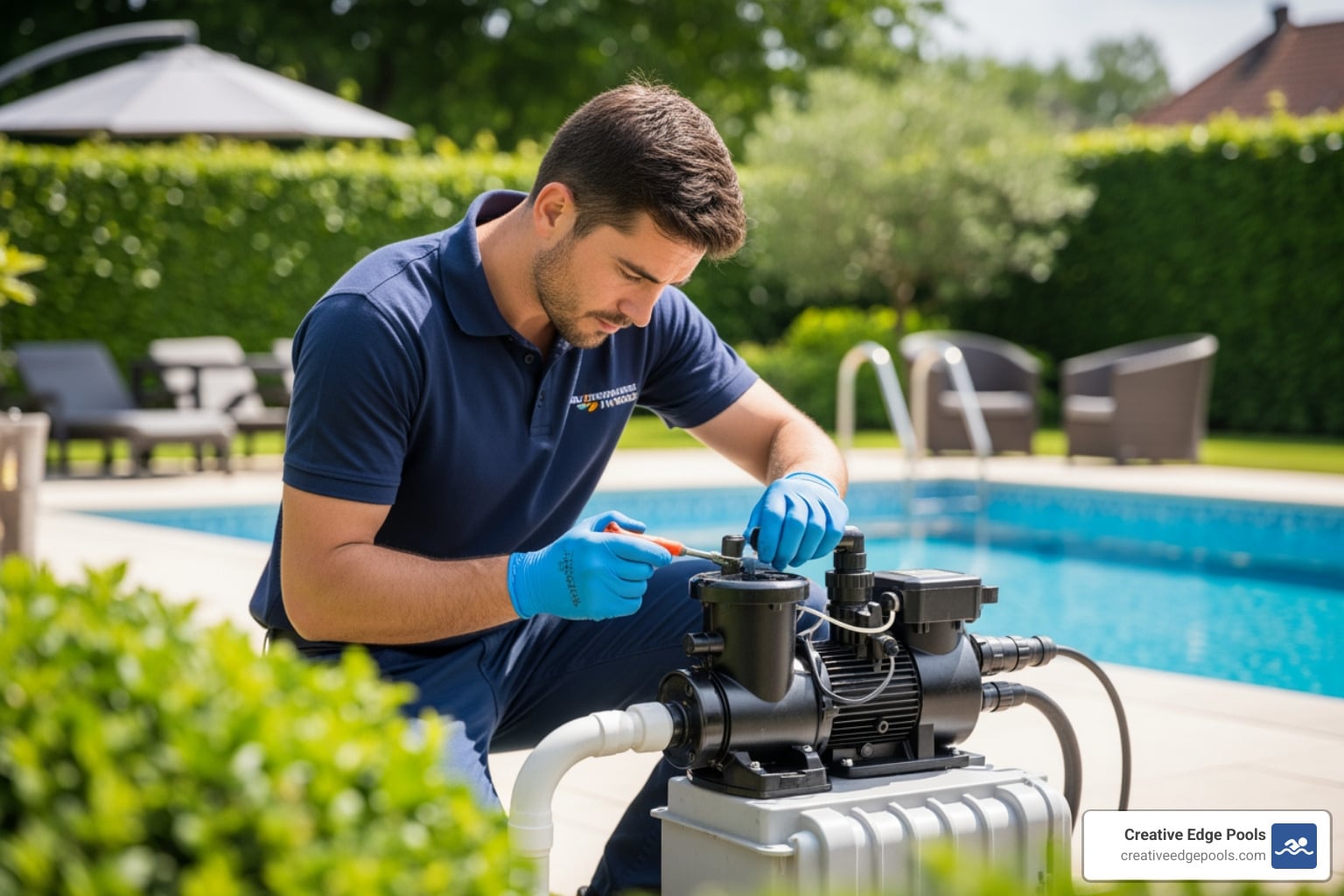
Why Pool Equipment Repair Matters for Your Backyard Investment
Pool equipment repair is essential for maintaining your swimming pool’s performance and preventing minor issues from becoming expensive emergencies. When equipment fails, you need to decide quickly whether to repair or replace—and that choice can save or cost you thousands.
Quick Decision Guide:
- Repair if: Equipment is less than 5 years old, issue is minor (seals, O-rings, capacitors), parts are available, and repair costs less than 50% of replacement
- Replace if: Equipment is over 10 years old, breakdowns are frequent, energy bills are high, parts are obsolete, or repair exceeds 50% of new equipment cost
- Get professional diagnosis for: Gas heaters, electrical issues, automation systems, underground leaks, or any safety-related concerns
Your pool equipment works hard every day. Pumps circulate thousands of gallons, filters trap debris, and heaters maintain comfortable temperatures. According to industry data, common problems include pump failures, filter issues, heating equipment glitches, plumbing leaks, and automation malfunctions.
The harsh New England climate makes proper equipment care even more critical. Freeze-thaw cycles, humidity, and seasonal use put extra stress on every component. Regular maintenance can prevent most failures, but when something breaks, you need to act fast.
Most homeowners face the repair-or-replace question without enough information. Should you fix that 8-year-old pump or upgrade to a variable-speed model? Is your heater worth repairing or should you invest in a heat pump? The wrong choice wastes money, while the right one keeps your pool running efficiently for years.
This guide walks you through identifying equipment problems, understanding when repair makes sense, and knowing when replacement is the smarter investment. You’ll learn what professionals look for, how to maximize equipment lifespan, and when to call for expert help.
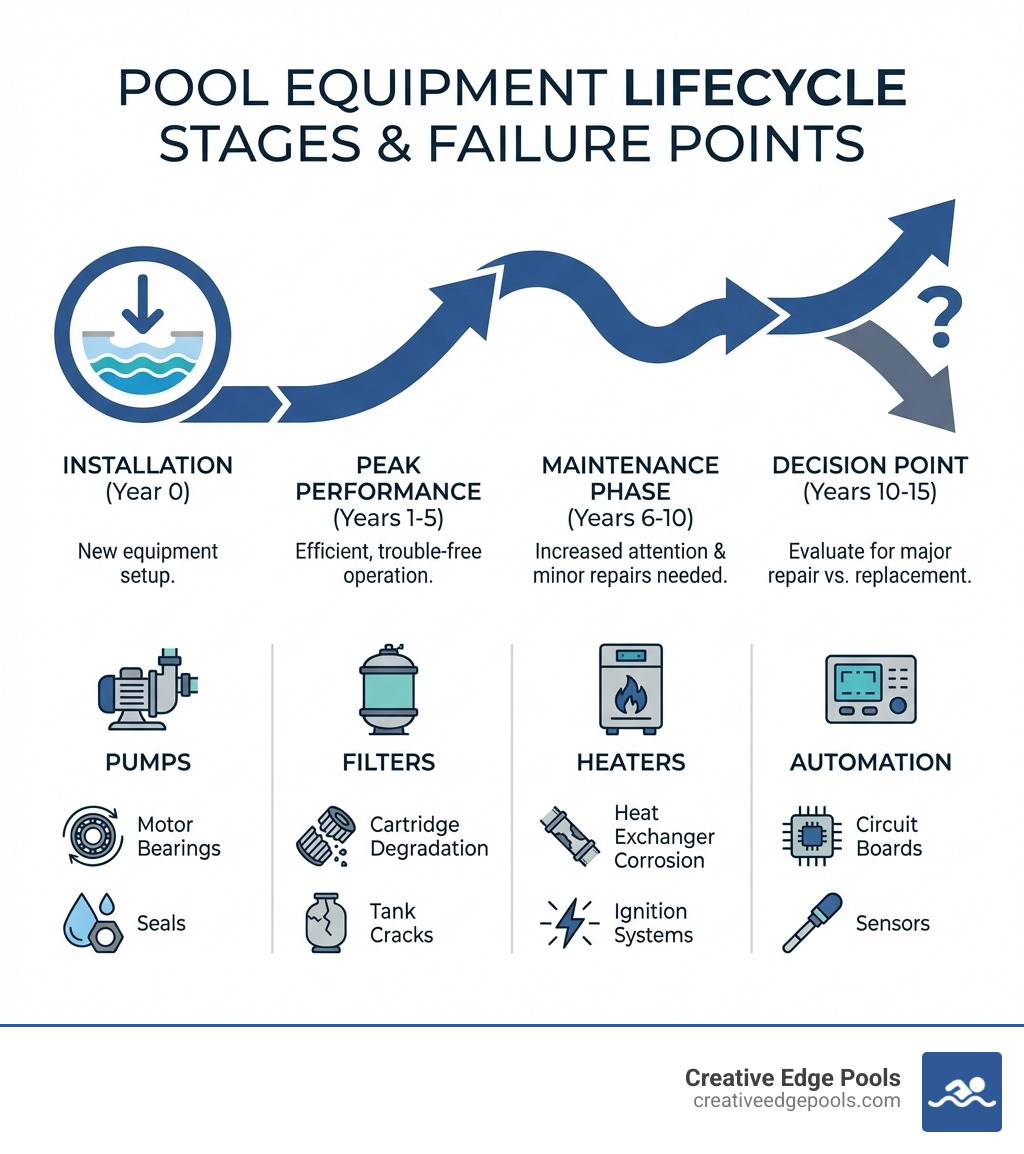
Identifying Common Issues in Pool Equipment Repair
The heart of your backyard oasis relies on several key pieces of equipment working in harmony. When one component falters, the entire system can suffer, leading to cloudy water, inefficient heating, or even a complete shutdown. Understanding the most common types of pool equipment that require pool equipment repair and recognizing the warning signs is the first step toward a quick fix.
The most common types of pool equipment that often need repair include:
- Pool Pumps: The workhorse of your system, circulating water for filtration and heating.
- Filtration Systems: Including sand, cartridge, and diatomaceous earth (DE) filters, responsible for keeping your water clear.
- Heating Equipment: Gas heaters and heat pumps, ensuring your swimming season extends comfortably.
- Plumbing Leaks: Hidden issues in pipes that can lead to significant water loss.
- Automation Systems: The brains of modern pools, controlling everything from pumps to lighting.
- Salt Cells: Essential for saltwater pools, converting salt into chlorine.
- Underwater Lighting: For ambiance and safety, these can suffer from leaks or electrical faults.
Signs Your Pump Needs Attention
Your pool pump is usually the first piece of equipment to show signs of distress. Catching these early can save you from a complete motor burnout.
- Strange Noises: If your pump sounds like it’s grinding rocks or squealing, bearings might be failing or the impeller could be obstructed.
- Low Flow: Weaker jets or a sluggish skimmer often indicate a clog, a failing motor, or impeller issues.
- Motor Humming but Not Starting: This often points to a faulty capacitor, a relatively inexpensive pool equipment repair that can get your pump running again.
- Leaking Seals: Puddles around the pump base indicate a leaking shaft seal. Ignoring this can lead to motor damage.
Common Filter and Heater Problems
Filters and heaters have their own ways of signaling failure.
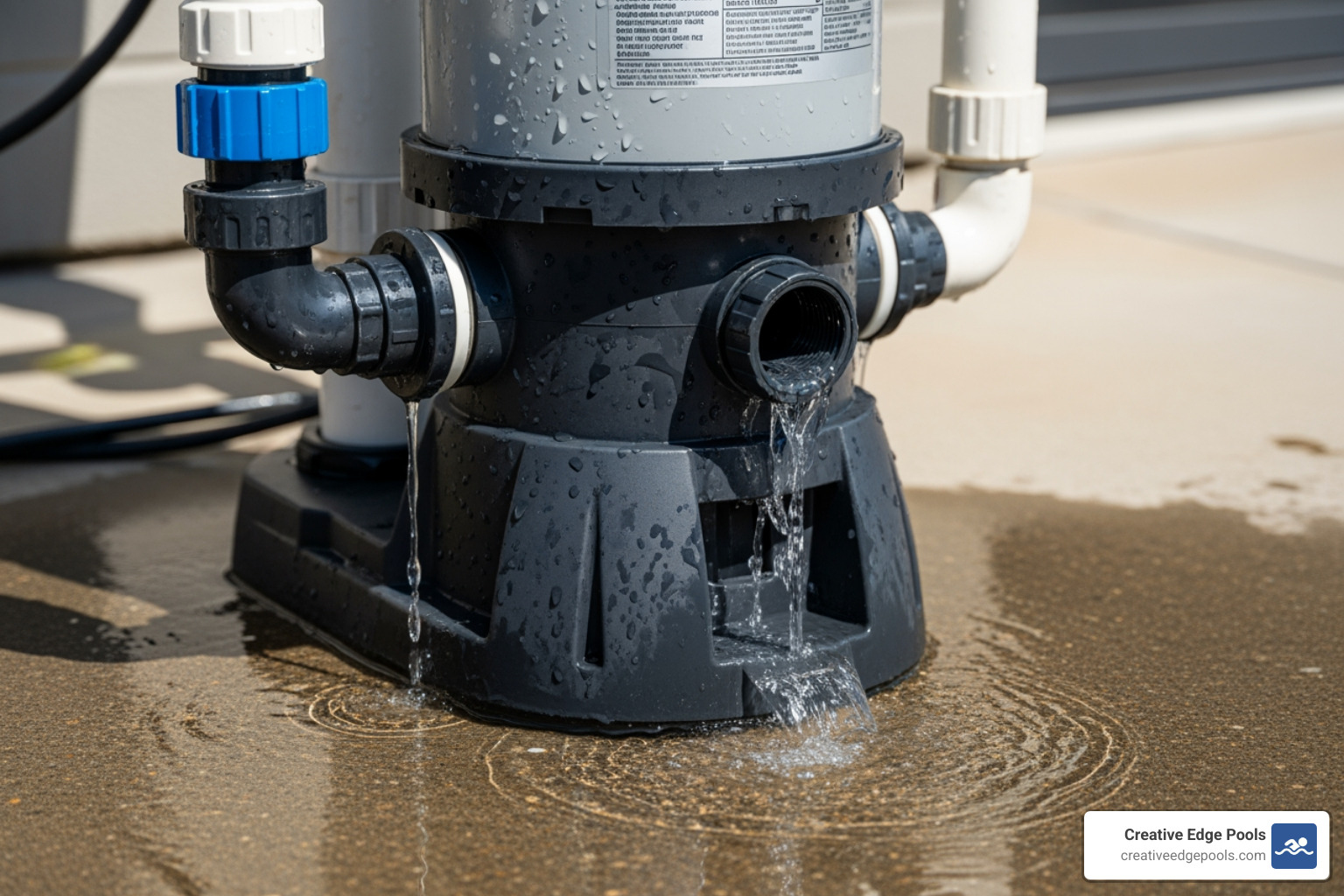
- Filter Pressure Spikes: A sudden increase in pressure usually means the filter is clogged. Persistent high pressure after cleaning could signal internal damage.
- Cloudy Water: If water remains cloudy despite proper chemical balance, your filter might have a damaged cartridge or broken internal component.
- Heater Ignition Failure: If your heater clicks but fails to ignite, the issue is often the igniter, pressure switch, or thermostat.
- Corrosion and Scale Buildup: The New England environment and improper chemistry can lead to corrosion within your heater’s heat exchanger, reducing efficiency and causing leaks.
Sometimes what appears to be a pool leak is actually a leaking piece of equipment. A full pool system diagnosis is essential to identify whether the issue lies with your pool’s structure or a faulty component. Our team conducts thorough diagnostics to pinpoint the exact source of any problem, ensuring effective pool equipment repair. We adhere to the professional standards of the Pool and Hot Tub Alliance (PHTA), assuring service, quality, and expertise.
The Big Decision: Repairing vs. Replacing Your Pool System
When a piece of pool equipment breaks down, the immediate question is always: “Can we fix it, or do we need to buy new?” This isn’t always a straightforward answer and involves weighing several factors, including the age of the equipment, the cost of pool equipment repair, energy efficiency, and future reliability.
| Factor | Repair Often Makes Sense | Replace/Upgrade is Better |
|---|---|---|
| Equipment Age | Less than 5-7 years old | Over 7-10 years old (especially pumps, heaters) |
| Repair Cost | Less than 50% of new equipment cost | Exceeds 50% of new equipment cost |
| Energy Efficiency | Current model is already energy-efficient | Older, inefficient model (e.g., single-speed pump) |
| Frequency of Breakdowns | First-time issue, isolated problem | Frequent, recurring problems |
| Parts Availability | Readily available and affordable | Obsolete, hard-to-find, or expensive parts |
| Technology | Still compatible with current automation, sufficient features | Outdated, incompatible with new smart systems, basic functionality |
| Warranty | Still under manufacturer’s warranty | Warranty has expired |
We often use the “50% rule” as a general guideline: if the cost of pool equipment repair is more than 50% of the cost of a new, comparable unit, then replacement is usually the more economical choice in the long run.
When to Choose Pool Equipment Repair
Sometimes, a little TLC is all your equipment needs to get back in top shape.
- Minor Leaks: A simple O-ring replacement, a PVC joint re-seal, or a new gasket can often resolve minor leaks without breaking the bank. These are common and relatively inexpensive pool equipment repair tasks.
- O-ring Replacement: O-rings and gaskets are wear-and-tear items that frequently need replacing, especially on pumps and filters. This is a quick and affordable fix.
- Capacitor Fixes: As mentioned, a humming pump that won’t start often indicates a bad capacitor. This is a relatively cheap part to replace and extends the life of the motor.
- Recent Models: If your equipment is only a few years old, it’s usually worth repairing. It likely still has many years of life left, and parts are readily available. Plus, newer models are generally more energy-efficient, so replacing a relatively new one would be a waste of a good investment.
When an Upgrade is the Better Investment
There comes a point when pouring money into an old, failing system becomes a false economy.
- Obsolete Parts: If parts for your old equipment are no longer manufactured or are extremely hard to find, it’s a clear sign that replacement is inevitable. Why wait until it completely breaks down when you can plan an upgrade?
- Frequent Breakdowns: If you’re calling for pool equipment repair every few months for the same piece of equipment, it’s time to cut your losses. The cumulative cost of repairs and the hassle of downtime will quickly outweigh the cost of a new unit.
- High Energy Bills: Older, single-speed pumps are notorious energy guzzlers. Upgrading to a variable-speed pump can reduce pump-related energy costs by up to 90%. This significant saving makes the upfront investment in a new pump pay for itself over time, sometimes in just a couple of years.
- Automation Compatibility: If you’re looking to modernize your pool with smart automation features, older equipment might not be compatible. Upgrading allows for seamless integration, giving you greater control and efficiency.
- Beyond the 50% Rule: When repair costs for an older unit creep past the 50% mark of a new replacement, it’s time to consider the long-term value. A new unit often comes with a fresh warranty, improved efficiency, and peace of mind.
Whether it’s a minor pool equipment repair or a complete system overhaul, we work with our clients to determine the best possible products and installation for their pool, always aiming for the highest return on your investment.
Maximizing Efficiency and Lifespan Through Professional Maintenance
Regular maintenance is the unsung hero of pool ownership, preventing many costly pool equipment repair needs before they even arise. Think of it as your pool’s annual check-up and a little bit of pampering. Our experience shows that preventive maintenance plays a crucial role in extending the life of your pool equipment. By scheduling regular checks, potential issues can be identified early, mitigating the risk of costly repairs or replacements in the future.
We bring an extensive understanding of all types of pool equipment, including pumps, filters, heaters, salt cells, and automated systems. Our comprehensive approach to maintenance includes:
- Preventive Maintenance: Scheduled inspections, cleaning, and adjustments designed to keep everything running smoothly.
- Chemical Balancing: Crucial for both water quality and equipment longevity.
- Winterization: Protecting your equipment from the harsh New England winter freeze.
- Filter Degreasing/Cleaning: Ensuring your filter operates at peak efficiency.
- Lubrication: Keeping moving parts like O-rings and seals from drying out and cracking.
- Seasonal Inspections: Thorough checks at the start and end of each season to catch problems early.
The Role of Water Chemistry in Equipment Health
It might sound surprising, but the chemistry of your pool water has a profound impact on the lifespan of your equipment. Improperly balanced water can be incredibly corrosive or lead to excessive scale buildup, acting like a slow poison to your pool’s vital components.
- Corrosion: Low pH (acidic water) can literally eat away at metal parts in your heater, pump, and filter, leading to leaks and premature failure.
- Scale: High pH (alkaline water) and high calcium hardness can cause scale deposits to form on heater elements, inside pipes, and on salt cells. This reduces efficiency, restricts flow, and can cause overheating in heaters. Maintaining proper water chemistry is paramount for heater longevity, as emphasized by manufacturers.
- Chlorine Levels: While essential, excessively high chlorine can also degrade certain materials over time, particularly rubber seals and plastic components.
Regular chemical balancing is crucial for a safe and comfortable swimming environment, but it’s equally important for your equipment’s health.
Seasonal Care to Prevent Costly Fixes
The New England climate demands specific seasonal care to protect your pool equipment. Ignoring these steps is an open invitation for expensive pool equipment repair come springtime.
- Spring Startup: A professional pool opening service ensures your system is properly reassembled, started up, and checked for any issues that may have developed over winter. This includes removing winterizing plugs, reassembling the pump and filter, and carefully testing all equipment.
- Winter Watch Program: For those who want extra peace of mind during the off-season, a winter watch program involves periodic checks of water levels, cover anchoring systems, and visual inspections of equipment to ensure everything remains protected. This is particularly important if you use a pool cover.
- Debris Removal: Keeping your pool and skimmer baskets free of debris prevents strain on your pump and filter.
- Proper Winterization: This is arguably the most critical aspect of pool care to avoid unnecessary repairs in the spring. It involves lowering water levels, treating the water with algaecide, disassembling and draining the pump, filter, and heater, blowing out the plumbing system, adding antifreeze, and securely covering the pool. For gunite pools, ensuring proper water levels below returns is key.
Our comprehensive services, from spring openings to fall closings and weekly maintenance, are designed to ensure your pool delivers worry-free enjoyment season after season.
Safety Considerations and Professional Diagnosis
When it comes to pool equipment repair, especially involving gas, electricity, or high-pressure systems, safety should always be your top priority. The risks of DIY repairs can range from minor property damage to serious injury or even fatality. This is why professional diagnosis and repair are not just convenient, but often essential.
Serious warnings from equipment manufacturers often accompany their manuals: “WARNING: If the information in these instructions is not followed exactly, a fire or explosion may result causing property damage, personal injury, or death.” We take these warnings very seriously.
Key safety considerations include:
- Gas Safety: Pool heaters operate on natural gas or propane. Improper installation, repair, or ventilation can lead to gas leaks, fire, explosions, or the silent, deadly threat of carbon monoxide (CO) poisoning. If you ever smell gas, do not try to light any appliance, do not touch electrical switches, and immediately call your gas supplier. For indoor installations, CO detectors are strongly recommended. Only licensed gas technicians should handle heater installations and repairs.
- Electrical Grounding: Pool equipment involves powerful electrical components. Improper wiring or grounding can create electrocution hazards. All electrical work should be performed by a qualified electrician.
- SVRS Technology: Safety Vacuum Release Systems (SVRS) are crucial safety devices on pumps that detect drain blockage and shut off the pump, preventing dangerous entrapment. These systems require regular inspection and calibration to ensure optimal protection.
- Pressure Testing: Systems like plumbing lines and filters operate under pressure. Improper assembly or damaged components can lead to leaks or even explosive failure. Pressure testing services are vital for diagnosing hidden plumbing issues and ensuring system integrity.
- Leak Detection: While we don’t do underground leak detection ourselves, it’s a specialized service sometimes needed for pool equipment issues. Knowing when and where to refer for such services is part of professional expertise.
Why Professional Diagnosis Matters
Why call in the pros when you could just try to YouTube a fix? The answer lies in complexity, safety, and expertise.
- Complex Electronics and Automation: Modern pool systems, especially automation controls, are highly sophisticated. They involve intricate wiring, circuit boards, and sensors. Diagnosing issues requires specialized tools and in-depth knowledge of these systems. Trying to troubleshoot complex automation systems without proper training can lead to further damage or incorrect repairs.
- Gas Line Handling: As mentioned, gas heaters are not a DIY project. Licensed technicians are trained to handle gas lines, ensure proper ventilation, and understand the specific safety protocols required for these powerful appliances.
- Hydraulic Efficiency: Pool systems rely on precise hydraulic balance. A professional understands how pumps, filters, and plumbing work together to maintain optimal flow and pressure. They can identify subtle inefficiencies that might go unnoticed by an untrained eye, ensuring your system runs at peak performance.
- Licensed and Experienced Technicians: Our team, with many technicians boasting over 20 years of experience, is equipped to handle all types of pool equipment repair. We are trained experts in the installation and repair of all major pool equipment, old or new, and understand the nuances of various brands and models. This expertise means faster, more accurate diagnoses and reliable repairs, saving you time and money in the long run. Professional diagnosis helps us identify which piece of equipment or piping is faulty, so we can repair or replace it efficiently.
Frequently Asked Questions about Pool Equipment Repair
We understand you have questions when your pool equipment acts up. Here are some of the most common inquiries we receive about pool equipment repair.
What are the signs I need pool equipment repair?
Beyond strange noises and leaks, look for these indicators:
- Changes in Water Clarity: Cloudy or green water despite treatment often points to filter or circulation issues.
- Unusual Sounds: Grinding, screeching, or persistent humming from your pump or heater are red flags.
- High Utility Bills: A sudden spike in electricity or gas could mean your equipment is working harder due to inefficiency.
- Error Codes: Modern automation systems display codes that point directly to specific problems.
- Inconsistent Heating: If your pool isn’t reaching temperature or the heater cycles frequently, it needs a diagnostic.
How much does typical pool equipment repair cost?
The cost of pool equipment repair varies based on the equipment type, the nature of the fix (minor O-rings vs. complex heat exchangers), and parts availability. While we can’t give exact figures without a diagnosis, we provide a clear cost-benefit analysis to help you decide if repair offers a better ROI than replacement. For regular maintenance customers, we typically respond to repair requests within 24 hours.
Can I DIY my pool equipment repair?
While you can handle basic tasks like emptying skimmer baskets or cleaning salt cells, significant pool equipment repair carries risks:
- Safety Risks: Dealing with gas lines, high voltage, or pressurized systems without training is dangerous.
- Warranty Voiding: DIY attempts on complex components can void manufacturer warranties.
- Professional Limits: If you lack specialized tools or the problem involves more than a simple part swap, call a professional. Our licensed and insured technicians ensure the job is done safely.
What are the benefits of professional pool equipment repair services?
Choosing professional service offers expert diagnosis, adherence to safety protocols, and quality workmanship. It restores equipment to optimal efficiency, extends its lifespan, and often includes a service warranty, saving you time and providing peace of mind.
How do I choose a reliable pool equipment repair service?
Look for a company with extensive experience, proper licensing, and positive reputation. Creative Edge Pools has served Eastern MA and Southern NH for decades. Ensure the provider offers comprehensive services and clear communication regarding pricing and solutions.
What role do pumps, filters, and heaters play in pool maintenance?
- Pumps: Circulate water to prevent stagnation and algae growth. Common issues include motor failure and seal leaks.
- Filters: Remove debris to keep water clear. Issues include clogged media or malfunctioning valves.
- Heaters: Extend your season. Common problems include ignition failure and heat exchanger corrosion.
How do automation systems in pools affect repair needs?
Automation adds convenience but requires specialized knowledge in electronics and software for troubleshooting. Issues often involve sensors, relays, or circuit boards. Professional diagnosis is highly recommended for these systems to avoid compounding electrical problems.
Conclusion
Navigating pool equipment repair can feel overwhelming, but with the right knowledge and a trusted partner, you can make informed decisions that protect your investment and ensure years of enjoyment from your backyard oasis. Whether it’s a minor fix or a major overhaul, understanding when to repair and when to replace is key to maintaining an efficient, safe, and sparkling clean pool.
At Creative Edge Pools, we understand the unique demands of pool ownership in Eastern MA and Southern NH. As a family-owned business with over 100 years of combined experience, we specialize in gunite pools and full-service backyard development, bringing homeowner visions to life. Our commitment to quality, expertise, and ethical service ensures that your pool equipment is in the best hands. Don’t let a faulty pump or a chilly heater keep you from enjoying your pool.