
Installation of Pools: Top 10 Powerful DIY Tips 2024
Installation of pools can transform your backyard into a personal oasis, offering endless entertainment and relaxation. However, it requires careful planning and understanding of the costs involved. Here’s what you need to know:
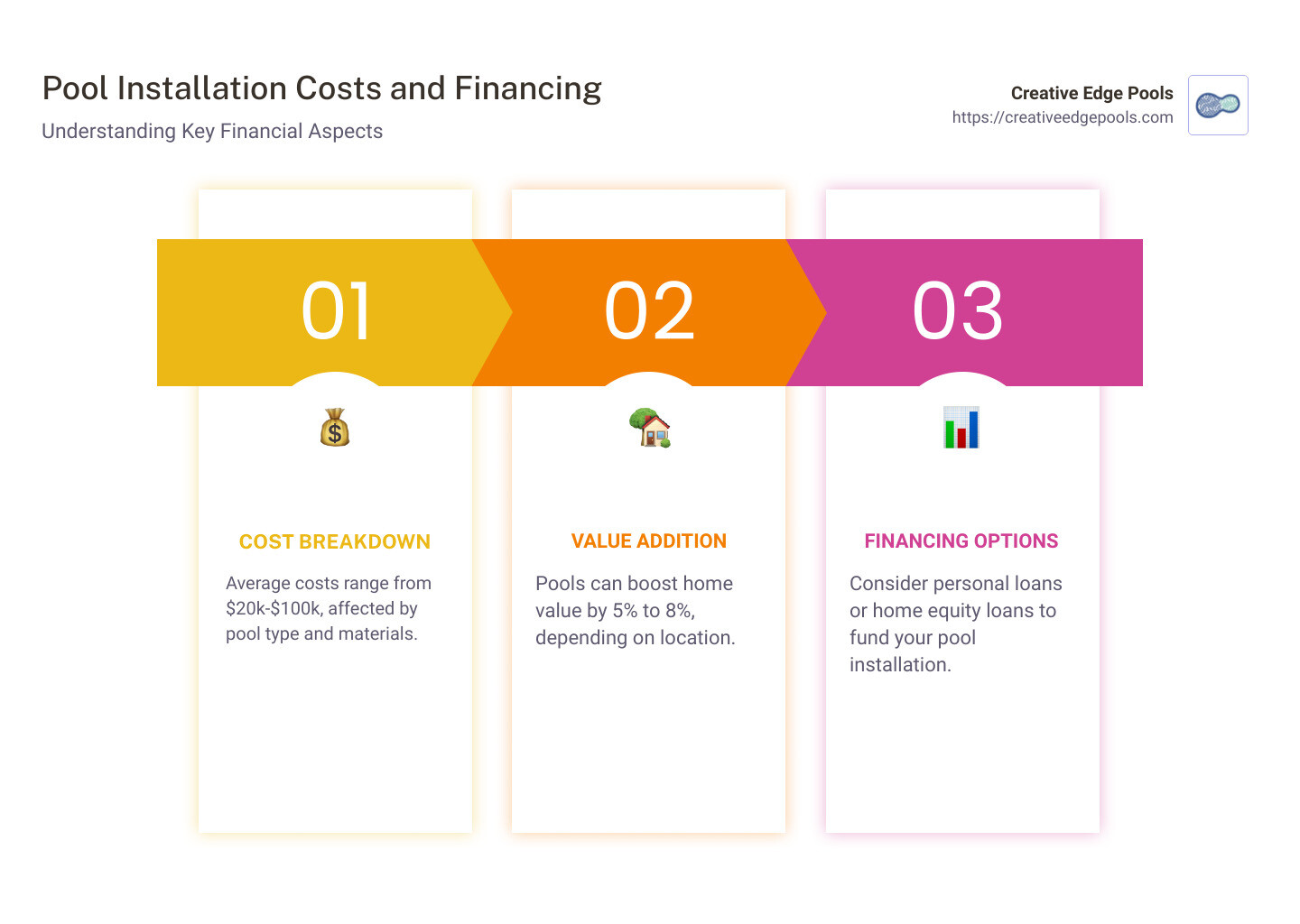
- Costs: The average cost ranges from $20,000 to $100,000, influenced by pool type and materials.
- Value: Pools can increase home value by 5% to 8%, depending on location.
- Financing Options: Explore personal loans and home equity loans to make your dream pool a reality.
My name is David Brabant, with over 30 years of experience in swimming pool installation. As the owner of Creative Edge Pools, I bring a hands-on approach to every project, ensuring the highest quality and satisfaction.
Basic installation of pools glossary:
Planning Your DIY Pool Installation
Starting on a DIY pool installation journey is no small feat. It involves several critical decisions and steps, starting with choosing the right pool type and budgeting effectively. Let’s explore the essentials.
Choosing the Right Pool Type
When planning your pool, selecting the right type is crucial. The three main types are fiberglass, vinyl, and concrete. Each has its own pros and cons:
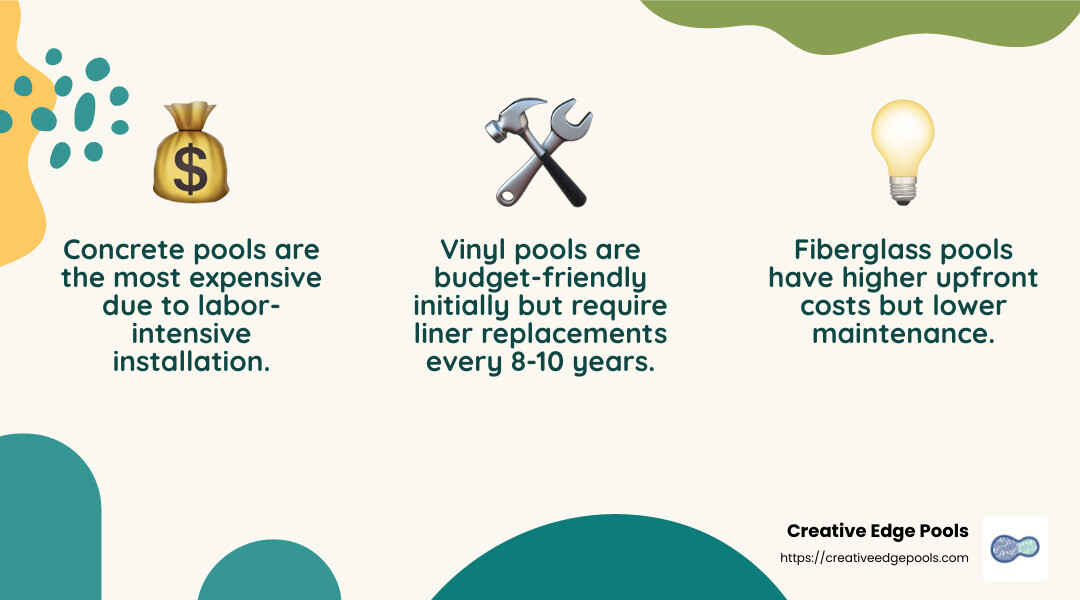
- Fiberglass Pools: These are known for their durability and low maintenance. They are pre-molded and installed as a single piece, which can make installation quicker and easier. However, they may be more expensive upfront.
- Vinyl Pools: Vinyl pools offer flexibility in design and are generally more budget-friendly. They do require liner replacements every 8-10 years, which can add to long-term costs.
- Concrete Pools: Concrete is the most customizable option, allowing for unique shapes and features. They are the most durable but also the most expensive and time-consuming to install.
Consider your preferences, budget, and long-term maintenance when choosing your pool type.
Budgeting for Your Pool
Creating a realistic budget is a critical step in your pool installation project. Here’s a breakdown of what to consider:
- Construction Costs: This includes excavation, framing, and the installation of the pool shell. Concrete pools tend to be the most expensive due to the labor-intensive process.
- Materials: Costs will vary depending on the type of pool. Fiberglass is generally more expensive initially, while vinyl is cheaper but may incur additional costs over time for liner replacements.
- Labor: Even with a DIY approach, you may need to hire professionals for tasks like electrical work or plumbing. Factor these costs into your budget.
- Permits: Check local regulations to determine if you need permits for your pool installation. Permit costs can vary significantly depending on your location.
- Extras: Don’t forget to include costs for decking, fencing, and landscaping. These elements not only improve the appearance of your pool area but also ensure safety and compliance with local laws.
By carefully planning and budgeting for your DIY pool installation, you can avoid unexpected expenses and ensure a smooth process. Next, we’ll guide you through the step-by-step installation process to help you bring your backyard oasis to life.
Step-by-Step Guide to Pool Installation
Backyard Preparation and Digging
Before diving into the installation, preparing your backyard is crucial. Start by clearing the area of any obstacles like rocks, trees, or shrubs. Ensure the site is level to prevent future structural issues. Excavation is next. You’ll need to dig a hole that matches the dimensions of your chosen pool type. This step requires precision, so renting excavation equipment or hiring professionals might be necessary.
Setting the Pool Shell
Once the site is ready, it’s time to set the pool shell. Fiberglass pools come as a single piece, making this step quicker. Simply lower the shell into the excavated area with caution. Vinyl pools require a frame to support the liner, while concrete pools involve constructing a rebar framework before pouring concrete, which allows for custom shapes.
Adding Water and Backfill
With the pool shell in place, begin filling it with water. Simultaneously, backfill the surrounding area with sand or gravel to stabilize the pool and prevent shifting. This process should be done gradually to maintain balance and prevent damage to the pool structure.
Plumbing and Electrical Installation
Proper plumbing and electrical systems are essential for a functional pool. Install the necessary pipes for water circulation and filtration. Ensure all electrical components, such as lights and pumps, meet safety standards and are connected correctly. This step might require a licensed professional to ensure compliance with local regulations.
Pouring Concrete and Finishing
For concrete pools, pouring the concrete is a critical step. Ensure the mixture is evenly distributed and smoothed to create a durable surface. Once the concrete sets, add any finishing touches like tiles or plaster to improve the pool’s aesthetic appeal.
Coping and Decking
Coping refers to the material used to cap the pool shell’s edge, providing a seamless transition from pool to deck. Popular choices include stone, brick, or concrete. After coping, install the decking around the pool area. This not only improves the pool’s appearance but also provides a safe, non-slip surface for walking.
Fencing and Safety Measures
Safety is paramount in pool installation. Erect a fence around the pool to prevent unauthorized access and ensure compliance with safety regulations. Consider additional safety features like pool covers or alarms for added protection.
By following these steps, you’ll be well on your way to successfully installing your DIY pool. Up next, we’ll explore essential tools and equipment to keep your installation process smooth and efficient.
Tips for a Successful DIY Pool Installation
Essential Tools and Equipment
Starting on a DIY pool installation requires the right tools and equipment. Without them, even the most enthusiastic DIYer can find themselves stuck. Here’s a quick checklist to get you started:
- Excavation Equipment: Renting a backhoe or excavator is essential for digging the pool hole. Precision is key, so consider professional help if needed.
- Leveling Tools: A laser level can ensure your site is perfectly flat, preventing future headaches.
- Concrete Mixer: For concrete pools, a mixer is crucial for preparing and pouring the concrete evenly.
- Plumbing Tools: Pipe cutters, wrenches, and PVC glue will be necessary for setting up the pool’s plumbing system.
- Safety Gear: Hard hats, gloves, and safety goggles are non-negotiable to protect against accidents.
Having these tools on hand will streamline the process and help avoid delays.
Safety Precautions
Safety should be at the forefront of your DIY pool project. Here are some key precautions:
- Regulations: Familiarize yourself with local building codes and safety regulations. This includes fence height requirements and electrical safety standards.
- Protective Gear: Always wear appropriate safety gear. Injuries can easily occur during excavation or when handling heavy materials.
- Electrical Safety: Ensure all electrical work is performed by a licensed electrician. Pool lighting and pump systems must meet strict safety standards to prevent electrical hazards.
By prioritizing safety, you can prevent accidents and ensure your pool installation is compliant with all necessary regulations.
Maintenance Tips
Once your pool is installed, regular maintenance is vital to keep it in top shape. Here’s how you can maintain your new oasis:
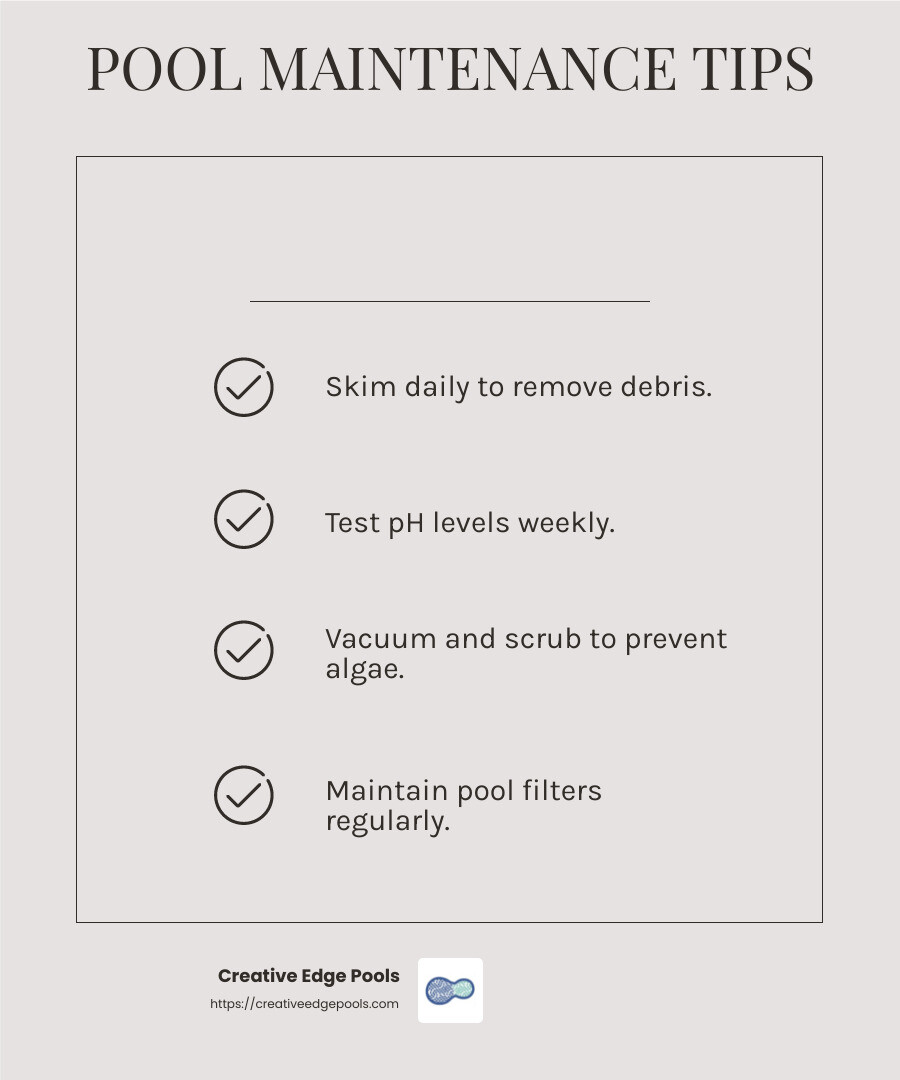
- Cleaning: Skim the pool daily to remove debris. Regularly vacuum the pool floor and scrub the walls to prevent algae growth.
- Chemical Balance: Test the water’s pH levels weekly. Keeping the water balanced with the right chemicals prevents bacteria and keeps the water clear.
- Filter Maintenance: Clean or replace pool filters as recommended by the manufacturer. A clean filter ensures efficient water circulation and filtration.
By following these maintenance tips, you’ll enjoy a clean, safe, and beautiful pool for years to come.
In the next section, we’ll dive into some frequently asked questions about the installation of pools, addressing common concerns and providing expert insights.
Frequently Asked Questions about Installation of Pools
What is the most expensive part of installing a pool?
The construction phase is typically the most costly part of pool installation. This includes several critical steps:
- Excavation: Digging the pool site is labor-intensive and often requires renting heavy machinery like backhoes or excavators. The cost can vary widely depending on soil conditions and accessibility.
- Framing and Pool Shell: The choice of pool shell material—fiberglass, vinyl, or concrete—significantly impacts costs. Concrete is the most durable but also the most expensive, while vinyl is more budget-friendly but may require more frequent replacement.
- Plumbing and Electrical: Installing plumbing lines and electrical systems for pumps, heaters, and lighting adds to the expense. This work must meet strict safety standards, often necessitating professional help.
Why do pools cost so much to install?
Several factors contribute to the high costs of pool installation:
- Pool Shell: As mentioned, the type of pool shell you choose (fiberglass, vinyl, or concrete) greatly affects the overall cost. Fiberglass is often a middle-ground choice, balancing durability and cost.
- Rental Equipment: Excavation and construction require specialized equipment, which can be expensive to rent. This equipment is essential for precision and safety.
- Labor: Professional labor for excavation, plumbing, and electrical work is a major cost driver. Skilled workers ensure that the pool is installed safely and correctly, but their expertise comes at a price.
- Pool Equipment: Pumps, filters, and heaters are necessary for pool operation and can be costly, especially if you opt for energy-efficient models.
What is the most cost-effective way to put in a pool?
To save money while installing a pool, consider these budget-friendly options:
- Fiberglass Pools: These pools offer a good balance between cost and durability. They are pre-fabricated, reducing installation time and labor costs.
- Vinyl Pools: While they may require more maintenance over time, vinyl pools have a lower initial cost compared to fiberglass and concrete options.
- DIY Elements: If you’re handy, tackling parts of the installation yourself, like site preparation or simple landscaping, can reduce labor costs. However, leave complex tasks like electrical work to professionals for safety reasons.
By choosing the right materials and considering some DIY elements, you can manage costs effectively while still achieving a beautiful pool in your backyard.
Conclusion
At Creative Edge Pools, we pride ourselves on turning your backyard dreams into reality with our custom design and comprehensive service. Our family-owned business specializes in creating beautiful and functional outdoor spaces with gunite swimming pools and spas in Eastern Massachusetts and Southern New Hampshire.
Custom Design and Comprehensive Service
Our unique selling proposition is our ability to offer a complete backyard development service. We don’t just install pools; we craft an entire outdoor environment custom to your vision. From the initial design phase to the final touches, our team is with you every step of the way.
Landscaping and Masonry
Beyond pool installation, our expertise extends to landscaping and masonry. We understand that a pool is just one part of your outdoor oasis. That’s why we offer services that improve the overall aesthetic and functionality of your space. Whether it’s adding retaining walls, outdoor kitchens, or beautiful patios, our work complements your home and lifestyle.
Why Choose Us?
Choosing Creative Edge Pools means partnering with a team that cares about your satisfaction and the quality of our work. Our commitment to excellence ensures that your pool not only meets but exceeds your expectations.
Ready to transform your backyard? Contact us today to start planning your dream pool and outdoor space. Let’s make your vision come to life with our expertise in custom pool design and backyard development.
