
How much does it cost to fill a pool 2025: Smart Costs
Understanding Pool Filling Costs
How much does it cost to fill a pool depends on whether you’re filling it with water for swimming or dirt for removal. Here’s what you can expect:
Water Filling Costs:
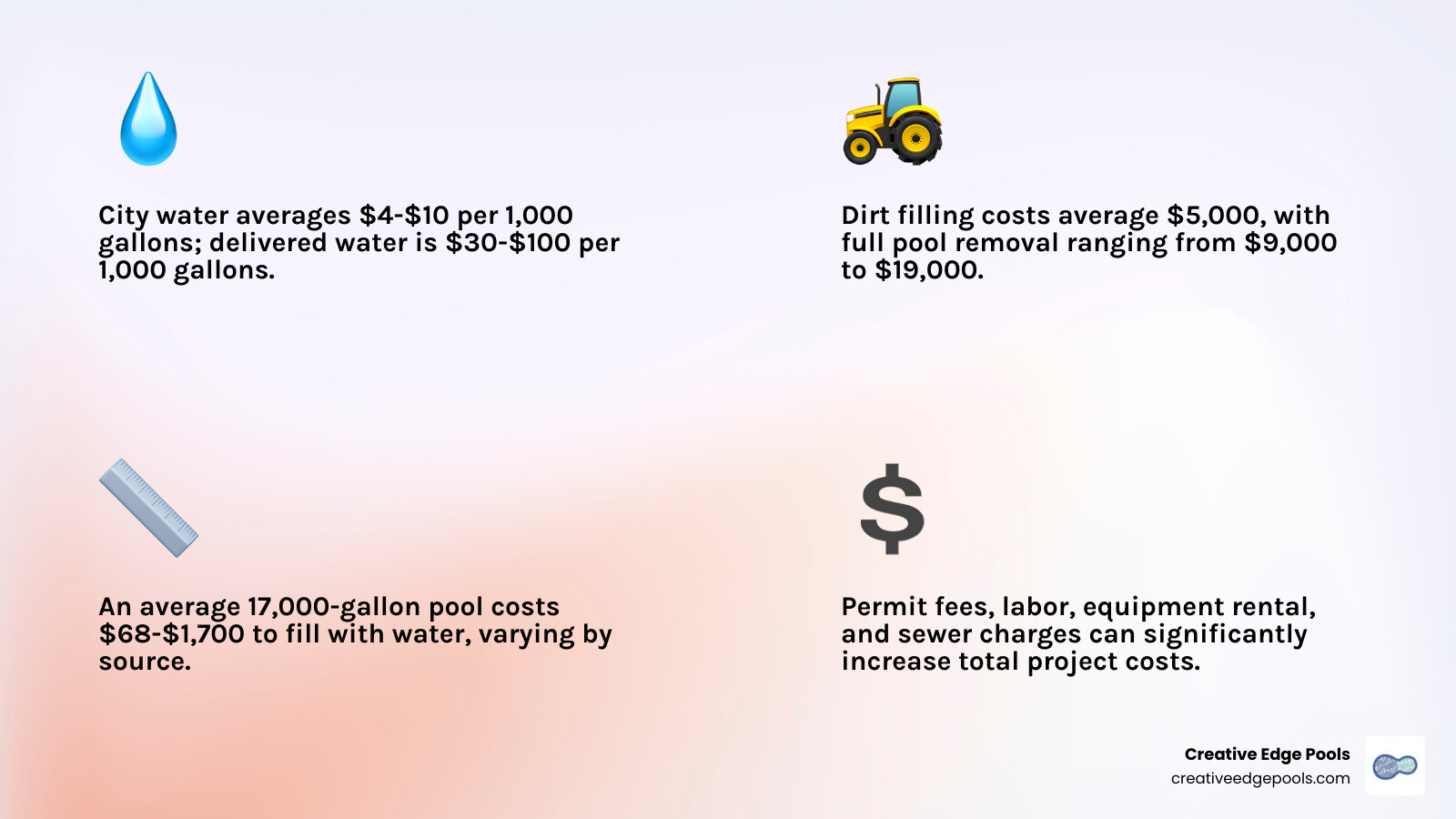
- City water: $4-$10 per 1,000 gallons
- Well water: $25-$75 (electricity costs only)
- Water delivery: $30-$100 per 1,000 gallons
- Average pool (17,000 gallons): $68-$1,700 total
Dirt Filling Costs:
- Average cost: $5,000
- Range: $2,500-$8,500
- Full removal: $9,000-$19,000
Whether you’re preparing for your first swim of the season or saying goodbye to an old pool, understanding these costs helps you budget properly. The price varies significantly based on your pool size, water source, and local rates.
Pool filling might seem straightforward, but there are important factors that can double or even triple your expected costs. From sewer charges on municipal water to permit requirements for pool removal, the details matter when planning your project.
I’m David Brabant, owner of Creative Edge Pools with over thirty years of experience in the swimming pool industry, and I’ve helped countless homeowners steer the question of how much does it cost to fill a pool for both water and dirt scenarios. My hands-on experience has shown me that proper planning prevents costly surprises down the road.
Calculating the Cost to Fill Your Pool
Understanding how much does it cost to fill a pool requires breaking down the numbers based on your specific situation. Whether you’re preparing for summer fun or saying goodbye to an old pool, getting accurate cost estimates helps you budget properly and avoid surprises.
The math isn’t complicated, but the variables can add up quickly. Let me walk you through both scenarios so you can plan accordingly.
How much does it cost to fill a pool with water?
For most homeowners, filling a pool with water costs around $180, typically ranging from $90 to $270. However, depending on your pool size and water source, you might pay anywhere from $40 to $2,000. The wide range comes down to two main factors: how many gallons your pool holds and where that water comes from.
Your pool size naturally drives the biggest cost difference. A small above-ground pool might only need 5,000 gallons, while a large inground pool can require 25,000 gallons or more. But here’s where it gets interesting – your water source can make a $1,500 difference in your final bill.
| Water Source | Cost Per 1,000 Gallons | Speed | Best For |
|---|---|---|---|
| City Water | $4-$10 | 12-24 hours | Budget-conscious fills |
| Well Water | $25-$75 (electricity only) | 12-24 hours | Well owners wanting to save money |
| Water Delivery | $30-$100 | 1-3 hours | Quick, convenient fills |
City water offers the most affordable option for most homeowners. At $4-$10 per 1,000 gallons, you’ll pay roughly $68-$170 to fill a typical 17,000-gallon pool. The water comes through your existing plumbing, so no special arrangements needed – just hook up your garden hose and wait.
One thing many homeowners don’t realize is the sewer charge that comes with city water. Your utility company assumes all water goes down the drain, so they charge you for sewage treatment even though your pool water never enters the sewer system. Many municipalities offer pool-filling credits or let you install a separate meter for outdoor water use. A quick call to your water department can save you money.
Well water costs almost nothing for the water itself – just $25-$75 in electricity to run your pump. If you’ve got a good well, this is often your cheapest option. The catch? You need to pace yourself. Fill for a few hours, then let your well recharge. Push too hard, and you risk burning out your pump or depleting your water supply.
Well water also typically needs more chemical treatment than city water to get it swim-ready, which adds to your overall cost.
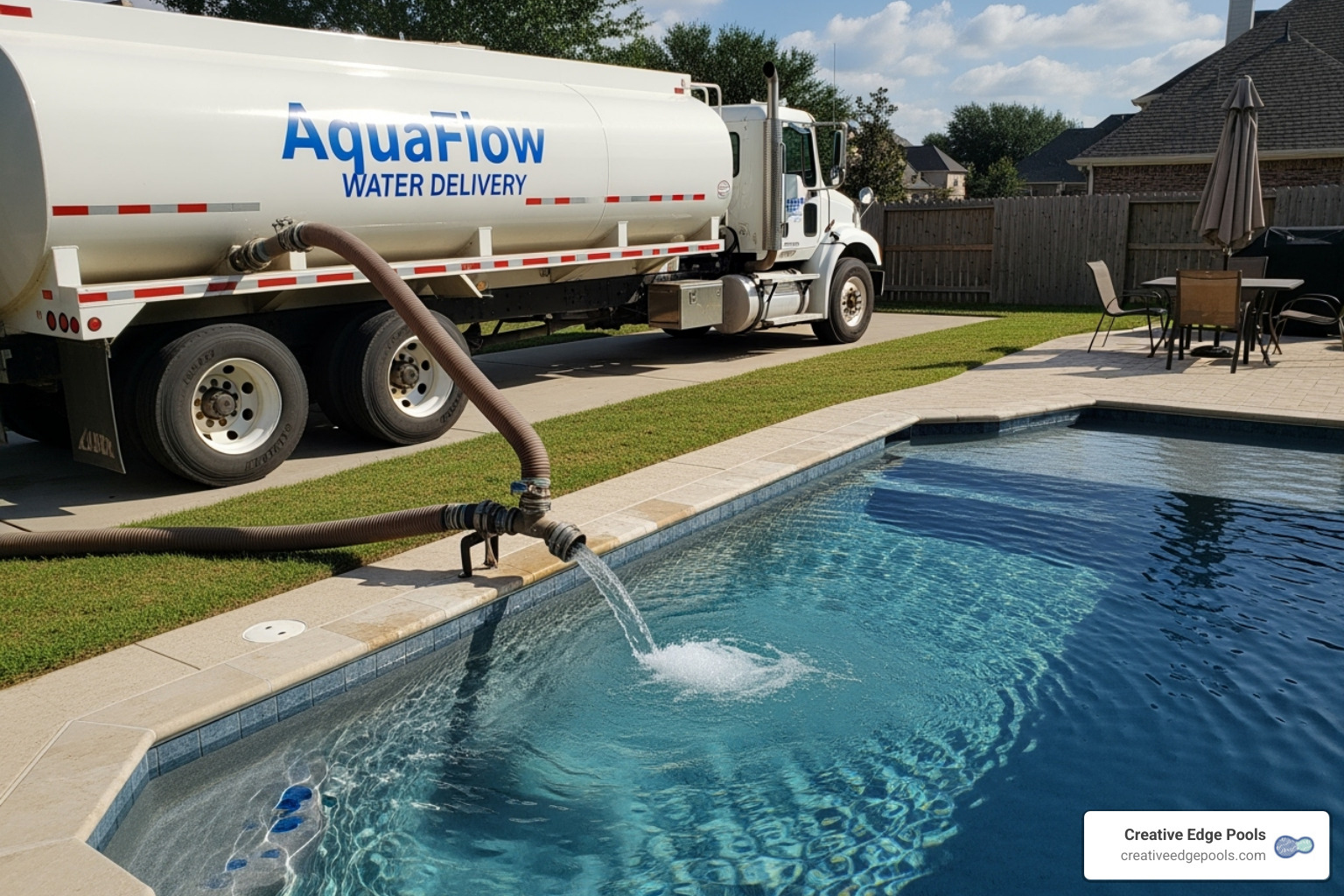
Water delivery services are the premium option, costing $30-$100 per 1,000 gallons. For that 17,000-gallon pool, you’re looking at $500-$1,700. But here’s what you get for the extra money: your pool fills in 1-3 hours instead of a full day, and many services pre-treat the water so it’s nearly swim-ready on arrival.
Calculating your pool volume is essential for accurate cost estimates. For rectangular pools, multiply length × width × average depth × 7.5. Round pools need the formula 3.14 × radius² × average depth × 7.5. If math isn’t your thing, use a pool volume calculator for quick results.
Don’t forget about ongoing water costs from evaporation and splashing. Most pools lose about an inch of water weekly during summer – that’s roughly 2,000 gallons monthly for an average pool. These partial refills typically cost $20-$500 per season, depending on your water source. A good pool cover dramatically reduces these losses and pays for itself in water savings.
How much does it cost to fill a pool with dirt?
When it’s time to reclaim your backyard space, filling a pool with dirt becomes a major excavation project. The average cost sits around $5,000, but depending on your approach, you might pay anywhere from $2,500 to $19,000.

The biggest decision you’ll face is partial versus full removal. This choice affects both your upfront costs and your property’s future use.
Partial removal costs around $5,000 and involves breaking up the top portion of your pool walls, punching drainage holes in the bottom, and filling the space with gravel and dirt. It’s cheaper upfront, but here’s the important catch – your land becomes “non-buildable.” You can’t construct permanent structures over the old pool area, and you must disclose this to future buyers.
Full removal runs $9,000-$19,000 but completely eliminates the pool structure. Every piece of concrete gets broken up and hauled away, then the area gets filled with engineered materials and properly compacted. The result? Buildable land with no restrictions on future use.
For detailed information about your options, check out our guides on Cost to Fill In an Inground Pool and Pool Demolition Services.
Fill materials vary in cost and purpose. Gravel for drainage runs $5-$8 per cubic yard, while structural fill dirt costs $8-$12 per cubic yard. This specialized dirt compacts properly to prevent future settling and sinkholes. Topsoil for the final layer ranges from $12-$55 per cubic yard, depending on quality.
Labor represents the largest expense, typically running $2,000-$16,400 depending on pool size, accessibility, and local rates. This covers demolition, excavation, material transport, and proper compaction – all critical for preventing future problems.
Key Factors Influencing Your Total Cost
Several factors beyond basic water source or removal method can significantly impact your final bill.
Pool size and type affect both water volume and demolition complexity. A small above-ground pool removal costs just $300-$800, while large inground pools require major excavation. Fiberglass pools often need full removal, while concrete pools might allow partial fill-ins.
Geographic location creates major cost variations. Water rates differ dramatically between regions, and labor costs in urban areas typically exceed rural rates. Here in Eastern Massachusetts and Southern New Hampshire, we understand local pricing and regulations that affect your project costs.
Permit fees for pool removal typically run $50-$500, but requirements vary by municipality. Some areas require engineering approval for fill projects, adding another $500 to your budget.
Additional demolition work adds to removal costs. Pool deck removal runs $500-$1,700, while pool enclosure removal adds $800-$2,000. Equipment rental for DIY projects can cost $2,000 just for a few days of excavator and truck rental.
Landscaping the area after fill-in ranges from simple grass seeding ($50-$100) to elaborate garden installations ($4-$12 per square foot). Plan for these finishing costs in your budget.
DIY vs. Hiring a Professional
The DIY versus professional decision varies dramatically between water and dirt filling projects.
For water filling, DIY makes perfect sense for most homeowners. Filling with a hose costs just $4-$10 per 1,000 gallons and requires no special skills – just patience for the 12-24 hour process. Water delivery is the professional option, costing more but saving time and often providing pre-treated water.
For dirt filling, the stakes change completely. While DIY can save about a third of the total cost, the risks are substantial. Renting equipment like excavators and trucks runs up to $2,000 for just a few days. More importantly, improper demolition and backfilling can create serious problems.
DIY risks include safety hazards from heavy machinery, improper drainage leading to standing water or flooding, inadequate compaction causing future sinkholes, and permit compliance issues that could result in fines or legal problems. The time commitment also stretches from the 2-7 days professionals need to potentially weeks for weekend warriors.
Professional benefits include proper equipment and expertise, safety protocols that protect your property and family, time savings that get your yard back quickly, and peace of mind knowing the job meets all local codes. Our Excavation Services ensure your pool removal is done right the first time.
While hiring professionals costs more upfront, the long-term benefits of proper pool removal typically outweigh the potential savings of a risky DIY attempt. After three decades in this business, I’ve seen too many DIY pool fills that created expensive problems down the road.
Is Filling Your Pool the Right Move?
Whether you’re getting ready for a summer of fun or reclaiming your backyard, understanding how much does it cost to fill a pool is just the beginning. The bigger question is whether filling your pool—with water or dirt—makes sense for your situation.
Making the Decision: Water or Dirt
If you’re considering filling your pool with water, you’re likely excited about swim season. The costs we’ve covered range from $40 to $2,000 depending on your pool size and water source. It’s a straightforward investment in summer fun and family memories.
But if you’re thinking about filling your pool with dirt, you’re facing a much bigger decision. This choice is often driven by frustration with endless maintenance, safety concerns, or simply wanting your backyard space back. We’ve helped many families in Eastern Massachusetts and Southern New Hampshire make this transition, and it’s rarely a decision made lightly.
The Reality of Pool Ownership
Let’s be honest—pools can be a lot of work. Between chemical balancing, pump maintenance, and the annual ritual of opening and closing, many homeowners find themselves spending more time maintaining their pool than enjoying it. Monthly maintenance costs alone can run $80 to $350, not counting repairs or heating bills.
On the flip side, a well-maintained pool provides endless entertainment and can be a great gathering spot for family and friends. It’s also a feature that many buyers actively seek when house hunting, especially in warmer climates.
What Happens After You Fill In Your Pool
The change can be remarkable. Where you once had a concrete hole requiring constant attention, you’ll have open space ready for whatever your family needs. Maybe it’s a vegetable garden, a play area for the kids, or simply more lawn to mow (though that might not sound exciting, it’s certainly easier than pool maintenance!).
However, this change comes with important considerations. If you chose partial removal, the land becomes non-buildable, meaning you can’t construct permanent structures over it. You’ll also need to disclose this to future buyers. Full removal eliminates these restrictions but costs significantly more.
The Importance of Professional Expertise
For complex jobs like pool removal, professional expertise ensures the project is done safely and correctly, preventing future issues like sinkholes or drainage problems. We’ve seen too many DIY attempts that seemed successful initially, only to create expensive problems years later when the ground settles improperly or drainage fails.
Improper compaction can turn your former pool area into a soggy mess or, worse, a sinkhole. These issues are not just expensive to fix—they can be dangerous and may affect your home’s foundation or neighboring properties.
Getting Professional Guidance
Creative Edge Pools provides comprehensive services to guide you through the process. Our three decades of experience have taught us that every situation is unique. Some pools are perfect candidates for partial fill-in, while others require complete removal. Factors like soil conditions, local regulations, and your future plans all play a role in determining the best approach.
If you’re considering removing your pool, explore our Swimming Pool Removal services to get a professional assessment. We’ll help you understand exactly what’s involved and provide a clear picture of costs and timelines.
The decision to fill in a pool is deeply personal, balancing practical concerns with lifestyle preferences. There’s no wrong choice—only what’s right for your family and your budget. Whatever you decide, make sure you have all the facts and professional guidance to ensure the project is done correctly.
Follow Creative Edge Pools on Facebook for more tips and updates.
