How Much Does It Cost for a Pool: 2025 Top Value Guide
Understanding Pool Investment: What You Need to Know
How much does it cost for a pool in 2025? The national average for an in-ground pool installation ranges from $44,499 to $87,349, with most homeowners paying around $65,909. Costs vary significantly based on type, size, and location.
| Pool Type | Average Cost Range | Yearly Maintenance |
|---|---|---|
| Vinyl Liner | $25,000 – $65,000 | $1,300+ |
| Fiberglass | $30,000 – $85,000 | $400+ |
| Concrete/Gunite | $50,000 – $120,000 | $2,700 – $4,000 |
| Above-Ground | $1,800 – $5,000 | $500 – $800 |
Dreaming of changing your backyard into a private oasis? You’re not alone. With over 200 sunny days per year in the Northeast and the growing trend toward “staycations,” a swimming pool represents more than just a luxury—it’s an investment in your home and lifestyle.
Building a pool is comparable to constructing a small home addition in terms of complexity and investment. The cost depends on numerous factors including:
- Pool size and depth: $50-$125 per square foot for in-ground pools
- Material choice: Concrete, fiberglass, or vinyl liner
- Site conditions: Level ground vs. sloped or rocky terrain
- Regional labor rates: Higher in Northeast vs. Southern states
- Add-on features: Heaters, lighting, waterfalls, automation
I’m David Brabant, owner of Creative Edge Pools with over thirty years in the swimming pool industry, and I’ve helped hundreds of homeowners understand how much does it cost for a pool while navigating the complex decisions that affect both upfront and long-term expenses.
How Much Does It Cost for a Pool? 2025 Snapshot
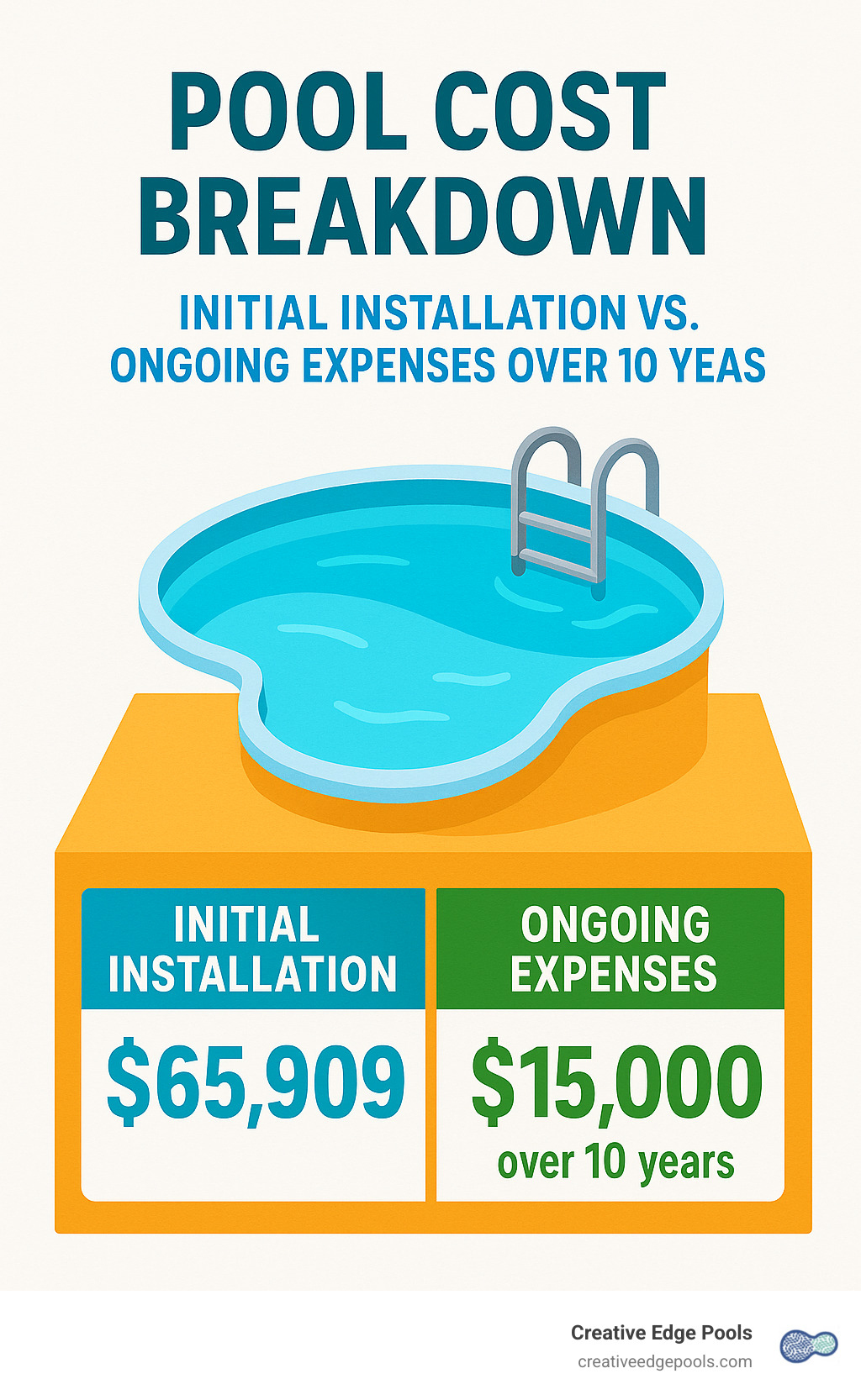
When homeowners sit down with me and ask “how much does it cost for a pool,” I can see them bracing themselves for the answer. The truth is, the national benchmark sits around $65,909 for a standard in-ground pool—but that’s just the middle of a pretty wide range. In 2025, we’re seeing costs continue to reflect both materials inflation and the booming demand for backyard retreats (something that took off during the pandemic and hasn’t slowed down).
But here’s the good news: pools aren’t just expenses—they’re investments in your property. According to a 2023 report from the National Association of Realtors®, in-ground pools deliver a 56% ROI. That means you’ll get back more than half of what you spend when you eventually sell your home. Not bad for something that also gives your family years of enjoyment!
Don’t forget to budget for permit fees, typically ranging from $500 to $2,000 depending on your town. These aren’t just bureaucratic hoops—they ensure your pool meets local safety requirements and give you peace of mind that everything’s been done by the book.
National Averages: How much does it cost for a pool today?
Right now, most homeowners across the country are spending between $44,499 and $87,349 for an in-ground pool installation, with the sweet spot hovering around $65,909. This range covers standard installations without all the bells and whistles.
For gunite pools specifically (what we specialize in at Creative Edge Pools), prices typically start around $75,000 for a basic installation. As Maria from Andover told me recently: “I expected sticker shock, but once I understood the craftsmanship that goes into a custom gunite pool, the investment made perfect sense.”
What affects this range the most? Pool dimensions make a big difference—most families choose between 12′ x 24′ and 16′ x 32′. Then there’s equipment (basic vs. premium packages), interior finishes (standard plaster vs. upgraded pebble), and decking options (essential concrete vs. expansive natural stone).
Regional Variations: How much does it cost for a pool in New England vs. Sunbelt?
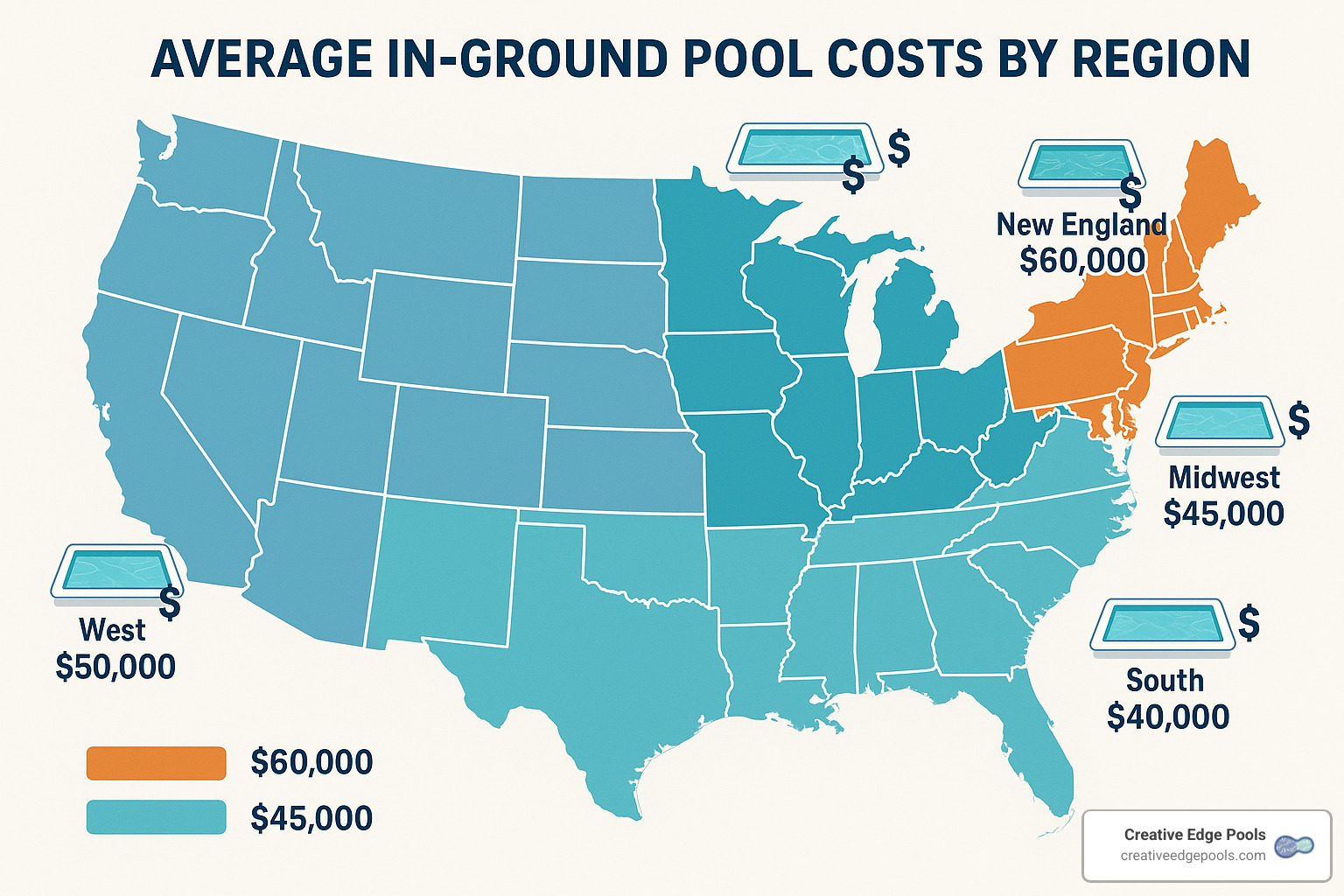
Location plays a huge role in determining how much does it cost for a pool. Here in New England, particularly Massachusetts and New Hampshire where we build, costs typically run 15-25% higher than national averages. There are good reasons for this:
Our labor rates are higher in the Northeast, our construction season is shorter (we can’t dig through frozen ground!), and we need more complex site preparations to account for those deep frost lines. We also face stricter local building codes, which protect you but add to the bottom line.
To put it in perspective, the same 16′ x 32′ gunite pool that might cost $75,000 in Phoenix or Tampa could easily run $90,000-$105,000 in the Boston suburbs. It’s not just about labor markets—our New England pools need specific engineering to handle freeze-thaw cycles and often include features like automatic covers that aren’t as necessary in warmer climates.
As we explain in our guide on How Much Do Inground Pools Cost in Massachusetts, building a pool in our region comes with unique considerations. But there’s a silver lining—because our swimming season is shorter, many of our clients opt for features that extend their enjoyment, like heating systems and spa additions, creating truly spectacular backyard retreats that stand up to our four-season climate.
Price Drivers You Can’t Ignore
When dreaming about your new backyard oasis, it’s easy to focus on the fun parts—sparkling water, poolside lounging, and summer memories. But understanding what drives costs can save you from surprise expenses that might make your wallet wince. Let’s explore the factors that significantly impact how much does it cost for a pool.
Excavation, Soil & Access Issues
Your property’s condition plays a starring role in your pool’s price tag, with excavation typically accounting for 25-50% of total installation costs.
Rocky Ground is practically a New England tradition—and not the delicious ice cream kind! One of our Bedford clients finded ledge rock during excavation, adding $6,000 to their project for specialized equipment and extra labor hours. As we often tell clients, “What’s under your lawn matters as much as what’s going on top of it.”
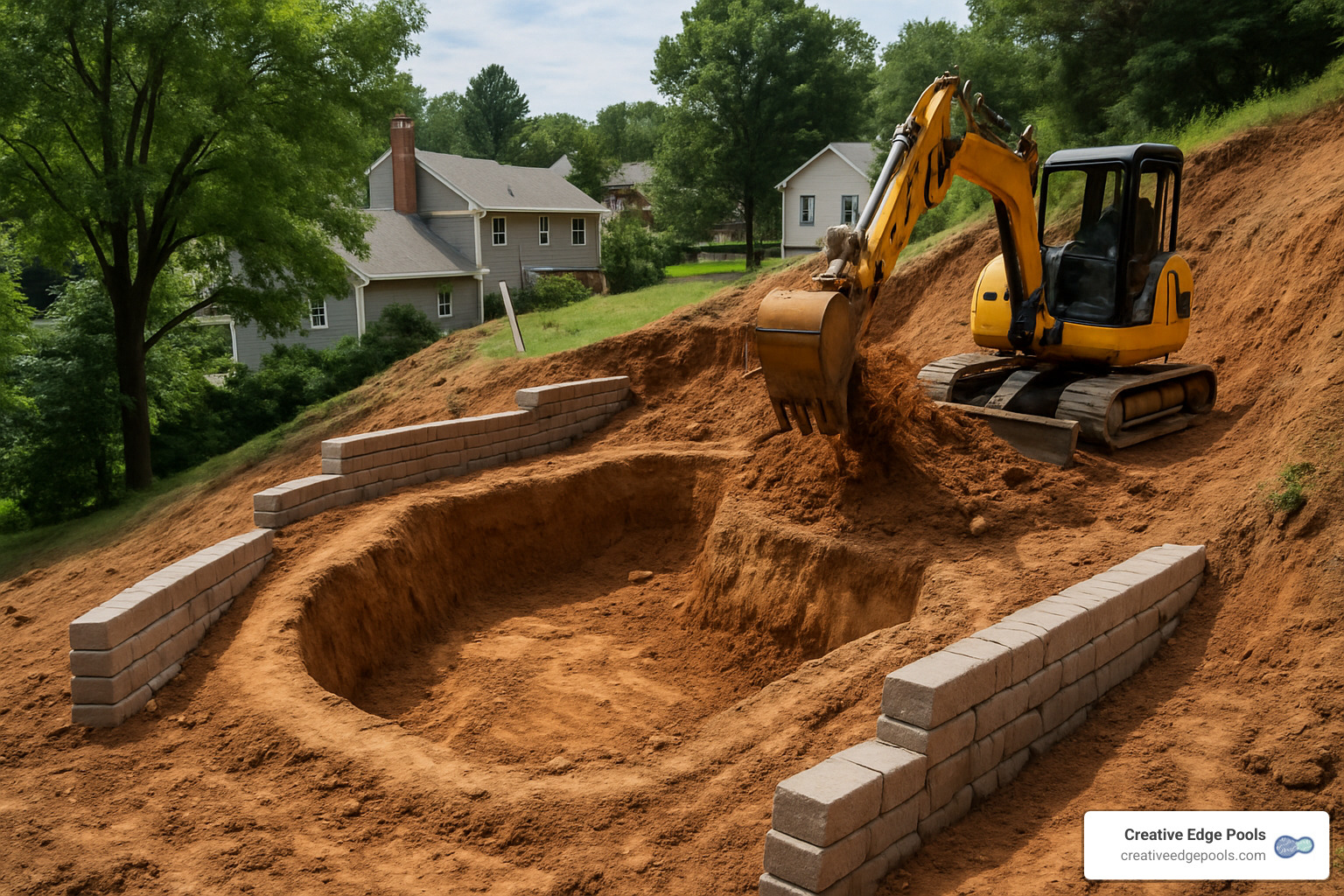
Slope Considerations can transform a standard project into a complex engineering feat. Building on a sloped yard typically adds $6,000-$12,000 to your budget for retaining walls, sophisticated drainage solutions, and extra soil removal. But the silver lining? These challenging sites often result in the most dramatic, multi-level pool designs that become neighborhood showstoppers.
Access Limitations might force your contractor to bring in specialized equipment. As one of our veteran excavation pros puts it: “Moving materials for a gunite pool is like delivering a grand piano to a high-rise—the tighter the space, the more specialized the equipment needed.” Narrow gates, mature trees, or overhead wires can all complicate access and increase costs.
Design Decisions: Size, Shape & Depth
The dimensions and configuration of your pool dramatically impact both material and labor costs—sometimes in surprising ways.
Rectangle vs. Freeform designs create a clear cost difference, with simple rectangular pools typically costing 15-20% less than custom freeform shapes. While those neat curves look beautiful, each one adds complexity to excavation, framing, and finishing. One of our Andover clients saved nearly $10,000 by opting for a classic rectangle with upscale finishes rather than a complex shape with basic materials.
Lap Pools offer a smart solution for narrow properties or fitness enthusiasts. These long, narrow designs (typically 40′ x 10′) optimize space while reducing overall square footage, potentially saving 10-15% compared to traditional shapes. Plus, they create a distinctive architectural element in your landscape.
Depth Considerations often surprise homeowners. Contrary to what many expect, adding a deep end only increases initial construction costs by $3,000-$5,000 compared to a uniform shallow pool. The real cost difference comes later in higher heating and chemical expenses over the pool’s lifetime. For families with young children, a shallow play pool with a tanning ledge might make more practical and financial sense.
Local Rules: Permits, Fencing & Safety Upgrades
Regulatory requirements aren’t the most exciting part of pool planning, but they’re non-negotiable and need to be budgeted for.
Permit Fees in Massachusetts and New Hampshire typically range from $500-$1,500 depending on your municipality. While tempting to view these as bureaucratic problems, they actually ensure your pool meets safety standards and protects your property value.
Fencing Requirements are mandated by safety codes and add approximately $19 per linear foot, with gates averaging $300 each. Most local regulations require minimum 48″ height, self-closing and self-latching gates, and no gaps larger than 4″. Beyond being legally required, proper fencing provides peace of mind, especially for families with young children or pets.
Electrical Upgrades including dedicated circuits and GFCI protection are mandatory safety features that typically add $1,500-$3,000 to your project. These systems protect against electrical shocks around water—something no pool owner should compromise on.
Before signing with any contractor, verify their credentials through your state consumer protection agency. They can help confirm licensing, bonding, and insurance requirements for pool builders in your area. As one of our clients wisely noted, “The cheapest quote often becomes the most expensive mistake.”
Pool Types Head-to-Head: Concrete, Fiberglass, Vinyl & Above-Ground
When it comes to choosing a pool, the material makes all the difference—both for your wallet today and your maintenance schedule tomorrow. Let’s break down your options:
| Feature | Concrete/Gunite | Fiberglass | Vinyl Liner | Above-Ground |
|---|---|---|---|---|
| Initial Cost | $50,000-$120,000 | $30,000-$85,000 | $25,000-$65,000 | $1,800-$5,000 |
| Installation Time | 8-12 weeks | 3-6 weeks | 4-8 weeks | 1-3 days |
| Lifespan | 50+ years | 25-30 years | 20+ years | 7-15 years |
| Customization | Unlimited | Limited to molds | Moderate | Minimal |
| Resale Value | Highest | Good | Moderate | Minimal |
| Annual Maintenance | $2,700-$4,000 | $400-$1,500 | $1,300+ | $500-$800 |
Concrete / Gunite
Think of gunite pools as the custom-custom suit of swimming pools—made specifically for you and built to last generations.
How much does it cost for a pool made of gunite? You’re looking at $50,000-$120,000+ for standard installations, but what you get is truly remarkable. These pools offer unlimited design possibilities—any shape, any depth, any feature you can imagine. Want a swim-up bar with underwater bar stools? Done. Craving a natural rock waterfall that looks like it’s been there forever? No problem.
The real magic of gunite is longevity. With proper care, these pools last 50-100 years, making them true family heirlooms. As one of our Lexington clients told us recently, “We chose gunite because we wanted something that would last generations. Twenty years later, with just one resurfacing, our pool looks and functions like new.”
For more details on these luxury options, check out our guide on How Much Does a Gunite Pool Cost?.
Fiberglass
Fiberglass pools are like the “move-in ready” homes of the pool world—factory-finished, quick to install, and ready for swimming in weeks, not months.
With costs ranging from $30,000-$85,000, these pools strike a nice balance between quality and convenience. The factory-molded shell arrives at your home in one piece (which can be quite a spectacle for the neighbors!). The non-porous surface naturally resists algae, requiring fewer chemicals and less scrubbing.
The main trade-off? Limited design options. As one of our suppliers likes to say, “Moving a fiberglass pool is like delivering a grand piano to a high-rise—it requires careful planning and sometimes specialized equipment.” This transportation challenge means fiberglass pools come in predetermined shapes and sizes that must fit down your street and into your yard intact.
Vinyl-Liner
For budget-conscious homeowners wanting an in-ground experience, vinyl-liner pools offer the gentlest entry point to pool ownership.
Starting at $25,000 and ranging to about $65,000, these pools feature a custom-fitted vinyl liner that gives them a smooth, non-abrasive surface that’s especially comfortable on bare feet. They’re also quite versatile in terms of shape and can be installed relatively quickly compared to gunite.
The catch? That beautiful liner needs replacement every 5-9 years at approximately $4,500 each time. It’s like getting new carpet for your pool—an expected maintenance cost that should factor into your long-term budget calculations. Despite this recurring expense, many families find vinyl-liner pools to be the perfect compromise between affordability and durability.
Above-Ground & Semi-Inground
When someone asks “how much does it cost for a pool” and gasps at in-ground prices, I often suggest considering above-ground options. At $1,800-$5,000, they’re the entry-level option that still delivers the core swimming experience.
Above-ground pools offer remarkable value—quick installation (often just 1-3 days), no major excavation, and some even allow for DIY setup if you’re handy. They typically last 7-15 years, making them perfect for families with young children who might outgrow the pool phase.
Semi-inground pools ($10,000-$25,000) offer a middle ground—partially buried in the earth, they look more permanent than fully above-ground models while avoiding the full expense of traditional in-ground construction. They’re particularly great for sloped yards where one side can be buried while the other remains exposed.
While these options won’t add significant property value like their in-ground cousins, they deliver summers of splashing fun without the premium price tag.
Beyond the Shell: Add-Ons, Features & Hidden Costs
The base price of your pool is just the beginning. Features and accessories can significantly improve your experience—and your budget.
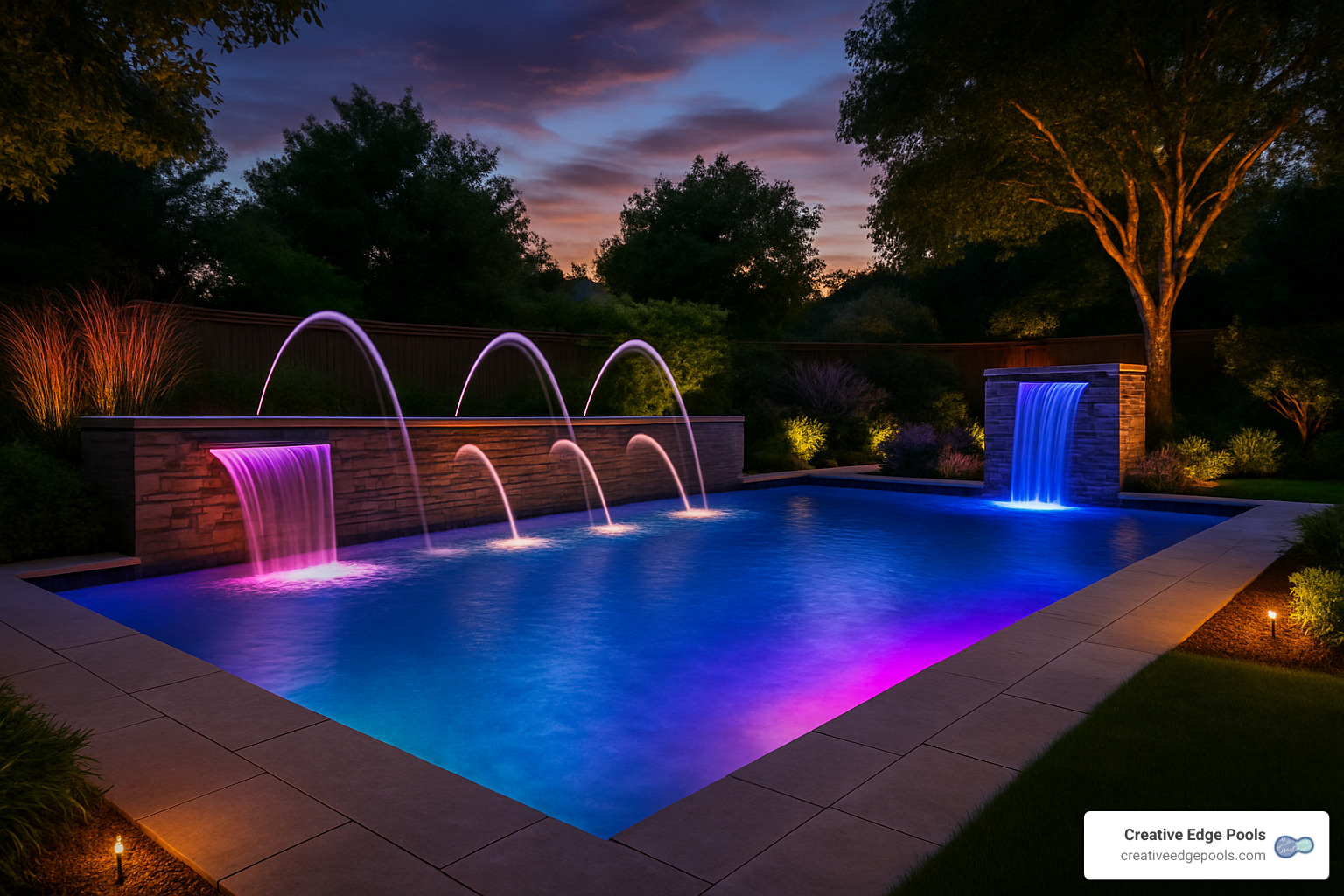
Must-Have Features & Their Price Tags
When clients ask me “how much does it cost for a pool,” I always explain that the shell is just the starting point. The features you add can transform your swimming experience from basic to resort-quality.
Let’s talk heating options first. A standard gas heater runs between $2,500-$3,800 and offers quick heating when needed. For the energy-conscious homeowner, a heat pump at $2,800-$5,500 provides efficient warming in our New England climate. Solar heating ($3,000-$7,000) offers the greenest option, though it works best during our summer months.
Water features add both visual appeal and soothing sounds to your backyard retreat. A basic waterfall creates that luxurious resort feel for about $5,000-$7,500, while playful deck jets ($400-$800 each) and bubblers ($500-$1,000 each) add movement and interest to still water.
The convenience features are what truly make pool ownership enjoyable rather than a chore. A salt chlorine generator ($1,000-$2,500) gives you softer water and reduces weekly chemical handling. Pool automation systems ($2,000-$6,000) let you control everything from your smartphone, while an automatic cover ($10,000-$20,000) adds safety, reduces evaporation, and keeps your pool cleaner.
Design elements like a tanning ledge ($2,000-$10,000) create a perfect spot for loungers and young children. A beach entry ($5,000-$15,000) eliminates steps altogether with a gentle slope into the water, while a spa spillover ($10,000-$20,000) combines relaxation with beautiful water movement.
I remember Sarah from Andover who took a phased approach: “We started with just the pool and essential equipment, then added the spa and automation the following year. Breaking it into phases made the investment more manageable.” This strategy works beautifully for many families who want to spread the cost over time.
Hidden & Surprise Expenses
After building hundreds of pools, I’ve found several costs often catch homeowners by surprise. Being prepared for these can prevent budget stress later.
That beautiful new pool? It needs water—lots of it. Initial filling costs between $2,500-$8,500 depending on your pool size and local water rates. Many clients don’t realize that’s not included in the construction cost.
Your home’s electrical system might need upgrading too. Most residential panels need additional capacity to handle pool equipment, adding $1,200-$3,000 to your project. One client called me in a panic when her electrician delivered this news midway through construction.
Don’t forget to call your insurance agent. Homeowners insurance typically increases by $50-$100 annually with a pool addition, reflecting the additional liability and property value.
The construction process is inevitably disruptive to your yard. Landscape restoration after equipment has trampled your lawn can add $2,000-$5,000 depending on how much repair is needed. And all that excavated soil has to go somewhere—removal costs run $1,500-$3,000 if it can’t be repurposed on your property.
As I often tell homeowners during our initial consultations, “The pool itself is like the foundation of a house—essential but incomplete without the surrounding systems that make it functional and beautiful.”
Understanding these additional costs upfront helps you budget realistically for the complete project. When someone asks “how much does it cost for a pool,” the honest answer includes these essential add-ons that transform a hole filled with water into your family’s backyard paradise.
Owning the Water: Annual & Long-Term Expenses
The true cost of pool ownership extends well beyond installation. Understanding ongoing expenses helps you budget appropriately for years of enjoyment.
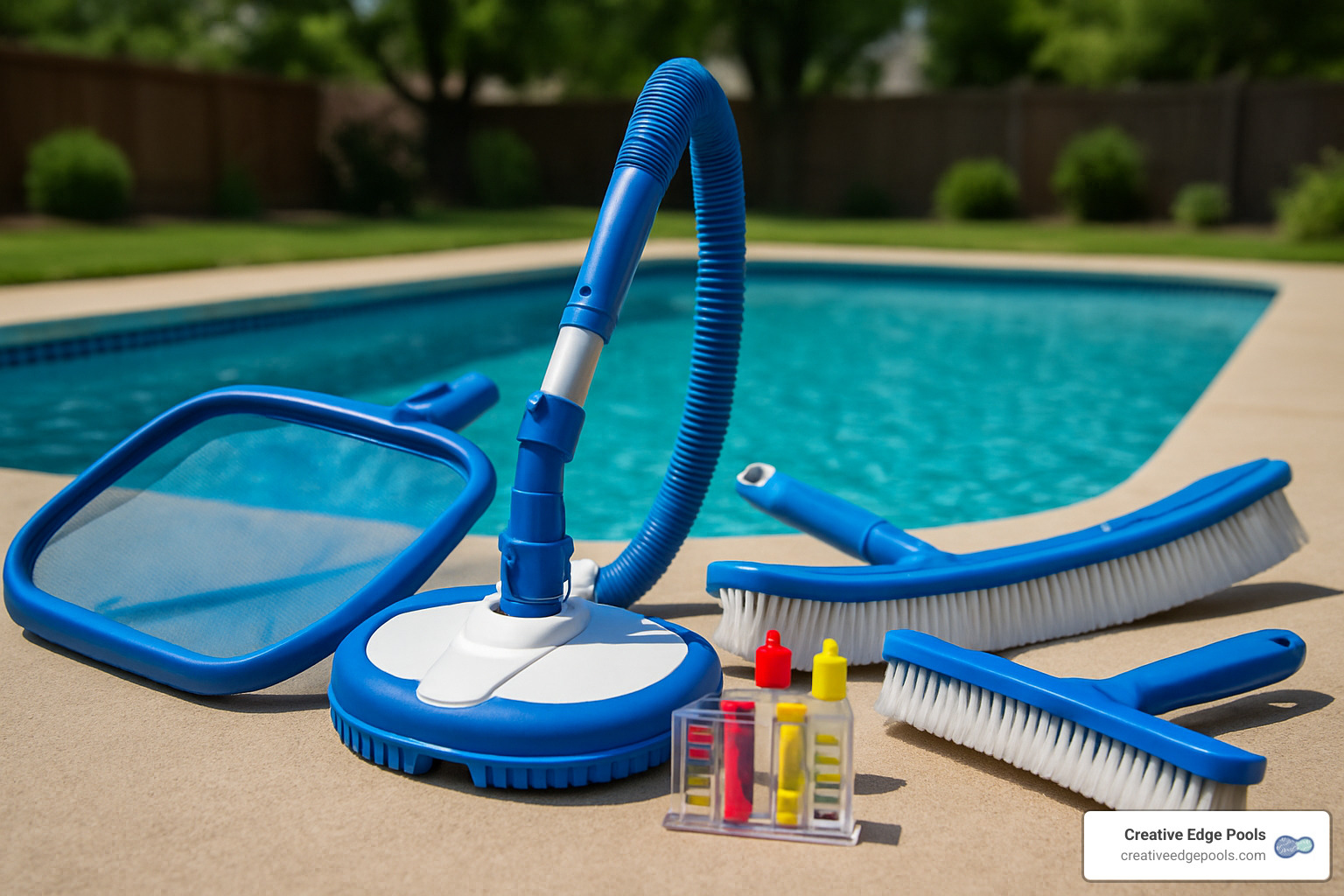
Yearly Maintenance by Pool Type
When clients ask me “how much does it cost for a pool” each year to maintain, I always explain that it varies dramatically depending on what type of pool you’ve chosen.
Concrete and gunite pools are the Cadillacs of pool construction, but they do require the most TLC annually. You’re looking at about $2,700-$4,000 per year for proper maintenance. This includes roughly $700 in chemicals, $400 for electricity to run pumps and filters, occasional acid washing (about $400 every few years), and if you opt for professional cleaning, that’s another $500 annually.
Fiberglass pool owners enjoy significantly lower maintenance costs, typically between $400-$1,500 per year. The non-porous surface needs fewer chemicals (under $200 annually) and uses less electricity (around $200). One of my North Andover clients switched from gunite to fiberglass specifically for this reason, telling me, “I wanted to spend more time swimming and less time maintaining!”
Vinyl liner pools fall somewhere in between at $1,300+ annually. While regular chemical and electricity costs run about $700 combined, the big consideration is planning for that liner replacement every 5-9 years at approximately $4,500 each time.
The DIY versus professional maintenance decision also impacts your wallet. Doing it yourself during swimming season typically runs about $250 monthly, while professional service averages $500 monthly. As one of our Newburyport clients shared: “I tried maintaining my pool myself for the first year. I switched to professional service after realizing the time commitment and learning curve involved. For me, the peace of mind was worth the additional cost.”
Major Repairs & Replacement Numbers
Beyond day-to-day upkeep, every pool owner should budget for eventual major expenses. Think of these as the “roof replacement” equivalent for your pool:
Your equipment will need replacing periodically. Pumps typically last 8-12 years and cost $800-$1,600 to replace. Filters need swapping every 5-10 years at $300-$1,800 depending on type. Heaters have a 7-10 year lifespan and run $1,800-$3,500 for replacement.
Surface treatments represent the most significant long-term expense. For gunite pools, resurfacing costs between $10,000-$20,000 every 10-15 years. Our detailed guide on the Average Cost to Resurface a Pool breaks down this inevitable expense. Vinyl liner pools need new liners every 5-9 years at around $4,500, while fiberglass pools might need a gel coat refresh after 15-20 years, costing $5,000-$10,000.
Here in New England, we also need to factor in opening and closing services each year. These seasonal transitions typically add $150-$300 each in spring and fall. As I tell my Massachusetts clients, proper winterization isn’t optional with our freezing temperatures—it’s essential protection for your investment.
When we discuss how much does it cost for a pool with potential clients, I always emphasize looking at the full lifecycle. A family in Andover recently told me, “We appreciated that Creative Edge explained not just the installation costs, but helped us understand what we’d be spending over the next decade. No surprises means no regrets!”
Smart Ways to Save (Without Skimping on Fun)
Building a dream pool doesn’t have to break the bank. Strategic decisions can significantly reduce both upfront and long-term costs.
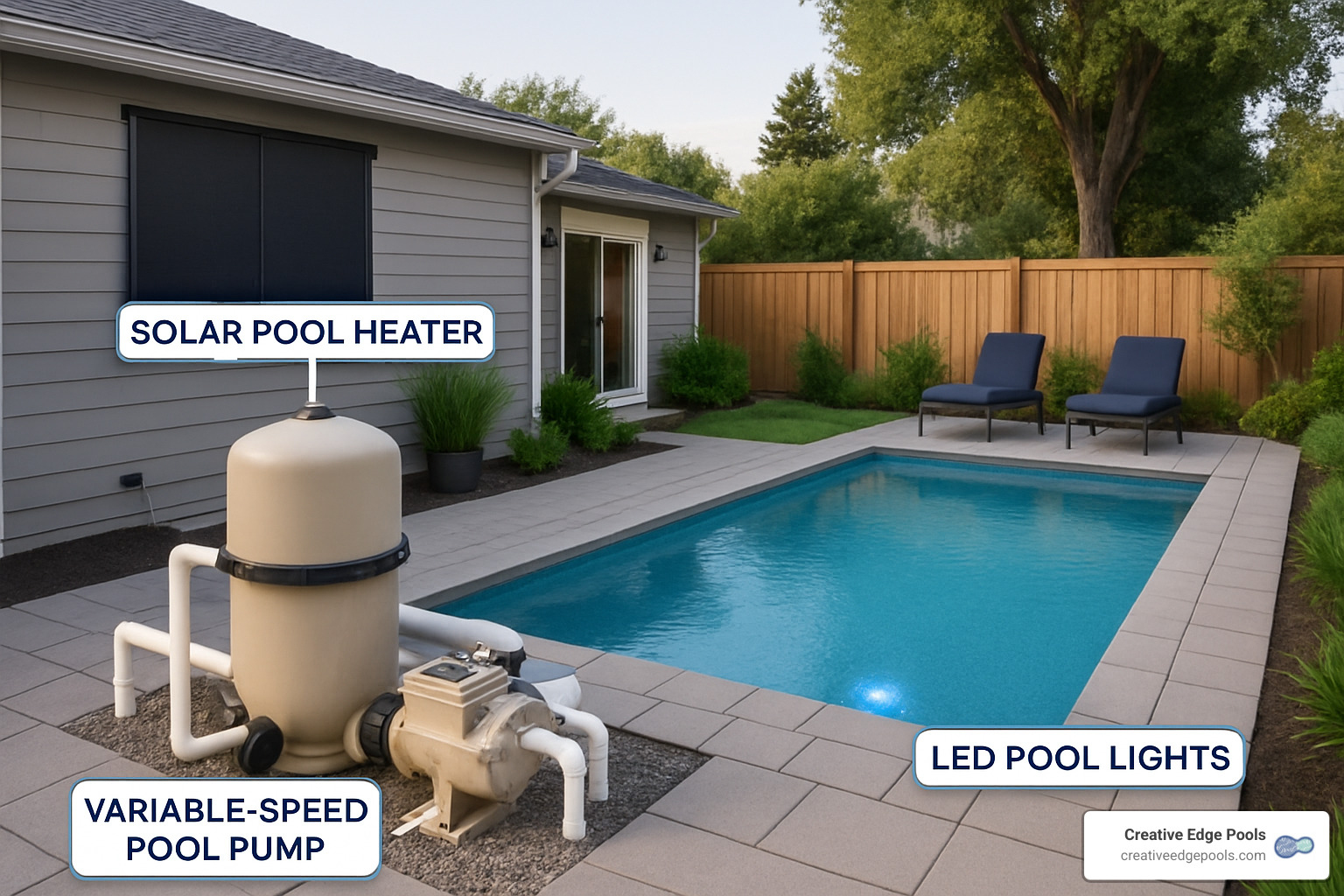
When I talk to clients about how much does it cost for a pool, I always share some insider tips for stretching their budget. One of my favorite success stories comes from a Winchester family who saved nearly $15,000 without sacrificing their pool dreams.
They opted for a simple rectangular design instead of a complex freeform shape, instantly cutting costs by about 15-20%. The clean lines still look stunning in their yard, and the simpler excavation meant fewer labor hours and materials.
Another smart approach is phasing your project over time. Start with the essential pool structure and basic equipment, then add luxury features like waterfalls, spas, or advanced automation systems in subsequent seasons. This strategy helps manage cash flow while still achieving your ultimate vision.
When it comes to equipment, don’t skimp on efficiency. Variable-speed pumps cost more upfront (about $400-800 more than single-speed options), but they can slash your electricity costs by up to 80%. One Andover homeowner told me, “My utility bills dropped so dramatically that the pump paid for itself in just two summers.”
Size optimization is another practical consideration. A 12′ x 24′ pool provides plenty of swimming space for most families while requiring less concrete, water, and chemicals than larger dimensions. As one client put it, “We realized we didn’t need an Olympic-sized pool—just enough room for the kids to play and adults to cool off.”
DIY vs. Hiring a Pro – Where It Makes Sense
Not everything about pool ownership requires professional help. Knowing when to call the experts and when to roll up your sleeves can lead to significant savings.
Always leave the technical work to professionals—this includes permitting, design, excavation, construction, and electrical/plumbing systems. These aspects require specialized knowledge and equipment, and mistakes can be costly or dangerous.
However, many homeowners successfully handle routine maintenance and water testing themselves. A Tewksbury client shared, “I save about $1,000 annually by managing weekly maintenance. The pool store tests my water for free, recommends the right chemicals, and I’ve actually come to enjoy the ritual of caring for our pool.”
Basic landscaping around the pool area is another DIY-friendly project. Many of our clients plant shrubs, install simple lighting, or even tackle basic paver installation (if they have some experience with similar projects).
Some adventurous homeowners even learn to handle seasonal opening and closing procedures after receiving proper training. Just remember—when in doubt, it’s usually more economical to hire a professional than to fix a costly mistake.
Financing Options & Tax Considerations
Several financing approaches can make the answer to “how much does it cost for a pool” feel more manageable for your budget.
Home equity options typically offer the most favorable terms. A Home Equity Line of Credit (HELOC) provides flexibility with interest-only payments during the draw period, while a traditional Home Equity Loan offers the security of fixed rates and predictable monthly payments. For some homeowners, a cash-out refinance makes sense, especially if current interest rates are lower than your existing mortgage.
Many pool builders (including us at Creative Edge) offer specialized financing options through partnerships with lenders who understand the pool industry. These loans often feature streamlined approval processes, though interest rates may be slightly higher than equity-based options.
Don’t overlook potential tax advantages. If your doctor prescribes pool therapy for a specific medical condition, you might qualify for a partial tax deduction—up to $12,000 in some cases. Always consult with a tax professional to confirm eligibility.
While pools do increase property taxes, the impact is generally proportional to the value added to your home. And according to the National Association of Realtors, in-ground pools recoup about 56% of their cost in home value—making them both a lifestyle improvement and a partial investment.
One Massachusetts client summed it up perfectly: “We financed our pool through a HELOC and structured the payments to fit our monthly budget. The joy our family gets from that pool every summer? Absolutely priceless.”
Frequently Asked Questions About How Much It Costs for a Pool
Does a pool always raise my homeowners insurance and taxes?
Yes, but the increase is typically more manageable than most homeowners fear. When you add that beautiful backyard oasis, your homeowners insurance will likely bump up by about $50-$100 annually. Insurance companies classify pools as an “attractive nuisance” (their words, not mine!), which essentially means your property now has something that might attract visitors—invited or otherwise—and potentially increase liability.
Most of our clients at Creative Edge Pools find their insurance agents recommend boosting liability coverage to at least $500,000, or even adding an umbrella policy for extra protection and peace of mind.
As for property taxes, yes, they’ll increase, but proportionally to the value your pool adds to your home. In Massachusetts communities, expect a modest bump that typically reflects about 5-7% of your home’s increased value. As one of our Winchester clients recently told me, “The tax increase was barely noticeable compared to the joy our family gets from the pool every summer.”
What does it cost to open and close a pool each season?
Here in New England, where we experience distinct seasons, professional opening services typically run $150-$300 each spring, while closing/winterizing averages $200-$300 each fall.
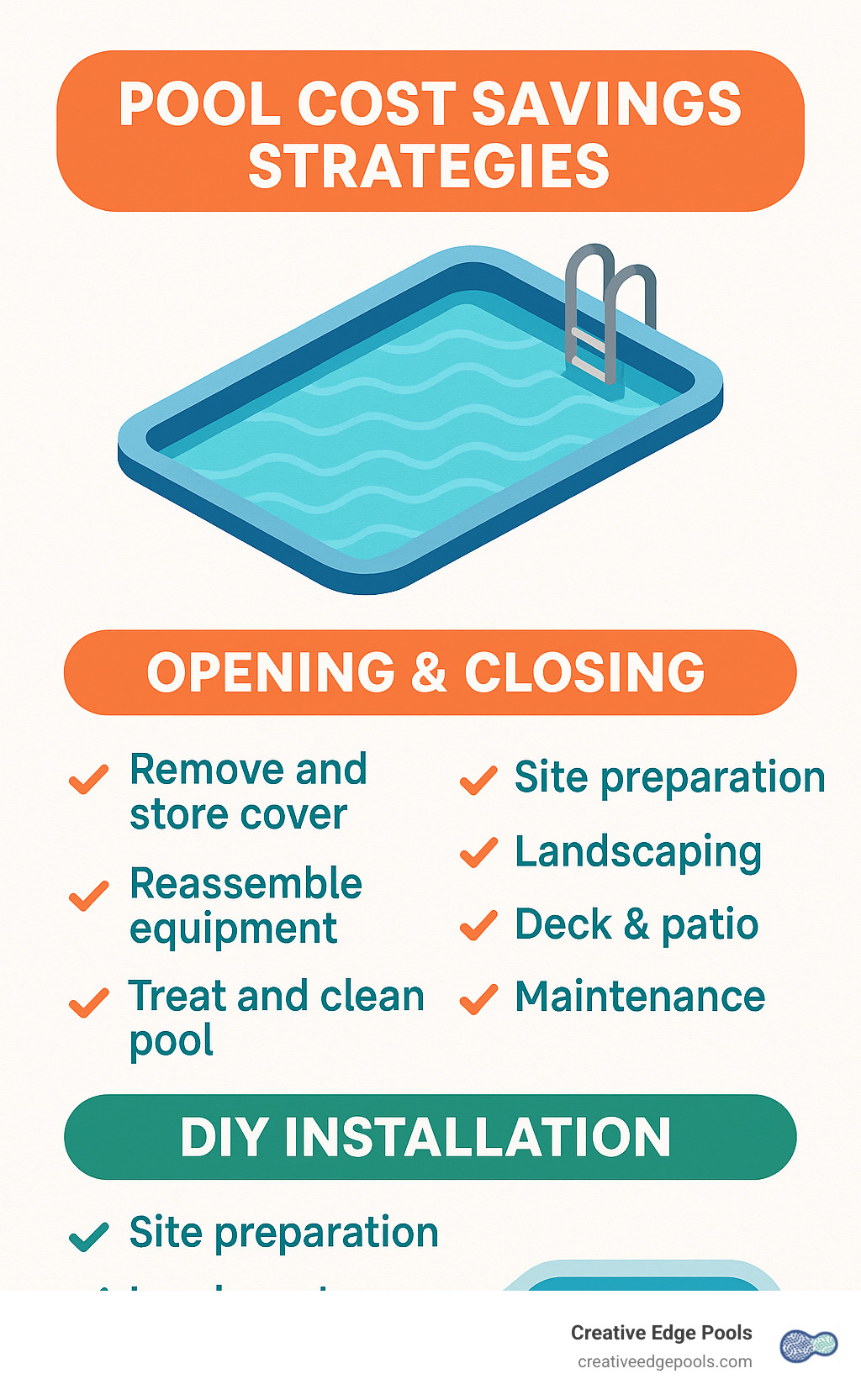
When professionals open your pool, they’ll handle all the heavy lifting: removing and storing that cumbersome winter cover, reassembling and firing up all your equipment, applying the initial chemical treatment to get your water sparkling, and performing basic cleaning to get you swim-ready.
Come fall, the closing process involves lowering your water level (typically 6-24 inches below the skimmer), adding specialized winterizing chemicals to protect your pool during dormancy, properly draining all equipment to prevent freeze damage, and securely installing your winter cover.
Why go professional? As one of our Andover clients put it: “After trying to close my pool myself the first year and finding a cracked pipe in spring, the professional closing fee suddenly seemed like the bargain of the century!” Those critical seasonal transitions really do benefit from expert handling, especially with our harsh New England winters.
Can I really install parts of the pool myself to cut costs?
Absolutely you can—with some important caveats! While you’ll want professionals handling the core construction (trust me on this one), savvy homeowners can potentially trim 20-40% off labor costs by rolling up their sleeves for certain aspects of the project.
DIY-friendly areas include site clearing and preparation before the crew arrives, basic landscaping around your completed pool, deck and patio installation (if you’re handy and experienced), and routine maintenance and water testing once your pool is up and running.
One of our project managers often shares this wisdom with cost-conscious clients: “DIY approaches work best for the finishing touches, not the core infrastructure. The pool shell, plumbing, and electrical work require specialized knowledge and often municipal inspections.”
A Tewksbury family we worked with last year found the perfect balance—they had us handle all the technical construction but prepared the site themselves and installed a beautiful paver patio after we finished. Their estimate? They saved nearly $8,000 through their own sweat equity while ensuring the critical systems were professionally installed.
Conclusion
Understanding how much does it cost for a pool means looking beyond just the sticker price to accept the full ownership journey. Here at Creative Edge Pools, we’ve built our reputation on crafting custom gunite pools that strike that perfect balance between quality, longevity, and value for families throughout Eastern Massachusetts and Southern New Hampshire.
Your pool isn’t just a construction project—it’s an investment in countless summer memories, impromptu weekend gatherings, and quiet evening swims under the stars. By making thoughtful choices about design, materials, features, and maintenance plans, you can create a backyard haven that honors both your dreams and your financial reality.
I’ve seen how the right pool transforms not just a yard, but an entire family’s lifestyle. As one of our Andover clients recently told me, “We used to talk about vacation destinations. Now we talk about who’s coming over this weekend.” That’s the true value of pool ownership that goes beyond dollars and cents.
When you’re ready to explore your options, our team provides detailed, transparent estimates custom to your specific property conditions and design wishes. We believe in honest conversations about both immediate costs and long-term ownership expenses—because nobody likes financial surprises after the concrete has set.
For Massachusetts homeowners looking for region-specific pricing information, I’d recommend our comprehensive guide on inground pool cost in Massachusetts. It addresses the unique considerations of building in our climate and regulatory environment.
The best pool isn’t necessarily the one with the heftiest price tag—it’s the one that seamlessly integrates with your property, complements your lifestyle, fits your budget, and provides decades of enjoyment. When you’re ready to transform your backyard dreams into reality, we’re here to guide you through every step of the journey.
After all, we’re not just building pools—we’re creating the backdrop for your family’s best moments for years to come.