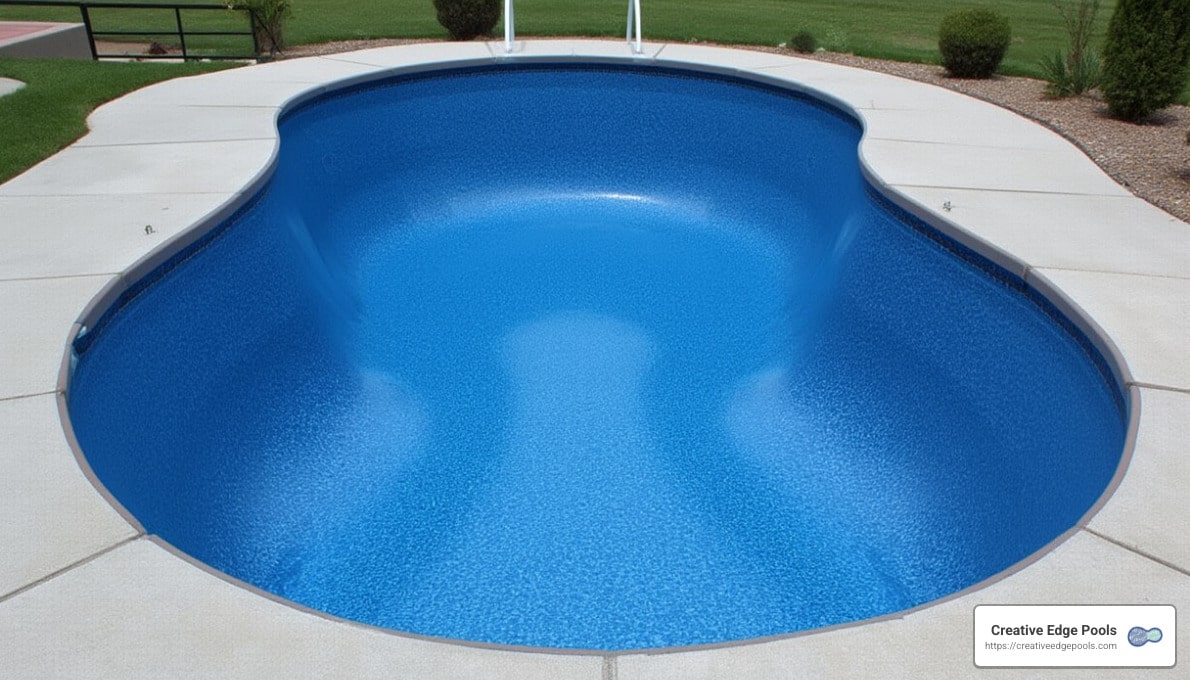
How Long Does a Vinyl Pool Liner Last? Top Tips 2025
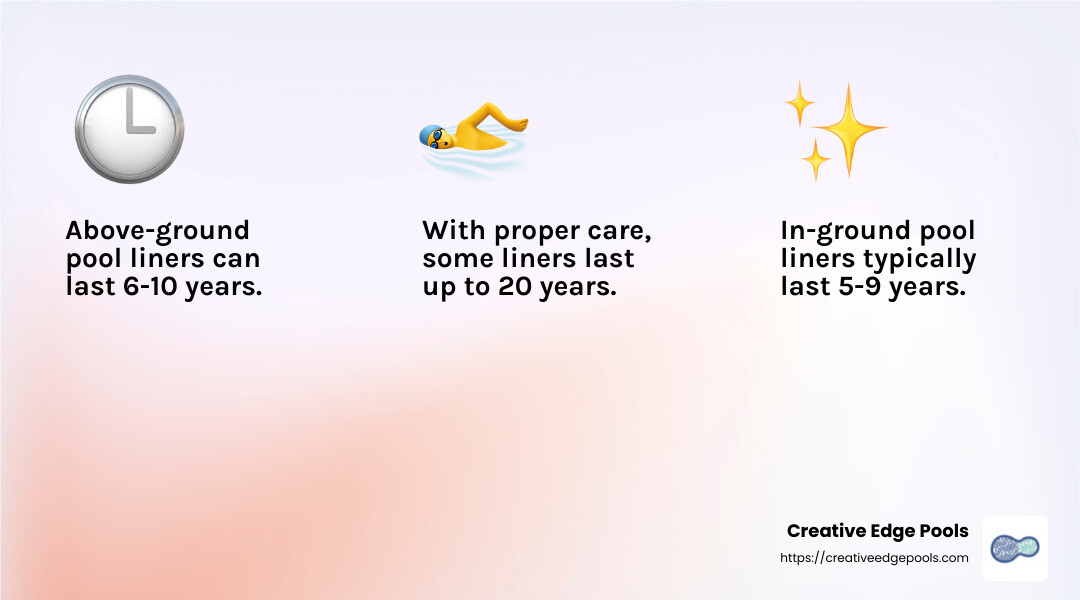
How long does a vinyl pool liner last? If you own or are considering a pool, this is a crucial question. Generally, vinyl pool liners have a lifespan of 6-10 years for above-ground pools and 5-9 years for in-ground pools. Yet, with proper care, some can last up to 20 years! Just remember, factors such as excessive use, chemical imbalances, and neglect can considerably shorten this lifespan.
Protect your investment by understanding the importance of regular maintenance. Weekly cleanings, monitoring pH levels, and ensuring balanced chemicals are vital steps. Avoid activities that scratch or puncture the liner, never completely drain your pool to prevent damage.
As David Brabant, owner of Creative Edge Pools, I bring over 30 years of hands-on experience in pool installation and maintenance. I’ve seen how quality care significantly extends the life of your vinyl pool liner, ensuring your pool remains a delightful outdoor retreat season after season.
How Long Does a Vinyl Pool Liner Last?
When it comes to vinyl pool liners, understanding their lifespan can help you plan for future maintenance and replacements. Let’s explore the details.
Average Lifespan
For most pool owners, the average lifespan of a vinyl pool liner is a key consideration. Typically, above-ground pool liners last between 6 to 10 years, while in-ground pool liners have a slightly shorter expectancy of 5 to 9 years. These numbers aren’t set in stone; with proper care, some liners have been known to last up to 20 years.
In-Ground vs. Above Ground
In-ground pool liners tend to face more challenges than their above-ground counterparts. This is due to factors like soil pressure and ground movement, which can lead to stress and wear on the liner. Additionally, in-ground pools often have more complex shapes and features, increasing the risk of liner damage over time.
On the other hand, above-ground pool liners generally enjoy a longer lifespan. This is partly because they are less exposed to external environmental pressures. However, they still require diligent maintenance to ensure longevity.
Real-Life Example
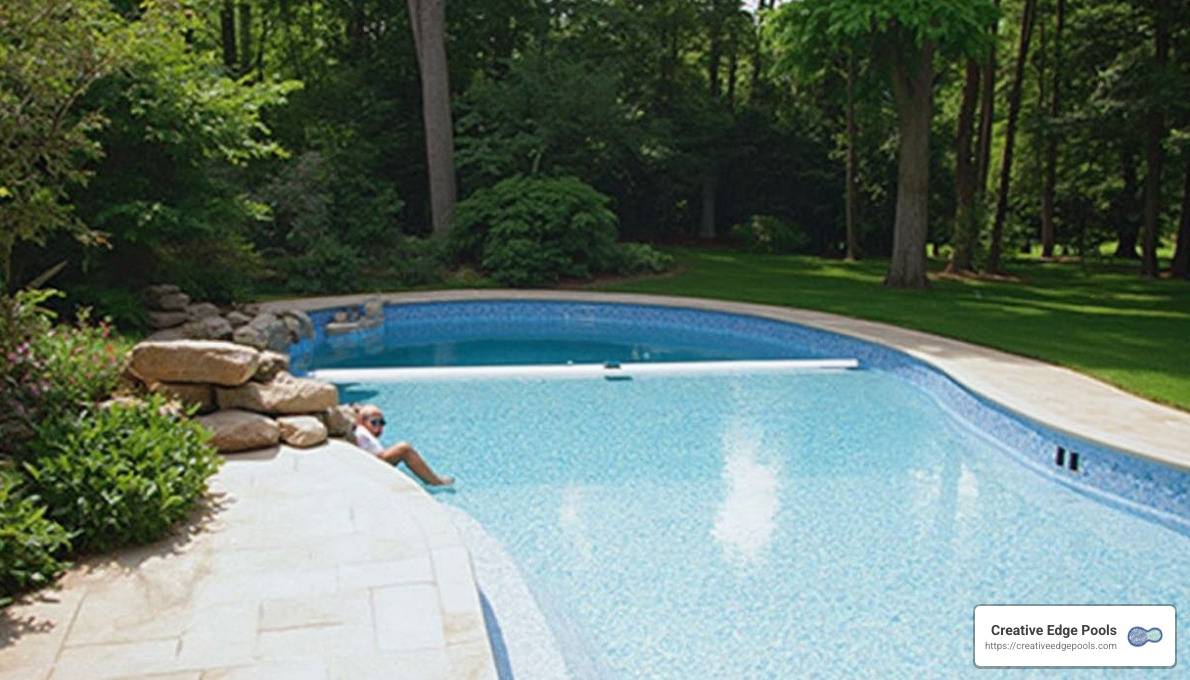
Consider the case of a homeowner who installed an in-ground vinyl pool liner with a “30-year” warranty. By year seven, the liner began to show signs of wear, including seam separation. Despite the warranty, the prorated coverage only offered a small discount, leaving the homeowner with significant replacement costs. This highlights the importance of understanding warranties and the realistic lifespan of your liner.
Key Takeaway
While warranties might promise decades of coverage, the actual lifespan of a vinyl pool liner depends heavily on factors like proper maintenance, balanced chemicals, and careful use. Regular inspections and timely repairs are crucial to extending the life of your liner, ensuring your pool remains a source of joy for years to come.
In the next section, we’ll explore the factors affecting vinyl pool liner lifespan and how you can mitigate them to maximize your liner’s durability.
Factors Affecting Vinyl Pool Liner Lifespan
Understanding what affects the lifespan of your vinyl pool liner can save you time, money, and frustration. Let’s explore some key factors that can impact how long your liner will last.
Excessive Use
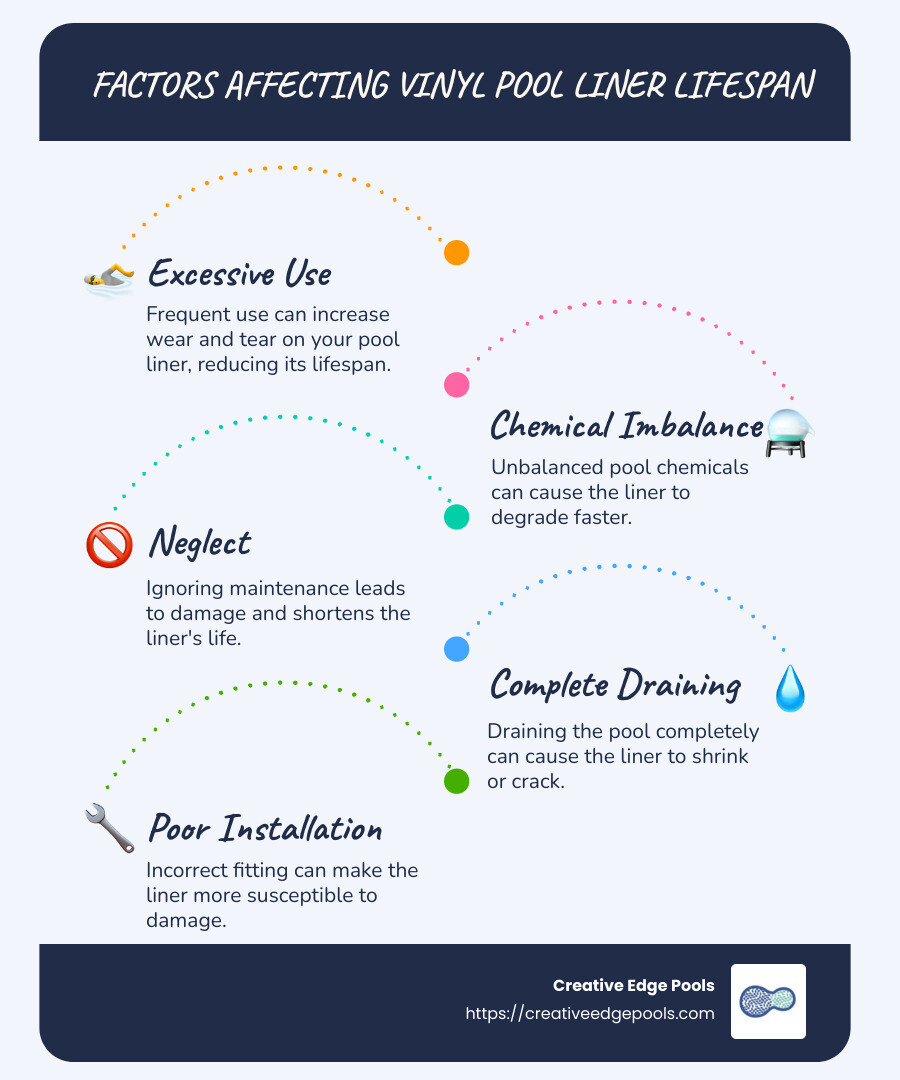
The more you use your pool, the more wear and tear your liner experiences. Frequent foot traffic, jumping, and playing can lead to small tears or punctures. Opt for soft pool toys and limit rough activities to help your liner last longer.
Unbalanced Chemicals
Keeping your pool’s water chemistry balanced is crucial. Unbalanced chemicals can cause your liner to wrinkle, sag, or even fade. Aim for a pH level between 7.4 and 7.6 to avoid these issues. Adding too many chemicals at once can lead to staining or bleaching, especially if they settle in one area.
Neglect
Skipping regular maintenance can seriously harm your liner. Weekly tasks like skimming and brushing prevent algae growth and staining. Neglecting these duties means you’ll need to add more chemicals, increasing the risk of damage from undiluted substances.
Complete Draining
Never fully drain your pool if you have a vinyl liner. The weight of the water helps keep the liner in place. Draining it all can lead to bubbles, wrinkles, and a higher chance of tearing. When winterizing, only lower the water to about 1 inch below the skimmer.
By understanding and managing these factors, you can significantly extend the life of your vinyl pool liner. Up next, we’ll discuss the signs it’s time to replace your vinyl pool liner so you can keep your pool in top shape.
Signs It’s Time to Replace Your Vinyl Pool Liner
Knowing when to replace your vinyl pool liner can prevent bigger problems down the road. Here are the telltale signs that it’s time for a new liner.
Cracks and Tears
Cracks and tears in your pool liner are like leaks waiting to happen. They can lead to water loss and even more damage if not addressed quickly. If you notice frequent tears, it might mean your liner has become brittle and less flexible. Rips and cracks are a clear signal that a replacement is needed.
Fading and Staining
Fading is more than just an aesthetic issue; it’s a sign of UV and chemical damage. Over time, the sun and pool chemicals can cause the liner to lose its color, making it brittle and prone to cracks. Staining often results from improper chemical use or metal deposits, which can weaken the liner. If your liner looks dull and worn out, consider replacing it.
Wrinkling and Stretching
Wrinkling and stretching occur when your liner loses its elasticity. This can happen due to groundwater issues or after completely draining and refilling the pool. If you see your liner slipping out of its track or forming wrinkles, it’s a red flag. While minor wrinkles can sometimes be fixed, persistent problems usually mean it’s time for a new liner.
Leaks
Leaks are serious business. They can cause your pool to lose water rapidly and might even affect the structure of your pool. For above-ground pools, leaks can lead to flooding and soft ground, which can cause the pool to tilt. In-ground pools face risks of shifting or cracking. The bucket test is a simple way to check for leaks: if your pool’s water level drops faster than the water in a bucket, you likely have a leak.
Recognizing these signs early can save you from costly repairs and keep your pool safe and enjoyable. Next, we’ll explore how to extend the life of your vinyl pool liner, ensuring you get the most out of your investment.
How to Extend the Life of Your Vinyl Pool Liner
Keeping your vinyl pool liner in great shape doesn’t have to be a daunting task. With just a few simple steps, you can significantly extend its lifespan and keep your pool looking fantastic.
Proper Maintenance
Regular maintenance is key. Skim your pool weekly to remove debris and prevent stains. Use a soft-bristled brush to gently scrub the liner, which helps discourage algae growth. This small investment of time each week can add years to your liner’s life. If you have an automatic pool cover, remember to open it during the day to lower water temperatures and reduce algae-friendly conditions.
Balanced Chemicals
Chemicals are a pool’s best friend and worst enemy. Balanced pool chemistry is essential to extending the lifespan of your liner. Use your chemical test kit regularly to check chlorine and pH levels. Avoid adding multiple chemicals at once, as this can lead to imbalances. According to Pool and Spa News, chlorine can bleach your liner if it settles in the deep end. Let the chemicals circulate for several hours to prevent this.
Avoid Full Draining
Draining your pool completely can be tempting, especially for thorough cleaning. However, this can cause your liner to stretch and wrinkle, leading to a poor fit when the pool is refilled. Instead, try to keep some water in the pool during cleaning sessions. If you must drain it, do so carefully and consult with a professional to avoid damaging your liner.
By following these simple steps, you can extend the life of your vinyl pool liner and enjoy a beautiful, well-maintained pool for years to come. Now, let’s dive into some frequently asked questions about vinyl pool liners to further improve your pool care knowledge.
Frequently Asked Questions about Vinyl Pool Liners
How often do vinyl pool liners need to be replaced?
Vinyl pool liners generally need to be replaced every 5 to 10 years. The lifespan can vary based on factors like pool type and maintenance habits. For instance, in-ground pool liners typically last 5–9 years, while above-ground liners can last 6–10 years. Proper care, such as maintaining balanced chemicals and avoiding excessive wear, can help extend their lifespan.
How much does it cost to replace a vinyl pool liner?
Replacing a vinyl pool liner can be an investment. On average, the cost for a new liner is around $1,700. However, additional expenses like water refilling and labor can add up. For example, refilling the pool might cost about $1,200, and labor could be around $2,000. This means total replacement costs can exceed $4,000. It’s a good idea to budget for these costs and plan ahead.
What is the best time to replace a pool liner?
The ideal time to replace your pool liner is during the spring or fall. This timing ensures you won’t miss out on enjoying your pool during the summer months. Spring is often a busy time for pool maintenance, so it’s wise to book early to ensure a smooth replacement process. Working with a reliable pool service provider can minimize downtime, allowing you to get back to enjoying your pool in as little as five to seven days.
Conclusion
At Creative Edge Pools, we understand that a pool is more than just a backyard feature—it’s a place for family fun, relaxation, and making memories. That’s why taking care of your vinyl pool liner is crucial. With proper maintenance, you can enjoy your pool for years before needing a replacement.
Here are some quick tips to extend the life of your vinyl pool liner:
- Maintain Balanced Chemicals: Regularly test and adjust your pool’s chemical levels. Keeping your pH between 7.4 and 7.6 and ensuring chlorine is properly dissolved can prevent premature liner wear.
- Regular Cleaning: Clean your liner weekly to remove debris and prevent algae growth. A gentle scrub with a soft-bristled brush can make a big difference.
- Avoid Full Draining: Never completely drain your pool. This can damage the liner’s integrity. Instead, drain only a third at a time if necessary.
- Be Mindful of Pool Use: While it’s tempting to enjoy your pool frequently, excessive use can lead to wear and tear. Repair any small tears or rips promptly to prevent larger issues.
By following these simple steps, you can maximize your liner’s lifespan and keep your pool looking its best. If you’re considering a liner replacement or need expert advice, contact Creative Edge Pools for all your vinyl liner needs. We’re here to help you create the perfect backyard oasis.