gunite pool refinishing cost 2025: Top 5 Powerful Savings
The Truth About Gunite Pool Refinishing Cost in 2025
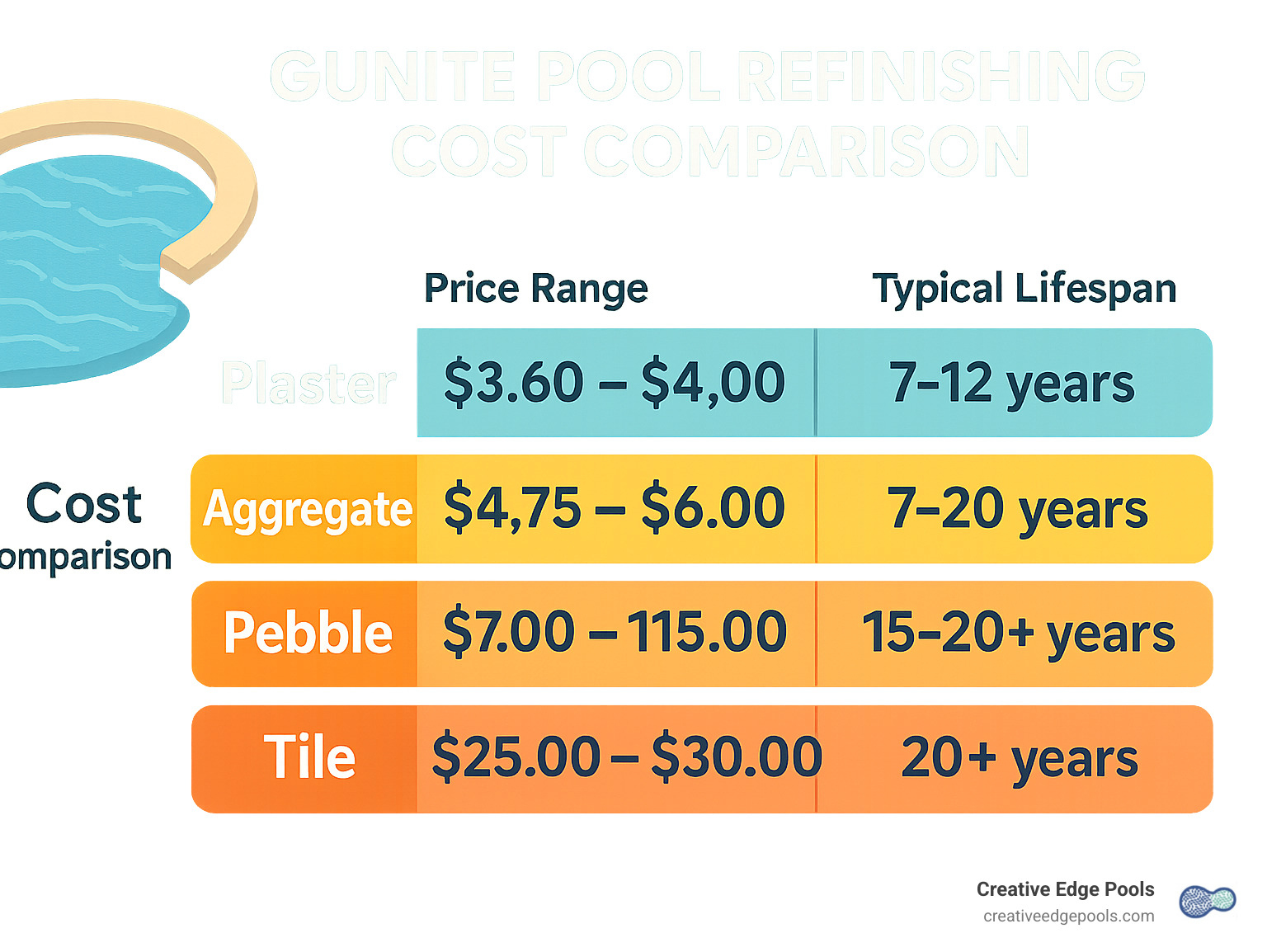
For homeowners seeking quick answers, gunite pool refinishing cost typically ranges between $10,000 and $20,000 for a standard-sized pool of 1,000 square feet. Here’s a breakdown of what you can expect:
| Finish Type | Cost Per Square Foot | Average Total Cost | Typical Lifespan |
|---|---|---|---|
| Plaster | $3.60-$4.00 | $5,500 | 7-12 years |
| Aggregate | $4.75-$6.00 | $6,500 | 7-20 years |
| Pebble | $7.00-$15.00 | $10,000 | 15-20+ years |
| Tile | $25.00-$30.00 | $30,000 | 20+ years |
When that sparkling blue oasis in your backyard starts showing signs of wear and tear, the gunite pool refinishing cost becomes a crucial consideration for every pool owner. Those chalky surfaces, rough patches underfoot, and stubborn stains aren’t just eyesores—they’re signals that your pool’s protective surface is deteriorating.
Like the inevitable roof replacement or kitchen update, pool resurfacing is a maintenance milestone that simply can’t be postponed indefinitely. The good news? A freshly refinished gunite pool not only improves your swimming experience but can recoup 40%-80% of its cost in added home value.
I’m David Brabant, owner of Creative Edge Pools with over thirty years in the swimming pool industry, and I’ve overseen hundreds of gunite pool refinishing cost estimates and completed projects throughout Massachusetts and New Hampshire, giving me knowledge of regional pricing trends and material performance in our New England climate.
Understanding Gunite Pool Refinishing: What & Why
Think of your gunite pool as having two crucial layers: the concrete shell that forms its foundation, and the finishing layer that you actually see and touch. This top layer—whether it’s plaster, aggregate, pebble, or tile—isn’t just for looks. It’s the unsung hero of your pool, creating a watertight barrier that protects everything underneath.
This finishing layer is working overtime for you. It seals your pool against leaks, shields the structural gunite from water damage, gives swimmers a comfortable surface, creates that beautiful blue oasis look, and even helps keep algae at bay by sealing porous areas where it might take hold.
But here in New England, this surface takes a beating. Between the harsh chemicals needed to keep your water sparkling, unrelenting UV rays during summer, and our brutal freeze-thaw cycles in winter, even the best finishes eventually surrender to time.
“I’ve watched too many homeowners try to squeeze an extra year or two out of an aging finish,” shares our lead project manager. “What starts as a standard $12,000 refinishing job often balloons to $20,000 or more when water penetrates to the gunite shell. By that point, we’re dealing with structural repairs, not just surface cosmetics.”
Between refinishing cycles, consistent maintenance is your best defense. Our guides on Gunite Pool Care and Gunite Pool Cleaning can help you extend your finish’s lifespan with proper care.
Signs Your Pool Needs Refinishing
Your pool has ways of telling you when the gunite pool refinishing cost should be in your near-future budget. Watch for these warning signals:
That white chalky residue on your hands and swimsuits? It’s your plaster surface literally dissolving. When the texture changes from smooth to sandpaper-rough, or you notice flaking “snowflakes” of plaster in the water, your finish is actively deteriorating. Stubborn stains, exposed aggregate materials, or visible cracks are all your pool’s way of waving a red flag.
Even more concerning are unexplained drops in water level (suggesting leaks), persistent algae problems despite proper chemistry, or rust spots appearing (especially alarming if they indicate exposed rebar).
One of our Massachusetts clients shared: “I kept dismissing those rough patches as minor issues until my daughter cut her foot pretty badly during a swim. That was my wake-up call—I hadn’t just been postponing a cosmetic upgrade, I’d created a safety hazard for my family.”
How Often Does a Gunite Pool Need to Be Resurfaced?
The lifespan of your pool’s surface largely depends on two factors: what material you chose and how diligently you’ve maintained your water chemistry.
Generally speaking, standard plaster finishes typically last 7-12 years, while quartz aggregate blends can stretch to 10-15 years. Premium pebble finishes often reach the 15-20 year mark, and tile can exceed 20 years with proper care.
But there’s a New England reality check needed here. Our harsh winters accelerate wear and tear, often pushing refinishing timelines closer to the lower end of these ranges. Many of our local clients find themselves needing plaster work closer to the 7-year mark rather than the 12 years our southern counterparts might enjoy.
“I can’t overstate how much water chemistry impacts surface longevity,” our service department manager emphasizes. “We’ve maintained pools with perfect chemistry that stretched plaster to 15+ years, while others with chronic pH imbalances needed complete refinishing after just 5-6 years.”
For a more detailed exploration of timing your refinishing project, check out our comprehensive guide on How Often Does a Gunite Pool Need to Be Resurfaced?
Gunite Pool Refinishing Cost in 2025
When it comes to planning your pool renovation budget, understanding the gunite pool refinishing cost is essential for avoiding sticker shock. In 2025, most homeowners across the nation can expect to invest between $10,000 and $20,000 to refinish a standard 1,000 square foot gunite pool, with the final price heavily influenced by your chosen finish and location.
For our friends in Eastern Massachusetts and Southern New Hampshire, I’ll be straight with you – we typically land toward the higher end of that range. This isn’t arbitrary pricing; it reflects our region’s higher labor costs, more stringent permitting processes, and the need for materials that can tough out our infamous New England winters.
“I nearly fell off my chair when I got my first quote,” laughed Maria from Andover. “My sister in Florida paid half what I was quoted. Now I understand why – her pool doesn’t have to survive February in New England!”
Your total gunite pool refinishing cost breaks down into several components. Labor runs between $45-$65 per hour, typically requiring 40-60 hours of skilled work. Then there’s the draining ($175-$225) and thorough cleaning (about $250) before the real work begins. Don’t forget to budget roughly $220 to refill your 20,000-gallon pool and between $100-$300 for those necessary permit fees that vary by town.
Repairs represent the wild card in your budget. Minor crack fixes might only add $15 to your bill, but if we find more significant structural issues once your pool is drained, repairs could potentially add $5,000 or more to your project.
If you’re ready to get started with your pool refinishing project, you can Find Local Pros to help you compare quotes and find the right contractor for your specific needs.
Average Gunite Pool Refinishing Cost per Square Foot
The material you select for your new pool surface dramatically impacts both your immediate investment and long-term value. Here’s what to expect:
Traditional plaster finishes are the most budget-friendly at $3.60-$4.00 per square foot (about $5,500 total for a 1,000 sq ft pool). While plaster offers that classic smooth feel underfoot, it typically needs replacement sooner than other options and is more prone to staining.
Quartz aggregate finishes step up both in durability and price at $4.75-$6.00 per square foot ($6,500 total). These surfaces resist staining better than plaster and come in various color options, though they do feel slightly more textured.
Pebble finishes represent an excellent middle-ground investment at $7.00-$15.00 per square foot ($7,000-$15,000 total). Their natural appearance and remarkable durability make them increasingly popular among our New England clients despite the higher upfront cost.
For those seeking the ultimate in longevity and luxury, tile finishes at $25.00-$30.00+ per square foot ($30,000+ total) provide best durability and endless design possibilities, though they require a significantly higher initial investment.
The newer EcoFinish thermoplastic coating ($10.00-$15.00 per square foot) offers quick application with immediate refill possibilities, though it lacks the decades-long track record of traditional materials.
“We bit the bullet and chose pebble at $12,000 instead of plaster at $6,000,” shared Tom from Lexington. “Eight years later, it still looks brand new while our neighbor is already planning their second plaster refinish. Sometimes spending more upfront saves money in the long run.”
Regional Gunite Pool Refinishing Cost Trends
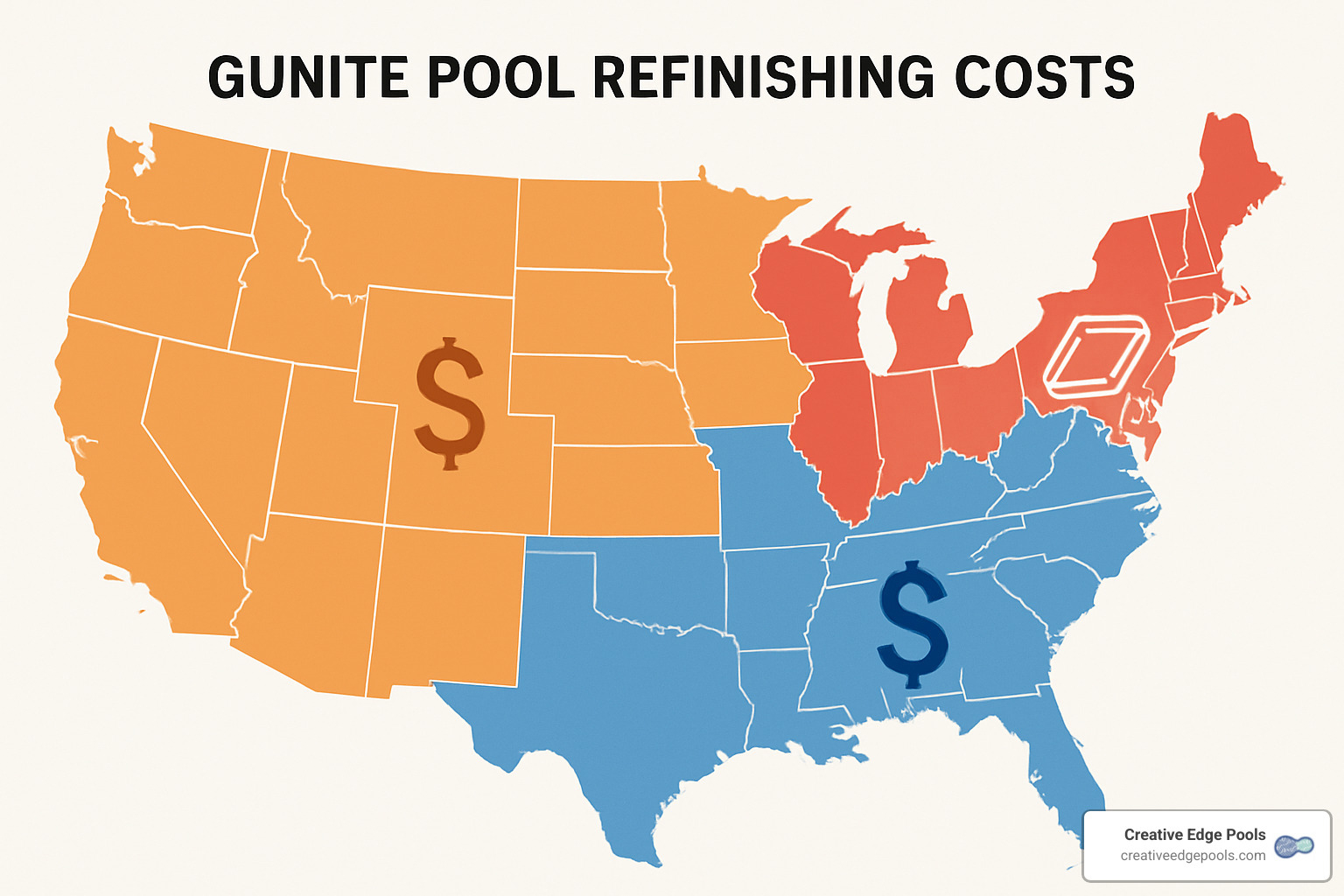
Location plays a tremendous role in your gunite pool refinishing cost, with Northeastern homeowners typically paying premium prices compared to their southern counterparts. Here in Eastern Massachusetts and Southern New Hampshire, several regional factors drive our costs:
Our brutal freeze-thaw cycles demand more durable materials, adding 10-15% to material costs. Our skilled pool technicians command $55-$65 hourly (versus $40-$50 down south) to ensure work that withstands our climate challenges. Add in our compressed April-to-October work season creating higher demand, stricter local permitting requirements, and higher water utility costs for refilling, and you can see why our regional prices trend higher.
“When we moved from Tampa to Concord, I was shocked at the price difference,” explained James, a recent transplant. “My contractor patiently explained they apply Diamond Brite finish almost 50% thicker here to handle the winter expansion. Made perfect sense once he explained it.”
For my New England neighbors, expect to budget approximately 15-25% above the national average for your gunite pool refinishing cost. It’s not just higher pricing – it’s an investment in materials and application techniques specifically engineered for our unique climate challenges.
Key Cost Influencers & Process Timeline
What actually drives the gunite pool refinishing cost for your backyard oasis? Understanding these factors helps you prepare both your timeline and your wallet.
Size matters—and that’s especially true with pools. Larger and deeper pools naturally require more materials and labor hours, directly impacting your bottom line. The current condition of your pool surface plays a huge role too. Those minor cracks you’ve been ignoring? They could mean more extensive (and expensive) preparation work before the new finish can even be applied.
Your choice of finish material creates the most dramatic swing in pricing, as we detailed above. But don’t overlook access challenges—if your pool is tucked behind landscaping with no clear equipment path, crews may need special machinery or additional hands, adding to your total.
“We once had to use a crane to bring equipment over a client’s house because there was simply no other way to access their backyard pool,” shares our operations manager. “That added nearly $1,200 to their project that they hadn’t anticipated.”
Surprises often lurk beneath the surface too. Once your pool is drained, contractors might find structural issues like exposed rebar or hollow spots in the gunite shell. These necessary repairs will add to your gunite pool refinishing cost. Many homeowners also choose to bundle upgrades like LED lighting, water features, or new coping stones while the pool is already empty.
Timing your project strategically can save money. Peak season (spring/early summer) typically comes with premium pricing, while fall projects might offer better rates. And of course, your geographic location influences both labor rates and material availability—which is why Northeast pool owners generally pay more than those in southern states.
Most professional pool refinishing projects follow this timeline:
- Day 1: Draining and initial preparation
- Day 2: Surface preparation (chipping, grinding, acid washing)
- Day 3-4: Repairs and application of new surface material
- Day 5-7: Curing, filling, and chemical balancing
DIY warriors should plan for a longer timeline—typically 10-14 days—due to the learning curve and limited equipment. For pools with underwater damage requiring immediate attention without draining, see our guide on Gunite Pool Repair Underwater.
Step-by-Step Refinishing Process
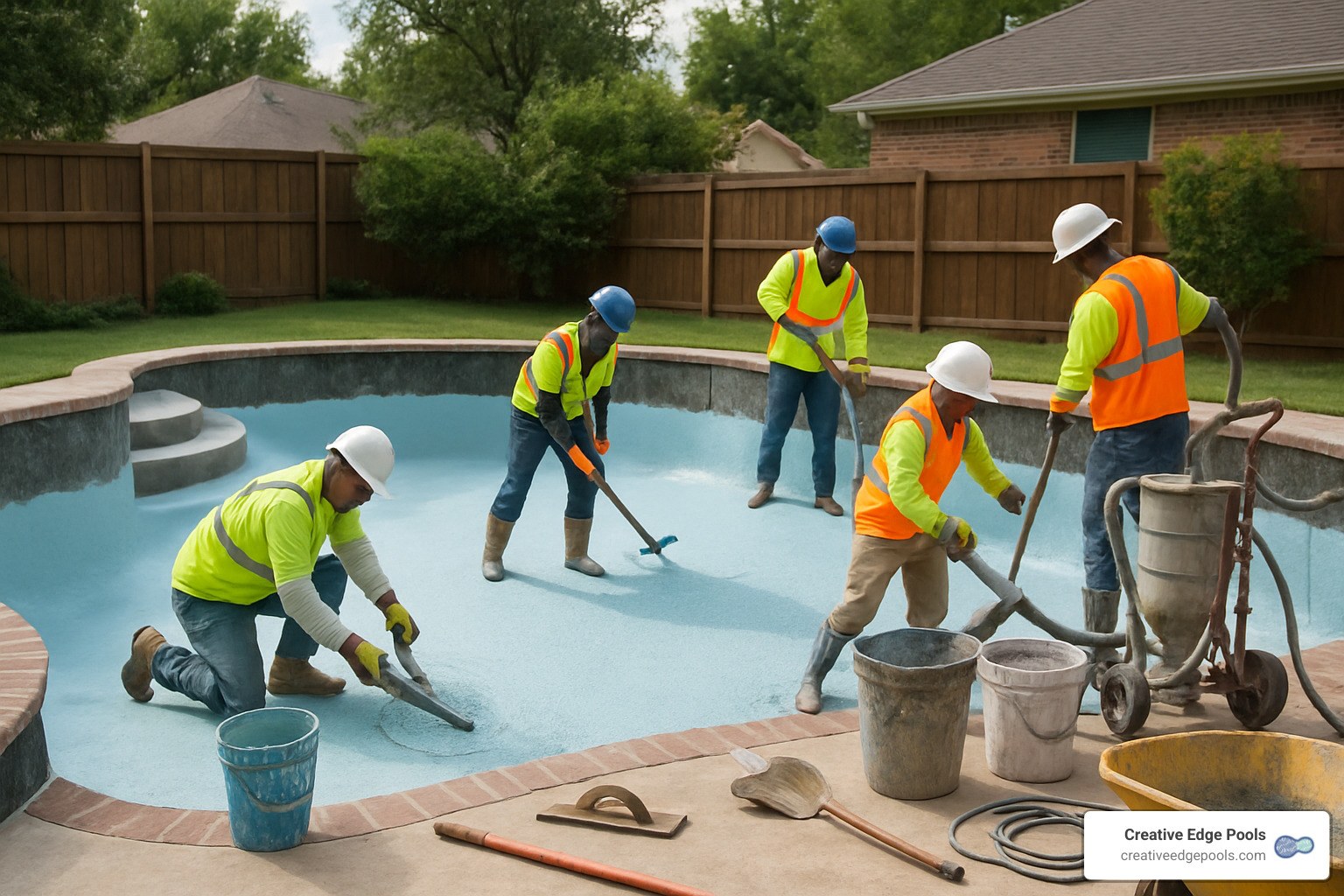
Ever wondered what actually happens during those 5-7 days when your pool is being refinished? Here’s where your investment goes:
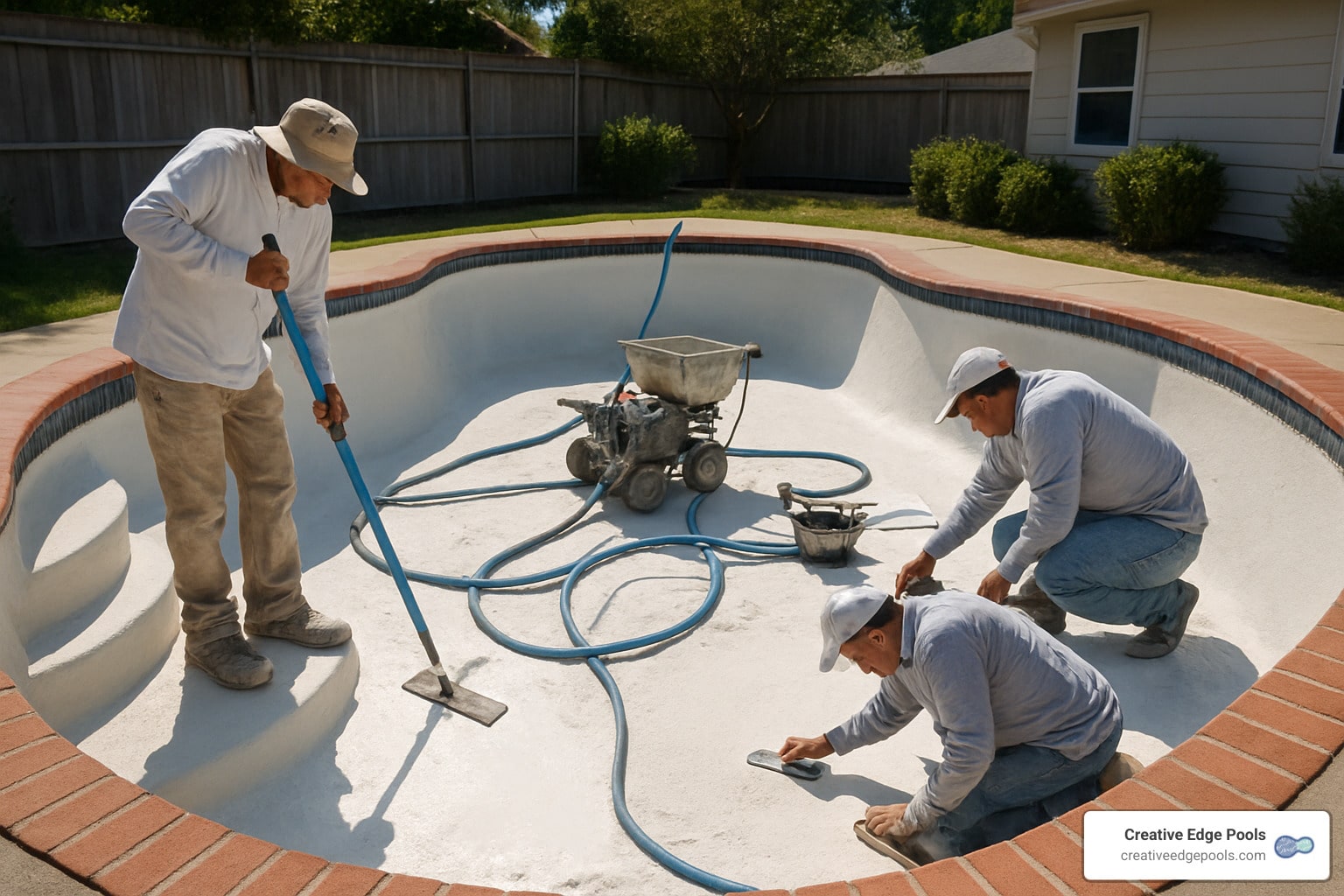
The process begins with completely draining your pool using submersible pumps—a full day’s work for most pools. Then comes the most labor-intensive part: surface preparation. Crews will chip, grind, sandblast or acid wash the old surface to create the perfect bonding profile for your new finish. This thorough prep work typically takes 1-2 days but is absolutely crucial for long-term success.
Next, any structural issues get addressed. Crack repairs, hollow spot filling, and fixing damaged areas in the gunite shell can take anywhere from a few hours to an extra day, depending on what we find.
“I always tell clients to build a little buffer into their budget,” explains our lead technician. “About 80% of pools need some type of structural repair once we can actually see the shell clearly.”
Before applying the new finish, crews apply a bonding agent to ensure proper adhesion. Then comes the main event—applying your chosen finish material. Plaster is troweled on in smooth, sweeping motions. Aggregate or pebble finishes are typically sprayed and then troweled to achieve the right texture. Tile finishes require individual setting with mortar followed by precise grouting. This application process usually takes 1-2 days depending on pool size and finish complexity.
Then patience becomes essential during the curing phase. Rushing this step is one of the biggest mistakes homeowners make. Plaster and aggregate finishes generally need 24-48 hours before filling, while tile requires 24-72 hours for mortar and grout to properly set.
Finally, your pool is carefully filled—too fast and you risk damaging the new finish—followed by initial chemical balancing to protect your investment. This chemical startup is crucial for maximizing the lifespan of your new surface.
“The biggest mistake homeowners make is rushing the curing process,” notes our operations manager. “We’ve seen beautiful finishes damaged because someone couldn’t wait the full recommended time before filling.”
Finish Options: Cost vs. Lifespan
When you’re weighing your gunite pool refinishing cost options, it’s smart to think beyond just the initial price tag. After all, that beautiful new finish is an investment in your home and your family’s enjoyment for years to come.
Plaster (Marcite)
Plaster remains the classic choice for many pool owners, and for good reason. At $3.60-$4.00 per square foot (about $5,500 total for a standard 1,000 sq ft pool), it’s the most budget-friendly option upfront. You’ll enjoy a smooth, comfortable surface with that traditional pool look we all grew up with. The downside? Plaster typically lasts just 7-12 years and tends to show staining and etching from chemical imbalances more readily than other finishes. Think of plaster as the “starter home” of pool finishes – affordable but you might outgrow it sooner.
Quartz Aggregate
Step up to quartz aggregate and you’re investing in greater durability and stain resistance. At $4.75-$6.00 per square foot (roughly $6,500 for a 1,000 sq ft pool), it’s a modest jump in price for significantly better performance. With a lifespan of 10-15 years and a variety of color options, many of our clients find this middle-ground option hits their sweet spot between cost and longevity. One Massachusetts homeowner told me, “The sparkle in our quartz finish makes the pool look like it’s glowing at night – worth every penny over basic plaster.”
Pebble Finish
For those looking for premium durability, especially in our harsh New England winters, pebble finishes shine. Priced between $7.00-$15.00 per square foot ($7,000-$15,000 total), pebble surfaces stand up beautifully to our freeze/thaw cycles and can last an impressive 15-20+ years. The natural stone appearance adds a luxurious touch to any backyard oasis. The textured surface isn’t for everyone – some swimmers prefer something smoother underfoot – but for longevity in our climate, it’s hard to beat.
Glass Bead Aggregate
Want something truly eye-catching? Glass bead aggregate creates a distinctive sparkle effect that catches the sunlight in magical ways. At $8.00-$12.00 per square foot ($8,000-$12,000 total), with a 15-20 year lifespan, it’s a premium option for homeowners who want something unique. “Guests always comment on our pool finish,” shared one Lexington client. “It’s like swimming in a bed of diamonds when the sun hits it just right.”
Tile
The crown jewel of pool finishes is undoubtedly tile. At $25.00-$30.00+ per square foot (approximately $30,000 total), it’s a significant investment, but one that can last 20+ years or more. Tile offers unlimited design possibilities, the smoothest possible surface, and best durability. It’s also the easiest finish to keep clean. If your pool is your backyard centerpiece and you plan to stay in your home long-term, tile can actually be the most cost-effective choice when calculated over decades.
EcoFinish (Thermoplastic Coating)
A newer player in the pool finish game, EcoFinish offers quick application and immediate refilling – meaning less downtime for your family. At $10.00-$15.00 per square foot ($10,000-$15,000 total) with a 10-15 year expected lifespan, it’s gaining popularity for its versatility. The jury’s still out on its long-term performance in our freeze/thaw environment, so we typically recommend it with some caution to our New England clients.
Epoxy Paint
For the truly budget-conscious, epoxy paint exists as an option at just $1.00-$2.00 per square foot (about $1,500 for professional application). However, I have to be honest – with a lifespan of only 2-7 years, it’s more of a band-aid than a solution. We rarely recommend this option unless you’re planning to sell your home soon or need a very temporary fix.
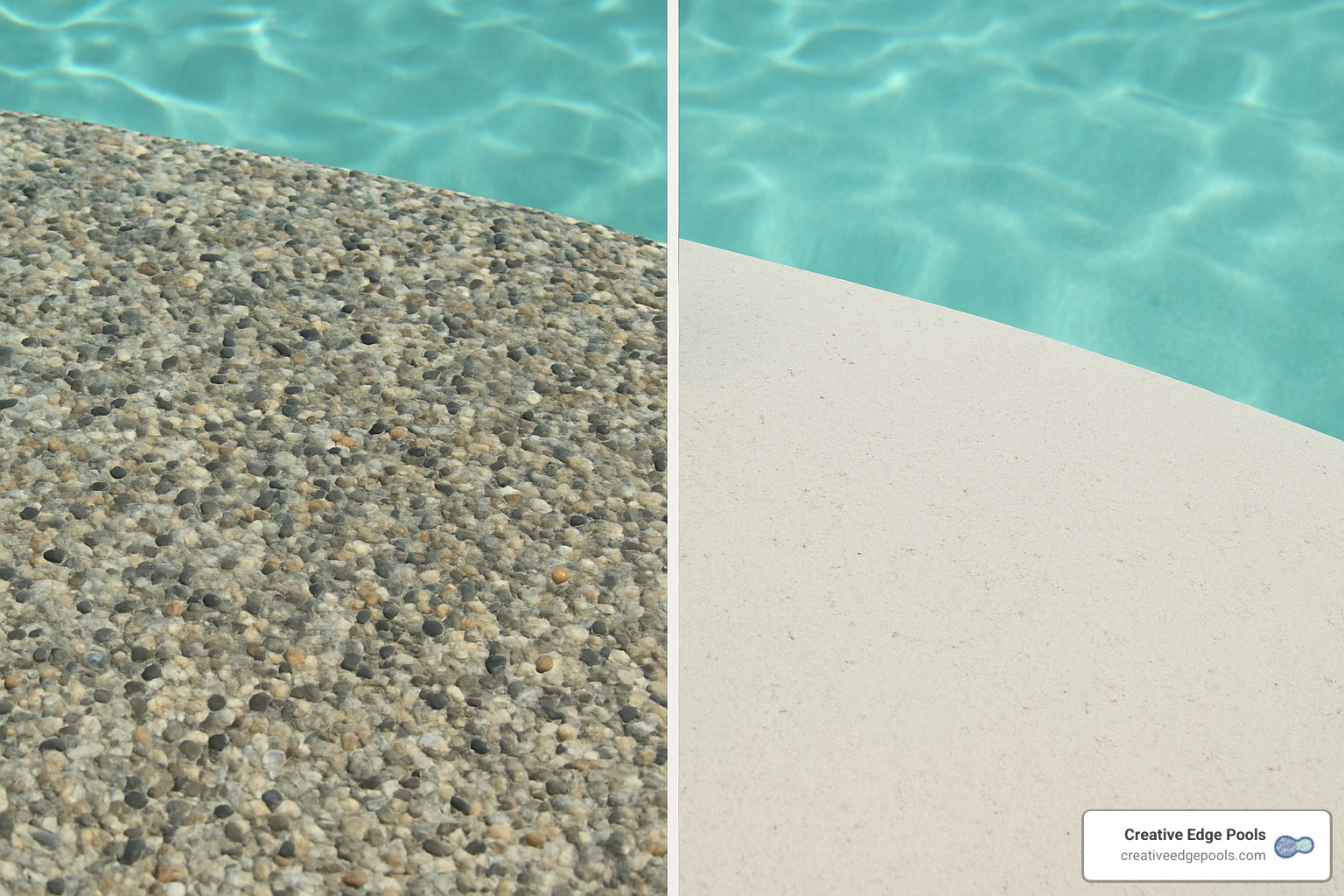
“I always ask clients to think about cost-per-year rather than just the sticker price,” explains our design consultant. “When you break it down, a $12,000 pebble finish lasting 18 years costs about $667 annually, while a $5,500 plaster finish lasting 8 years runs about $688 per year. Plus, you’re avoiding the hassle of refinishing twice in the same timeframe.”
The finish you choose isn’t just about aesthetics – it’s about your lifestyle, how you use your pool, and how long you plan to stay in your home. For growing families who use their pool daily, durability might be your priority. For entertainment-focused homeowners, the visual wow factor of glass beads or tile might be worth the splurge.
For more ideas on comprehensive pool updates beyond just refinishing, check out our Gunite Pool Renovations page where we showcase complete changes that have delighted our clients.
Money-Saving Tips, ROI & FAQs
Let’s talk honestly about that gunite pool refinishing cost – yes, it’s a significant investment, but there are smart ways to get more bang for your buck without cutting corners on quality.
Money-Saving Strategies
The off-season secret is one of my favorite tips to share with homeowners. Scheduling your refinishing project during fall or early spring can open up discounts of 10-15% when pool companies are less busy. It’s like booking a beach vacation in the shoulder season – same great experience, friendlier pricing.
Many of our clients have found success bundling their refinishing with other backyard upgrades. When our crews are already on site handling your pool surface, adding deck work or equipment upgrades becomes more cost-efficient. One Massachusetts homeowner told me, “We saved nearly $2,000 by combining our refinishing with new coping stones and deck repair – plus we only had to deal with the construction mess once!”
Consider a strategic approach to tile work too. Rather than tiling the entire pool (beautiful but pricey!), many homeowners opt for a decorative waterline tile band that delivers that luxury look for a fraction of the cost.
For the DIY-inclined, handling your own pool draining and initial cleaning can trim $400-$500 off the project total. Just be sure to check local regulations about water disposal first – some municipalities have strict rules.
The most overlooked money-saver? Consistent water chemistry maintenance. Nothing extends your finish lifespan like properly balanced water. Think of it as preventative medicine for your pool – a little attention now prevents costly problems later.
Return on Investment
When clients ask if refinishing is “worth it,” I often share what local real estate professionals tell us: a well-maintained pool with a fresh, attractive surface can recoup between 40% and 80% of your gunite pool refinishing cost in added property value.
I remember Sarah, a homeowner in Wellesley, who called us after selling her home. “Our appraiser specifically highlighted our recently refinished pool as a premium feature,” she shared. “He estimated it added $30,000 to our home’s value – more than double the $14,000 we invested in pebble refinishing the year before.”
Beyond the dollars and cents, there’s also the value of extended enjoyment, safety, and pride in your outdoor space – benefits that don’t show up on a spreadsheet but matter tremendously to families.
FAQ #1 – What is the cheapest way to lower my gunite pool refinishing cost?
If you’re working with a tight budget, standard white plaster remains your most economical option upfront. While it won’t last as long as premium finishes, proper maintenance can help maximize its lifespan.
Timing matters too. Most homeowners don’t realize that refinishing during winter months (when possible) or early spring before the rush can save 10-15% through seasonal discounts.
Be cautious about choosing solely based on price, though. Tom, a homeowner in Andover, shared a painful lesson: “I chose the lowest bid to save $2,000, but that contractor used inferior materials that failed in just four years. I ended up spending more in the long run when I had to redo everything.”
The most cost-effective approach is addressing issues early. Refinishing at the first signs of deterioration prevents more expensive structural repairs down the line – it’s always cheaper to refinish a surface than repair damaged gunite underneath.
FAQ #2 – Does refinishing my gunite pool really increase home value?
The short answer is yes – and for several compelling reasons.
First impressions matter tremendously in real estate. A sparkling, freshly refinished pool creates that “wow factor” that helps sell homes. More practically, buyers calculate the cost of immediate work needed, and a pool needing refinishing often becomes a negotiation point.
A local real estate agent recently told me, “In our luxury market, a dated pool surface can reduce offers by $20,000-$30,000 or extend days on market. Buyers calculate refinishing costs and subtract that from their offers, often overestimating the expense.”
Beyond aesthetics, a properly refinished pool addresses safety concerns that might otherwise emerge during home inspections. Smooth surfaces without cracks or rough patches protect swimmers from cuts and scrapes – a significant selling point for families with children.
FAQ #3 – Should I try DIY gunite pool refinishing or hire a pro?
I understand the appeal of DIY – who doesn’t love saving money? But pool refinishing falls into that category of projects where professional expertise truly matters.
Professional refinishing teams bring several advantages that are hard to replicate as a homeowner. They have access to commercial-grade materials that simply aren’t available to consumers. Their specialized equipment for surface preparation ensures proper adhesion of the new finish. Perhaps most importantly, experienced crews can identify underlying structural issues that might not be visible to the untrained eye.
Mike from Lexington learned this lesson the hard way: “I attempted DIY epoxy painting to save money. It looked great for six months, then began peeling. I ended up paying professionals to remove my failed attempt plus do a proper refinish—costing nearly double what professional work would have initially.”
The timeline difference is substantial too. Our professional teams typically complete a refinishing project in 5-7 days, while DIY attempts often stretch to 10-14 days or longer. That’s additional time without being able to enjoy your pool.
For most homeowners, professional refinishing delivers better long-term value despite the higher initial gunite pool refinishing cost. The combination of proper materials, experienced application, and warranty protection simply makes more financial sense over the life of your pool.
Conclusion
When evaluating gunite pool refinishing cost, you’re not just paying for a pretty pool—you’re investing in your backyard’s heart and soul. Think of refinishing as preventative medicine for your pool: the right surface, properly applied, protects everything underneath while creating the perfect environment for those priceless family memories.
For those of us braving New England winters, choosing materials that can handle our notorious freeze-thaw cycles isn’t just smart—it’s essential. Yes, we typically pay 15-25% more than our southern friends, but quality materials and expert installation pay for themselves through extended service life and fewer headaches down the road.
I’ve seen countless homeowners struggle with this decision over my years at Creative Edge Pools. That’s precisely why we sit down with each client to have honest conversations about balancing immediate budget concerns with long-term value. After all, the cheapest option today often becomes the most expensive choice tomorrow.
“I wish I’d invested in pebble the first time,” one client recently told me. “I could have been enjoying my pool instead of refinishing it again!”
Your refinishing project deserves careful planning. Start by considering how long you’ll be in your home—are you refinishing for yourself or for future buyers? If you’re staying put, investing in premium materials like pebble or quartz aggregate makes sense for the decades of enjoyment ahead. If you’re selling soon, standard plaster might give you the best return on investment.
Though, that maintaining proper water chemistry remains your most powerful ally in extending your surface’s lifespan. Regular testing, prompt chemical adjustments, and professional cleaning can add years to your finish while ensuring the safest, most enjoyable swimming experience for your family.
For more information about our professional gunite pool refinishing services or to schedule a no-pressure consultation, visit our Gunite Pool Resurface page or give us a call. We’ve been helping Eastern Massachusetts and Southern New Hampshire homeowners create and maintain their backyard retreats for generations, and we’d love to help you too.