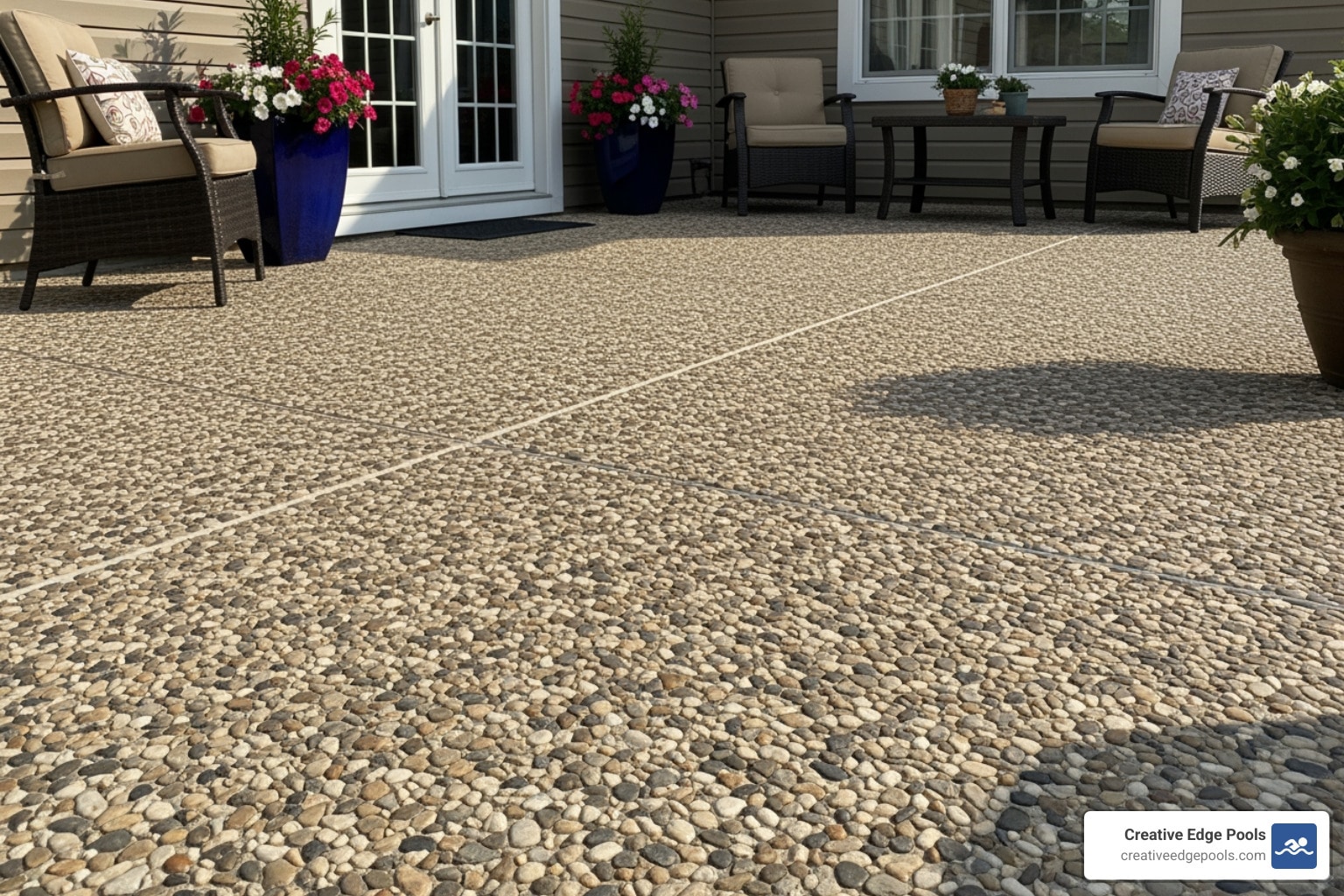
Why Exposed Aggregate Finish Is Your Secret Weapon for Outdoor Living
Exposed aggregate finish is a decorative concrete technique where you wash away the top layer of cement paste to reveal beautiful stones, pebbles, or glass embedded in the concrete. It creates a textured, slip-resistant surface that’s perfect for patios, pool decks, and walkways.
Quick Answer: How to Get an Exposed Aggregate Finish
- Pour your concrete slab with decorative aggregate mixed in
- Smooth the surface using standard finishing tools
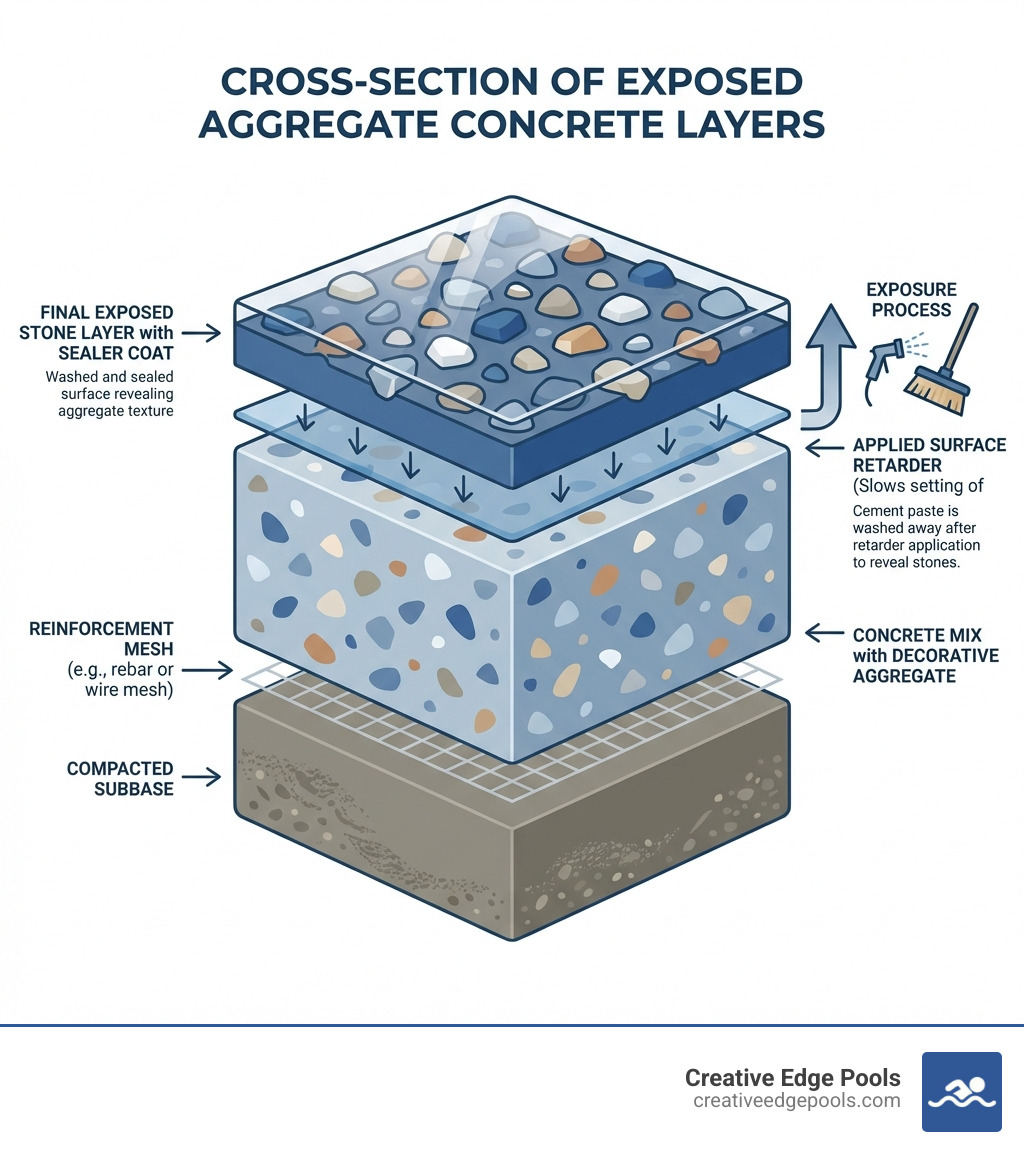
- Apply a chemical surface retarder to prevent the top layer from hardening
- Wait 5-12 hours (depending on weather)
- Wash away the cement paste with water and stiff brooms
- Seal the surface after curing for long-term protection
If you’ve ever looked at a boring gray concrete patio and thought “there has to be something better,” you’re not alone. Standard broom-finish concrete gets the job done, but it doesn’t exactly make your backyard Instagram-worthy.
That’s where exposed aggregate comes in. This finish has been around since the early 1900s, and it’s still popular because it delivers both function and beauty. The exposed stones create natural traction when wet, making it safer than smooth concrete. Plus, it hides minor imperfections and stays looking good for 20-30 years with basic care.
The best part? You’re not stuck with one look. You can choose from river stones, crushed granite, recycled glass, or even seashells. Mix in integral color, and you’ve got endless design possibilities.
Yes, it costs about $2-5 more per square foot than standard concrete. And yes, the installation requires precise timing. But homeowners in Massachusetts and New Hampshire keep choosing this finish because it transforms a simple slab into a custom outdoor feature that actually adds value to their property.
This guide walks you through every step, from choosing the right aggregate to washing away the cement paste at exactly the right moment. We’ll cover the tools you need, the mistakes to avoid, and how to keep your patio looking fresh for decades.
Understanding the Exposed Aggregate Finish
An exposed aggregate finish transforms ordinary concrete into a textured surface that reveals the natural beauty of the stones within. Unlike standard slabs where the gravel is hidden, this technique removes the top “skin” of cement paste to uncover the coarse aggregate, creating a mosaic-like appearance that is both visually appealing and functional.
| Concrete Finish | Description | Primary Benefit | Aesthetic |
|---|---|---|---|
| Exposed Aggregate | Surface treated to reveal embedded stones. | Slip-resistant & durable. | Natural, mosaic-like texture. |
| Broom Finish | Lines created by dragging a broom. | Cost-effective traction. | Simple, utilitarian look. |
| Stamped Concrete | Patterns imprinted with rubber mats. | Highly customizable. | Mimics stone, brick, or wood. |
| Polished Concrete | Mechanically ground and polished. | Easy to clean. | High-gloss, smooth finish. |
The exposed aggregate finish stands out by leveraging the inherent beauty of the stones. It provides a rugged, nonskid surface ideal for patios, driveways, and pool decks in Eastern MA and Southern NH. You can learn more about its properties via Lehigh Hanson Canada’s Concrete Products.
Why Homeowners Choose This Texture
Homeowners across Massachusetts and New Hampshire choose this finish for its blend of practicality and curb appeal.
- Weather Resistance: It handles New England’s freeze-thaw cycles better than standard finishes. The stones are more durable than cement paste, resisting damage from frost and salts.
- Slip Resistance: The protruding aggregates provide excellent traction, making it a safer choice for pool decks and walkways.
- Low Maintenance: It hides minor imperfections and requires only regular cleaning and periodic sealing to maintain its look for 20-30 years.
Comparing Costs and Value
Exposed aggregate typically costs between $8 and $14 per square foot for residential projects. While standard concrete ranges from $4 to $8, the higher price reflects the labor-intensive process and specialized materials.
The investment covers specialized mix designs, surface retarder application, and the timed washing process. Despite the initial cost, the longevity and improved property value offer a significant return on investment for local homeowners.
Essential Ingredients: Choosing Your Decorative Aggregate
The magic of an exposed aggregate finish begins with the stone selection. This is your chance to define the color palette and texture of your outdoor space.
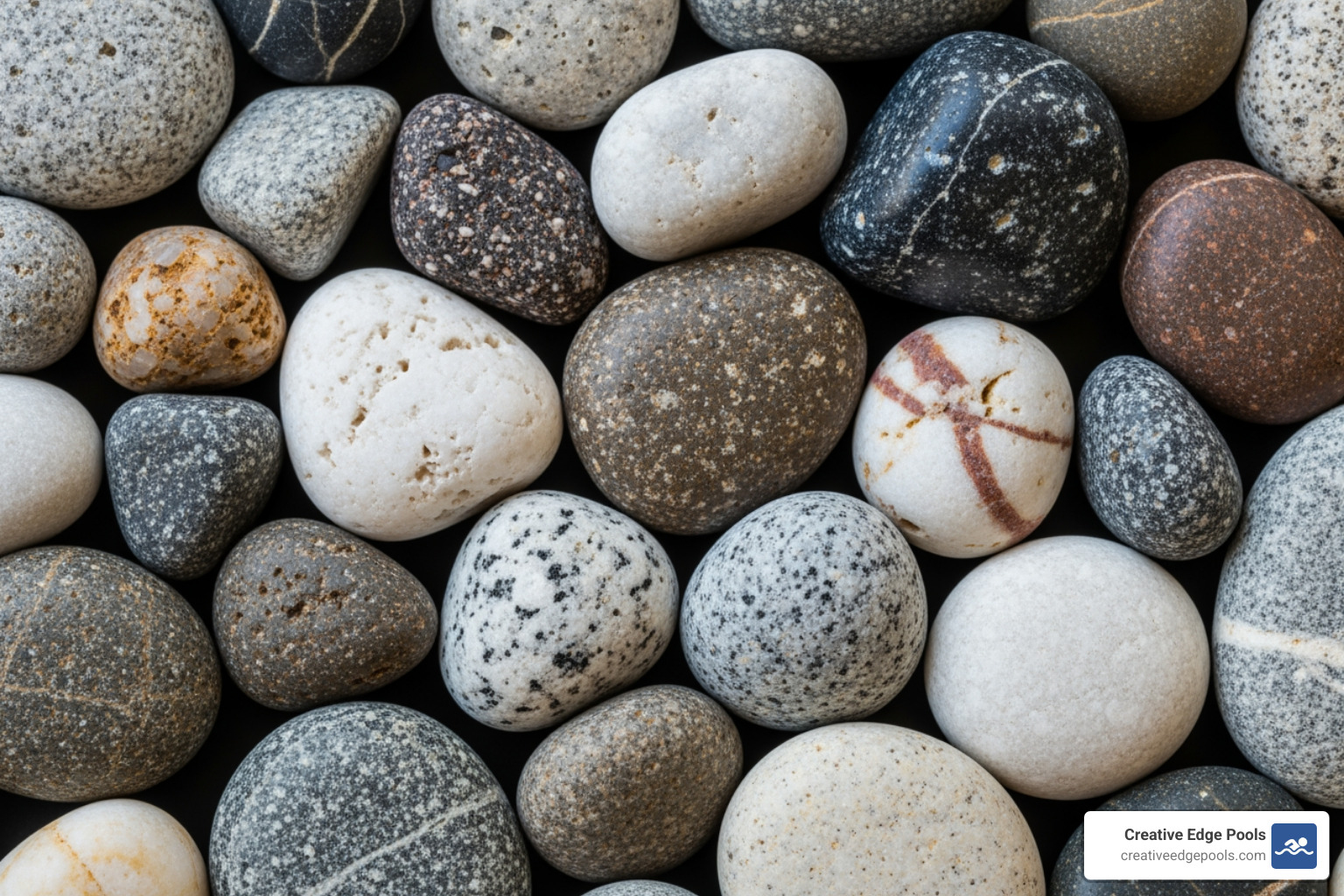
Key factors for selection include:
- Color: Earth tones, cool grays, or vibrant recycled glass.
- Hardness: Durable stones like granite, basalt, and quartz are best for traffic.
- Shape: Rounded pebbles are smoother for bare feet; angular stones offer more traction.
- Durability: Avoid stones with iron oxides that can cause staining.
Size and Shape Considerations
Aggregate size typically ranges from 10mm to 14mm (3/8 to 1/2 inch). Smaller aggregates create a subtle texture, while larger stones offer a bolder look and better slip resistance. Rounded pebbles are preferred for pool decks, while angular stones are excellent for driveways. We ensure the exposure depth is no more than one-third the diameter of the stone to prevent dislodgement.
Color and Design Possibilities
Beyond natural stone, you can incorporate recycled glass or seashells for a unique shimmer. We can also add integral color to the concrete mix to complement the stones. By using contrasting aggregates or wood divider strips, we can create custom patterns that lift your patio’s design. For more inspiration, see ConcreteNetwork’s guide on adding aggregate.
Step-by-Step: How to Achieve an Exposed Aggregate Finish
Achieving a flawless finish requires meticulous site preparation, including subgrade compaction, sturdy formwork, and steel reinforcement. We use a specific mix design with a high decorative aggregate content to ensure a dense, beautiful surface.
Pouring and Leveling the Slab
- Pouring: The concrete is distributed evenly within the forms.
- Screeding: A straightedge levels the surface to the correct elevation.
- Bull Floating: This tool pushes down large stones and brings a thin layer of cement “cream” to the top. This layer must be managed carefully, as it is what we will eventually remove.
Applying the Surface Retarder
Once the bleed water evaporates, we apply a chemical surface retarder. This “secret sauce” delays the hardening of the top layer while the concrete below cures normally.
- Application: Sprayed at 200-350 sq. ft. per gallon for uniform coverage.
- Control: Modern retarders like Brickform’s Select-Etch allow us to control the exact depth of exposure, ensuring consistent results across the entire slab.
Pro Tips for Mastering the Exposed Aggregate Finish
Timing is everything. The window for removing the retarder is usually 5-12 hours after application, but this varies based on New England’s unpredictable weather. High heat accelerates the set, while cool humidity slows it down.
Washing and Revealing the Stones
When the concrete is firm but the surface paste is soft, we begin the reveal:
- Water and Brooms: A gentle rinse and scrubbing with stiff nylon brooms is the preferred method.
- Pressure Washing: Used with caution if the concrete has set longer than 12 hours.
The goal is to expose the stones to a depth of 1/3 their diameter. For more professional insights, check Brickform’s expert tips.
Cleanup and Slurry Management
Washing creates an alkaline slurry of water and cement. We contain and collect this mixture to comply with EPA regulations and local codes in MA and NH. Once the slurry is removed, the surface is rinsed thoroughly to ensure the aggregate colors are vibrant before sealing.
Maintenance and Longevity: Keeping Your Patio Pristine
With proper care, an exposed aggregate finish lasts 20 to 30 years. The secret to this longevity is a consistent sealing and cleaning schedule. High-quality sealers protect against water, salts, and stains. Research options like Stone Technologies Corp’s sealer for the best protection.
The Importance of Sealing
Sealing is critical in New England to prevent freeze-thaw damage.
- Acrylic Sealers: Provide a “wet look” that improves stone color. See Expo-Gloss Sealer details for examples.
- Penetrating Sealers: Protect the concrete without changing its natural appearance.
Long-Term Care Schedule
- Annual Cleaning: Use a hose or low-pressure washer to remove dirt.
- Re-sealing: Every 1-3 years, depending on wear and weather.
- Minor Repairs: Address small cracks immediately with color-matched epoxy fillers.
Frequently Asked Questions about Aggregate Finishes
How much more does an exposed aggregate finish cost than standard concrete?
Expect to pay $2 to $5 more per square foot than standard broom-finish concrete. This covers the cost of decorative stones and the specialized labor required for the washing and exposure process.
Is exposed aggregate concrete too rough for bare feet?
It depends on the stone. For pool decks, we recommend rounded pebbles and a lighter exposure. A “sand-finish” is another great option that provides slip resistance without being abrasive.
Can you repair a patch of exposed aggregate?
Yes, but it requires skill. We use epoxy adhesives and matching stone batches to blend repairs. Because matching the original stone and cement color is difficult, professional assistance is recommended for seamless results.
Conclusion
We hope this extensive guide has given you a clear understanding of the beauty, durability, and detailed process behind an exposed aggregate finish. It’s more than just concrete; it’s a statement, a testament to thoughtful design that blends seamlessly with the natural environment of your home in Eastern MA or Southern NH. From its superior resistance to our challenging New England weather to its inherent slip resistance and customizable aesthetics, exposed aggregate offers a unique combination of form and function that consistently adds value and enjoyment to any outdoor space.
At Creative Edge Pools, we understand that every homeowner’s vision is unique. As a family-owned business with over 100 years of combined experience, we pride ourselves on bringing those visions to life, whether it’s a stunning new patio, a durable driveway, or a beautiful pool deck. We specialize in designing, installing, and renovating gunite pools and spas, offering full-service backyard development that includes expertly crafted concrete finishes like exposed aggregate.
If you’re dreaming of changing your backyard into an oasis that combines timeless elegance with lasting performance, we’re here to help. Contact us today to discuss how an exposed aggregate finish can be the secret sauce recipe for your successful outdoor living project. And if your plans involve a pool, don’t forget to explore more info about gunite pool renovations to complete your backyard change!