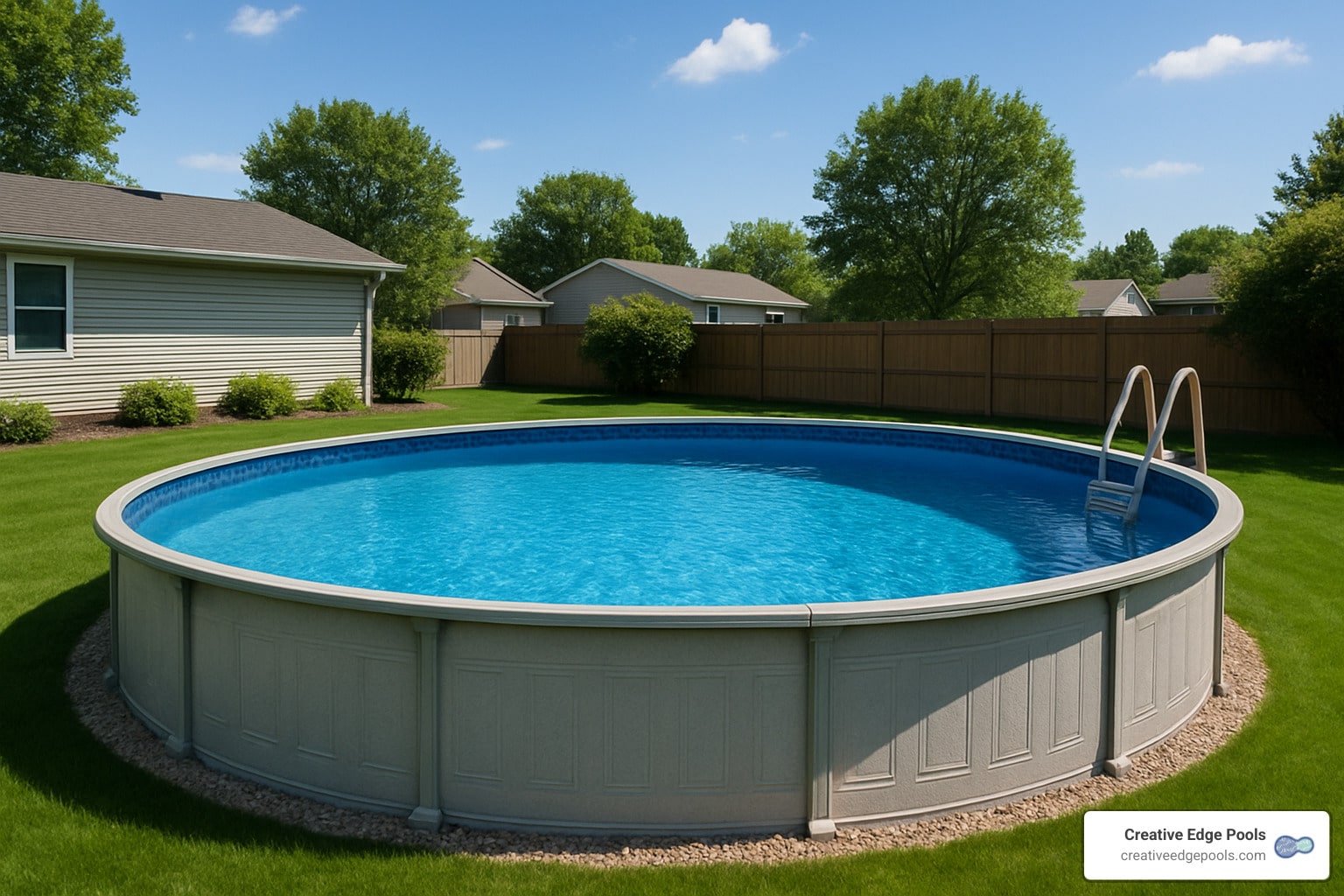
Cost of a pool liner above ground: Smart 2025 Guide
Why Understanding Above Ground Pool Liner Costs Matters
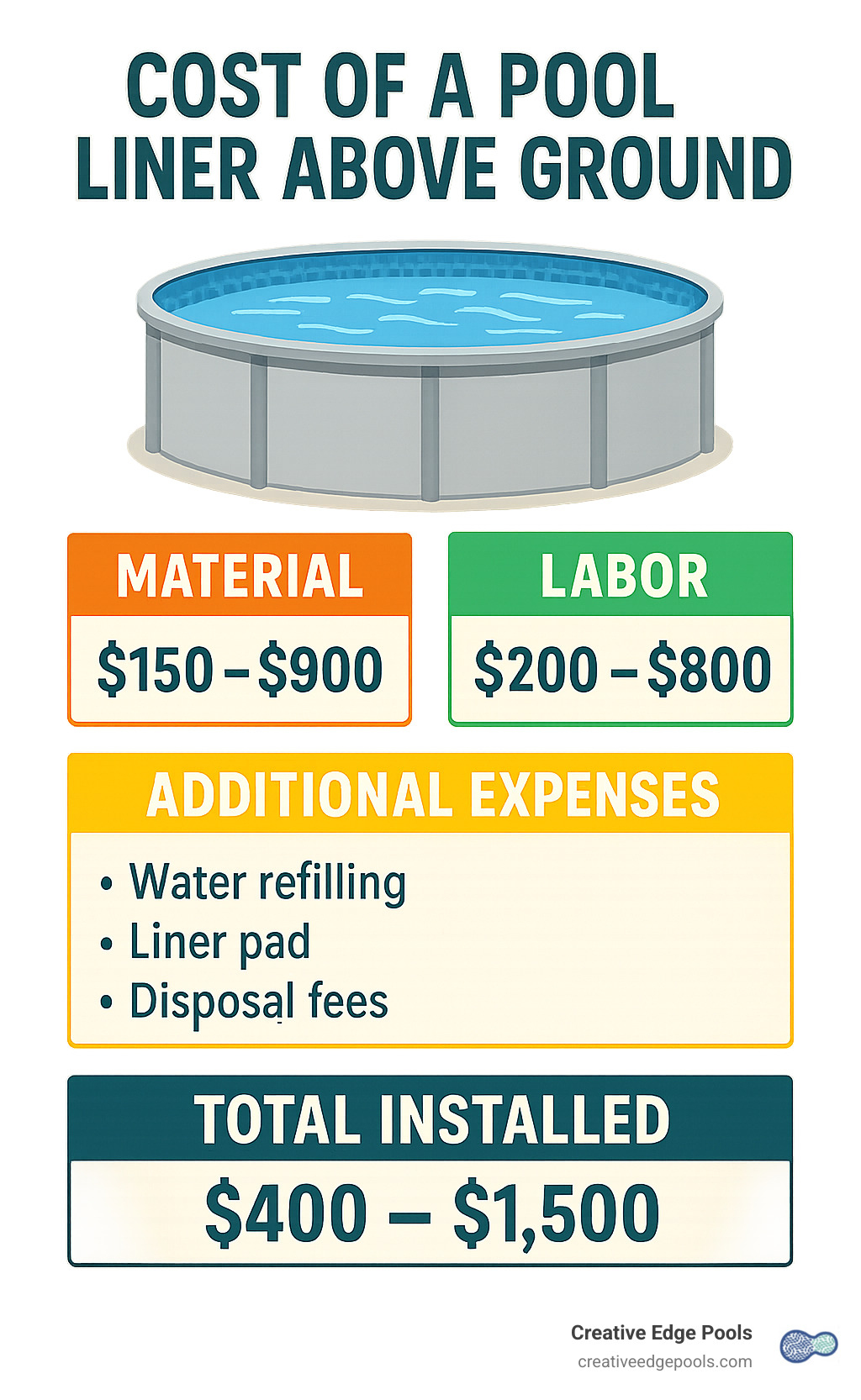
The cost of a pool liner above ground ranges from $400 to $1,500+ installed, with the liner material alone costing $150-$900. Here’s what you need to know:
Quick Cost Breakdown:
- Material Only: $150-$900
- Labor: $200-$800+
- Total Installed: $400-$1,500+
Key Cost Factors:
- Pool size and shape
- Liner type (Overlap, Unibead, Beaded)
- Thickness (gauge/mil)
- Installation complexity
Whether you’re facing a cracked liner that’s constantly leaking water or simply planning ahead for your pool’s maintenance needs, understanding these costs helps you budget properly and avoid sticker shock when quotes arrive.
The price varies significantly based on your specific situation. A basic 18-foot round pool with a standard overlap liner will cost much less than a large oval pool requiring a premium beaded liner with professional installation.
I’m David Brabant, owner of Creative Edge Pools, and with over thirty years in the swimming pool industry, I’ve helped countless homeowners steer the cost of a pool liner above ground and make informed decisions about their pool investments. My hands-on experience from warehouse work to pool installation gives me unique insight into what really drives these costs.
Breaking Down the Total Cost of a Pool Liner Above Ground
When you’re planning a pool liner replacement, the cost of a pool liner above ground isn’t just about the liner itself. Think of it like renovating a room – you’ve got your main materials, but there’s also labor, prep work, and those little extras that somehow always pop up. Let’s walk through each piece so you’ll know exactly where your money goes.
Average Material Cost of a Pool Liner Above Ground
The liner material is your biggest single expense, and honestly, it’s where you’ll see the most dramatic price swings. We’re talking anywhere from $150 to $900 just for the vinyl itself.
Here’s what drives that huge range. A basic overlap liner for a smaller round pool might only set you back $150-$600. These are your budget-friendly workhorses – they get the job done without breaking the bank. Unibead liners bump you up to the $200-$700 range, while beaded liners – the premium option – can run $300-$900.
But size matters more than you might think. A compact 12-foot round pool needs far less material than a sprawling 21×41-foot oval. It’s simple math – more vinyl equals more money. That designer pattern you’re eyeing? It’ll cost more than a solid blue, but sometimes those extra dollars make your backyard feel like a resort.
The thickness of your vinyl also plays a role. Standard 20-gauge liners offer solid durability at a lower price point. Want something tougher? Premium 25-gauge or 28-mil liners will resist punctures better and last longer, but they’ll add $200-$400 to your material costs.
Professional Installation and Labor Costs
Labor typically runs $200-$800 or more, and trust me, this isn’t just someone slapping a liner in place. Professional installation is actually quite involved.
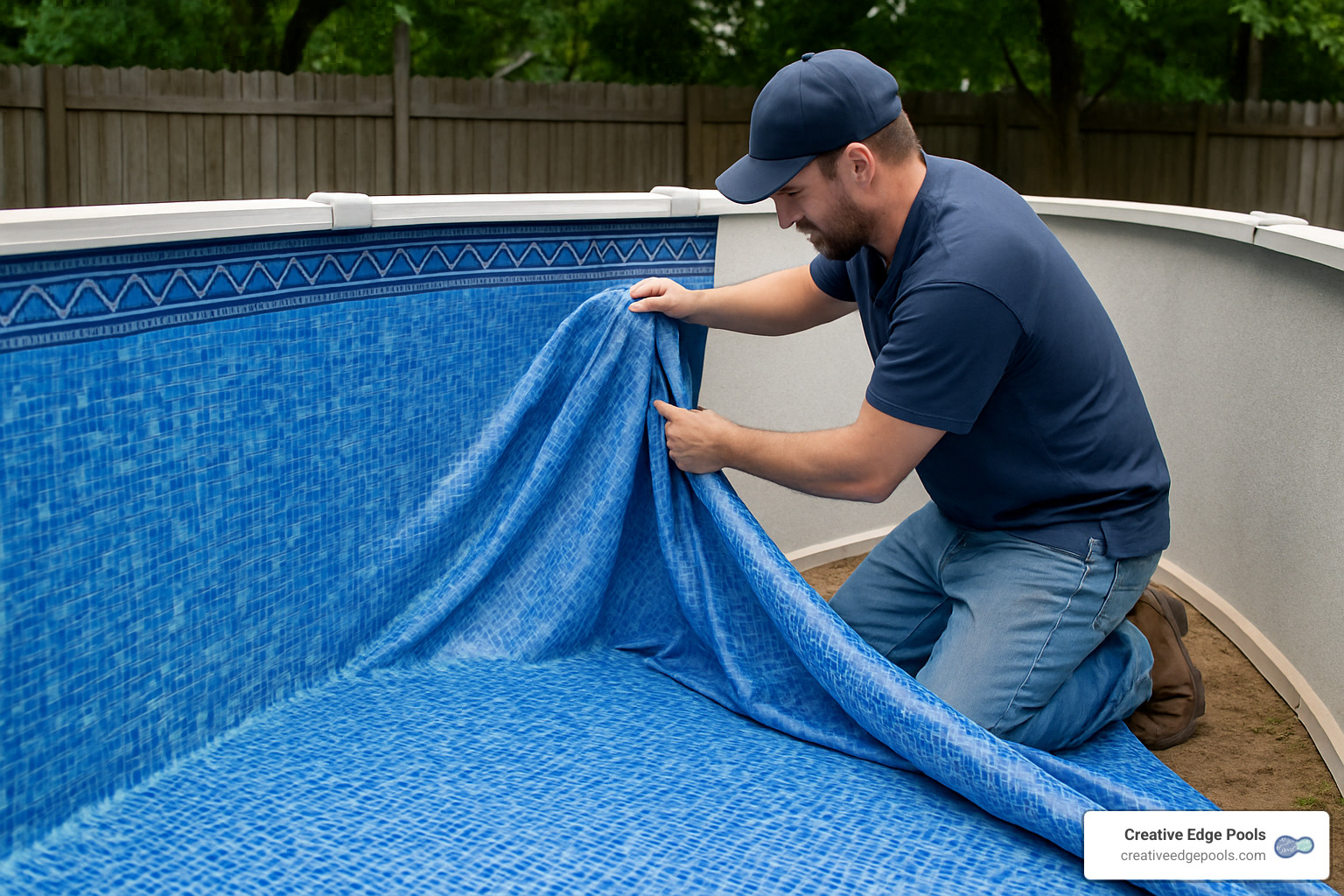
Your installer needs to drain your pool completely, remove the old liner (which can be surprisingly stubborn), inspect the base for any issues, and then carefully install the new liner with proper stretching. Finally, they’ll start the refill process and make sure everything looks perfect.
Time-wise, most installations take 5-6 hours for smaller pools (up to 600 square feet) and 8-9 hours for larger ones (up to 800 square feet). But if your pool needs structural work or base repairs, you might be looking at several days instead of hours.
Where you live affects labor costs too. Here in Eastern Massachusetts and Southern New Hampshire, our rates reflect the local cost of living and the availability of skilled pool professionals. A simple round pool with easy access will cost less than an oval pool tucked into a tight corner where equipment access is tricky.
The All-In Price: Total Installed Cost
When you add everything up, most homeowners spend $700-$2,500 for a complete liner replacement. The average project hits around $700, but your specific situation will determine where you land in that range.
Basic replacements ($400-$900) typically involve smaller round pools with overlap liners – straightforward jobs that don’t require any extras. Mid-range projects ($900-$1,500) usually feature medium-sized oval pools with unibead liners and maybe some additional accessories. Premium installations ($1,500-$2,500+) involve larger pools, beaded liners, and often some structural work or upgrades.
These numbers align with what we see across the industry, though premium projects can definitely push beyond these ranges if you’re dealing with custom shapes or extensive repairs.
At Creative Edge Pools, we believe in transparency. Our estimates break down every single cost component, so you’ll never wonder where your money is going. We’ve found that homeowners appreciate knowing exactly what they’re investing in – no surprise expenses, no hidden fees, just honest pricing for quality work.
How Liner Type and Features Impact Your Budget
When you’re shopping for a new pool liner, you’ll quickly find that not all liners are created equal. The type of attachment system, thickness, and additional features you choose can dramatically affect your cost of a pool liner above ground. Let’s explore how these decisions impact your budget and what you get for your investment.
Comparing Liner Types: Overlap vs. Unibead vs. Beaded
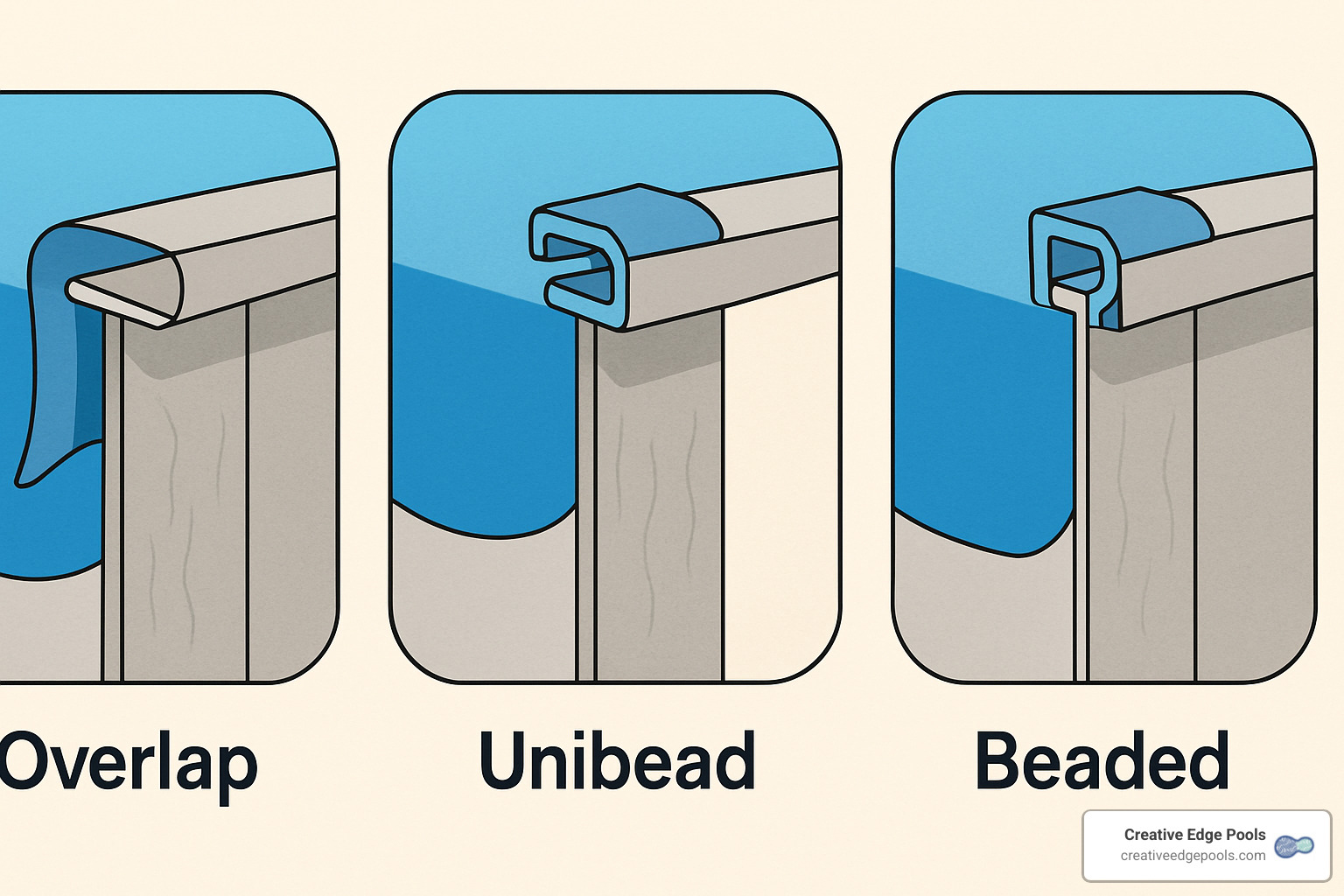
The way your liner attaches to your pool makes a bigger difference than you might think. Each system has its own price point and installation requirements that affect your total project cost.
Overlap liners are the most budget-friendly choice, typically costing $150-$600 for the material. These liners simply drape over your pool wall and get secured with coping strips. They’re forgiving if your measurements aren’t perfect, making them ideal for DIY installations or when keeping costs low is your main priority.
Unibead or J-Hook liners fall in the middle range at $200-$700. What makes them special is their versatility – they can be installed either as a beaded liner or using a J-hook system. The catch is that they require foam coving around the bottom of your pool, which adds to your material costs but gives you a much cleaner finished look.
Beaded liners represent the premium option, ranging from $300-$900. These liners snap into a track system around your pool’s perimeter, creating the cleanest appearance of all three options. Once the track system is installed, future liner replacements become much easier. However, they require precise measurement and installation, which can increase labor costs.
The installation complexity varies significantly between these options. Overlap liners are the most forgiving and easiest to install, while beaded liners demand precision and experience. Unibead liners sit comfortably in the middle, offering improved aesthetics without the complexity of a full track system.
Does Liner Thickness (Gauge/Mil) Matter for Cost and Durability?
Vinyl thickness is one of those features where spending a bit more upfront can save you money down the road. The thickness is measured in gauge or mil, and the numbers directly relate to puncture resistance and overall lifespan. (If you’re curious about the measurement itself, see this brief explanation of the mil (unit)).
Standard 20-gauge (20 mil) liners work well for most residential pools and represent the most economical choice. They’ll handle normal pool use without issues, but they’re more susceptible to punctures from sharp objects or pet claws.
25-gauge (25 mil) liners offer what we consider the sweet spot for most homeowners. They provide significantly better puncture resistance than 20-gauge options while avoiding the premium pricing of thicker materials. The durability improvement often justifies the additional $200-$400 cost.
28-30 mil liners represent the premium thickness option, offering maximum puncture resistance and longevity. While they can add $400-$500 to your project cost, they’re worth considering if you have pets, young children, or simply want the longest-lasting liner possible.
In our experience at Creative Edge Pools, the 25-gauge option provides the best balance of performance and value for most families. The improved durability typically extends the liner’s lifespan by 2-3 years, which more than pays for the upgrade cost.
For detailed guidance on selecting the right vinyl thickness for your specific situation, Creative Edge Pools offers comprehensive consultation services to help match your needs with the appropriate liner specifications.
Additional Costs to Keep in Mind
Beyond the liner and basic installation, several additional expenses can affect your total project cost. These extras often catch homeowners off guard, but knowing about them helps you budget accurately.
Water refilling is an unavoidable expense that varies by location and method. Municipal water typically costs $60-$120 to refill an average pool, while truck delivery runs $30-$100 per 1,000 gallons. The total depends on your pool size and local water rates.
Liner pads or shields cost $50-$150 but provide valuable protection against punctures while creating a smoother surface. They’re especially important if your pool sits on concrete or has any rough spots in the base.
Pool cove material runs $25-$75 and creates the curved transition between your pool wall and floor. This foam cove isn’t just aesthetic – it prevents sharp angles that could damage your liner over time.
Coping strips for overlap liners add $30-$100 to your project but are essential for securing the liner properly. Wall foam costs $40-$120 and provides cushioning between the liner and pool wall while improving swimmer comfort.
Don’t forget about old liner disposal, which typically costs $75-$150. Most installers include this in their quote, but it’s worth confirming. New gaskets for your skimmer and return fittings are inexpensive at $20-$50 but necessary for a leak-free installation.
Some areas require permits for pool work, adding $100-$300 to your project cost. Check with your local building department or ask your installer about permit requirements in your area.
All these accessories and services are available through Creative Edge Pools, and we help you determine which ones are necessary versus optional for your specific installation. Our goal is to prevent surprise costs while ensuring your liner replacement project delivers lasting value.
Key Considerations: Repair, DIY, and Lifespan
Before committing to a full liner replacement, it’s important to understand when repair might be sufficient and what factors affect the decision between DIY and professional installation.
Typical Lifespan: When to Replace Your Liner
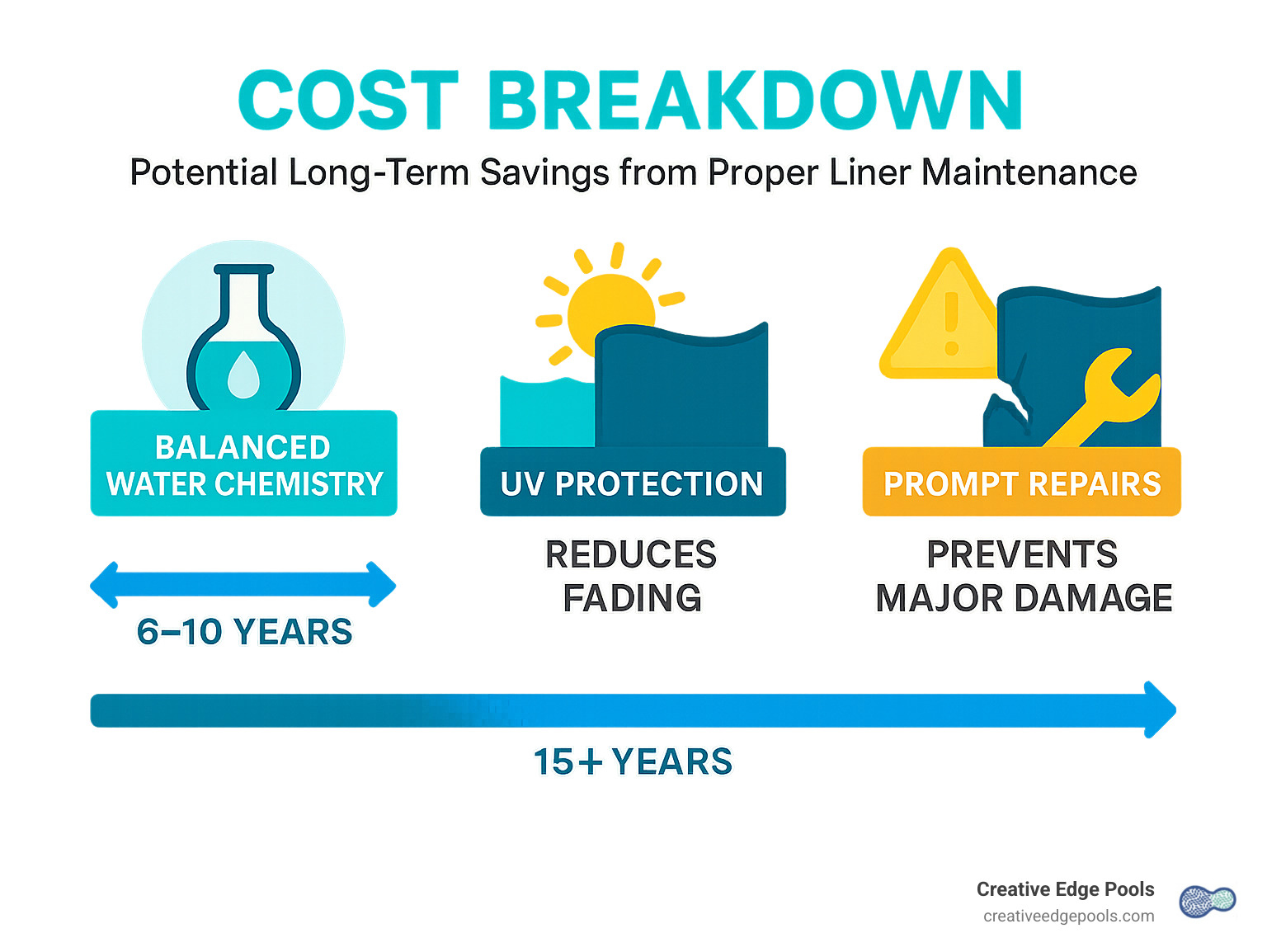
Above-ground pool liners typically last 6-10 years, though proper maintenance can extend this to 15 years or more. Several factors influence lifespan:
Signs Your Liner Needs Replacement:
- Constant water loss despite patching attempts
- Visible tears, rips, or holes underwater
- Brittleness or cracking, especially around the waterline
- Significant fading or discoloration
- Liner floating or bubbling underwater
- Pool deck sinking or erosion around the pool
Factors Affecting Liner Lifespan:
- Water chemistry: Proper pH balance (7.2-7.6) prevents chemical damage
- UV exposure: Pool covers reduce sun damage and fading
- Usage patterns: Heavy use accelerates wear
- Maintenance practices: Regular cleaning and chemical balancing extend life
- Installation quality: Proper installation prevents premature failure
At Creative Edge Pools, we emphasize the importance of proper water chemistry and regular maintenance to maximize your liner investment. A well-maintained liner can last significantly longer than the average 6-10 years.
Repair vs. Replace: Making the Smart Choice
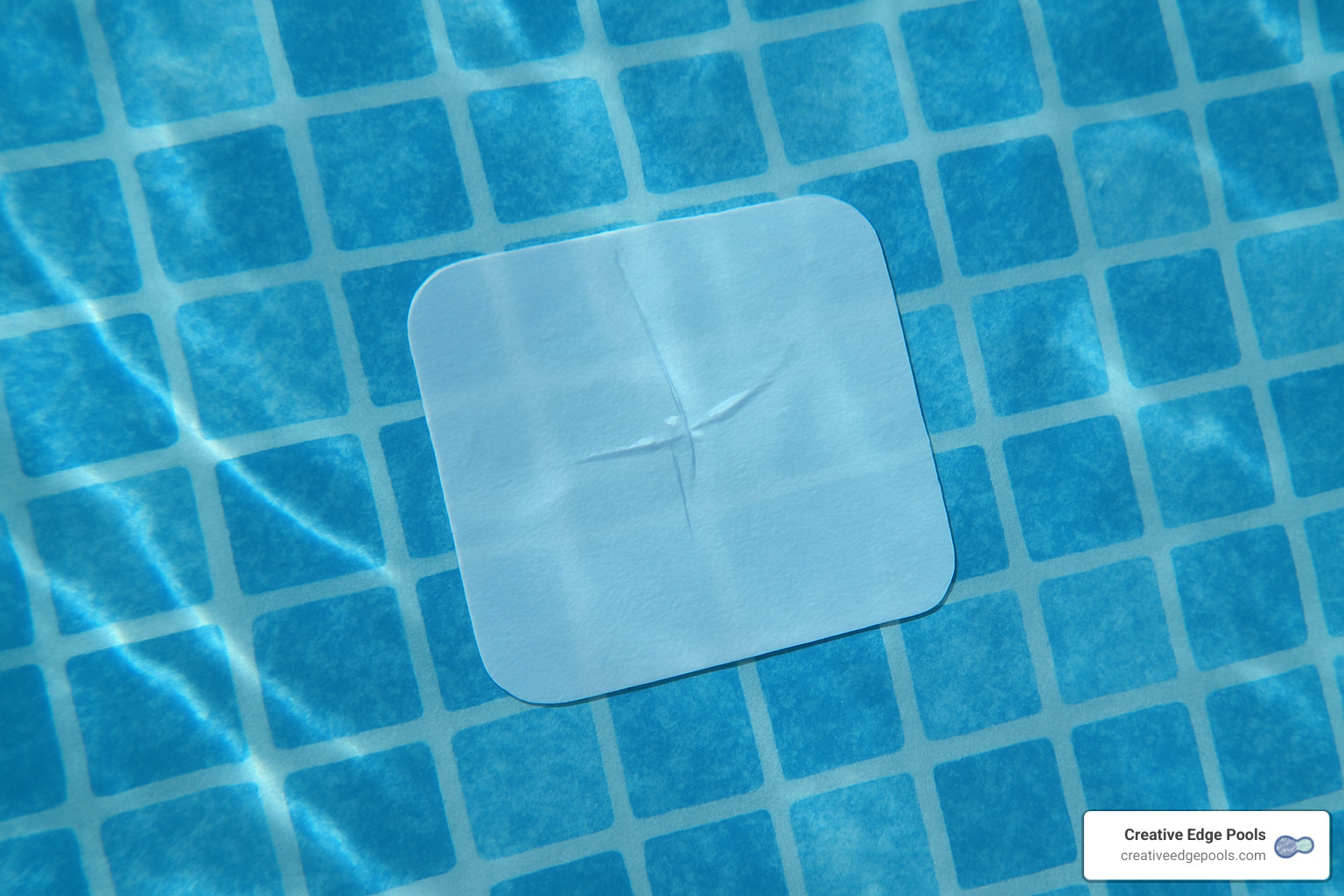
Not every liner issue requires complete replacement. Here’s how to determine the best approach:
When Repair Makes Sense:
- Small tears (under 3 inches) in liners less than 5 years old
- Minor punctures from sharp objects
- Isolated damage with warranty coverage
- Limited budget requiring a temporary solution
Repair Costs:
- DIY patch kits: $10-$50
- Professional repair: $100-$500
- Underwater repair service: $150-$300
When Replacement is Better:
- Multiple tears or widespread damage
- Liner age exceeding 8-10 years
- Significant fading or brittleness
- Recurring leaks despite multiple repairs
- Structural issues requiring pool base work
Our experience shows that attempting multiple repairs on an aging liner often costs more than replacement in the long run. For expert advice on repair versus replacement decisions, consult Creative Edge Pools for a professional assessment.
DIY vs. Professional Installation: Impact on the Cost of a Pool Liner Above Ground
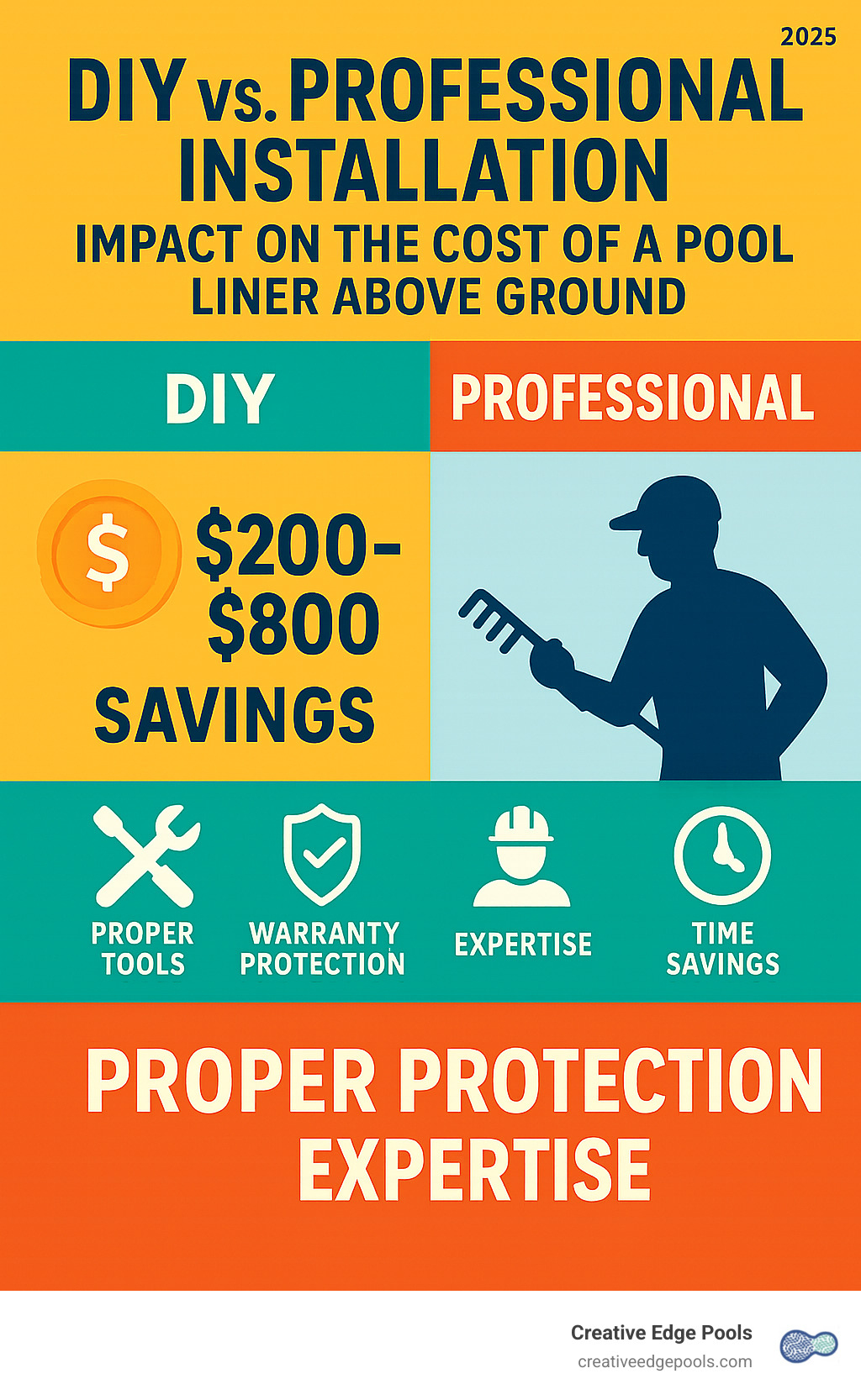
While DIY installation can save $200-$800 in labor costs, it’s not always the best choice. Here’s what you need to consider:
DIY Installation Challenges:
- Requires multiple people (typically 4-6 helpers)
- Specialized tools and equipment needed
- Risk of wrinkles, improper fit, or damage during installation
- Potential warranty voiding if installation errors occur
- Time-consuming process requiring full day commitment
Professional Installation Benefits:
- Expertise in proper liner stretching and fitting
- Specialized tools and equipment
- Warranty protection on installation work
- Efficient completion (typically same day)
- Problem-solving for unexpected issues
Our research indicates that many DIY installers “would rather pay someone to do it next time” due to the complexity and physical demands of the process. Professional installation through Creative Edge Pools ensures proper fitting, warranty protection, and peace of mind.
Frequently Asked Questions about Above Ground Pool Liners
How does my pool’s size and shape affect the liner cost?
Your pool’s dimensions directly impact the cost of a pool liner above ground because you’re essentially paying for the amount of vinyl material needed. Think of it like buying carpet – the bigger the room, the more you’ll spend.
Round pools are typically the most affordable option. A compact 12-foot round pool requires much less material than a sprawling 33-foot round pool. The difference can be substantial – sometimes $200-$400 more for the larger size.
Oval pools present a different challenge entirely. Even a smaller 18×33-foot oval liner often costs more than a 24-foot round liner because of the complex shape and additional material waste during manufacturing. The oval shape requires more precise cutting and specialized manufacturing techniques.
Our research shows that round pools range from 12 feet to 33 feet in diameter, while oval options span from 12×18 feet up to 21×41 feet. As you move up in size, both material costs and installation time increase proportionally, affecting your total investment.
Custom shapes or non-standard depths require specially-made liners, which can add $300-$500 to your project cost. These specialty liners often have longer lead times and limited pattern options.
How can I save money on my pool liner replacement?
Smart homeowners can significantly reduce their cost of a pool liner above ground through strategic choices and timing. The biggest savings come from selecting a standard, solid-color overlap liner instead of premium beaded options with designer patterns.
Timing your replacement during the off-season (fall or winter) can lower labor costs when pool professionals have more availability. Many contractors offer better rates during their slower months.
Choosing the right thickness matters too. While 25-gauge liners offer better durability, a 20-gauge liner costs $200-$400 less and still provides years of reliable service for most pools.
Maintaining proper water chemistry represents your best long-term savings strategy. Balanced pH levels (7.2-7.6) and proper chlorine levels prevent chemical damage that can cut your liner’s lifespan in half. This simple maintenance can extend your liner from the typical 6-10 years to 15+ years.
Addressing minor issues promptly prevents small problems from becoming expensive replacements. A $30 patch kit today can save you from a $1,500 replacement next year.
Consider bundling multiple pool maintenance tasks during your liner replacement. Having your pool professional handle other repairs while they’re already on-site can save on additional service calls.
Can you put a new pool liner over an old one?
While it’s technically possible to install a new liner over an old one in some sand-bottom pools, it’s one of those “just because you can doesn’t mean you should” situations. Industry professionals universally recommend complete removal of the old liner, and here’s why.
The old liner becomes brittle and sharp over time, creating potential puncture hazards for your new liner from underneath. Imagine trying to protect a balloon by placing it on top of broken glass – that’s essentially what you’re doing.
Trapped moisture between the liners creates an ideal environment for mold and bacteria growth. This not only creates health concerns but can also cause unpleasant odors and water quality issues.
The old liner can also create an uneven surface that leads to premature wear patterns on your new liner. Wrinkles and bubbles from the underlying liner will telegraph through, creating weak spots that fail much sooner than expected.
Our research confirms that the small amount of time saved by leaving the old liner in place is rarely worth the potential problems it causes. The few hours spent removing the old liner properly can add years to your new liner’s lifespan.
At Creative Edge Pools, we always recommend complete removal of the old liner to ensure the best results and longest life for your investment. The peace of mind alone is worth the extra effort.
Conclusion
Making sense of the cost of a pool liner above ground requires looking at the complete picture, not just the sticker price on the liner itself. With total installed costs typically ranging from $400-$1,500+, your final investment depends on several key decisions you’ll make along the way.
The material costs alone span from $150-$900, which might seem like a wide range until you consider the differences between a basic overlap liner for a small round pool versus a premium beaded liner for a large oval pool. Add professional installation costs of $200-$800+, and you start to see why getting accurate quotes matters so much.
Your liner type choice makes a real difference in both your upfront costs and long-term satisfaction. While overlap liners offer the most budget-friendly entry point, beaded liners provide that clean, finished look that many homeowners prefer. The installation is more complex, but the results speak for themselves.
Don’t forget about those additional expenses that can catch you off guard. Water refilling, liner pads, disposal fees, and new gaskets might seem small individually, but they add up quickly. Planning for these extras helps avoid budget surprises.
Here’s something that might surprise you: proper maintenance can double your liner’s lifespan. While most liners last 6-10 years, balanced water chemistry and regular care can extend that to 15 years or more. That makes your initial investment much more cost-effective over time.
At Creative Edge Pools, we’ve seen too many homeowners make decisions based solely on price, only to regret it later. Our comprehensive approach considers not just immediate costs but how your choices will affect your enjoyment and expenses for years to come. We provide expert guidance throughout the entire process because we know that the right liner, properly installed, transforms your backyard experience.

For a truly transformative backyard project that integrates your pool seamlessly with landscaping and masonry, consider a comprehensive approach. Learn more about inground vinyl pool liner replacement.