
Why Understanding the Average Cost of Inground Hot Tub Matters for Your Backyard Investment
The average cost of inground hot tub installation ranges from $8,000 to $25,000 for most projects, with the national average sitting around $15,000. However, custom-built gunite spas integrated with pools or designed as standalone luxury features can easily exceed these figures.
Quick Cost Breakdown:
- Prefabricated inground hot tub: $6,000 – $17,000 (installed)
- Custom gunite/concrete spa: $8,000 – $25,000+ (installed)
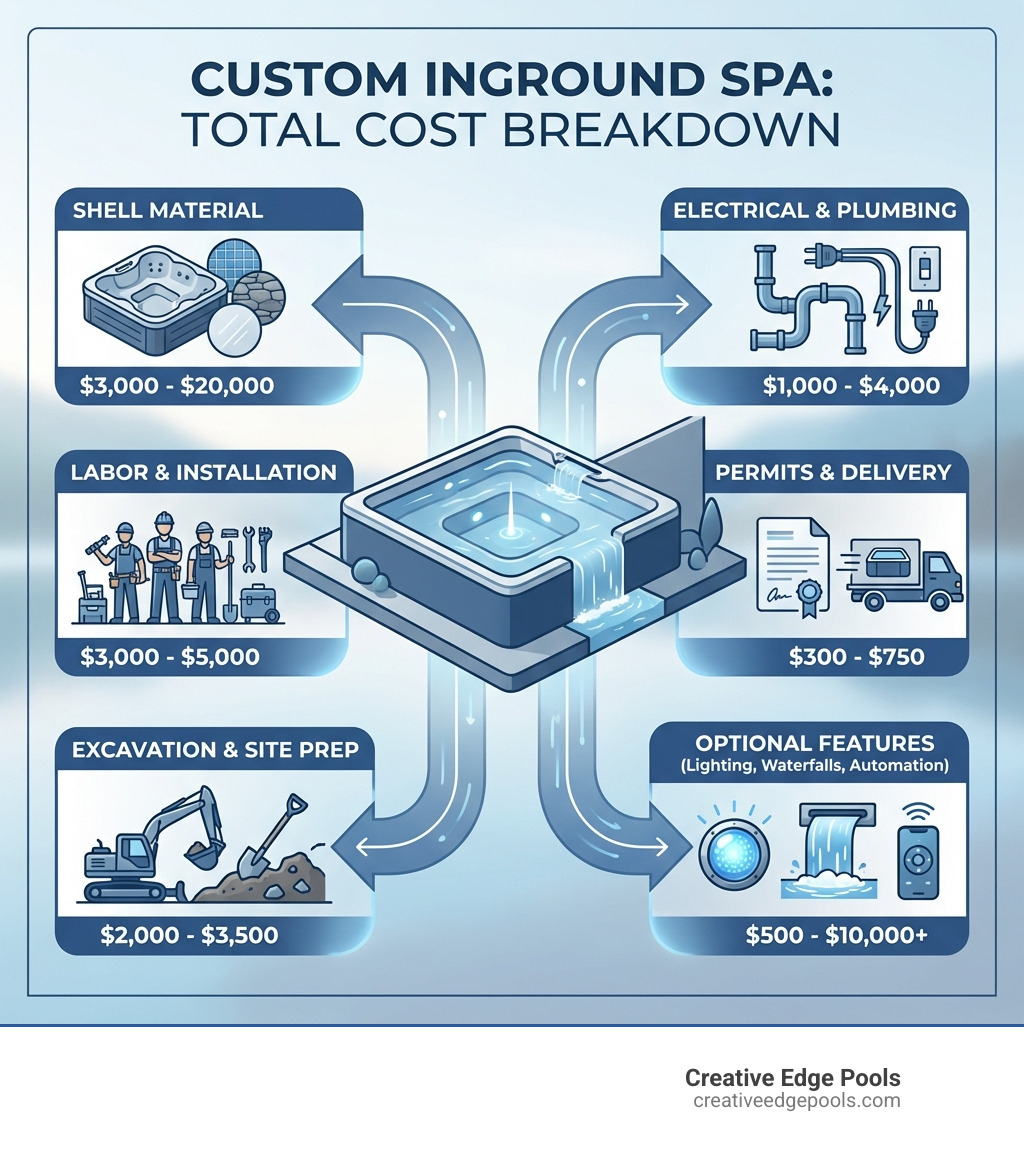
- Labor costs: $3,000 – $5,000
- Site preparation: $2,000 – $3,500
- Electrical and plumbing: $1,000 – $4,000
Whoever said the perfect pair doesn’t exist hasn’t seen a swimming pool and an inground spa sitting together. Yet when homeowners in Massachusetts and New Hampshire start planning their dream backyard retreat, the question of cost quickly rises to the surface.
Unlike buying a portable hot tub from a showroom, installing an inground spa is more like building a small addition to your home. Every property presents unique challenges – from rocky New England soil to tricky backyard access. Every design choice, from the filtration system to the tile finish, impacts your final investment.
This guide breaks down exactly what drives inground hot tub costs. You’ll learn why a tiled spa costs roughly $5,000 more than an acrylic one, what makes overflow filtration more expensive than skimmer systems, and which features deliver the best return on your investment.
Whether you’re planning a spa alongside a new gunite pool or adding a standalone relaxation oasis to your existing landscape, understanding these costs upfront helps you make confident decisions and avoid budget surprises.
What is the Average Cost of Inground Hot Tub Installation?
When considering an inground hot tub for your home in Massachusetts or New Hampshire, one of the first questions that comes to mind is, “What’s the damage to my wallet?” The average cost of inground hot tub installation is around $15,000, but this figure can fluctuate significantly based on your choices and local conditions. According to HomeAdvisor, the typical range for installing an in-ground hot tub falls between $5,000 and $25,000, with some luxury projects pushing past $35,000.
Let’s break down what these figures mean for you.
| Type of Inground Hot Tub | Average Cost Range (Installed) | Key Characteristics |
|---|---|---|
| Prefabricated Model | $6,000 – $17,000 | Factory-made shell, quicker installation, less customization. |
| Custom-Built (Gunite/Concrete) | $8,000 – $25,000+ | Built on-site, highly customizable, integrated with landscaping, superior durability. |
Data from various industry sources, including How Much Does It Cost to Install an In-Ground Hot Tub? [2025 Data].
As specialists in custom gunite pools and spas, we often see our projects fall into the higher end of this spectrum for a good reason: customization, durability, and seamless integration with your existing backyard. While a prefabricated model offers a more budget-friendly entry point, it typically comes with limitations in design and material choices.
A significant portion of the total cost goes towards labor. On average, the labor to install a hot tub costs between $3,000 and $5,000. This covers the expertise of excavators, plumbers, electricians, and the skilled craftsmen who build and finish your custom spa. Given the complexities of working with gunite and concrete, and the need for precision in plumbing and electrical work, these costs reflect the specialized skills required to ensure a safe, functional, and beautiful inground spa.
Regional variations also play a role. In areas like Eastern Massachusetts and Southern New Hampshire, factors such as the prevalence of rocky soil, stricter permitting requirements, and the cost of skilled labor can influence the overall price. For instance, excavating through granite bedrock, a common occurrence in our region, will naturally be more expensive than digging in softer soil. This is why a detailed site assessment is crucial for accurate budgeting.
Key Factors Influencing the Average Cost of Inground Hot Tub Projects
The journey to your perfect inground hot tub is paved with choices, and each decision influences the final price tag. Understanding these factors is key to managing your budget and ensuring your investment aligns with your vision for relaxation and enjoyment.
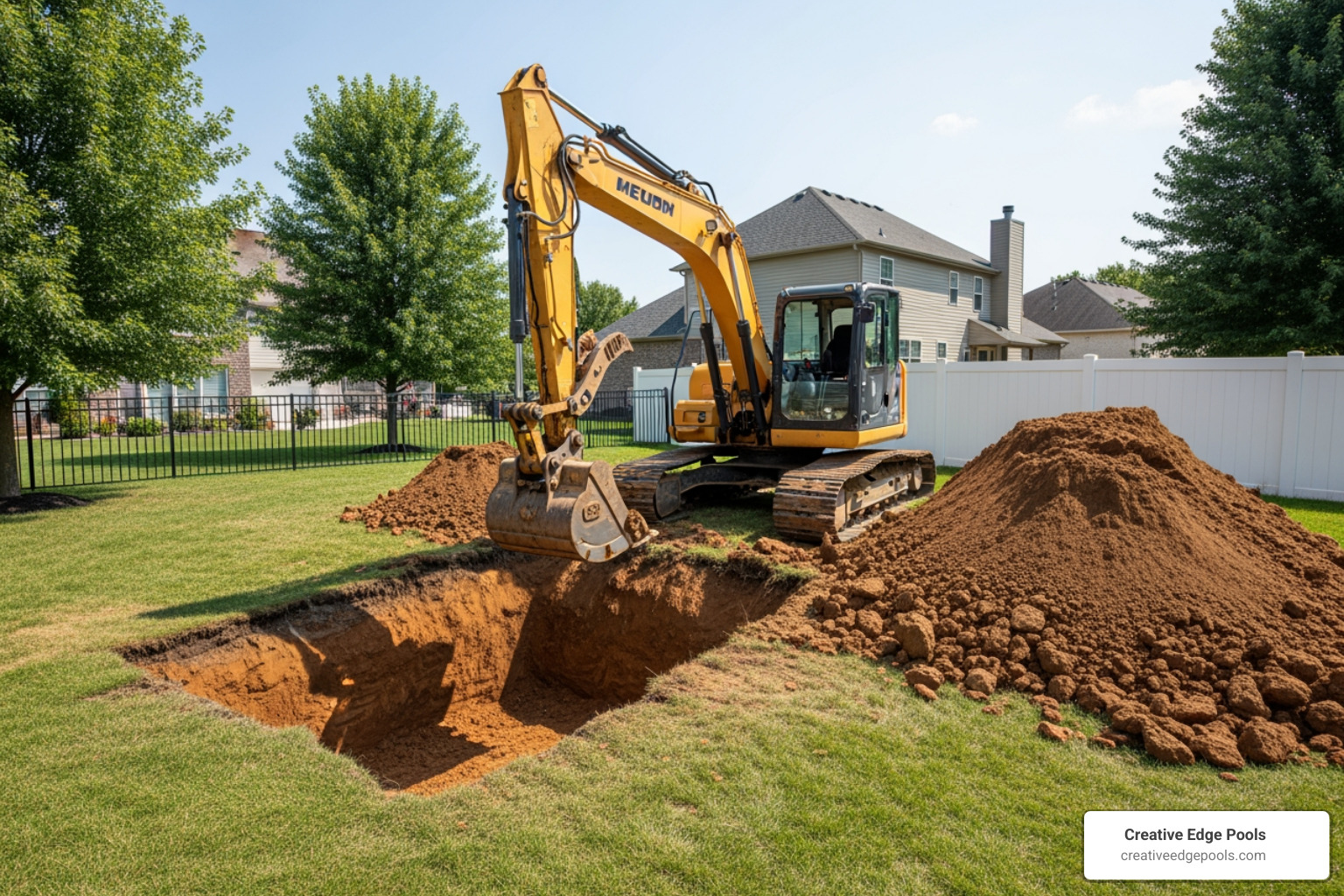
One of the first considerations is the site itself. Our New England properties often present unique challenges. Site accessibility, for example, can significantly impact costs. If heavy machinery can’t easily reach the installation area, manual labor or specialized equipment (like a crane for delivery) might be required, adding to the expense. Similarly, soil conditions are paramount. Rocky terrain, common in many parts of Massachusetts and New Hampshire, necessitates more intensive excavation, potentially driving up costs compared to softer, easier-to-dig soil.
The design of your spa’s water circulation system also plays a crucial role. We often discuss two primary filtration styles with our clients: skimmer and overflow.
- Skimmer systems: These are generally more common and less expensive. They draw water from the surface through a skimmer opening, filtering out debris.
- Overflow systems: Also known as perimeter overflow or infinity edge spas, these are more luxurious and, consequently, more expensive. Water flows over the entire edge of the spa into a hidden trough, creating a visually stunning, mirror-like effect. This design requires a larger surge tank and more complex plumbing, increasing both material and labor costs. Our research indicates that an overflow in-ground spa is typically more expensive than a skimmer system, representing the higher end of the price bracket.
Plumbing complexity is another significant cost driver. An inground spa requires extensive underground piping to connect to pumps, filters, heaters, and jets, often housed in a separate equipment pad or plant room. The distance between the spa and the equipment, the number of jets, and any additional water features all contribute to the plumbing costs.
Finally, electrical upgrades are almost always necessary. Inground hot tubs typically require a dedicated 240V electrical service. If your existing electrical panel can’t handle the load, an upgrade or a new subpanel installation will be required, adding to the total infrastructure expenses. These are critical components that must be installed by licensed professionals to ensure safety and compliance with local codes. We work closely with homeowners to design a custom spa that considers these elements from the outset. You can explore more about designing your ideal spa here: How to Design a Custom Spa.
Material Choices and the Average Cost of Inground Hot Tub Shells
The material you choose for your inground hot tub shell is one of the most significant factors influencing the average cost of inground hot tub installation, as well as its durability and aesthetic appeal. Unlike prefabricated acrylic units, custom inground spas offer a range of robust options.
Our expertise lies in gunite construction, a highly durable and customizable material. Gunite is a mixture of cement, sand, and water sprayed at high pressure over a steel rebar framework, then hand-troweled to create the desired shape. This method allows for virtually limitless design possibilities, from freeform curves to integrated seating and tanning ledges.
Here’s how different materials compare:
-
Gunite/Concrete: This is our specialty and the material of choice for luxury, custom-built inground spas. While the initial investment is higher, gunite offers unparalleled durability and longevity. It can be finished with various interior surfaces, including plaster, aggregate finishes, or tiles. A fully tiled finish, for example, offers a stunning, high-end look and exceptional durability but adds significantly to the cost. Our research shows that a tiled in-ground spa can be approximately $5,000 more expensive than an acrylic counterpart, reflecting the labor-intensive process of hand-setting each tile. Gunite spas are built to last for decades, often outliving the homes they’re installed in, making them a wise long-term investment.
-
Acrylic (Prefabricated): These are factory-molded shells that are then dropped into an excavated hole. They are typically less expensive than custom gunite spas, with prefabricated models costing $2,000 to $3,000 less than custom options. Acrylic offers a smooth, non-porous surface that is easy to clean. However, customization is limited to the manufacturer’s designs, and they may not offer the same seamless integration with your landscape as a custom gunite spa.
-
Vinyl-Lined: While less common for standalone inground hot tubs, vinyl liners are sometimes used in conjunction with concrete or steel walls. They are generally more affordable than gunite but require liner replacement every 7-10 years, adding to long-term costs.
For homeowners in Massachusetts and New Hampshire seeking a truly bespoke backyard oasis, gunite is often the preferred choice. Its strength, design flexibility, and the ability to choose premium finishes like intricate tiling allow us to create Luxury Pools and Spas that perfectly complement your home and lifestyle. The initial investment pays off in terms of durability, aesthetic value, and the sheer joy of a spa designed just for you.
Size, Features, and the Average Cost of Inground Hot Tub Add-ons
Beyond the fundamental choices of material and filtration, the size of your inground hot tub and the array of features you select play a pivotal role in determining the final average cost of inground hot tub installation. We believe that an inground spa should be a reflection of your personal style and needs, and the options are virtually endless.
Size and Seating Capacity:
Naturally, a larger spa requires more material, more excavation, and more water, all of which increase the cost. Hot tubs are typically categorized by seating capacity, and the price scales accordingly:
- Small (2-4 people): Unit-only costs can range from $3,000 – $9,000. Ideal for intimate relaxation.
- Medium (5-6 people): Unit-only costs often fall between $4,000 – $15,000. Great for families or small gatherings.
- Large (7+ people): Unit-only costs can be $5,000 – $20,000+. Perfect for entertaining and larger families.
These are unit-only costs for prefabricated models; custom gunite spas will have different pricing structures that incorporate material and labor for the shell.
Jet Count and Configuration:
The number and type of jets are central to the hydrotherapy experience. More jets, especially specialized ones for different massage types (e.g., pulsating, directional, rotational), will increase the cost. We can design custom jet configurations to target specific muscle groups, ensuring optimal relaxation and therapeutic benefits.
Lighting and Water Features:
Ambiance is everything in a spa. Adding LED lighting, particularly color-changing systems, can transform your evening soak. These can range from $25-$60 per light for basic options, with professional lighting systems potentially costing $2,000-$3,000. Water features like waterfalls, laminar jets, or deck jets ($300-$2,000) add soothing sounds and visual appeal, elevating your spa into a true backyard retreat.
Automation Systems and Controls:
Modern technology can make your spa experience effortless. Automation systems allow you to control heating, filtration, and jets remotely via a smartphone app. While these add to the upfront cost, they offer convenience and can optimize energy usage. Remote control operating systems are also available for seamless management.
Saltwater Systems:
For those seeking an alternative to traditional chlorine, a saltwater chlorination system can be integrated. These systems convert salt into chlorine, resulting in softer water that is gentler on skin and eyes. A saltwater generator can add between $200 and $1,500 to your installation cost, but it can reduce ongoing chemical expenses. However, it’s crucial to ensure all spa components are compatible with saltwater to prevent corrosion.
Integration with a Pool:
If you’re considering a new gunite pool, integrating a spa into the design can be a cost-effective approach. Building a Gunite Pool With Spa simultaneously often reduces overall excavation, plumbing, and electrical costs compared to installing them separately. This also creates a cohesive and visually stunning backyard environment.
Site Preparation and Infrastructure Expenses
Before any water fills your new inground hot tub, significant groundwork needs to be laid – literally. Site preparation and infrastructure expenses are foundational costs that can vary widely depending on your property in Massachusetts or New Hampshire. These elements are crucial for the structural integrity, safety, and functionality of your spa.
Excavation Costs: This is often the first and most variable expense. For an inground spa, a hole needs to be dug to precise dimensions. Excavation costs can range from $400 to $2,500, or $2.50 to $15.00 per cubic yard, depending on the depth, size, and most importantly, the soil conditions. Our region, known for its rocky terrain and even granite bedrock, can significantly increase these costs. If extensive rock removal or blasting is required, these prices can climb considerably. Trenching for plumbing and electrical lines also falls under excavation, adding to the labor and equipment time.
Concrete Pad/Foundation: A stable foundation is paramount for an inground hot tub, which can weigh up to six tons when filled. A reinforced concrete pad is often required to support this immense weight. The cost for a concrete pad can range from $1,000 to $1,500, or $2 to $6 per square foot. This ensures the spa remains level and prevents future settling or structural issues.
Plumbing and Electrical Work: These are non-negotiable and safety-critical aspects of inground hot tub installation.
- Electrical Wiring: An inground hot tub typically requires a dedicated 240V electrical service. Running the necessary wiring from your main electrical panel to the spa site can cost between $600 and $2,200. If your existing electrical panel lacks the capacity, a new subpanel installation or an upgrade can add an additional $400 to $1,800. These tasks must be performed by a licensed electrician to comply with safety codes and prevent hazards.
- Plumbing Pipes: Connecting the spa to its pumps, filters, and heater requires extensive piping. The cost for new plumbing pipes can range from $350 to $2,000, depending on the length of runs and complexity of the system.
Building Permits: Before any digging begins, you’ll need to secure the necessary permits from your local municipality in MA or NH. These permits ensure your installation complies with local building codes and safety regulations. Permit costs typically range from $100 to $250. Skipping this step can lead to fines, forced removal, or complications when selling your home.
Delivery Logistics and Crane Fees: While some prefabricated hot tubs can be delivered with standard equipment, custom gunite shells or large prefabricated units being placed in inaccessible backyards may require specialized delivery. If a crane is needed to lift the spa over your house or other obstacles, this can add a significant cost, ranging from $800 to $2,500 or more, depending on the complexity of the lift and the crane’s reach. Standard delivery costs, without a crane, typically run between $200 and $500.
Understanding these detailed expenses for site preparation and infrastructure is vital for an accurate budget. For more insights into these factors, explore In-Ground Hot Tub Cost Factors in 2026.
Long-Term Ownership: Maintenance and Running Costs
The initial installation cost is just one piece of the puzzle when it comes to your inground hot tub investment. To truly understand the full financial commitment, we need to consider the ongoing running and maintenance costs. Just like any luxury appliance, an inground spa requires consistent care to ensure its longevity and your continued enjoyment.
Electricity Usage: This is often the largest ongoing expense. The good news is that modern hot tubs are much more energy-efficient than older models. Most homeowners can expect to pay around $20 to $60 per month for electricity to power their hot tub, with an average around $30 per month. This figure can vary based on several factors:
- Spa Size: Larger spas require more energy to heat.
- Insulation: Well-insulated spas and covers retain heat better, reducing energy consumption.
- Usage Frequency: The more you use it, especially in colder months, the higher your bill.
- Temperature Settings: Maintaining a higher temperature uses more electricity.
- Climate: In our New England climate, heating a spa in winter will naturally consume more energy than in warmer regions.
Water Chemistry and Chemicals: Maintaining proper water chemistry is crucial for hygiene, comfort, and the lifespan of your spa. This involves regularly testing the water and adding chemicals like sanitizers (chlorine or bromine), pH adjusters, alkalinity balancers, and calcium hardness increasers. The annual cost for chemicals and filters typically ranges from $120 to $370. You’ll also need to drain and refill your hot tub water several times a year (about 3-4 times) for a thorough cleaning, incurring a small cost for water.
Annual Servicing: Just like your car, your hot tub benefits from professional annual servicing. Nick Clamp, Editor-In-Chief of WhatSpa? Magazine, recommends servicing your hot tub every 12 months to keep it in optimal condition. This can include checking pumps, heaters, jets, and electrical components, and ensuring all systems are running efficiently. Professional routine service visits typically cost $50 to $300 per visit.
Component Replacement and Repairs: Over time, components may wear out and need replacement. Filters, headrests, jet faces, and lights are common items. Unexpected repairs, such as a faulty heater element or pump issue, can arise. Individual repairs typically cost between $160 and $500. A comprehensive annual maintenance budget, including chemicals, filters, and potential minor repairs, often falls between $500 and $1,000 per year.
Winterization: In our Massachusetts and New Hampshire climate, proper winterization is essential if you choose not to run your hot tub year-round. This involves completely draining the water, removing any equipment that could be damaged by freezing temperatures, and using a wet/dry vacuum to ensure no residual water remains in the lines. This protects your investment from costly freeze damage.
Energy Efficiency Measures: To curb electricity costs, we always recommend choosing an energy-efficient model with good insulation, using a high-quality, tightly fitting insulated cover, and considering a thermal blanket. Programming heating cycles to coincide with off-peak electricity hours can also provide savings.
Frequently Asked Questions about Inground Hot Tub Costs
We understand that investing in an inground hot tub brings up many questions. Here, we address some of the most common inquiries our clients in Massachusetts and New Hampshire have about the financial aspects of their dream spa.
Does an inground hot tub add value to my home?
This is a nuanced question, and the answer often depends on the prospective buyer and the quality of the installation. A well-maintained, aesthetically integrated inground hot tub, especially one designed as part of a cohesive backyard landscape, can certainly improve your home’s appeal and potentially add value. It signifies a luxury amenity and a commitment to outdoor living.
However, an outdated, poorly maintained, or standalone hot tub that doesn’t blend with the property can be seen as a liability, deterring some buyers who may not want the associated maintenance. For the best return on investment, we recommend a professional installation that complements your home’s architecture and existing landscaping, ensuring it’s always kept in pristine condition. A well-executed installation improves buyer interest and boosts curb appeal.
What is the price difference between a custom inground hot tub and other spa options?
The price difference between a custom inground hot tub and other spa options is quite significant, reflecting variations in materials, installation complexity, and customization levels.
- Inflatable Hot Tubs: These are the most budget-friendly, ranging from $400 to $1,500. They are portable, easy to set up, but lack durability and advanced features.
- Portable/Above-Ground Hot Tubs: These typically cost between $3,000 and $10,000. They are self-contained units that sit on a prepared surface. While they offer more features than inflatables, they don’t provide the integrated, permanent aesthetic of an inground spa.
- Prefabricated Inground Hot Tubs: These factory-molded shells cost $6,000 to $17,000 installed. They offer a middle ground, being partially inground but with limited design flexibility.
- Custom Inground Hot Tubs (Gunite/Concrete): These are the premium option, ranging from $8,000 to $25,000+, with luxury projects exceeding $35,000. They are built on-site, offering unlimited customization in shape, size, features, and finishes (like tiling), and are integrated seamlessly into your landscape. The higher cost reflects the specialized labor, materials, and extensive site work involved.
You’re investing in permanence, superior durability, and bespoke design with a custom inground hot tub, which naturally commands a higher price point than its more temporary or pre-made counterparts.
How much does it cost to run an inground spa monthly?
The primary monthly running cost for an inground spa is electricity, which powers the heater, pumps, and filtration system. For most homeowners in our service areas, you can expect to pay around $20 to $60 per month for electricity, with an average of about $30 per month.
This figure can vary based on:
- Insulation and Cover Quality: A well-insulated spa with a high-quality, tightly fitting cover will retain heat better, reducing heating costs.
- Usage Frequency and Duration: The more often and longer you use your spa, the more electricity it will consume.
- Desired Water Temperature: Maintaining a higher temperature requires more energy.
- Outdoor Air Temperature: Heating a spa in the cold New England winter will cost more than in milder seasons.
- Energy-Efficiency of Components: Newer, more efficient pumps and heaters can reduce consumption.
Beyond electricity, you’ll have monthly costs for water testing supplies and chemicals, which are typically a smaller portion of the budget. Annually, these average $120 to $370. When budgeting, it’s wise to factor in the full spectrum of ongoing expenses, including potential repairs and annual servicing, to get a complete picture of long-term ownership.
Conclusion
Starting on the journey to install an inground hot tub is an exciting prospect for any homeowner in Eastern Massachusetts or Southern New Hampshire. While the average cost of inground hot tub installation can seem like a significant investment, understanding the various factors that contribute to the price allows you to plan effectively and make informed decisions. From the choice between prefabricated and custom gunite models to the intricacies of site preparation, material selection, and ongoing maintenance, every detail plays a role in your total investment.
At Creative Edge Pools, we understand that this isn’t just about a price tag; it’s about bringing your backyard vision to life. With over 100 years of combined experience as a family-owned business, we pride ourselves on custom craftsmanship and full-service backyard development. We guide you through every step, ensuring that your inground spa is not only a source of endless relaxation and enjoyment but also a valuable, seamlessly integrated addition to your home. We’re here to help you steer the costs, choose the right features, and create a custom gunite spa that perfectly fits your lifestyle and improves your property for years to come.
Ready to dive deeper into the possibilities for your New England backyard? Let’s explore how we can turn your dreams into a tangible, luxurious reality.
