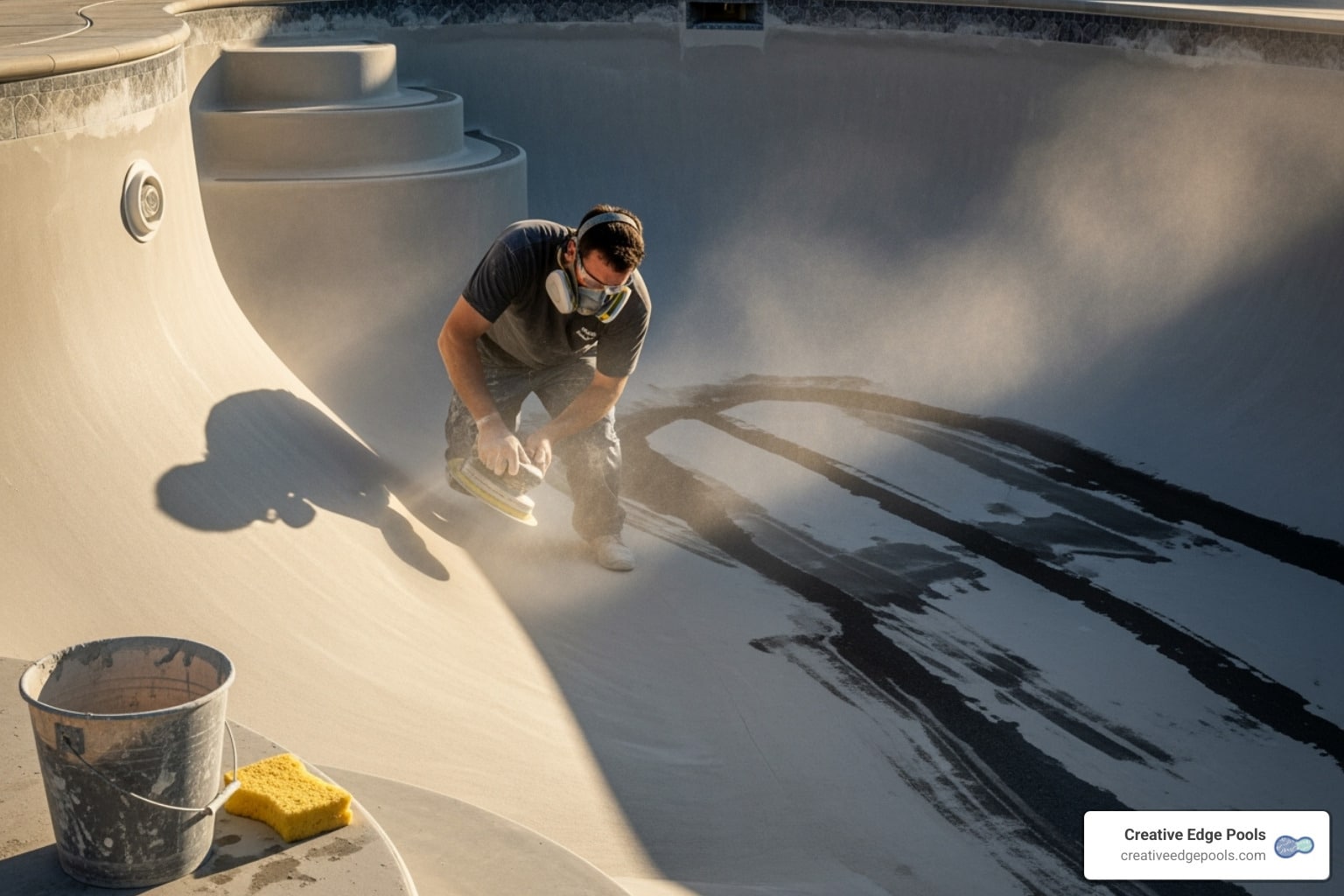
Sanding Pool Plaster: Complete Smooth Guide 2025
Why Your Pool Plaster Feels Like Sandpaper
Sanding pool plaster is often the best DIY solution when your pool’s surface becomes rough enough to scrape skin or snag swimsuits. Here’s what you need to know:
Quick Answer: How to Sand Pool Plaster
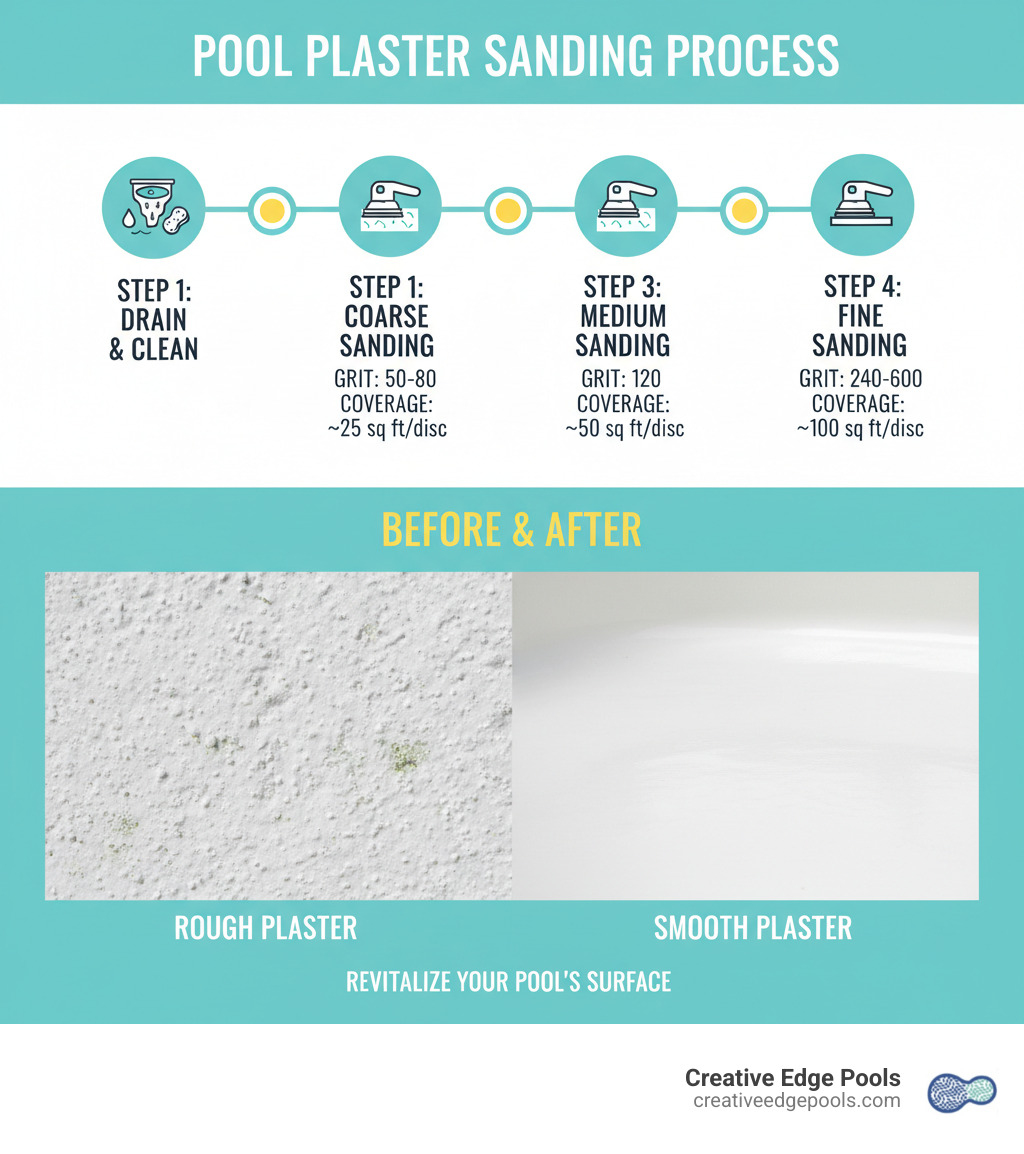
- Drain the pool completely and clean the surface
- Use coarse grit (50-80) for initial smoothing of rough areas
- Follow with medium grit (120) for general surface preparation
- Finish with fine grit (240-600) for a smooth, polished feel
- Work in small sections (5×5 ft) with light, consistent pressure
- Rinse frequently to prevent overheating and remove debris
The walls and bottom of plaster pools can become rough over time because of poor water chemistry, chlorine exposure, and mineral buildup. What starts as a minor texture issue quickly becomes a major comfort problem – nobody wants to exit the pool looking like they wrestled with concrete.
Many pool owners face quotes of $10,000 or more for complete replastering when simple sanding could restore their pool’s smooth finish for a fraction of the cost. The key is knowing when sanding will work and how to do it safely without damaging your plaster.
I’m David Brabant, owner of Creative Edge Pools, and I’ve been working with gunite pools and plaster finishes for over thirty years in Massachusetts and New Hampshire. Throughout my career, I’ve seen countless pools transformed through proper sanding pool plaster techniques, turning rough, uncomfortable surfaces back into the silky-smooth finishes homeowners love.
The Complete Guide to Sanding Pool Plaster
When your pool feels like sandpaper, it’s time to act. As someone with over three decades of experience with gunite pools, I can tell you that sanding pool plaster isn’t just about aesthetics – it’s about restoring the comfortable, silky finish that makes swimming a joy.
Understanding the Problem: Causes of Roughness and When to Sand
Before we dive in, let’s talk about why your plaster becomes rough. Your pool’s surface is a report card for its water chemistry.
Poor pool chemistry is the biggest culprit. When your pH is consistently high or calcium hardness levels are imbalanced, calcium precipitates out of the water and deposits onto your plaster. This creates rough spots, scaling, and calcium nodules that feel like little rocks under your feet.
Many pool owners mistakenly use acid washing as a quick fix. While it can remove stains and scale, too much acid (or incorrect application) eats away the cement paste in your plaster, leaving the aggregate (the sand or pebbles) exposed. This overexposed aggregate is what creates the sandpaper feeling.
If you have a saltwater pool, there’s another factor at play. The salt itself, over time, can attack the cement in plaster, gradually eroding it and contributing to roughness. It’s one of those trade-offs – you get the benefits of saltwater, but your plaster needs a bit more TLC.
Even brand-new plaster isn’t always perfectly smooth. It’s hand-troweled with an intentional “eggshell” texture for traction. Minor imperfections, slight blotchiness, streaking, and small “check” cracks are actually normal.
So when is sanding pool plaster the right solution? You’ll want to consider it when you’re dealing with overexposed aggregate from aggressive acid washing, topical stains that regular cleaning can’t touch, calcium scale and nodules, or just general roughness that’s making your pool uncomfortable.
The good news is that manufacturers recommend a minimum plaster thickness of 5/8 inch, which gives you plenty of room to smooth out rough spots without compromising the structural integrity. If your plaster is significantly thinner or severely damaged, you might need to consider a full replastering – but for most common issues, sanding offers a fantastic, cost-effective alternative. For more comprehensive renovation options, you can explore our gunite pool renovations services.
Gearing Up: Essential Tools and Materials for the Job
Having the right tools makes the difference between a professional-looking result and a frustrating weekend project.
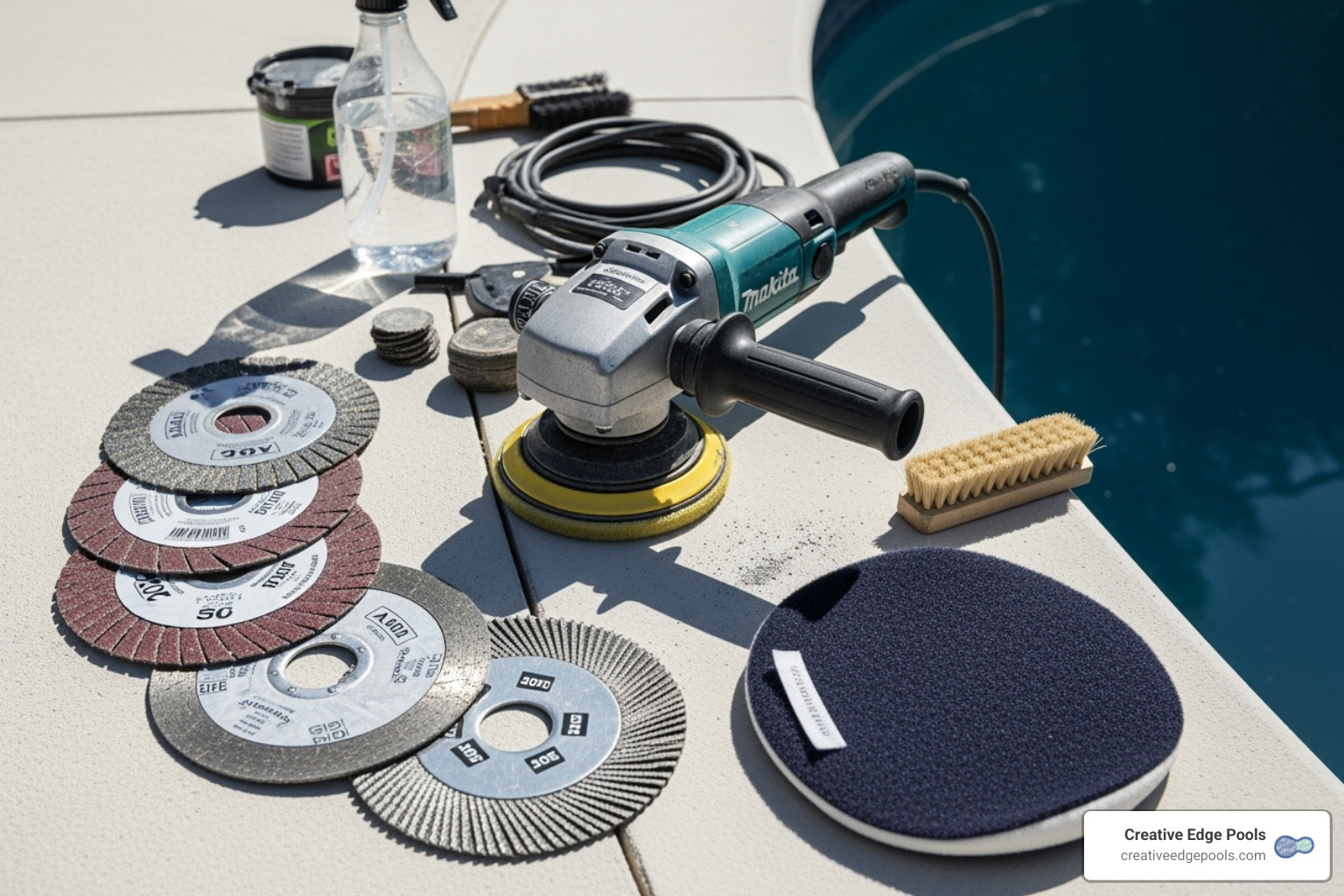
Your variable speed polisher or sander is the heart of this operation. Look for one that maxes out at 3500 RPM, as anything faster can generate too much heat and damage your plaster. The variable speed feature gives you control. Pro tip: the tool’s weight is usually enough pressure; you don’t need to lean into it.
Non-corrosive diamond discs are a modern solution. Traditional metal-bonded abrasives can leave corrosive particles that harm saltwater systems and affect chlorine readings. The specialized bonding in quality diamond discs prevents rust and corrosion—a worthwhile investment.
Your Velcro backer pad must match your disc diameter. A mismatch leads to uneven wear and poor results.
You’ll need a submersible pump to drain your pool completely, plus hoses and nozzles for the constant rinsing that’s crucial to this process.
Safety gear is non-negotiable. Your GFCI outlet protects you from electrical hazards around water. A quality respirator keeps you from inhaling plaster dust. Safety goggles, gloves, and non-slip shoes round out your protection. I’ve seen too many DIY projects go wrong because someone skipped the safety basics.
The Step-by-Step Process for Sanding Pool Plaster
Follow this two-step process to transform your rough pool surface back into the smooth finish you’ve been missing.
First, prepare your pool properly. Drain it completely using your submersible pump. Use this opportunity to inspect and repair any lights, fittings, or tiles while you have access. Then pressure wash the entire surface to remove loose debris, dirt, and algae. You want a clean slate to work with.
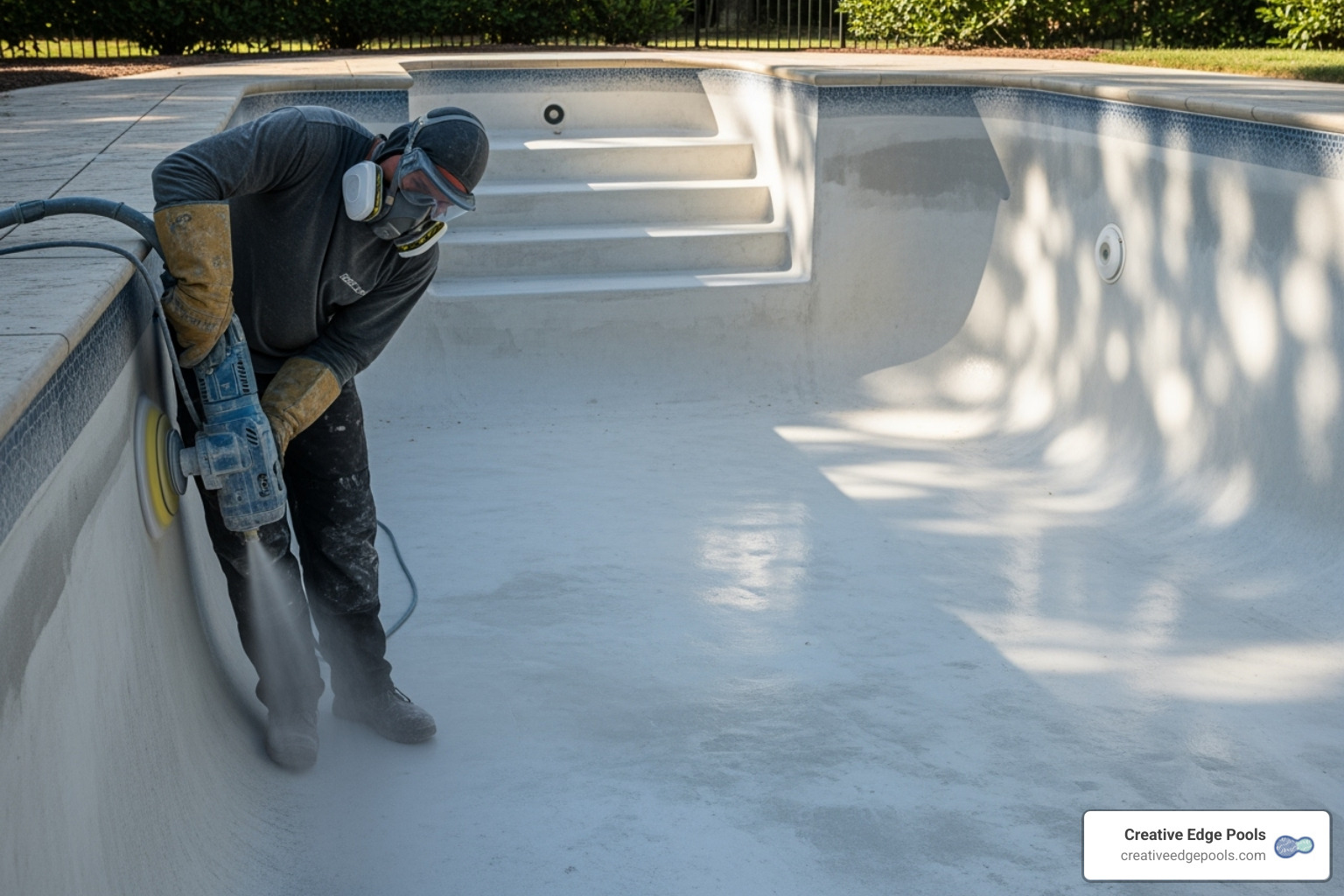
The honing step comes first. Attach your 50 or 70 grit non-corrosive diamond disc to your polisher. Start on the walls just below the waterline tile and work your way down methodically. Once the walls are done, move to the floor, then tackle the inside coves and corners.
Work in manageable 5-foot by 5-foot sections – this isn’t a race, and smaller sections give you better control and more consistent results. Apply the disc evenly and lightly against the plaster, letting the tool’s weight do the work. This honing pass removes scaling, rough aggregate, and trowel marks, creating a uniform surface.
If you’re dry sanding (which is often necessary), rinse each section immediately after completing it. This prevents overheating and removes the residual plaster material that can clog your disc and damage the surface.
The polishing step is where the magic happens. Switch to a 120 grit non-corrosive diamond disc and repeat the same methodical process. This pass removes any texture left by the coarser grit and gives you that wonderfully smooth, like-new finish.
Keep feeling the surface as you go – your hands are the best quality control tool you have. The goal is a silky-smooth, comfortable finish throughout the entire pool.
When you’re satisfied with the smoothness, give the entire pool a thorough final rinse to remove all plaster dust and debris. Your pool is now ready to be refilled and enjoyed again.
Choosing Your Weapon: Selecting the Right Sanding Grit
Choosing the right grit is like a chef selecting the right knife—use the wrong one, and you can create more problems than you solve.
| Grit Level | Primary Use | Expected Outcome | Disc Coverage (50/70 Grit) |
|---|---|---|---|
| 50/70 Grit | Initial honing and light shaping, removing rough aggregate, heavy scaling, and trowel marks | Provides a uniform texture | Approximately 1,500 to 2,000 sq. ft. (depending on roughness and material) |
| 120 Grit | Final polishing after honing | Achieves a smooth, polished finish | Similar coverage, but used for finishing work |
Coarse grits like 50 or 70 are your heavy-duty workhorses. They’re designed to tackle heavy scale removal, smooth out overexposed aggregate, and eliminate annoying trowel marks.
Medium grits around 120 are perfect for that final polishing pass. They remove the slight texture left by coarser grits and give you that smooth finish that makes swimming comfortable again.
For manual touch-up work on smaller areas, you might use 80 grit for very rough spots, 120 grit for further smoothing, 240 grit for almost completely smooth finishes, and even 600 grit with an angle grinder for an ultra-smooth, finished look.
In my experience with gunite pools, while manual sanding works for small patches, the power and consistency of a quality polisher with diamond discs gives you the professional results you’re looking for across the entire pool surface.
Advanced Tips: Sanding Pool Plaster vs. Other Surfaces
While the basic principles of smoothing surfaces remain the same, sanding pool plaster is quite different from working with other pool surfaces like fiberglass. Understanding these differences helps you apply the right techniques and avoid costly mistakes.
Plaster is a rigid, cement-based finish. When we sand it, we’re removing a thin layer of hardened cement and aggregate to smooth out calcium deposits, rough spots, and other imperfections without exposing the underlying gunite shell. The diamond discs we use are specifically designed for this hard, mineral-based material.
Fiberglass pools have a smooth, non-porous gelcoat layer that presents entirely different challenges. Issues here are typically discoloration, fading, or surface buildup rather than roughness. Sanding fiberglass requires much finer grits – often starting with 400-800 grit and progressing to 1000-2000 grit wet/dry sandpaper.
The key difference is that fiberglass gelcoat has a finite thickness – sand too deep and you’ll expose the underlying fiberglass mat, which requires professional repair. After sanding fiberglass, you typically need buffing and polishing with specialized compounds to restore the gelcoat’s luster.
Textured surfaces and anti-slip coatings on steps or floors present their own challenges. These areas are much harder to sand without altering the intended texture, so they may require different approaches or might be best left as-is.
With plaster, we’re reshaping a hard, mineral surface to restore comfort and smoothness. The tools, grits, and techniques reflect the durable nature of this cement-based material.
After the Sanding: Long-Term Care and Prevention
Congratulations on changing your rough pool plaster into a smooth surface. But sanding pool plaster is only half the battle. The secret to keeping that silky-smooth finish lies in what you do next. With the right maintenance routine, you can keep your pool feeling luxurious for years to come.
Maintaining Your Silky-Smooth Finish
Your pool’s water chemistry is the foundation of plaster care. After sanding, you don’t want to watch calcium deposits build up again, turning your smooth surface back into sandpaper.
Proper water chemistry is absolutely critical. Your pH levels should stay between 7.4 and 7.6. This narrow range prevents calcium from precipitating and forming rough deposits. High pH is plaster’s worst enemy, so test and adjust regularly.
Total alkalinity between 80-120 ppm acts as a pH buffer, preventing wild swings that can stress your plaster and keeping everything balanced.
Here’s something that surprises many pool owners: calcium hardness between 200-400 ppm is actually good for plaster pools. It sounds backwards, but water with enough calcium won’t be “hungry” for more, which means it won’t try to pull calcium from your plaster. Water that’s too soft can actually dissolve your plaster over time.
The Langelier Saturation Index (LSI) is your secret weapon for long-term plaster health. Keep it between -0.3 and +0.3, and you’ll prevent both scaling and etching. There are excellent online calculators that make this math easy.
When you refill your pool after sanding, maintain a continuous flow of water. Starting and stopping the hose can create permanent rings on your new finish, which is heartbreaking after all that work.
Never, ever use soft water to fill a newly sanded or replastered pool. Soft water is aggressive and will actually attack your plaster, undoing all your hard work. If you have a water softener, bypass it completely when filling your pool.
Regular brushing becomes even more important after sanding. Your plaster will shed some “plaster dust” for the first few weeks – this is completely normal. Brushing helps remove this residue and keeps your water crystal clear. Plus, it prevents microscopic debris from settling and creating rough spots.
Prevention is always easier than correction when it comes to stains. Address any metal stains, organic matter, or chemical imbalances quickly.
If you have a saltwater system, pay extra attention to your chemistry. Salt can slowly attack cement over time, making balanced water even more crucial. The good news is that our recommended non-corrosive diamond discs don’t introduce any additional corrosive elements during the sanding process, giving your saltwater system one less thing to worry about.
By following these maintenance practices, you’ll preserve that smooth finish you worked so hard to achieve and extend your plaster’s overall lifespan. We’ve seen properly maintained pools stay smooth and beautiful for decades – it’s all about consistency and attention to detail.
At Creative Edge Pools, we take immense pride in helping homeowners create and maintain beautiful backyard spaces. You can see examples of our craftsmanship and dedication to quality on our More info about our work page.
If you ever need professional assistance or want to explore other surface options for your pool, we’re here to help. Learn more about the various solutions we offer by visiting our Learn more about pool resurfacing options page.
We love connecting with pool owners and sharing tips for beautiful, functional backyards. Follow us on Facebook to stay updated on our latest projects and get more maintenance tips from our team!