Pool Resurfacing: Top 10 Costly Mistakes in 2025
Pool resurfacing is a crucial step in maintaining and enhancing the beauty and durability of your swimming pool. It’s a process aimed at giving your pool a fresh, updated look while also extending its lifespan. If you’re seeking a quick overview, here’s what you need to know:
- What is Pool Resurfacing?
- Involves removing the old surface and applying a new finish.
- Improves visual appeal and pool functionality.
- Increases the pool’s longevity by preventing leaks and extending its usable life.
- Why Consider Pool Resurfacing?
- Improves safety by repairing structural issues.
- Offers a range of aesthetics with various finish options.
- Reduces maintenance costs with a more durable surface.
Investing in pool resurfacing not only boosts the visual appeal of your backyard oasis but also ensures your pool’s longevity and safety. As a homeowner in Eastern Massachusetts or Southern New Hampshire, understanding this process can help you make informed decisions to improve your outdoor living space.
I’m David Brabant, with over thirty years in pool design and construction, including expertise in pool resurfacing. Our team at Creative Edge Pools is committed to providing quality craftsmanship and custom solutions for your backyard dreams. Let’s explore this process further and find how to transform your pool into a long-lasting masterpiece.
Know your pool resurfacing terms:
– cost to redo pool
– diamond brite pool repair
– plaster pool resurfacing cost
What is Pool Resurfacing?
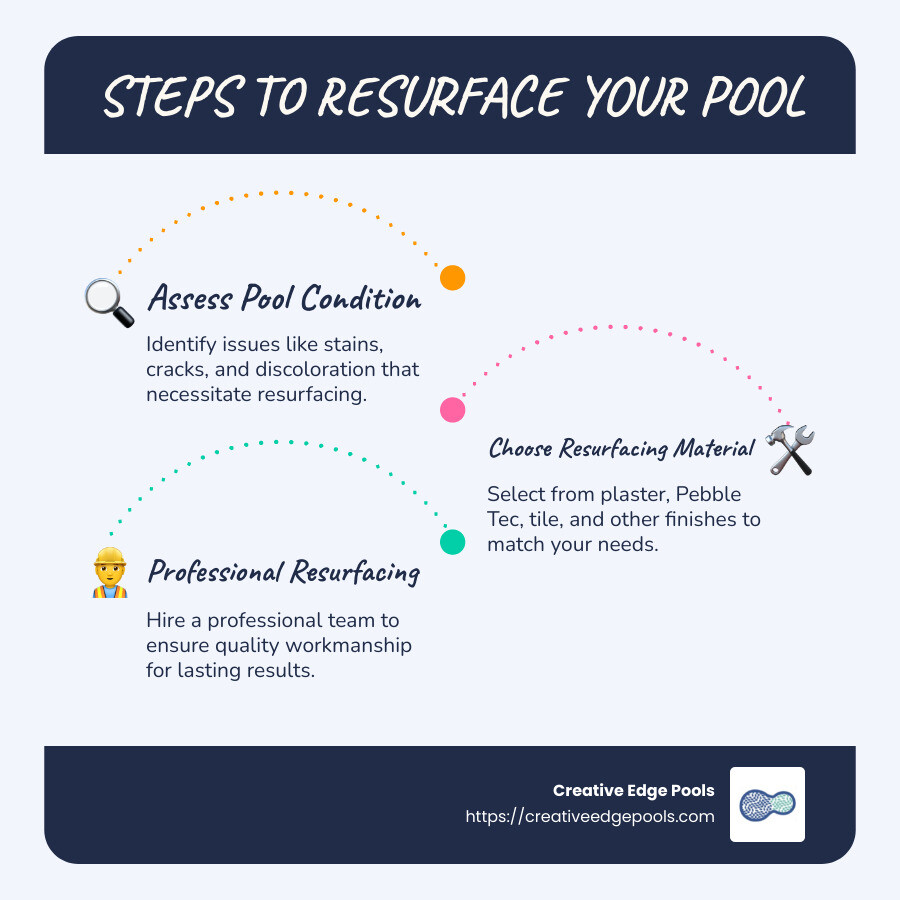
Pool resurfacing is all about giving your pool a fresh start. It’s like a makeover for your swimming pool, aimed at restoring its original beauty and functionality. Here’s how it works:
Removing the Existing Finish
The first step in the pool resurfacing process is to remove the existing finish. This involves either chipping, sandblasting, or hydro blasting the old surface. Each method has its pros and cons, but the goal is to prepare the pool for the new finish. This is the loudest and dustiest part of the process, but it’s crucial for ensuring the new surface adheres properly.
Replacing the Top Surface
Once the old finish is removed, it’s time to apply the new top surface. This could be plaster, Pebble Tec, or another finish depending on your preference. The material is carefully applied to ensure a smooth, even coat. This stage is where your pool begins to transform, as the new surface gives it a fresh look and feel.
Applying a New Sealant
After the new surface is in place, a sealant is applied. This acts as a protective barrier, guarding against leaks and damage from chemicals or weather. The sealant is essential for extending the life of your pool and keeping maintenance costs down.
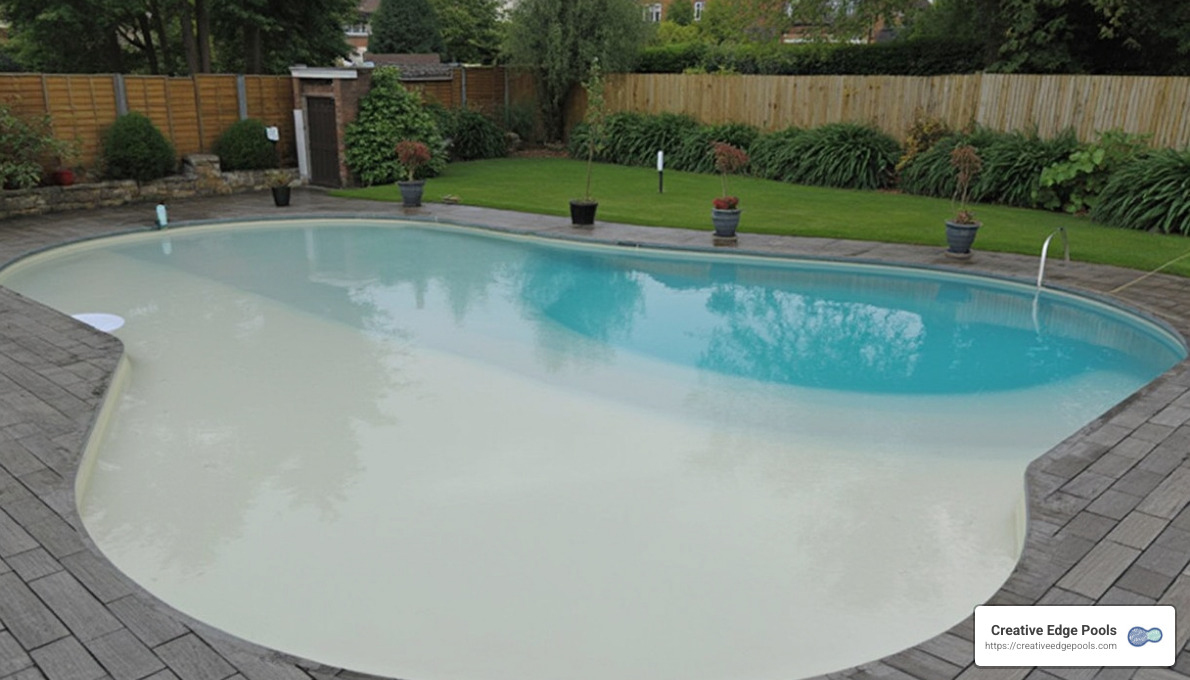
By understanding these steps, you can appreciate the complexity and importance of pool resurfacing. It’s not just about aesthetics—it’s about safeguarding your investment and ensuring your pool remains a centerpiece of enjoyment for years to come.
Signs Your Pool Needs Resurfacing
Knowing when to resurface your pool is crucial to maintaining its beauty and functionality. Here are some telltale signs that it might be time for pool resurfacing:
Stains and Discoloration
If your pool’s surface is marred by stains that are growing or difficult to remove, it’s a clear sign that resurfacing might be needed. Over time, exposure to chemicals and sunlight can cause discoloration, making your pool look old and uninviting.
Flaking and Peeling
Flaking or peeling, especially in plaster finishes, indicates that the surface has worn out. This not only affects the appearance but can also lead to further damage if not addressed.
Cracks
Cracks are more than just an eyesore—they can lead to leaks and structural issues. Even small cracks can worsen over time, so address them early with resurfacing.
Pebble Loss
For pools with Pebble Tec or similar finishes, pebble loss is a common issue. As pebbles come loose, the surface becomes rough and uneven. This can be uncomfortable to walk on and can worsen if not treated.
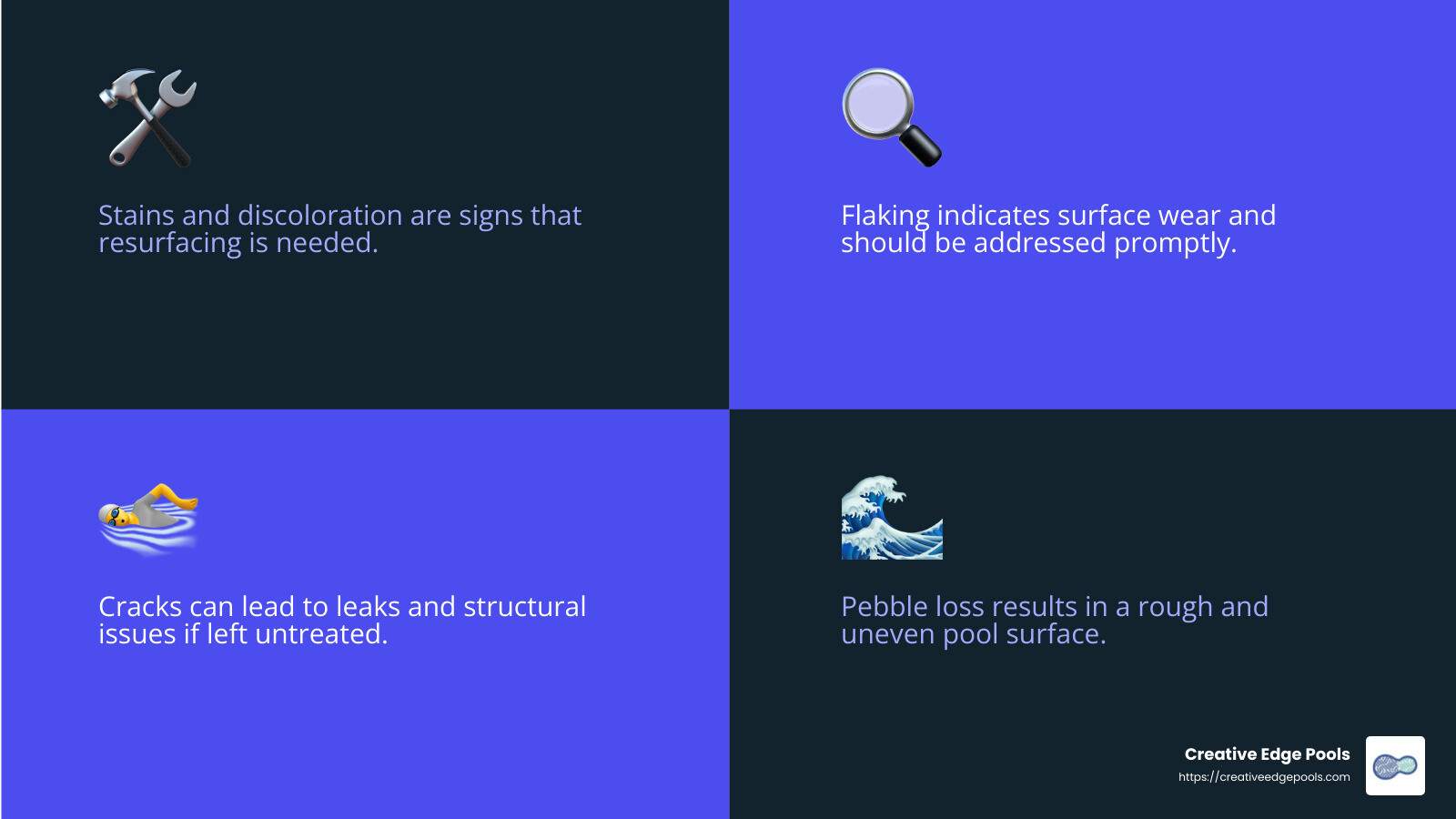
If you notice any of these signs, it might be time to call in professionals for pool resurfacing. Addressing these issues promptly can save you from more extensive repairs down the line, ensuring your pool remains a safe and enjoyable space.
Pool Resurfacing Costs
Understanding the costs associated with pool resurfacing can help you plan your budget effectively. Let’s break down the average costs, the factors that influence these costs, and the choices of materials available.
Average Cost
The cost of resurfacing a pool can vary significantly based on several factors. On average, you might expect to pay between $4,000 and $10,000 for a full resurfacing job. However, this can change depending on the size of your pool and the materials you choose.
Factors Influencing Cost
- Pool Size: Larger pools require more materials and labor, naturally increasing the cost.
- Material Choice: The type of finish you select plays a significant role in the total cost. For example, simple plaster might cost around $5 per square foot, while high-end glass tiles could range from $4 to $30 per square foot.
- Location: Costs can vary depending on your geographical location due to differences in labor rates and material availability.
- Pool Condition: If your pool has extensive damage, such as deep cracks or significant peeling, additional repairs will increase the cost.
- Additional Features: Adding features like waterfalls or custom designs during resurfacing can also raise the price.
Material Choices
When it comes to selecting materials for pool resurfacing, you have several options, each with its own cost and lifespan:
- Plaster: A popular and cost-effective option, plaster typically lasts around 10 years. It’s durable but can be prone to staining and discoloration over time.
- Pebble Tec: Known for its natural look and durability, Pebble Tec can last 10 to 20 years. It involves mixing small pebbles into the surface, offering a textured finish.
- Tile: Tile finishes are beautiful and long-lasting, but they are also the most expensive option. They offer a wide range of design possibilities.
- Diamond Brite: This exposed aggregate finish is durable and resistant to harsh chemicals. It can last between 8 and 15 years, offering a smooth and colorful finish.
- Vinyl Liner: While not a resurfacing material per se, replacing a vinyl liner every 5 to 9 years is necessary for vinyl pools. This can cost between $1 and $3.5 per square foot.
Choosing the right material involves balancing initial cost, longevity, and the aesthetic you desire for your pool. By understanding these factors, you can make an informed decision that aligns with your budget and preferences.
Next, we’ll explore the pool resurfacing process to give you a clear idea of what to expect when you decide to refresh your pool.
Pool Resurfacing Process
Resurfacing a pool involves several key steps that ensure a smooth and durable finish. Here’s what you can expect during the pool resurfacing process:
Draining the Pool
The first step is to drain the pool completely. This is crucial because it allows workers to access the entire surface. A submersible pump is typically used to remove the water. Before starting, make sure to check local regulations about where and how you can drain your pool water.
Surface Preparation
Once the pool is empty, the surface preparation begins. This involves cleaning the pool’s surface to remove debris, dirt, and any old finish. Workers will also address any cracks or imperfections by filling and smoothing them out. This step is essential for ensuring that the new surface will adhere properly and last longer.
Priming
After the surface is prepped, a primer is applied. Think of this as a base coat that helps the new finish stick better. The primer needs to dry completely before moving on to the next step. This usually takes about four hours, depending on the weather and the pool’s surface size.
Finishing
Now it’s time for the finishing touch. The chosen resurfacing material is applied, often starting from the deep end and moving to the shallow end. Professionals usually apply multiple coats, allowing each layer to dry before adding the next. This ensures a strong and even finish. Depending on the material, you might see between three to four coats being applied.
Refilling the Pool
Once the final coat is dry, it’s time to refill the pool. However, it’s important to let the surface cure for at least seven to ten days before adding water. This curing period is crucial for the longevity of the new surface. After the wait, you can start refilling the pool and enjoy its fresh, new look.
Understanding this process can help you prepare for what to expect during pool resurfacing. Knowing the steps involved ensures that you can plan accordingly and minimize downtime for your pool. Next, we’ll explore the different types of resurfacing materials available and how to choose the best one for your needs.
Types of Pool Resurfacing Materials
Choosing the right material for pool resurfacing is crucial for both the look and longevity of your pool. Each material offers unique advantages and challenges. Here’s a breakdown of the most popular options:
Plaster
Plaster is one of the most traditional and cost-effective resurfacing materials. Made from a mix of water, marble sand or limestone, and white cement, plaster provides a classic and neat look. It can also be dyed to match your desired color scheme.
- Pros: Affordable, classic appearance, customizable colors.
- Cons: Rough texture, requires regular maintenance to prevent algae growth. Typically lasts 5-15 years depending on care.
Pebble Tec
Pebble Tec is an exposed aggregate finish known for its natural, lakeside appearance. Made by mixing small pebbles into cement, it offers a durable and low-maintenance option.
- Pros: Long-lasting (10-20 years), low maintenance, natural aesthetic.
- Cons: Can feel rough underfoot, potential for scaling if water chemistry is not balanced.
Tile
Tile finishes offer a luxurious and highly customizable option. Available in a variety of colors and designs, tiles can create unique patterns and textures.
- Pros: Highly customizable, visually striking, easy to clean.
- Cons: Higher cost, requires skilled installation.
Marquis Finishes
Marquis finishes, also known as Diamond Brite, consist of aggregate pebbles or quartz mixed with polymer-modified cement. They are known for their vibrant colors and smooth finish.
- Pros: Durable, vibrant color options, smooth texture.
- Cons: Can erode or discolor over time, especially with poor water chemistry. Lifespan ranges from 5-10 years.
Diamond Brite Finishes
Diamond Brite is a brand of exposed aggregate finish that uses natural quartz for added durability. It offers a comfortable feel underfoot and comes in a variety of colors like emerald and blue-gray.
- Pros: Strong, durable, comfortable texture, resistant to chemical corrosion.
- Cons: Susceptible to scaling and etching if water chemistry is not maintained. Typically lasts 8-15 years.
Stonescape Finishes
Similar to Pebble Tec, Stonescape finishes use an aggregate mix of stones and cement. The stones are larger, providing a unique texture and appearance.
- Pros: Strong and durable, natural look, long-lasting (similar to Pebble Tec).
- Cons: Rough texture, potential for discoloration and scaling.
Selecting the right resurfacing material depends on your budget, aesthetic preferences, and how you plan to maintain your pool. Each option offers a distinct look and feel, so choose wisely to ensure your pool remains a beautiful and functional part of your backyard oasis. Up next, we’ll discuss how often you should consider resurfacing your pool to keep it in top condition.
How Often Should You Resurface Your Pool?
Resurfacing your pool is essential for maintaining its beauty and functionality. But how often should you plan for this important maintenance task? The answer typically depends on a few key factors.
8-10 Year Rule of Thumb
Most pools need resurfacing every 8 to 10 years. This timeline is a general guideline and can vary based on the materials used and how well the pool is maintained. For instance, plaster finishes may require more frequent attention, while high-end options like Pebble Tec or Stonescape can last longer.
Environmental Factors
The environment plays a significant role in determining when to resurface your pool. Pools in harsh climates with extreme temperatures or high UV exposure may need resurfacing sooner. For example, pools in sunny regions might experience faster wear due to sun exposure, leading to fading or discoloration.
Usage Frequency
How often you use your pool also affects its resurfacing schedule. Pools that see heavy use, especially with lots of swimmers, can experience more wear and tear. Frequent use can lead to more rapid deterioration of the surface, prompting an earlier resurfacing than pools used less often.
Signs It’s Time for Resurfacing
While the 8-10 year guideline is helpful, always watch for signs that your pool might need attention sooner. Look for issues like:
- Stains or Discoloration: Persistent staining or fading colors can indicate it’s time for a refresh.
- Cracks or Flaking: Physical damage to the surface is a clear sign.
- Rough Texture: If the pool feels rough underfoot, it might be time to resurface.
Keeping an eye on these factors will help you plan for pool resurfacing and keep your pool in excellent condition. Next, we’ll explore the best time of year to take on a resurfacing project.
Best Time to Resurface Your Pool
Choosing the right time for pool resurfacing can make the process smoother and more efficient. Timing is crucial, as it impacts both the quality of the resurfacing and your enjoyment of the pool. Here’s what you should consider:
Fall Season
The fall is often regarded as the best time to resurface your pool. Why? As the swimming season winds down, you can afford to have your pool out of commission without missing out on warm-weather fun. Plus, many pool professionals have more availability in the fall, which can lead to quicker project completion and potentially lower costs.
Weather Considerations
Weather plays a significant role in the resurfacing process. Cooler temperatures and less rain during the fall provide optimal conditions for resurfacing. Excessive heat can cause materials to dry too quickly, leading to cracks or uneven surfaces. Similarly, rain can delay the process or compromise the curing of new finishes. Choosing a time with stable, mild weather ensures the best results.
Backyard Remodeling
If you’re planning a broader backyard renovation, aligning it with your pool resurfacing can be highly beneficial. Coordinating these projects allows for a cohesive look and minimizes disruption to your outdoor space. Whether you’re adding a new patio, landscaping, or outdoor kitchen, consider scheduling these updates alongside your pool resurfacing to transform your backyard into a cohesive oasis.
By planning your pool resurfacing for the fall, you can take advantage of ideal weather conditions and seamlessly integrate it with any other backyard projects. Next, we’ll address some frequently asked questions about pool resurfacing to further guide you in your decision-making process.
Frequently Asked Questions about Pool Resurfacing
What is the average cost of resurfacing a pool?
The cost of pool resurfacing can vary widely based on several factors. On average, expect to pay between $4,000 and $10,000. However, the price can climb higher depending on the pool’s size, the type of materials chosen, and the complexity of the project. For instance, using premium materials like glass tiles can increase costs significantly, with prices ranging from $4 to $30 per square foot. More budget-friendly options, such as plaster, typically cost around $5 per square foot.
How long does it take to resurface a pool?
The duration of a pool resurfacing project generally falls between 5 and 14 days. This timeframe depends on factors like the pool’s size, shape, and the materials used. A professional team will typically work 8 to 10 hours per day to complete the job. Weather conditions and the availability of materials can also affect the timeline. For example, cooler, dry weather is ideal for resurfacing, while rain can cause delays.
What is the difference between replastering and resurfacing?
Replastering and pool resurfacing are often used interchangeably, but they refer to different processes. Replastering involves applying a new layer of plaster to the pool’s surface. It’s a common choice for restoring a pool’s smooth texture and appearance. Resurfacing, on the other hand, can involve various materials like Pebble Tec, Marquis finishes, or Diamond Brite finishes. Resurfacing not only upgrades the look of the pool but can also improve its durability and lifespan. By choosing the right material, you can customize the pool’s appearance and performance to suit your preferences and needs.
Understanding these aspects of pool resurfacing helps you make informed decisions about maintaining and enhancing your pool. Whether you’re considering a simple replaster or a full resurfacing with premium materials, knowing the costs and timelines involved can assist you in planning effectively.
Conclusion
Pool resurfacing offers a wide range of benefits that go beyond just giving your pool a fresh look. By resurfacing, you can significantly improve the pool’s appearance, making it more inviting and enjoyable for family and friends. A newly resurfaced pool also improves safety by addressing cracks and leaks, and creating a smooth, slip-resistant surface.
Moreover, resurfacing increases your pool’s functionality by improving water flow and reducing water loss, which can lead to better energy efficiency. This process can also extend the longevity of your pool by protecting it from further damage and reducing the need for costly repairs in the future. These benefits not only improve your swimming experience but also boost the pool’s overall value.
At Creative Edge Pools, we specialize in providing a comprehensive service that covers every aspect of your pool resurfacing project. Our family-owned business in Eastern Massachusetts and Southern New Hampshire is dedicated to turning your backyard vision into reality. We handle everything from designing and installing custom gunite swimming pools to offering landscaping and masonry services. Our team’s extensive experience ensures that the resurfacing process is smooth and stress-free, allowing you to enjoy your pool for many years to come.
So, when you choose Creative Edge Pools, you’re not just getting a service; you’re investing in a partnership that prioritizes quality, durability, and your satisfaction. Let us help you transform your pool and outdoor space into a paradise that you and your family will cherish.