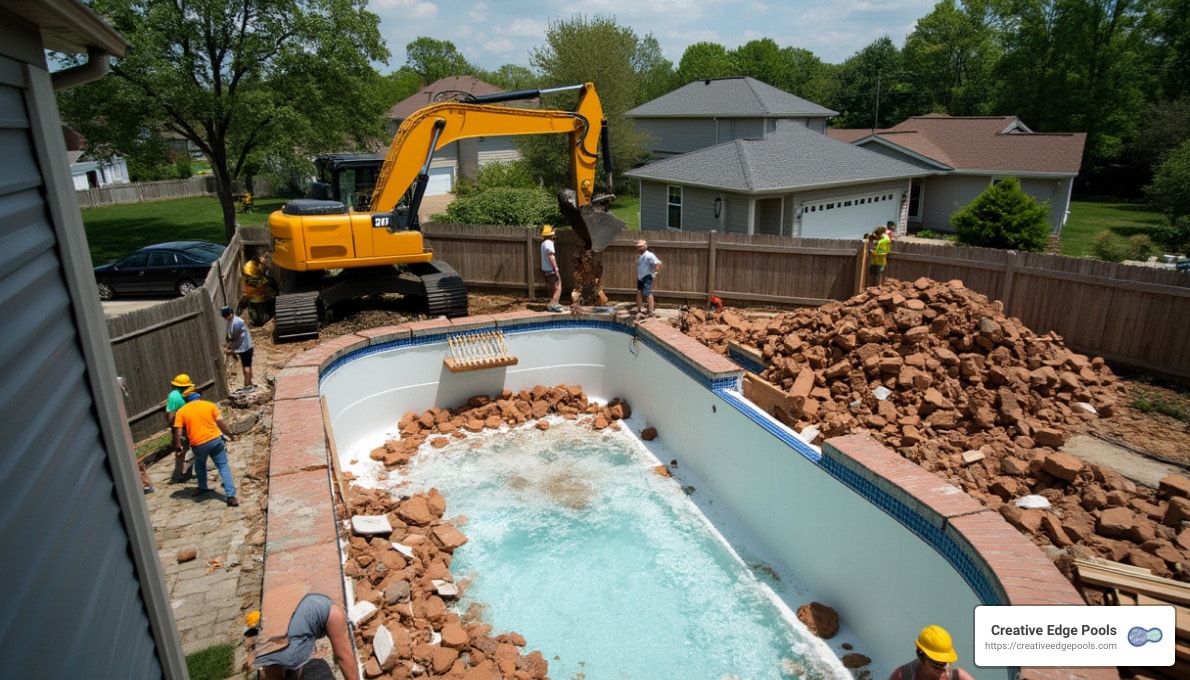
Cost to Remove Swimming Pool: 5 Smart Ways in 2024
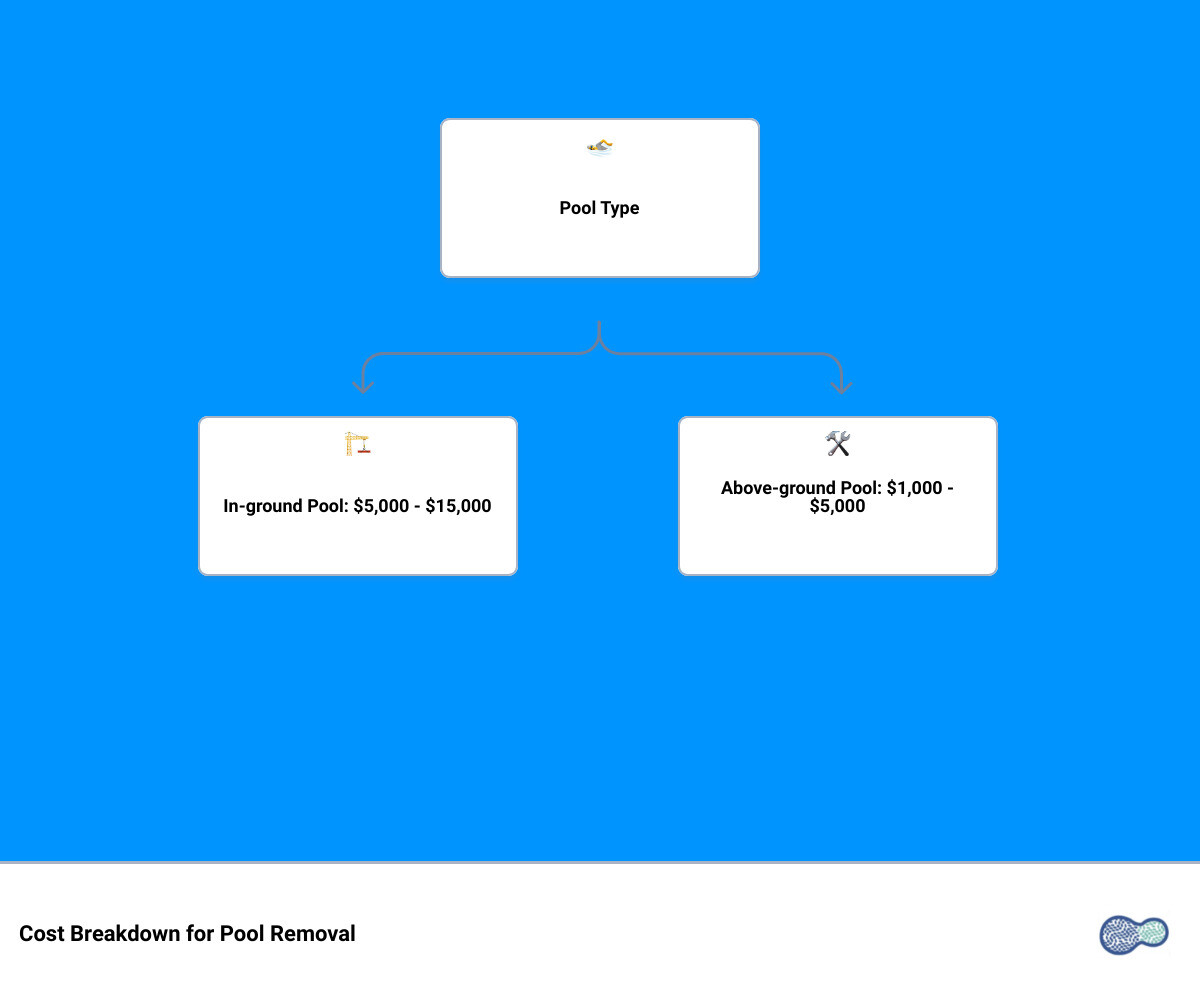
Cost to remove swimming pool can be a significant concern for many homeowners. On average, you can expect to spend between $5,000 to $15,000, depending on the specifics of your project, such as the pool’s type, size, and the contractor you choose. However, before diving into removal, consider how a pool impacts your property value and landscaping aesthetics. In places like Portland, Oregon, a pool can often be more of a liability than an asset, with many buyers seeing it as a maintenance burden rather than a selling point. But in warmer climates, pools are popular, and their value can vary widely.
My name is David Brabant, owner of Creative Edge Pools, where we specialize in swimming pool installation and removal. With over 30 years of experience in the swimming pool industry, I have managed various aspects from excavation to complete site development. By understanding the cost to remove swimming pool, I help homeowners find the right solutions while enhancing their outdoor spaces with thoughtful design and practicality.
Basic cost to remove swimming pool glossary:
– how to remove a swimming pool
– cost to fill a pool with dirt
– do you need a permit to fill in a pool
Understanding the Cost to Remove a Swimming Pool
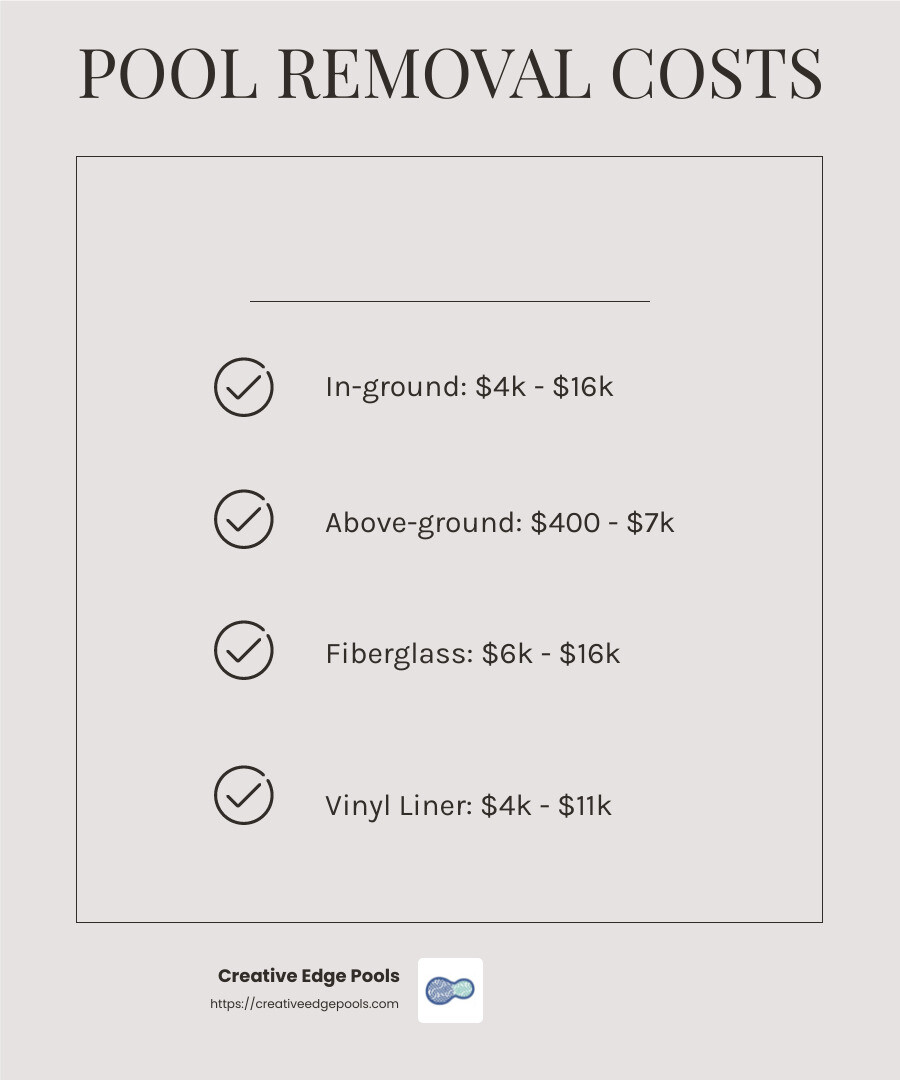
When considering the cost to remove a swimming pool, it’s important to recognize that expenses can vary widely depending on several factors. On average, removing a pool can range from $3,000 to $20,000, with the national average hovering around $10,000. Let’s break down the costs based on different pool types.
In-ground Pool Removal
In-ground pools are often the most expensive to remove. The cost depends on whether you choose a partial or full removal.
- Partial removal involves demolishing the top layer of concrete and using the rubble as backfill. This method is less expensive, with costs ranging from $4,000 to $10,000.
- Full removal is more comprehensive and costly, priced between $7,000 to $16,000. It involves removing all pool materials and using engineered backfill to ensure the ground’s stability.
Above-ground Pool Removal
Above-ground pools are generally cheaper to remove due to their simpler construction. Costs can range from $400 to $900 for the pool alone. If you have additional structures like decks, prices might increase to between $1,000 and $7,000.
Fiberglass Pool Removal
Fiberglass pools require complete removal because the material cannot be left in the ground. The costs for removing a fiberglass pool typically fall between $6,000 and $16,000. If the shell can be removed intact, the process might be less expensive.
Vinyl Liner Pool Removal
Removing a vinyl liner pool is similar to fiberglass pools in that it requires complete removal. The average cost ranges from $4,000 to $11,000. This process involves taking out the liner and any supportive structures, like aluminum or steel framing.
Concrete Pool Removal
Concrete pools are often the most costly to remove. Partial removal costs about $4,000 to $16,000, while full removal can be significantly higher. The removal process is labor-intensive, involving breaking apart the concrete and cutting through rebar.
Understanding these costs can help you make informed decisions about whether to keep, refurbish, or remove your pool. Each type of pool presents its own set of challenges and costs, so it’s crucial to consider your specific situation and consult with professionals like Creative Edge Pools to explore the best options for your outdoor space.
Next, we’ll explore the factors influencing pool removal costs to give you a clearer picture of what might affect your specific project.
Factors Influencing Pool Removal Costs
When it comes to understanding the cost to remove a swimming pool, several factors come into play. These can significantly affect your overall expenses, so let’s dive into each one.
Pool Type
The type of pool you have is a major determinant of removal costs. In-ground pools, often made of concrete or fiberglass, are typically more expensive to remove than above-ground pools due to their construction and the effort required to dismantle them. Concrete pools, in particular, demand more labor for breaking apart and cutting through rebar, which increases costs.
Pool Size
Size matters. Larger pools require more time and labor to demolish, which naturally raises the cost. A deeper pool will also be more expensive to remove than a shallow one because of the additional materials and effort needed to fill the space.
Demolition Method
There are two main methods: partial removal and full removal. Partial removal involves demolishing the top layer and leaving some materials in place, which is less costly. Full removal, on the other hand, entails taking out all pool materials and ensuring the ground is stable for future use, often involving engineered backfill. This method is more comprehensive and expensive.
Material Disposal
Disposing of the pool materials can be a significant cost factor. Some contractors include disposal in their estimates, while others might charge separately. Recycling or salvaging materials, like metal rebar, can sometimes offset costs, but this depends on the contractor’s capabilities and local recycling facilities.
Permits and Regulations
Before starting the demolition, you’ll need to secure the necessary permits. The cost of these permits can range from $200 to $400, depending on local regulations and the complexity of the demolition process. Some contractors handle this for you, which can simplify the process but might add to the overall cost.
Geographic Location
Where you live can impact costs due to varying labor rates and disposal fees. Urban areas might have higher costs compared to rural locations, where expenses like transport and disposal might be lower.
Contractor Expertise
The experience and expertise of the contractor you choose can also influence costs. More seasoned contractors often charge higher rates, but their knowledge can prevent costly mistakes and ensure a smoother removal process.
By understanding these factors, you can better plan and budget for your pool removal project. It’s crucial to weigh these elements carefully and consult with professionals, like those at Creative Edge Pools, to get the best outcome for your investment.
Next, we’ll explore cost-saving tips for pool removal, offering practical advice to help you manage expenses effectively.
Cost Breakdown by Pool Type
When considering the cost to remove a swimming pool, it’s important to know that different pool types come with different removal processes and costs. Let’s break down what you can expect for each type of pool.
In-ground Pool Removal
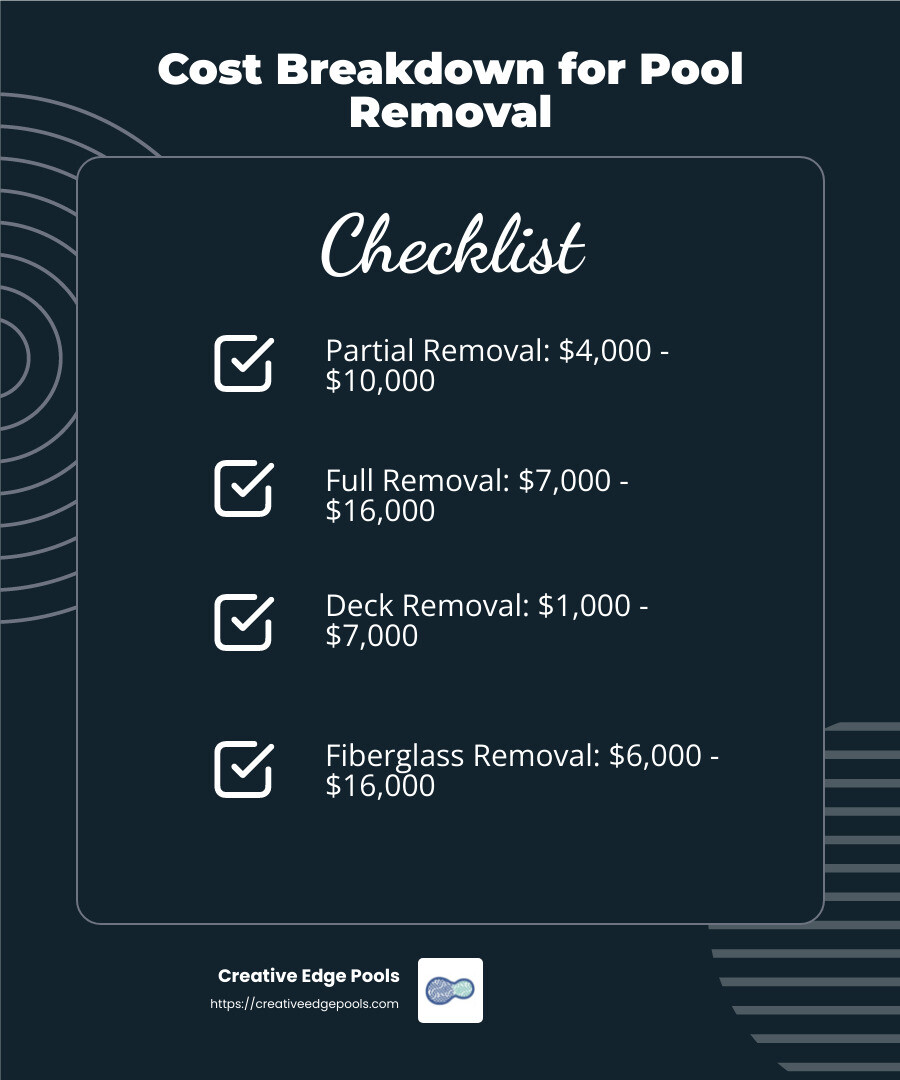
Partial Removal: This is a popular choice for in-ground pools, especially if you’re looking to save money. It involves demolishing the top layer of the pool and using the rubble as backfill. This method is quicker and less expensive, with costs ranging from $4,000 to $10,000.
Full Removal: For a more thorough option, full removal involves taking out all pool materials and ensuring the ground is stable for future use. This often requires engineered backfill to prevent future settling. The cost for full removal typically falls between $7,000 to $16,000.
Above-ground Pool Removal
Removing an above-ground pool is generally simpler and cheaper than in-ground pools.
Deck Removal: If your above-ground pool includes a deck, expect additional costs for dismantling it. This can range from $1,000 to $7,000 depending on the size and complexity.
Backfill and Accessibility: Filling in the space left by the pool may not be necessary, but if you choose to do so, it will add to the cost. Accessibility to the site can also impact the cost, as difficult access might require special equipment or more labor.
Fiberglass Pool Removal
Full Removal: Fiberglass pools must be completely removed because the shell cannot be left in the ground. If the shell is intact, removal is easier and less costly. However, if it needs to be broken into smaller pieces, costs increase, ranging from $6,000 to $16,000.
Disposal: Proper disposal of fiberglass is crucial. Some contractors may offer recycling options, which can slightly reduce costs.
Vinyl Liner Pool Removal
Complete Removal: Like fiberglass pools, vinyl liner pools require full removal. This includes taking out the liner and any supporting structures such as aluminum or steel framing. A structural engineer may be needed to ensure safe removal, especially if the pool is constructed with concrete backing. Costs typically range from $4,000 to $11,000.
Concrete Pool Removal
Concrete pools are the most labor-intensive to remove.
Partial Removal: This involves breaking down the top layer and using the debris as backfill. It’s a more economical option, usually costing between $4,000 to $16,000.
Full Removal: Removing a concrete pool entirely is expensive due to the need for extensive labor to cut through rebar and dispose of heavy debris. This option is best for those planning significant landscaping changes or new construction.
Understanding the specific removal process and costs for each pool type will help you make an informed decision. Up next, we’ll provide some cost-saving tips for pool removal to help you manage your budget effectively.
Cost-saving Tips for Pool Removal
Removing a pool can be pricey, but with a little planning, you can keep costs down. Here are some smart ways to save money on your pool removal project.
Get Multiple Estimates
Shop Around: Start by contacting several pool removal contractors for quotes. Each contractor might offer different pricing based on their expertise and equipment. By comparing estimates, you can ensure you’re getting the best deal. The lowest price isn’t always the best choice—consider the contractor’s reputation and experience too.
DIY Removal
Do It Yourself: If you’re handy and want to save some cash, consider handling parts of the removal yourself. While it’s not recommended for the entire process, you can tackle smaller tasks like removing pool accessories (filters, pumps) or simple structures like fences. This can cut down on labor costs, but be cautious—safety first!
Salvageable Materials
Cash in on Materials: Before demolition begins, ask your contractor about any materials that can be salvaged. Items like metal rebar, pool equipment, or even the pool liner might have resale value. Some contractors might offer a discount if they can sell or recycle these materials. It’s a win-win!
Recycling Options
Go Green: Recycling isn’t just good for the environment; it can also save you money. Some pool materials can be recycled, which might reduce disposal fees. Check if your contractor offers recycling services or can direct you to a facility that accepts pool materials. Not all materials can be recycled, but it’s worth exploring this option for potential savings.
By following these tips, you can manage the cost to remove a swimming pool more effectively. Next, we’ll tackle some frequently asked questions about pool removal to clear up any lingering doubts.
Frequently Asked Questions about Pool Removal
Does removing a pool decrease home value?
It depends. In some areas, especially those with cooler climates like Portland, OR, a pool can be seen as a disadvantage. Many buyers view pools as expensive and high-maintenance, which can deter potential buyers. Removing a pool might actually make your home more appealing to these buyers, potentially increasing its value.
On the other hand, in warmer regions where pools are common and desirable, removing a pool might reduce your home’s attractiveness. It’s crucial to evaluate local market trends and buyer preferences when considering pool removal.
How hard is it to remove an inground pool?
Removing an inground pool is a significant undertaking. It involves draining the pool, disconnecting utilities, and demolishing the structure. For concrete pools, this means breaking apart the concrete and cutting rebar, which requires heavy machinery like excavators and jackhammers.
The process can take anywhere from 3 to 5 days depending on the pool size and the contractor’s efficiency. While it can be a DIY project for those with construction experience, hiring a professional is often the safest and most efficient choice.
Is it worth it to get rid of a pool?
Whether it’s worth removing a pool depends on your personal circumstances and future plans. If the pool is a financial burden due to high maintenance costs or if it’s rarely used, removal might be a smart move. It could free up yard space for other uses, like gardening or creating a play area.
However, if you’re in a region where pools add value to homes, you might want to consider renovating instead of removing it. Replastering or updating the pool can be more cost-effective and maintain its appeal to potential buyers. Always weigh the costs and benefits specific to your situation before making a decision.
Now that we’ve addressed these common questions, let’s move on to our conclusion, where we’ll explore how Creative Edge Pools can help transform your backyard.
Conclusion
At Creative Edge Pools, we understand that removing a swimming pool is a big decision. Whether you’re looking to reclaim outdoor space or reduce maintenance costs, our team is here to support you every step of the way.
Backyard Development is our specialty. We don’t just remove pools; we help you envision and create a new landscape that fits your lifestyle. Imagine changing your former pool area into a lush garden, an inviting patio, or a vibrant play zone for your family. Our comprehensive services ensure that your backyard reflects your vision.
Landscaping and Masonry are integral parts of our approach. We offer custom solutions that improve the beauty and functionality of your outdoor space. From designing intricate stone pathways to building robust retaining walls, our team handles every detail with precision and care. Our expertise in masonry ensures that your new backyard is not only beautiful but also durable.
By choosing us for your pool removal needs, you’re partnering with a family-owned business committed to quality and customer satisfaction. We take pride in offering personalized service that aligns with your goals and budget.
Ready to transform your backyard into a paradise? Contact Creative Edge Pools today to explore the possibilities and get started on your next project. Let us help you turn your vision into reality.